
How France’s Riverside Towns are Welcoming Slow Tourism
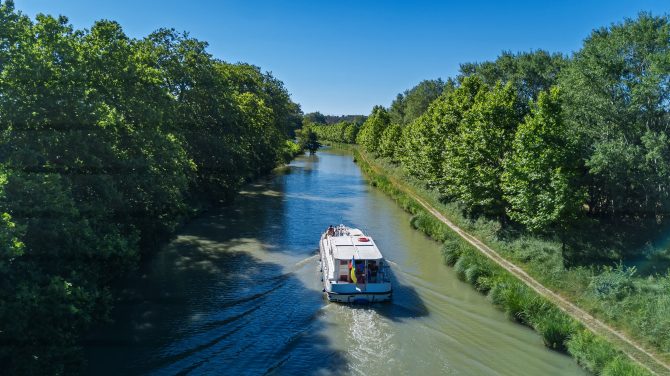

France’s canals were once the highlight of rural travel, with towpaths perfect for rambling walks, early-morning boats floating past vegetable gardens and lingering picnics on long summer days.
While most tourism has drifted towards larger cities and crowded coastal resorts, encouraged by package tours and social media, these inland waterways are experiencing a quiet revival.
Their main pull? Offering slow travel alternatives to southern European destinations overwhelmed by tourism.
Once known for trade and industry, canal towns across France, such as Briare, Béziers and Josselin are now establishing themselves as substantial eco-tourism hubs.
They’re reinventing their quaysides with electric boat hires, cycling routes, restored lock houses, canal-side restaurants championing authentic regional food and local festivals.
“French canal towns encourage travellers to appreciate gradual landscape transitions, architectural details, and local community interactions impossible when rushing between famous destinations,” Carlos Nasillo, CEO of motorcycle rental platform Riderly, said.
Why French Canal Tourism is Growing

Recently, French canal and river tourism has seen a steady increase, especially due to the soaring interest in France after the 2024 Paris Olympics. This has further been supported by the rise in experiential tourism, with more travellers now prioritising meaningful experiences over material purchases.
River tourism in France drew over 330,000 tourists in 2024, according to French Waterways (VNF), who spent around €352 million on hotel barges, hire boats and river cruise ships.
Prominent canal tour operators like Le Boat have doubled down on this trend and expanded their 2025 offerings, which usually require no prior licences or experience and include beautiful towns, lively markets and heritage landmarks.
A rise in luxury-conscious tourism has further contributed to the boom in French canal town visitors. More self-drive boats and barge-hotel trips have supported this, with several boat companies also investing in larger electric boat fleets.
Many French towns and communes have also upgraded canal towpaths and tourist facilities like marinas.
This trend is not only attracting international travellers, more domestic French visitors are increasingly choosing local canal towns over crowded, hotter and more expensive Mediterranean and Atlantic coastal holidays.
“These waterways offer a chance to experience what the French provinces really are. Here, visitors can wander around charming villages, or work with small businesses like booksellers who have their own paper factory attached,” Nasillo said.
He added: “Tourism based on canals helps to preserve the lifestyle and culture of traditional local boat builders, lock keepers and local food using regional fresh produce.”
But which French canal towns have truly reinvented themselves as eco-travel hubs?
How Béziers Turned its Waterways into a Green Tourism Magnet

Béziers in the Occitanie region of France was once the capital of the Languedoc wine region. In the 18th and 19th centuries, it was especially renowned for exporting wine and alcohol, boosted by the construction of the Canal du Midi.
Now, the city is pivoting towards becoming a sustainable tourism destination, aligning with its title as a Grand Site Occitanie, which recognises its outstanding heritage value.
Today, Béziers is a prime example of a multifunctional slow travel destination that is easily accessible on cycling, walking and canal routes, such as the Canal des 2 Mers and the EuroVelo 8.
The city’s government has added several new scenic viewpoints, accessible walking paths, pedestrian bridges and towpath landscaping features, all designed to help travellers take a moment to immerse themselves in the surrounding nature.
A small electric-boat dock makes it much easier for sustainable cruises and boats to operate, allowing visitors to experience the lock staircase in action.
Off the water, travellers can marvel at stunning panoramic views in the restored Maison du Coche d’Eau’s new restaurant. The building also holds a tourist office, a shop and an immersive cinema highlighting the canal’s history.
Another major landmark, the Nine Locks, was fully renovated and reopened in 2017, improving the structure, adding a new visitor centre, restaurant and enhanced edu-tainment experiences that share the site’s history.
Despite these widespread changes, Béziers has retained its “floating narrative” and historic magic through old lock-keeper houses, eco-conscious renovations that balance vegetation and water flows with a strong focus on heritage celebration.
The city’s tourism office has further leaned into the sustainable renovation philosophy, even printing its brochures on recycled paper with vegetable-based inks.
Josselin: Cycling, Crafts and Chȃteau views

Once powered by its tanneries and linen factories, Josselin, a medieval town in Brittany, is another French canal town actively upgrading its tourism infrastructure while balancing heritage preservation.
Sitting squarely on the Nantes-Brest Canal, it has significantly redeveloped its towpaths for travellers on cycling holidays, as part of Brittany’s wider voie verte network.
With a picturesque château, a well-preserved medieval quarter and walking trails weaving into heritage routes, Josselin is full of old-world, nostalgic charm. Travellers can wander around riverside gardens, narrow cobblestone streets and half-timbered houses.
The city is prioritising outdoor, low-impact activities and solo travellers as part of its tourism revival. Visitors can choose from many slow-travel-friendly multi-day boat and bike itineraries to absorb the best of the French rural countryside.
Although the château was historically the main tourist draw, Josselin has now better integrated the canal in its tourism strategy with new green spaces, small artisan kiosks, picnic areas, and summer waterfront crafts markets.
To allow for quiet, nature-focused boating holidays, Josselin has also improved its quayside services for low-emission craft and electric rental boats and added more moorings for private boats.
Josselin is also focusing strongly on embracing and celebrating its local artisanal crafts industry, which in turn is giving tourists more eco-friendly cultural immersion opportunities.
This includes the revival of potters, woodworkers, weavers, canal-side ateliers and textile makers. Many of these use traditional Breton methods of production. Several workshops have visitor demonstrations of these crafts too, along with a weekly market of short-supply-chain, regional produce, for a taste of authentic small-town France.
Saint-Jean-de-Losne: A Fresh take on Marina Culture

Saint-Jean-de-Losne, in eastern France’s Bourgogne-Franche-Comté region, was historically the country’s busiest inland port. From a bustling hub of boat-building and river barging, it has now emerged as one of Europe’s biggest eco-navigation and leisure boating destinations.
Located at the junction of the Burgundy and Saône canal network, it has a thriving marina and houseboating culture today, with extensive boat services and a barge repairs industry as well.
Rather than mass tourism, the city focuses on low-impact tourism through extensive cycle paths along the Voie Bleue and Burgundy Canal cycle routes. It also has several hiking trails and bicycle hire options, aimed at further reducing reliance on car transport.
Tourists can visit several local markets along the canals to explore local gastronomy, wine regions and businesses, or head to the Barge Museum for more information into the city’s history.
Saint-Jean-de-Losne is also reviving its marinas’ heritage, through workshops that restore old barges and river events that celebrate their ancient working waterways, offering tourists a deeper glimpse into olden life on the water.
Visitors can also easily access other key cities like Dijon and the Burgundy vineyards from Saint-Jean-de-Losne.
Briare: Loire Calm and Enamel

Briare, a commune in France’s north-central Centre-Val de Loire region, has a long and detailed enamel and mosaics past. However, it is now also leaning more into its waterway history, characterised primarily by the Briare Pont-Canal, an iconic 662m long canal bridge.
Tourists can soak in the local heritage by walking along the bridge for endless views of both the Loire and the canal. Cycling tourists are especially well-catered to, with the town being well-connected to long-distance routes like EuroVelo 6. La Maison du Pont Canal also offers electric and all-terrain bike rentals, along with repair kits.
Prefer not to be at the helm? Choose a sightseeing cruise, with kayaking, canoeing and pedal-boating options also available. For a unique and atmospheric stay, tourists can choose a hostel in the former lock-keeper’s house next to the canal bridge.
For a glimpse into the historic river trade and crafts, head to the Musée des Deux Marines et du Pont-Canal, complete with model boats and trade workshops.
Water Shortages and Fragile Canal Ecosystems
Despite these towns focusing more on sustainable tourism, France’s canals still face some serious risks. Fragile waterway and towpath ecosystems can face damage due to consistent boat and foot traffic.
Water shortages, worsened by increasingly hotter summers, can also make navigating older canals harder. As such, visitors must be aware of responsible boating etiquette, from respecting wildlife to minimising wake damage.
While encouraging tourism, canal towns also need to balance visitor numbers with local limitations, to reduce the threat of overtourism for essential services and small quays.
As France’s canal towns continue to double down on eco-tourism, meaningful travel and restored heritage, these waterways remain serene and immersive getaways that allow future visitors to explore and unwind at a slower pace while soaking in authentic rural charm.
REPLY