
The Forteresse de Salses, a Spanish Fortress in France
Sponsored
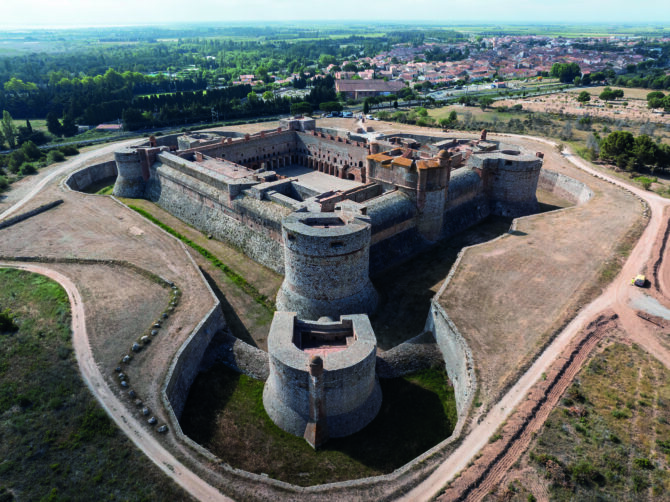
Built by the Spanish monarchs to hold France at bay, the Forteresse de Salses is one of the most innovative examples of military architecture in southern France. Five centuries on, it holds, paradoxically, two nations’ histories
Up in the Corbières mountains, the 15th-century Catholic Monarchs of Spain had one problem: how to keep an eye on the French when the threat of war loomed over the region. They settled on building an immense fortress with sweeping views that would double as a stronghold and prison. Today, the Forteresse de Salses is a treasured site in the care of the Centre des monuments nationaux – and this year, visitors can explore more of the monument than ever before, with the keep opening for self-guided visits for the first time.
STRATEGY IN THE STONES
Salses sits in a strategic corridor through the Corbières that formed a natural border between the French and Spanish kingdoms. Today, it lies between the Aude and Pyrénées-Orientales departments, with lagoons on one side and rocky mountains on the other.
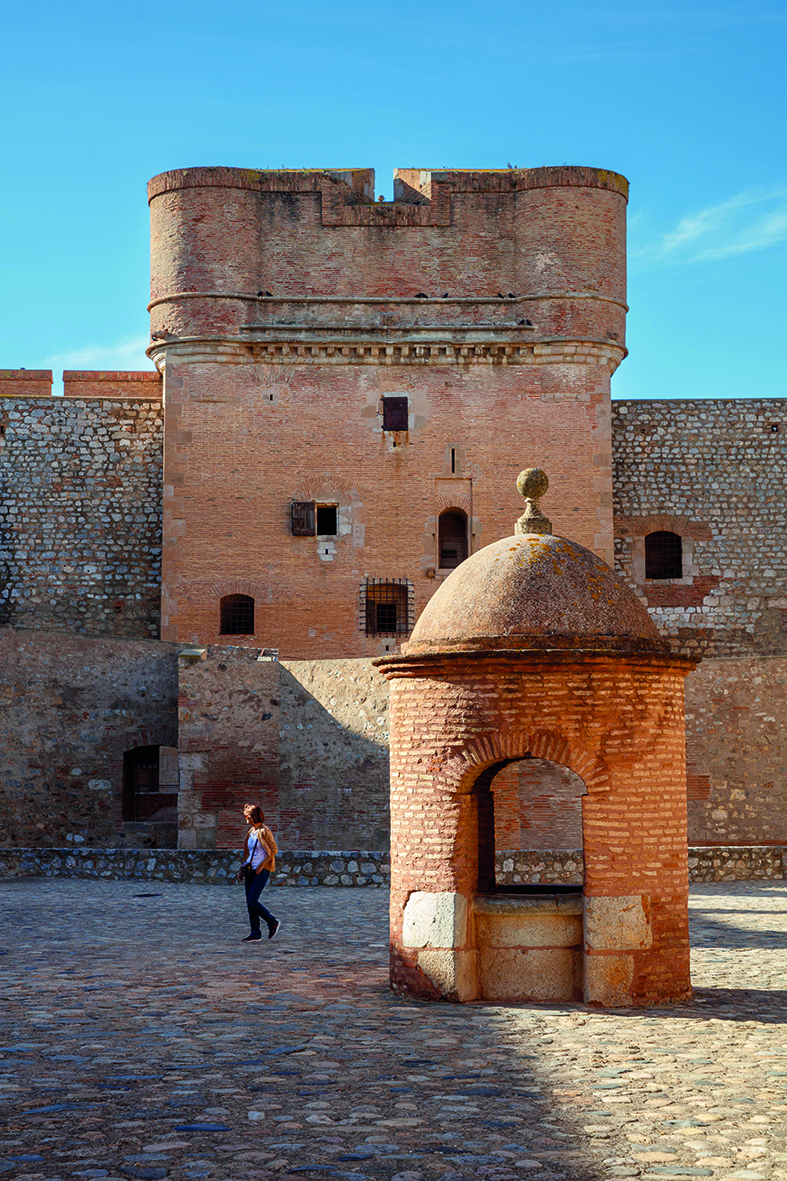
The fortress’s dungeon and well
War broke out in 1495, and Ferdinand II of Aragon and Isabella of Castile placed Ramiro López, head of the royal artillery, in charge of the project. Who better to build a fortress than a man trained to destroy them? López was instructed to build something that could withstand the new cast-iron artillery. Construction was completed some six years later, in 1503, and the fortress was deemed impregnable. That same year, Salses withstood its first siege. A century later, in 1639, the French succeeded in capturing it, though the Spanish retook it a year later before it finally fell to the French again in 1642. The Treaty of the Pyrenees, signed in 1659, sealed its fate by pushing the border 60km south.
ARCHITECTURAL LAYERS
What sets Salses apart architecturally is its blend of influences. Built when medieval castle design was giving way to the age of artillery, it carries two clear DNAs: the keep, rounded corner towers and internal division are Castilian in tradition, while the Italian engineers brought in by Charles V imposed more geometric rules on the defensive works. Moorish construction techniques can also be spotted. The result is a surprisingly low-lying fort, half buried in the ground to absorb cannon fire. Inside, the seven levels form a maze of corridors and defensive chicanes.
France’s greatest military engineer, Vauban, dismissed Salses as “useless” and recommended its destruction. But the demolition cost was too high and it survived, serving as a prison before becoming a powder store until it was listed as a monument historique in 1886.
This year, visitors can discover the fortress in a new way. The keep has opened for self-guided visits for the first time, while new interpretation panels, enhanced lighting and a large bronze tactile model in the parade ground make it easier than ever to appreciate the monument’s remarkable architecture and military ingenuity.
Lead photo credit : The Forteresse de Salses combines French and Spanish history
Share to: Facebook Twitter LinkedIn Email
More in Catalan history, Centre des Monuments Nationaux, Corbières, Discover the secrets of France's heritage sites, Forteresse de Salses, fortress, French monument, military architecture, Roussillon, Vauban
Related Posts



Leave a reply
Your email address will not be published. Required fields are marked *