
8 Untranslatable French Words
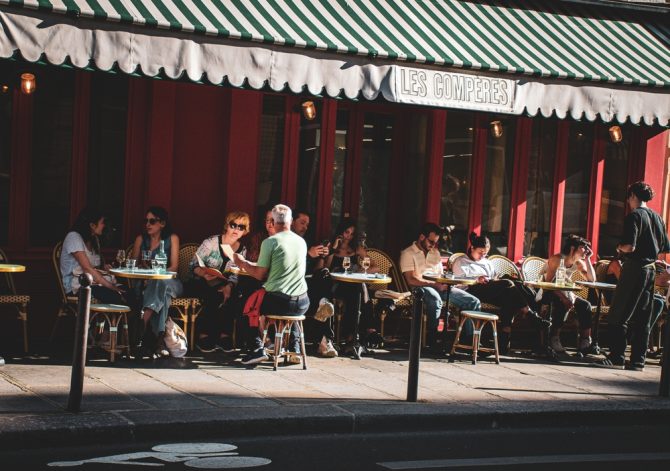
Some French words or expressions simply do not translate into a single word in English but convey a depth of meaning that only the French can understand. Here, we explore 8 untranslatable French phrases and their significance.
As somebody who grew up with two languages and two cultures, I’ve always been fascinated by untranslatable words because they carry the emotions, attitudes and cultural subtleties of a people – layers of meaning that go beyond a single word in another language. Here are a few of my favourite untranslatable French expressions.
- Savoir-vivre
Le savoir-vivre is knowing how to act appropriately according to social and cultural standards. A blend of manners and etiquette, savoir-vivre is also about being polite and mindful of others.
“Dire bonjour avant de commander son pain à la boulangerie, c’est faire preuve de savoir-vivre.”
- Je-ne-sais-quoi
The expression refers to an indescribable quality that makes someone or something particularly interesting or attractive. It’s used to express how difficult it is to nail down and to explain why that quality is so charming.
“Son sourire a un certain je-ne-sais-quoi qui la rend inoubliable.”
- Bon vivant
A bon vivant (feminin, bonne vivante) refers to someone who enjoys the pleasure of life, from good food or drink to spending quality time with people they love. Not quite the same as hedonism, it’s all about making the most of the good things and is often said of someone who likes to eat well.
“Michel est un bon vivant, il apprécie le bon vin.”
- Terroir
A uniquely French concept, le terroir encompasses all the characteristics of a piece of land that then influences the food and drink that is produced in that specific area, from geology and weather, to the way the land is worked by men and farm animals. Le terroir is particularly important for wine-making or cheese-making.
“Le terroir de Bourgogne s’exprime dans la minéralité de ses vins.”
- Dépaysement
Another uniquely French expression, le dépaysement literally means you are feeling outside of your home country. In other words, you are in surroundings that are totally different from what you know and have seen before.
“Ce voyage m’a complètement dépaysé !”
- Tartiner
Referring to the traditional bread “tartines” often enjoyed at breakfast time, the verb tartiner means to spread something soft on a piece of bread, ie butter, jam or chocolate spread. You could also say it when you’re lathering yourself with sunscreen in the summer!
“Il adore tartiner de la confiture sur sa tranche de pain.”
- Retrouvailles
This conveys the deep joy of reuniting with people you haven’t seen in a long time. It’s not just about the actual meet-up, retrouvailles carries all the emotions that can crop up during such a reunion.
“Cela m’a fait beaucoup de bien ces retrouvailles en famille.”
- La flemme
This slang term expresses a kind of laziness but not only ; it’s really about ‘wanting to do nothing’. Unlike laziness which can be perceived as a character trait, la flemme is a little more subtle and, most importantly, a temporary state.
“J’ai la flemme de faire la vaisselle ce soir.”
So next time you find yourself searching for the right word, why not borrow from French? While English may lack direct equivalents for these expressions, their meanings are universally felt. These phrases simply open the door to a deeper understanding of life…à la française.
Have I missed an untranslatable French expression that you love? Leave a comment!
Lead photo credit : Borrow some French phrases to express life à la française © Shutterstock
Share to: Facebook Twitter LinkedIn Email
More in French culture, french language, Language Learning
Related Posts




Leave a reply
Your email address will not be published. Required fields are marked *