
Victor Hugo’s Life as an Architectural Visionary
Sponsored
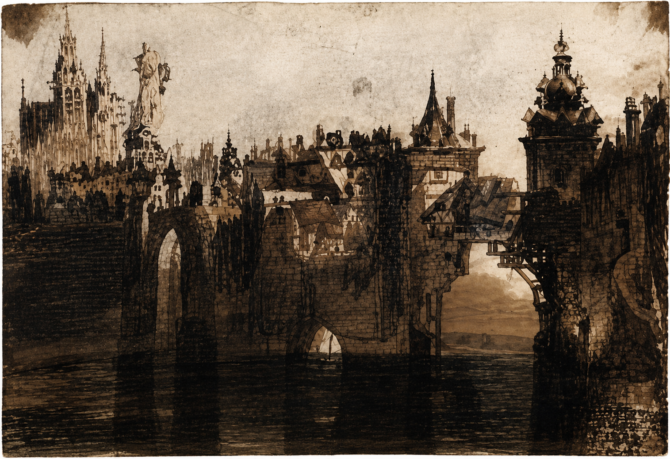
When we think of Victor Hugo, we think of soaring prose and groundbreaking literary works such as Les Misérables. But here’s something that might surprise you: Hugo was also a prolific visual artist. Across hundreds of sketches, watercolours and drawings made throughout his life, he recorded buildings and ruins encountered on his travels or that sprang from his imagination. Many were transcribed onto the pages of his novels, others never left the confi nes of his sketchbooks. This summer, the Maison de Victor Hugo in Paris is inviting visitors to discover this lesser-known side to the writer. ‘Hugo et l’Architecture, de la pierre à la plume’ (from stone to pen) runs from June 11 to November 22. It is the latest in a series of exhibitions the museum has devoted to Hugo’s visual work, following ‘Victor Hugo Dessins, Dans l’intimité du génie’ in 2023 and ‘Hugo décorateur’, which closed this spring. Together, they build a compelling portrait of a man for whom writing, drawing and building went hand in hand.
WRITER’S HOME
The Maison de Victor Hugo occupies the apartment at 6 place des Vosges where Hugo lived from 1832 to 1848. Now part of the Paris Musées network, which encompasses 12 municipal museums and two heritage sites, the institution holds more than 50,000 of the writer’s works of all kinds: paintings, sculptures, manuscripts, photographs, personal objects and an extensive library. The Place des Vosges apartment has been preserved with furniture and objects from Hugo’s time, creating an intimate sense of his world. Recent renovations have also added a garden and café.
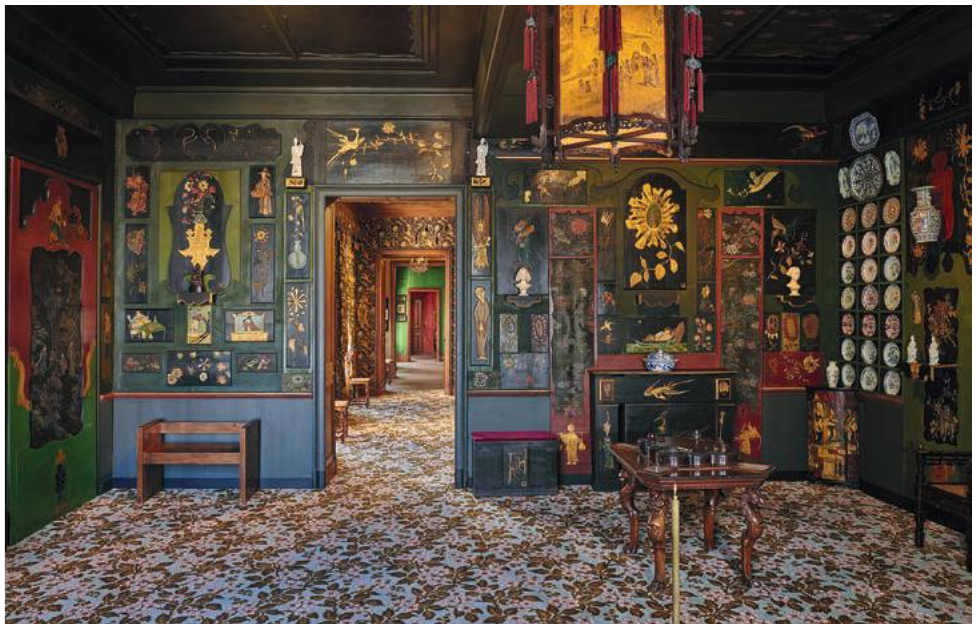
Hauteville House, Victor Hugo’s home in Paris © MAISON DE VICTOR HUGO – HAUTEVILLE HOUSE / VILLE DE PARIS
FIVE CHAPTERS
The exhibition unfolds across two floors in five themed sections that trace Hugo’s passion for architecture, from his earliest sketchbooks to his fi nal, unfulfi lled dreams. The journey begins with ‘Choses vues’ (things seen), presenting the travel drawings Hugo made on the road in the 1830s and 1840s, his notebooks dense with keeps, belfries and towers. Perhaps less expected is the revelation of Hugo as a collector of architectural photography, with previously unseen prints of cathedrals and landscapes on display.
The second section, ‘De l’édifi ce à l’écriture’ (from building to writing), draws a connection between his visual and literary worlds. The centrepiece is, of course, Notre-Dame de Paris. Published in 1831, the novel wasn’t simply set in the cathedral, it made the cathedral its protagonist. Also on show here is one of the exhibition’s more unique delights: drawings in which the letters of the alphabet become architectural forms, columns and arches built from typography. And for those unaware that Hugo illustrated his own work, a section brings together drawings made in dialogue with texts such as La Légende des Siècles and Les Travailleurs de la mer, along with sketches for the décor of his play, Ruy-Blas. The exhibition then moves into more dreamlike territory. ‘Du réel à l’imaginaire’ (from the real to the imaginary) shows how, during his years The Maison de Victor Hugo, housed in the author’s former home on the Place des Vosges in Paris Ville au pont rompu (City with a Broken Bridge), a drawing by Victor Hugo from 1847 of exile in Jersey and Guernsey in the 1850s and 1860s, Hugo began reconstructing from memory the châteaux and ruins he had sketched years before, reinventing them into something more personal. ‘Architectures visionnaires’ goes further still, dipping into pure fantasy: oriental temples, cut-out silhouettes, and the rarely exhibited, monumental and slightly haunting Le Burg à la croix.
The final section takes visitors into the apartment itself, where photographs by Hugo’s grandson, Jean-Baptiste, document Hauteville House in Guernsey, the home Hugo transformed into a medieval-inspired work of art. Also on display for the first time: the original plans by architect Leidenfrost for a house Hugo dreamed of building at the end of his life, but never did.
From France Today Magazine
Lead photo credit : One of Victor Hugo's sketches
Share to: Facebook Twitter LinkedIn Email
More in architecture, drawing, exhibition, Maison de Victor Hugo, Notre-Dame, Paris Musées, Place des Vosges, Victor Hugo
Related Posts

Leave a reply
Your email address will not be published. Required fields are marked *