
5 Must-Visit Places for Science in Paris
From the pioneering work of Marie Curie and Louis Pasteur to today’s research into space, medicine, climate and technology, scientific discovery has long been woven into the country’s history.
And there is perhaps no better place to explore that story than Paris.
Away from the galleries, grand boulevards and famous monuments, the French capital is home to historic laboratories, remarkable collections and interactive museums where visitors can discover the people and ideas behind some of the world’s most important scientific advances.
Whether you are fascinated by Marie Curie, intrigued by the machines that transformed everyday life or simply looking for something different to explore on your next visit, here are five places to discover another side of Paris.
1. Cité des sciences et de l’industrie
For an immersive introduction to science, head to the Cité des sciences et de l’industrie in the Parc de la Villette. One of Europe’s largest science museums, it brings science and technology to life through interactive exhibitions, experiments and hands-on displays covering everything from space and the human body to climate, mathematics and innovation. The museum also houses the Cité des enfants, with dedicated spaces designed to introduce younger visitors to science through play and exploration.
2. Fête de la science
The Cité des sciences et de l’industrie is also one of the Paris venues taking part in Fête de la science, France’s annual celebration of science and research. Taking place from 2 to 12 October 2026, the nationwide festival brings together scientists, researchers and the public through talks, demonstrations, workshops and other activities. At the Cité, visitors can take part in a programme of events offering a chance to explore scientific discoveries and ideas in an accessible, engaging way.
3. Musée Curie
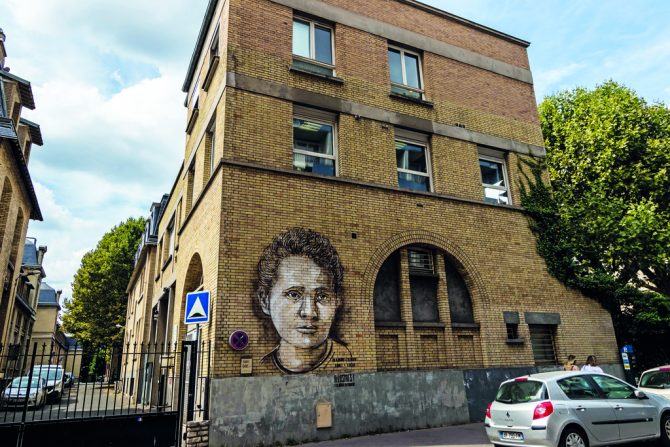
Few scientists are as closely associated with Paris as Marie Curie.
At the Musée Curie in the Latin Quarter, visitors can step inside the historic laboratory where Curie and her colleagues carried out research into radioactivity. The museum explores her life and work, as well as the scientific legacy of the Curie family.
Curie remains one of the most celebrated figures in the history of science. Born in Warsaw, she made her scientific career in France and became the first woman to win a Nobel Prize, later becoming the first person to win Nobel Prizes in two different scientific fields.
The museum offers a more intimate experience than some of the capital’s larger institutions, bringing visitors closer to the people behind the discoveries. It is also part of the Institut Curie, which continues to conduct cancer research today, creating an unusual link between the history of scientific discovery and contemporary research.
4. Musée des Arts et Métiers
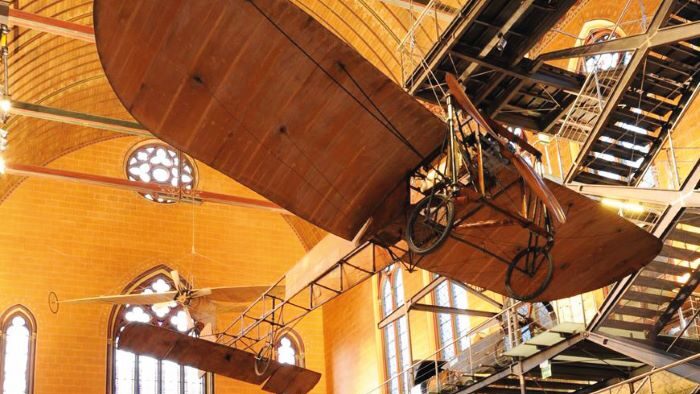
Science and technology are not only about laboratories. At the Musée des Arts et Métiers, they are also about the machines, inventions and engineering that have transformed everyday life. Housed partly within the former priory of Saint-Martin-des-Champs, the museum contains an extraordinary collection of scientific instruments, mechanical devices, transport exhibits and industrial technology.
Among its highlights is the historic sphere used in Foucault’s famous 1851 Panthéon experiment demonstrating the rotation of the Earth. The museum also traces the development of transport, telecommunications and energy, offering a fascinating journey through the inventions that helped shape the modern world.
For visitors interested in how ideas become practical objects, it provides a different perspective on France’s scientific heritage.
5. Palais de la Découverte
The Palais de la Découverte offers another way to experience science in Paris, with demonstrations and activities designed to make complex ideas accessible to a wide audience. Created in 1937, the institution has a long history of bringing scientific knowledge to the public. Its programme spans subjects including physics, chemistry, mathematics, biology and astronomy.
The Palais is currently undergoing a major transformation as part of the renovation of the Grand Palais, with a full reopening planned for spring 2027. In the meantime, special events and exhibitions continue to give visitors a taste of what is to come.
The Fête de la science is one such opportunity, with its programme of experiments, demonstrations and encounters with researchers offering a more hands-on introduction to the world of science.
Discover another side of Paris
Paris may be better known for its art, architecture, fashion and gastronomy, but its scientific history is just as rich.
From Marie Curie’s laboratory to the vast questions of space and climate explored at the Cité des sciences, these institutions reveal a different side of the French capital. They also offer a reminder that the country’s reputation for scientific discovery is not confined to universities and research centres. It can be found in historic laboratories, remarkable collections and museums designed to make complex ideas accessible to everyone.
For visitors returning to Paris, or those looking to explore beyond the city’s best-known attractions, following its scientific story offers another way to understand the capital – and the people and ideas that have helped shape the modern world.
Lead photo credit : A graffiti portrait of Marie Curie on the Musée Curie in Paris,
Share to: Facebook Twitter LinkedIn Email
More in Events, French technology, museums in France, museums in Paris, science
Related Posts


By Sophie Lee
Leave a reply
Your email address will not be published. Required fields are marked *