
How Tiffany Black Turned French Market Crates Into a Work of Art
For Tiffany Black, France has been part of her life for as long as she can remember. She first came to the country as a child in the 1970s with her artist family, developing an early connection with the landscapes, markets and light of the south. Fifty years later, she continues to live and work between France and England.
That longstanding relationship with France now comes together in There Is No Map, Tiffany’s new exhibition at the Museum of Modern and Contemporary Art (MAMC) in Cordes-sur-Ciel. Bringing together sculpture, sound, film, prints, pastel and charcoal drawings, the exhibition explores ideas of travel, displacement, memory and what it means to feel at home.
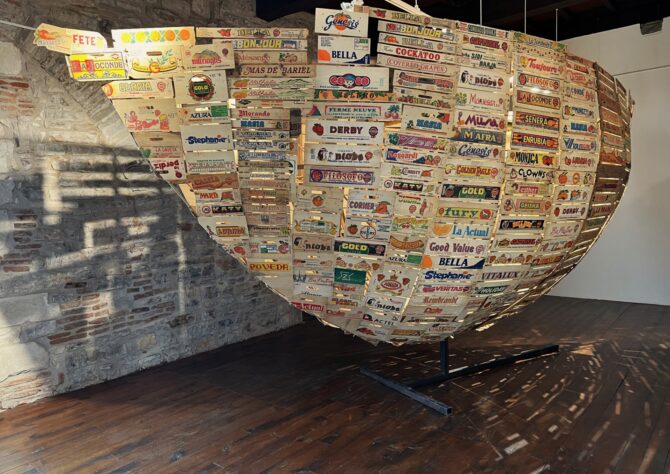
At its centre is an extraordinary sculptural boat made from more than 1,000 pieces of French market crates, or cageots, collected by Tiffany over 25 years. It is a remarkable story of transformation: pieces of fragile wood gathered from markets across the Aveyron, Tarn and Tarn-et-Garonne have been brought together to create a contemporary work measuring 5.5 metres by 2.8 metres.
“I think that we each live our lives defining our own real, physical journeys, but also those that are imagined, that we carry within us, that are not chartered. For some people the question of where home is, is increasingly hard to answer.”
It is a question that sits at the heart of There Is No Map.
How the boat came to be
Tiffany first encountered the cageots through the markets she visited growing up in the south of France. Her mother, the artist Jacqueline Black, would collect the wooden pieces and use them to create small, beautifully decorated shelf sets.
When her mother died, Tiffany was left with a couple of bags of the fragile pieces.
“I began ‘playing’ with them, sorting and selecting them and then I decided I would just continue to build my own collection over the next 25 years.”
The idea of turning them into a boat came later. During travels to Turkey and Venice, Tiffany saw wide, flat market boats carrying cageots filled with fruit and vegetables.
“I recognised how they held such a sense of journeying, exchange, and yet were so fragile, and the cases often seen as redundant, yet so useful, so resilient.”
Made from cageots and bamboo, the finished boat balances on a single metal upright.
“Although it takes the form of a boat, it also carries the memory of generations of local market traders journeying with their produce,” Tiffany says. “For me, it is both rooted in this surrounding and imbued with a sense of journey.”
A life between France and England
That sense of journeying runs throughout Tiffany’s work. She first came to France as a child in the 1970s, and the experience stayed with her.
“From a young age I was very aware of the different sense of warmth, space and light in the South of France, compared with England. This has continued to be important to me and the way I work, both outdoors and in the studio.”
For the past 25 years, Tiffany has had a studio in Laguépie, at the confluence of the Aveyron and Viaur rivers.
“It is a wonderful village located between the more open, hot, vine-filled fields of the Tarn and the wilder, rich, green hills of the Aveyron.”
Her life between the two countries is also reflected in the title There Is No Map. For Tiffany, maps may define countries and routes, but they cannot account for all the journeys people make, particularly those that take place internally.
“The exhibition title reflects the idea that, although maps define countries and routes, they are human constructions – both political and personal. I think that we each live our lives defining our own real, physical journeys, but also those that are imagined, that we carry within us, that are not chartered. For some people the question of where home is, is increasingly hard to answer.”
Three rooms of sound, film and art
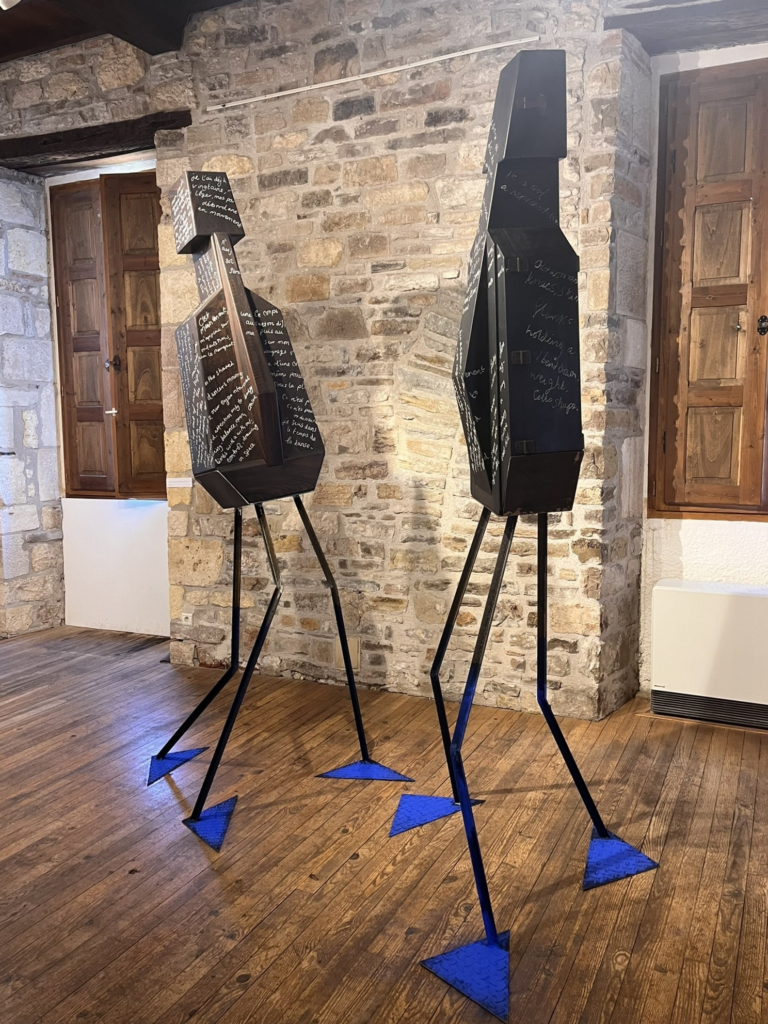
While the boat provides the central focus, There Is No Map extends across three temporary exhibition rooms at the MAMC, bringing together sculpture, sound, film, prints, pastel and charcoal drawings.
Sculptures, films, drawings and paintings come together as an ensemble to make a moving statement on how we travel through life and what we make of it. For Tiffany, working across different mediums offers different ways of exploring an idea.
“As a contemporary artist I am excited by exploring the different possibilities different mediums can give you.”
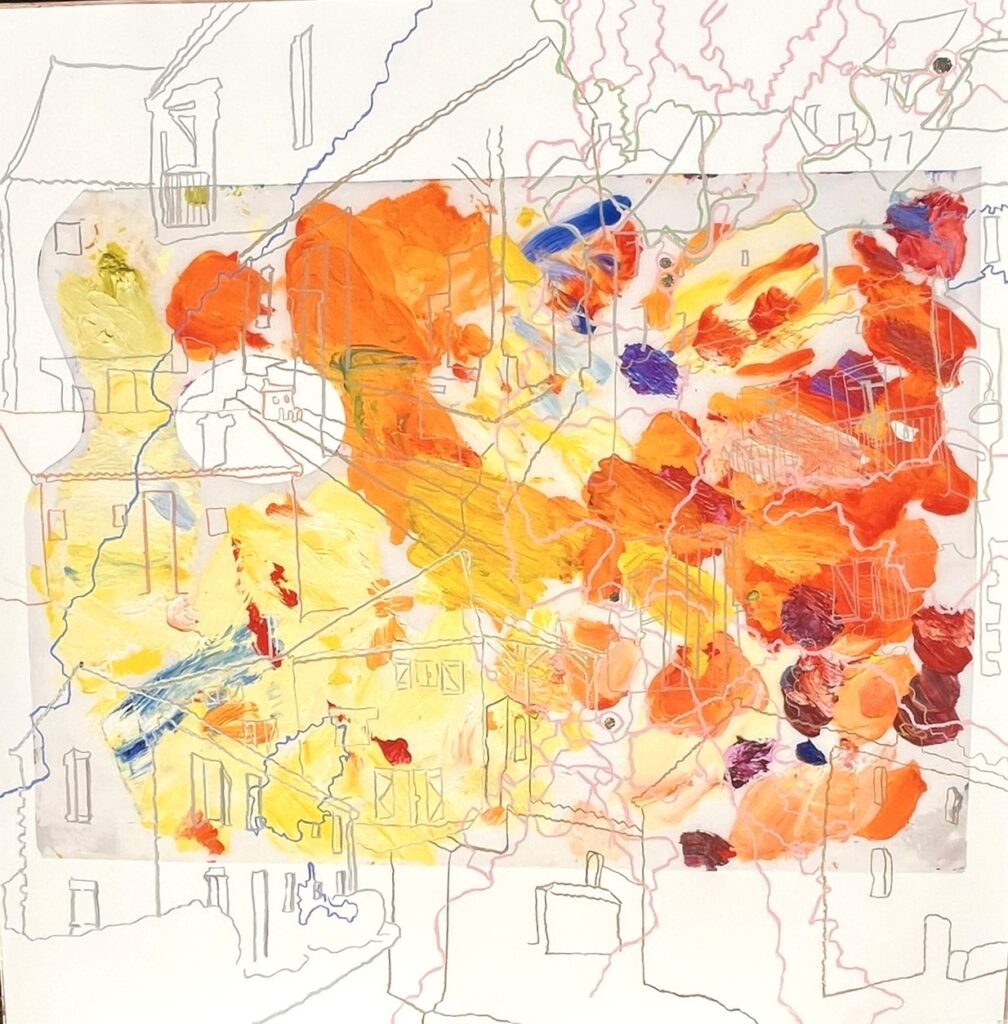
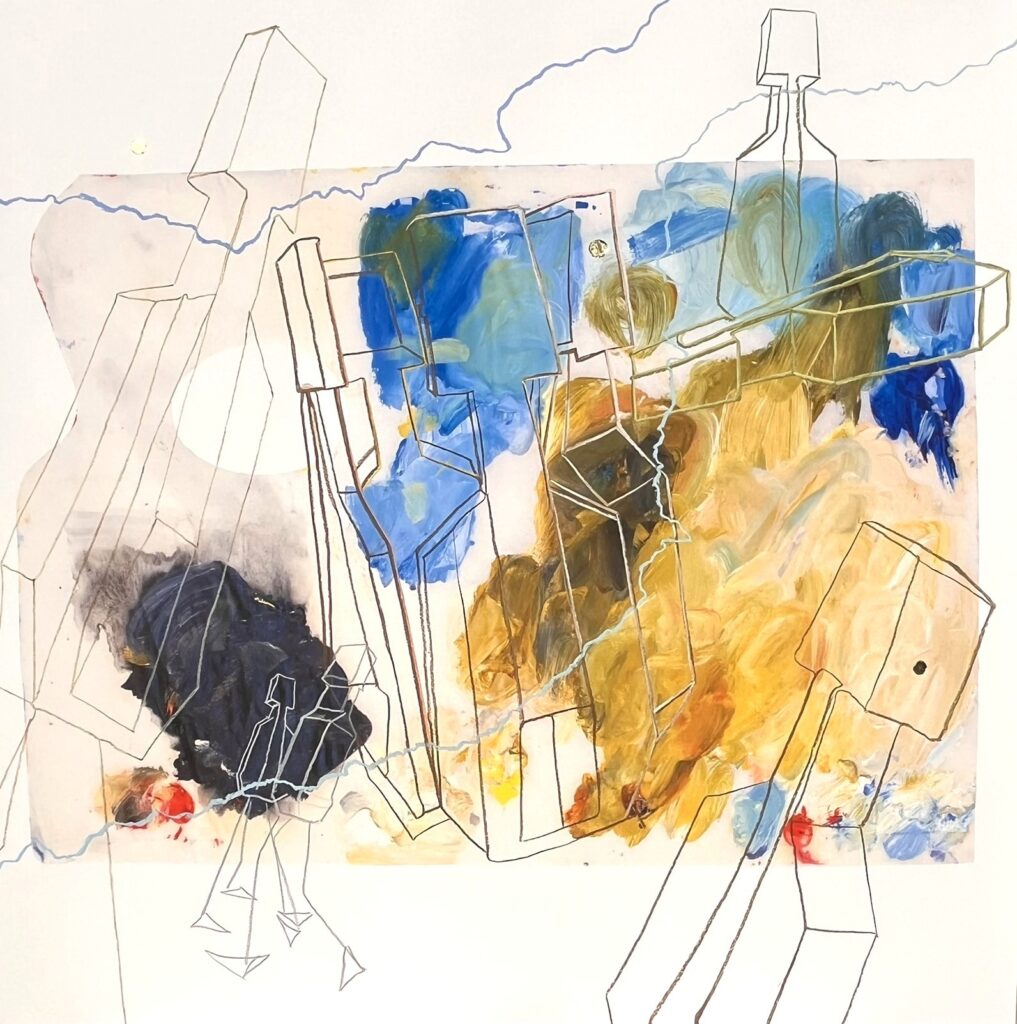
That variety also creates a direct connection with Tiffany’s family history and her longstanding relationship with the landscape around Albi. Her mother, Jacqueline Black, was also working as a painter in the same area. Tiffany has retained her mother’s discarded oil paint palettes, creating new works from the traces of her mother’s practice, carrying her legacy through her own work.
Collaborating with her mother’s colour palettes, Tiffany has created images of two generations looking at this landscape through colour. It is another way in which There Is No Map brings together memory, place and the unique experience of seeing a landscape across generations.
That sense of discovery is closely tied to the physical experience of making the work.
“If I am sat in a field plein-air painting, it is for me about being still and focused on looking beyond myself. And then in the studio with paper and charcoal, mark making and getting excited about the contrasts and depth of black is again a very different sensation. Being in a recording studio situation or cutting metal in the yard is again different in smell, touch and sound. Each different working environment, and the different materials used is a bit like speaking in a different language; you might be trying to articulate the same thing, but you inter-act, sense things differently and often new ideas and understandings come through.”
A personal connection to Cordes-sur-Ciel
The exhibition has a particularly personal significance for Tiffany because of her longstanding relationship with Cordes-sur-Ciel. She has lived on and off near the town for many years and worked there as a teenager.
Her mother, Jacqueline Black, was commissioned in 1989 to make a work celebrating the bicentenary of the French Revolution. It is now part of the MAMC’s permanent collection.
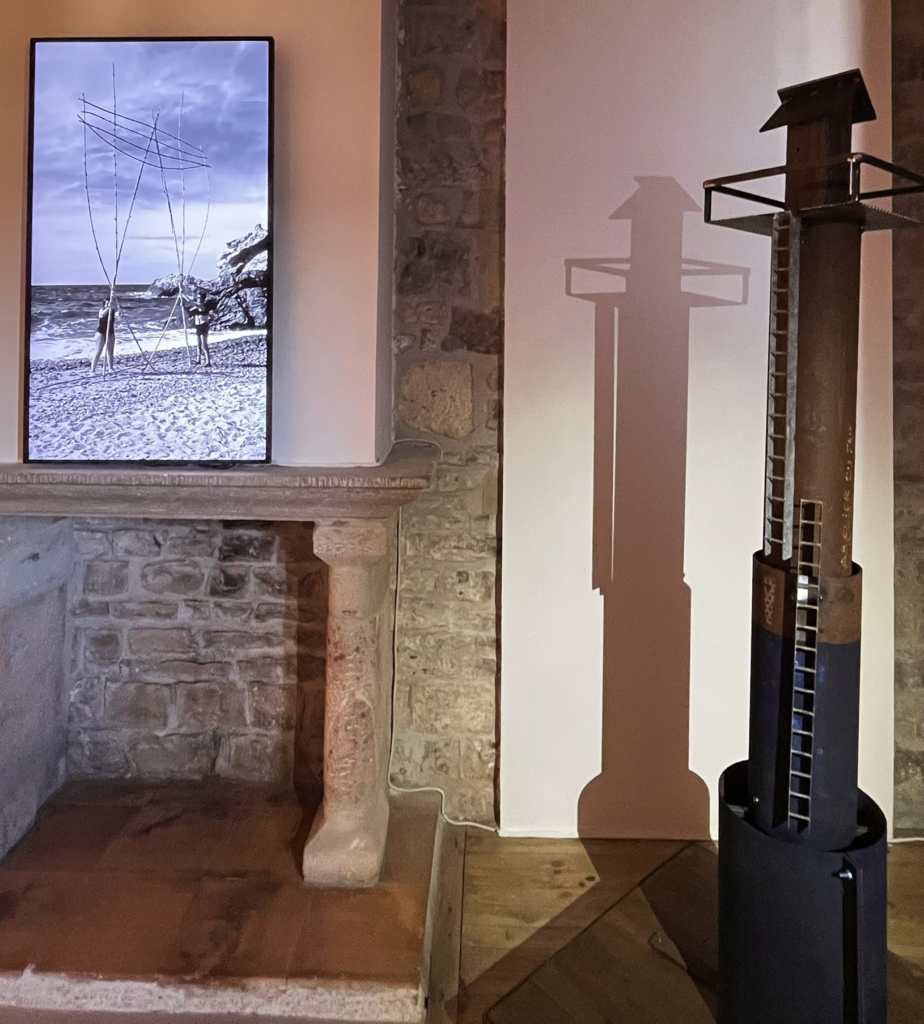
There Is No Map is the final exhibition in a series of four marking the 20th anniversary of the MAMC in Cordes-sur-Ciel. The exhibition is displayed inside the Maison du Grand Fauconnier, a 12th-century stone building whose historic architecture provides the setting for Tiffany’s contemporary installation.
Finding a sense of home
For Tiffany, the questions of travel and displacement ultimately lead back to the idea of home. After five decades between France and England, she does not see being at home as something that can necessarily be defined by a particular place.
“I think that the feeling of being ‘at home’ is different for each of us. For some it is a fixed location and for others, whether by choice or not, it is a temporary place that must be adapted to. Perhaps being ‘at home’ depends more on how you feel rather than where you are.”
It is a central theme that runs through There Is No Map, from the fragile boat made from market crates to the sounds, landscapes and other works surrounding it. For Tiffany, the exhibition is ultimately an invitation to consider the journeys that shape our lives, both physical and personal.
“I hope visitors to the exhibition enjoy it, and perhaps reflect on their own life journeys, and perhaps those of others and the different circumstances in which they are made.”
Visit There Is No Map
There Is No Map runs from 18 September to 1 November 2026 at the Museum of Modern and Contemporary Art (MAMC), Maison du Grand Fauconnier, 39 Grand Rue Raymond VII, 81170 Cordes-sur-Ciel, Tarn, France.
The museum is open in the afternoon from 2pm to 6pm, Monday and Wednesday to Sunday, and is closed on Tuesdays.
Discover a deeply personal exhibition shaped by Tiffany Black’s lifelong connection to France, bringing together sculpture, sound, film, prints, pastel and charcoal works, as well as a creative dialogue between two generations of her family.
Share to: Facebook Twitter LinkedIn Email
More in art, contemporary art, design, france, Museum of Modern and Contemporary Art, sculpture
Related Posts
By Sophie Lee
Leave a reply
Your email address will not be published. Required fields are marked *