
Witness the Architectural History of Calvados
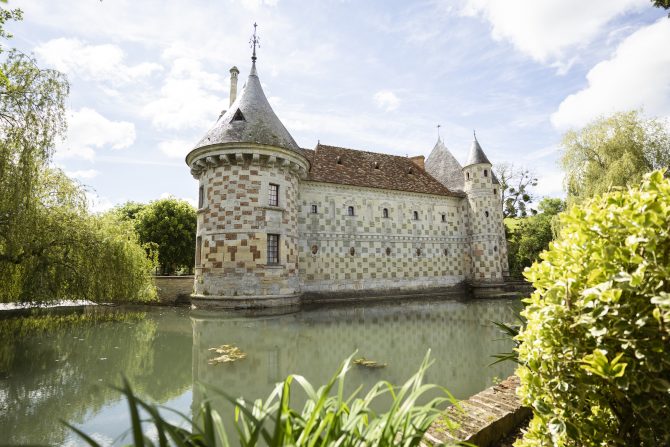
In the northwestern region of Normandy lies the département of Calvados, an architectural tapestry that reveals a region with rich history, for those who know where to look. With medieval fortresses, Belle Époque seaside villas, timber-framed rural homes and refined classes, the architecture of Calvados reveals the stories of the past, speaking for the people who can no longer tell them.
Creating The Foundation of a Region with Local Materials and Craftsmanship
Pierre de Caen (Caen Stone) is a fine limestone that was used to construct abbeys, churches and civic monuments across the region. Giving its most important monuments a luminous quality that binds the architecture to the land.
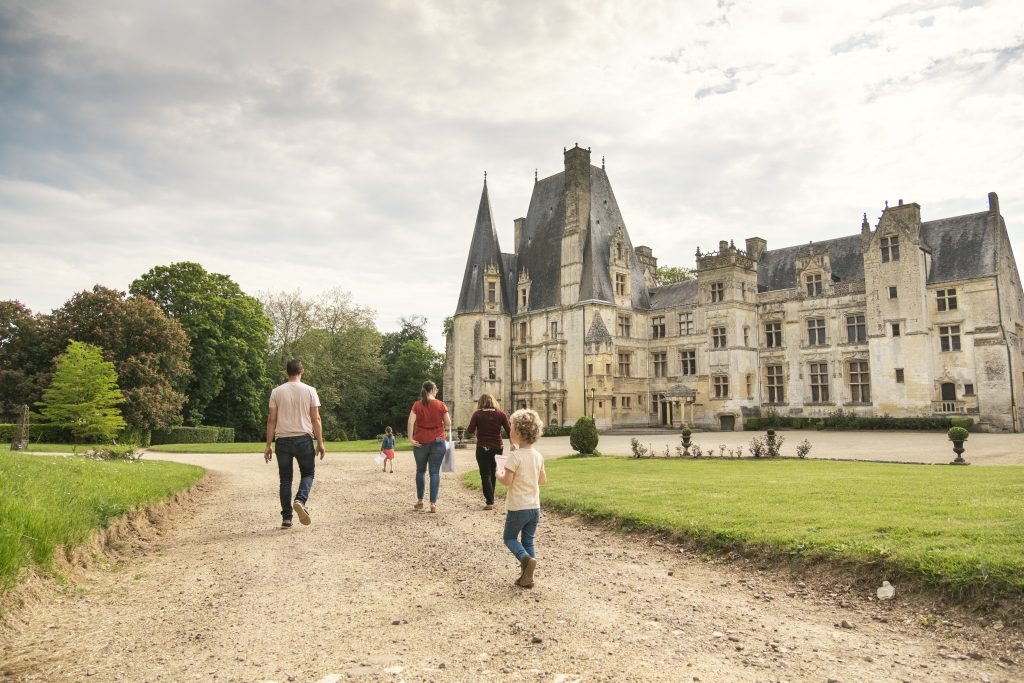
Learn about Caen Stone in Normandy here.
Timber-framed houses are also a trademark of Norman and Pays d’Auge villages. These charming half-timbered houses were made with traditional craftmanship, local materials and reflect centuries of traditional rural life in this department.
Read more about Normandy’s traditional houses here.
Calvados’ Architectural Epochs
The regional architecture bears the marks of a long and varied history, with each historical period leaving its distinctive mark on its coasts and rolling landscapes. The medieval era is represented by its imposing castles and fortresses, such as Château de Falaiseand Château de Caen, which were symbols of societal power as well as military strength.
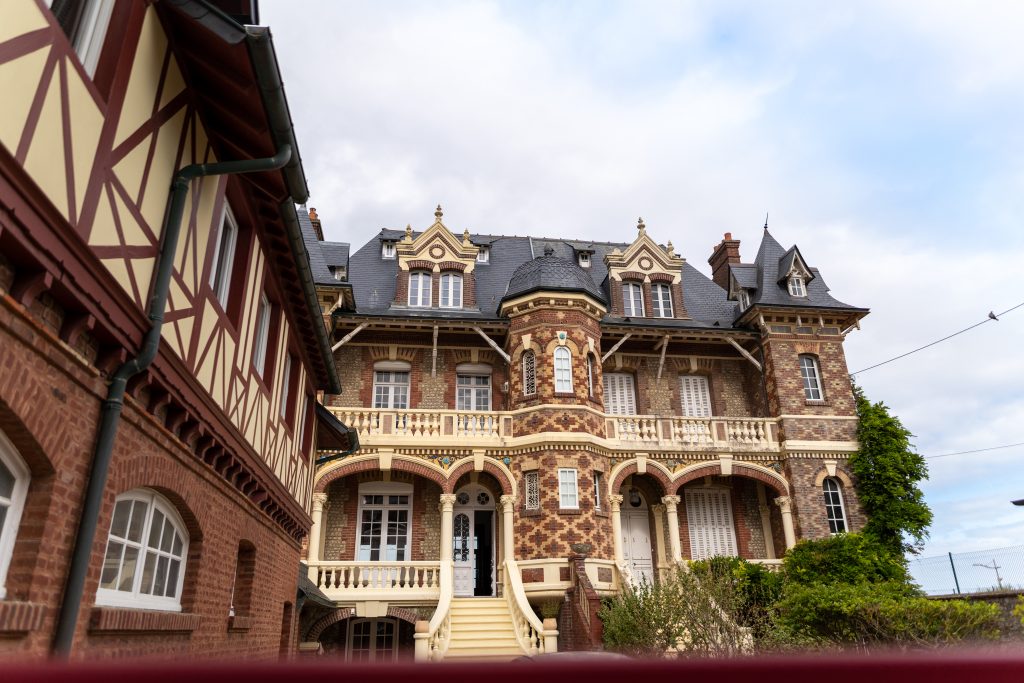
In the 19th and 20th century, Calvados’ coastal towns experienced a surge in tourism and the growth of leisure culture, embracing modern lifestyles, which led to the construction of elegant Belle Époque villas. With decorative façades, turrets and bow windows framing spectacular seas views, these villas remain cherished landmarks throughout the region.
During the Second World War, the fortified farms in the Bessin played a strategic and essential role in sheltering civilians from conflict and allowing troops to monitor enemy movements behind their thick walls. Originally built to protect inhabitants and livestock from medieval raids, these farms later proved to be vital in modern warfare, as their historic defensive features adapted to meet the demands of a 20th century battlefield.
This département’s historic buildings tell the stories of generations past, reflecting the transformations and enduring traditions that have shaped Calvados over the centuries. The built heritage in Calvados is a living testament to its rich identity, regional history and craftsmanship.
Lead photo credit : @Photo911_Calvados Attractivité
Share to: Facebook Twitter LinkedIn Email
More in architecture, Calvados
Related Posts

Leave a reply
Your email address will not be published. Required fields are marked *