
The Little Catalan Village that Attracted Countless Artists
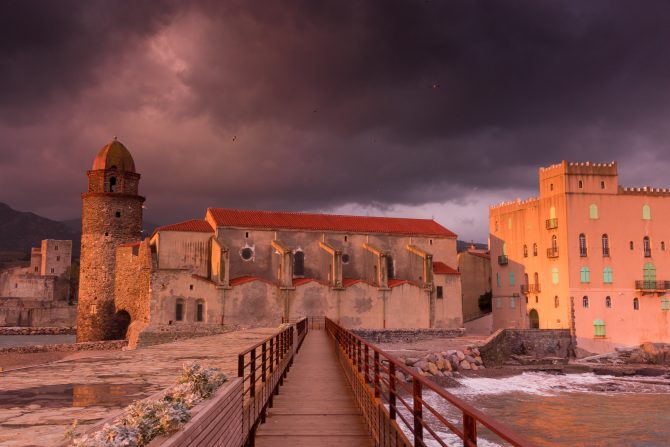
Collioure, a fishing village nestled against the foothills of the Albères range in the Pyrenees, has long attracted artists who flocked here to capture the special light that bounces off the Mediterranean.
“Come! Before you waste away. Come to Collioure.” Henri Matisse to fellow artist, André Derain, 1905
Simple words on a postcard led to a new school of art.
Henri Matisse could not have known that his simple message on a postcard to fellow artist and close friend, Alain Derain, would begin a period of intense collaboration between the two artists in 1905. Nor could Matisse have known that their art would result in a movement that countered the French Impressionism of the time to the point of being scornfully named Fauvism, meaning wild beast. Both artists used bold, non-naturalistic colors, a significant change from the artistic conventions of the time.
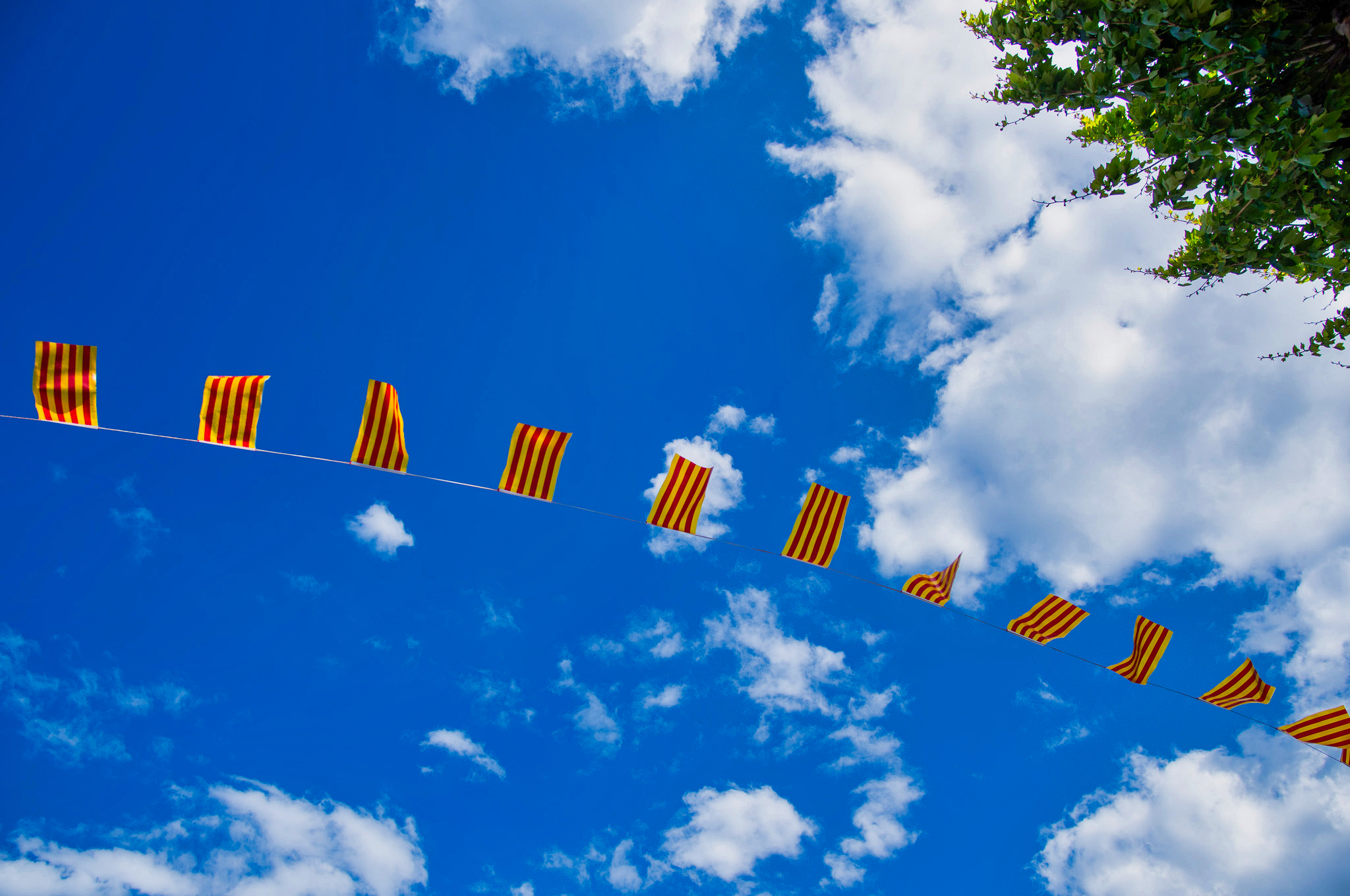
The flags of Catalonia against the blue sky of Collioure. © Ava Kabouchy
Collioure, an antidote to the grey skies of the north
Suffering from a malady that might have been depression or neurasthenia, today called fibromyalgia, Derain remained fretful, irritable, and sleepless in 1904 after three years in military service, though his exact role in the military is not documented. What is known, however, is that he had to put aside his artistic training and pursuits during those years. Still only twenty-five years old when he received the postcard from Matisse, ten years his senior, Derain left the grey winter skies of Chatou, his hometown outside Paris, for the Mediterranean sun of Collioure in July 1905 to create no fewer than thirty canvases that summer.
It was during the exhibition of their work in the 1905 Salon d’Automne where the art critic, Louis Vauxcelles, first coined the word ‘fauves’ to derisively characterize the two artists and their artistic style. Matisse once said, “When I put a green, it is not grass. When I put a blue, it is not the sky.” Both Matisse and Derain knew, maybe intuitively, that color is a powerful tool in art because color can create emotions and moods, and they used color to express their emotions. As Derain said, “I do not paint what I see, but what I feel.”
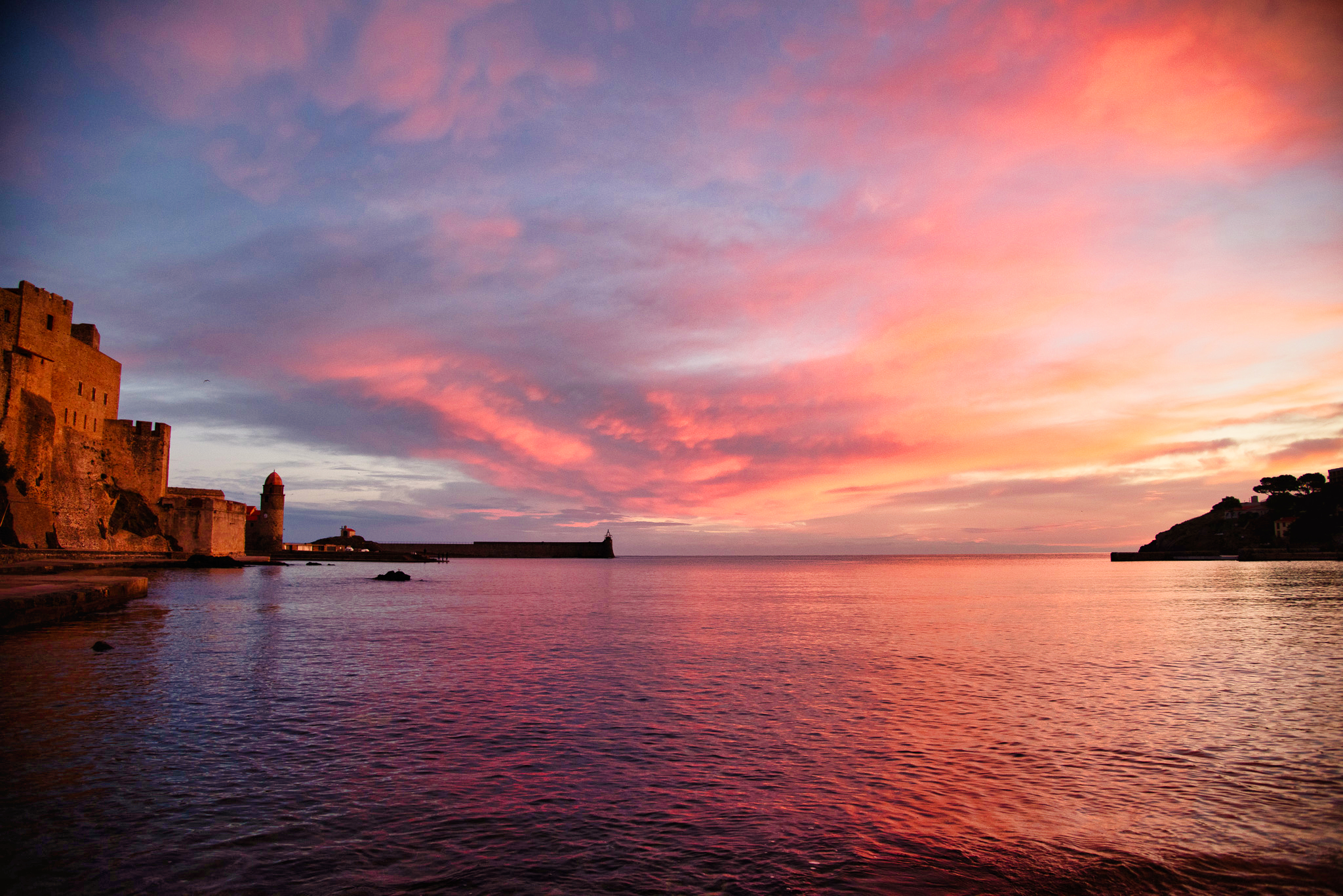
Early morning sunrise over the harbor, pink and blue skies reflected in the Mediterranean © Ava Kabouchy
Surpassing shadows
Like his friend Henri Matisse, André Derain was captivated by the quality of the light of Collioure and used it prolifically in his painting that summer of 1905. As a northerner, he might not have experienced the light of the South of France before, which prompted him to say these words to Maurice de Vlaminck, another French artist who became part of the Fauvist moment, on arriving at Collioure, “This place, its people with bronzed faces, skin colours of chrome yellow, orange, deeply tanned; blue-black beards … boats, white sails, multicoloured barques,” he expressed to Vlaminck. “But it’s the light, a pale gilded light, that suppresses shadows. The work to be done is fearful. Everything I’ve done up to now strikes me as stupid.”
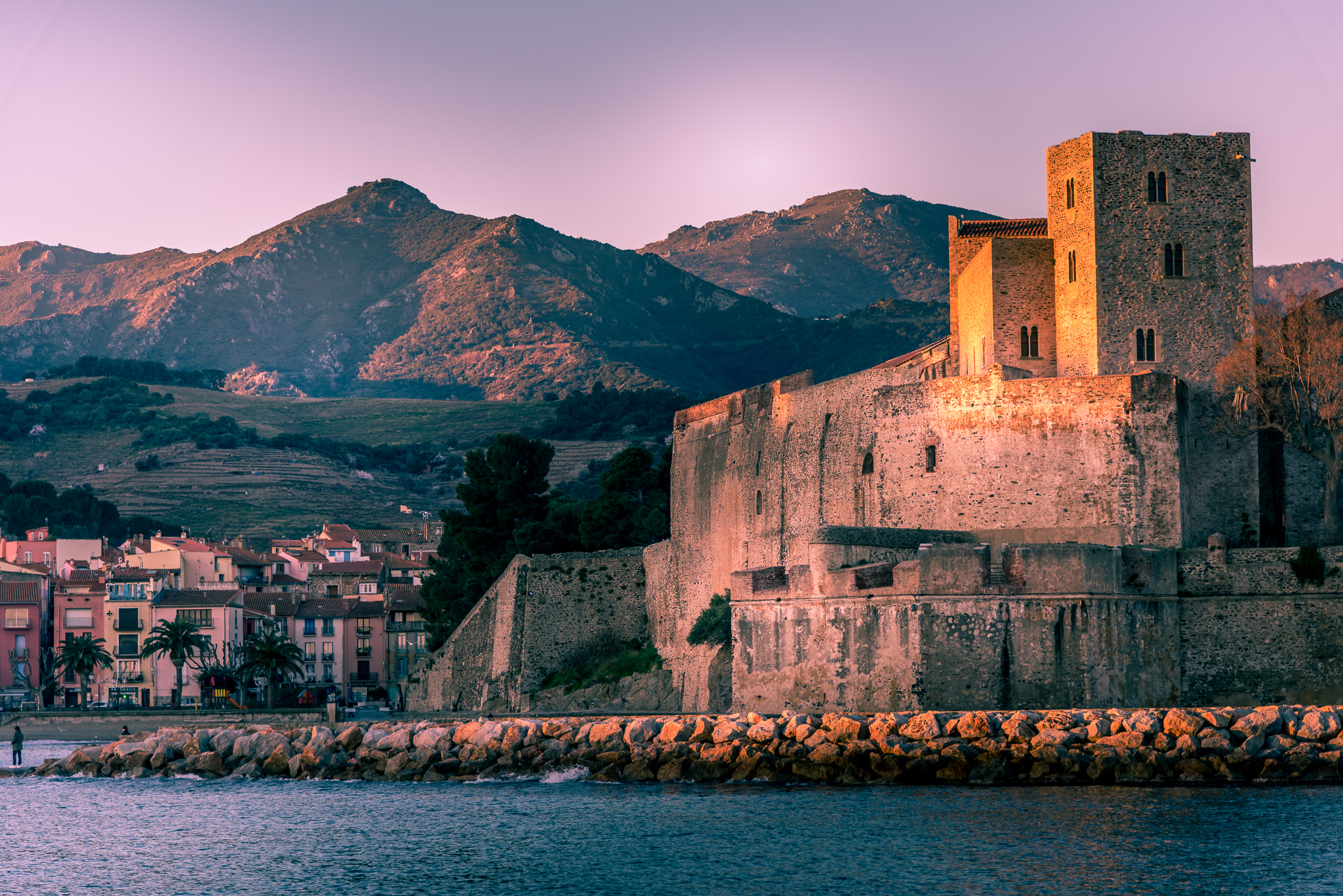
Early evening light over the Chateau Royal and the Albères Mountains which range behind Collioure © Ava Kabouchy
The captivating beauty of a small fishing village
In May 1905, Henri Matisse had already arrived in Collioure with his wife and two sons for a vacation, and with the eyes of an artist, he observed the light reflecting off the Mediterranean.
Tucked between the Mediterranean Sea and the Albères of the eastern Pyrenees, Collioure’s light is always present. Any visitor to Collioure nowadays will be equally enchanted, as Matisse and Derain were by this Catalan fishing village, the houses painted with leftover paint used on the fishing boats, resulting in an array of pastel blues, pinks, oranges, and yellows. Much of Collioure is made of soaring hillsides, many of which are terraced and so steep that all viticulture must be done by hand. A few Catalan boats, once used for anchovy fishing, still an industry in Collioure, grace Collioure’s harbor, but no longer go to sea.
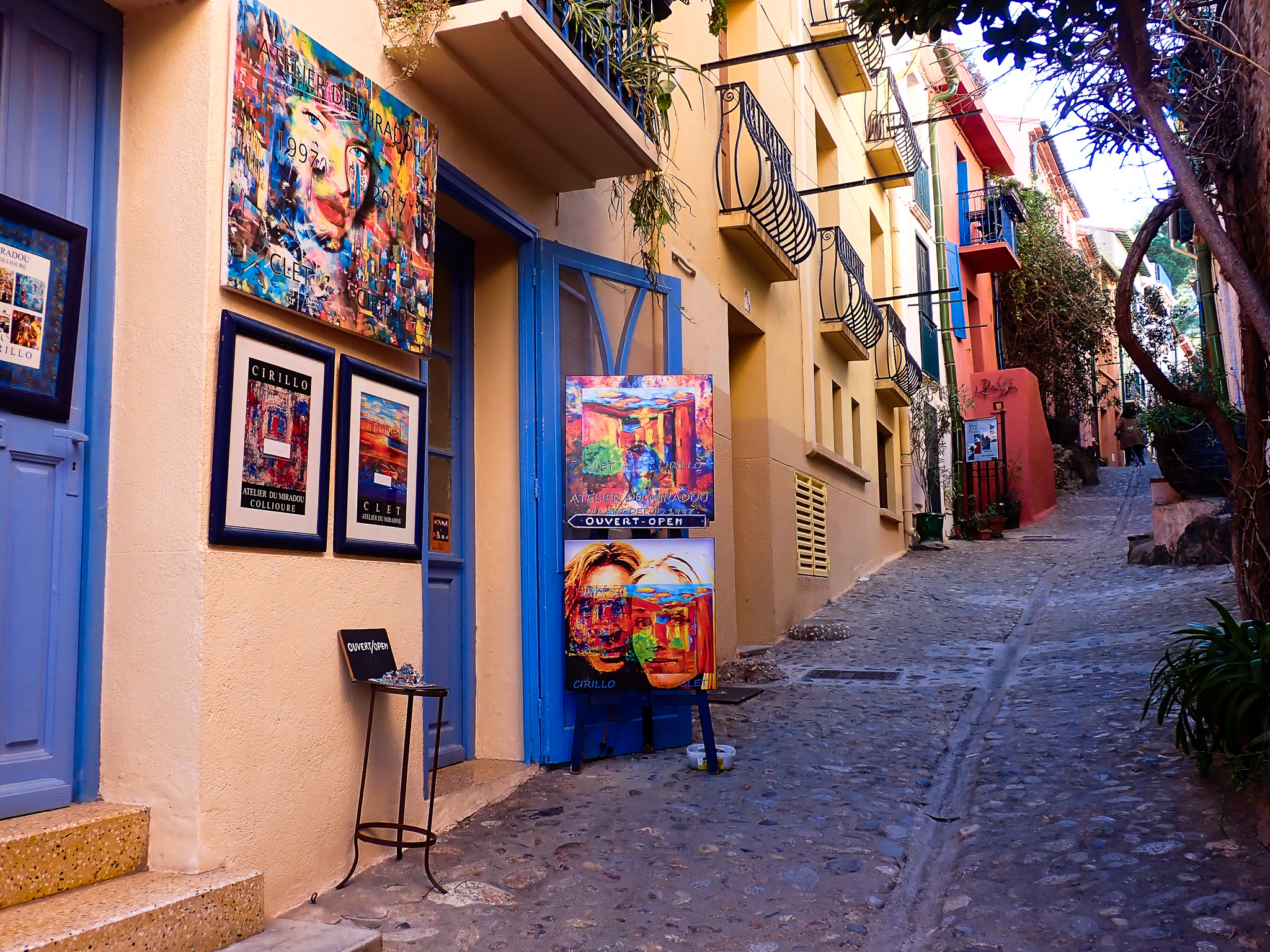
A typical street in Collioure, art galleries and stones worn smooth by many © Ava Kabouchy
Collioure is a place that is meant to be savored and walked through slowly, up and down staircases on worn stones, to appreciate the scenery, the potted flowers, the rock and sand beaches, and the picturesque architecture. Imagining Matisse and Derain in the summer of 1905, painting side by side and creating a new school of art will be easy, two artists with their bold brushstrokes capturing Collioure’s light as their artistic eyes interpreted it.
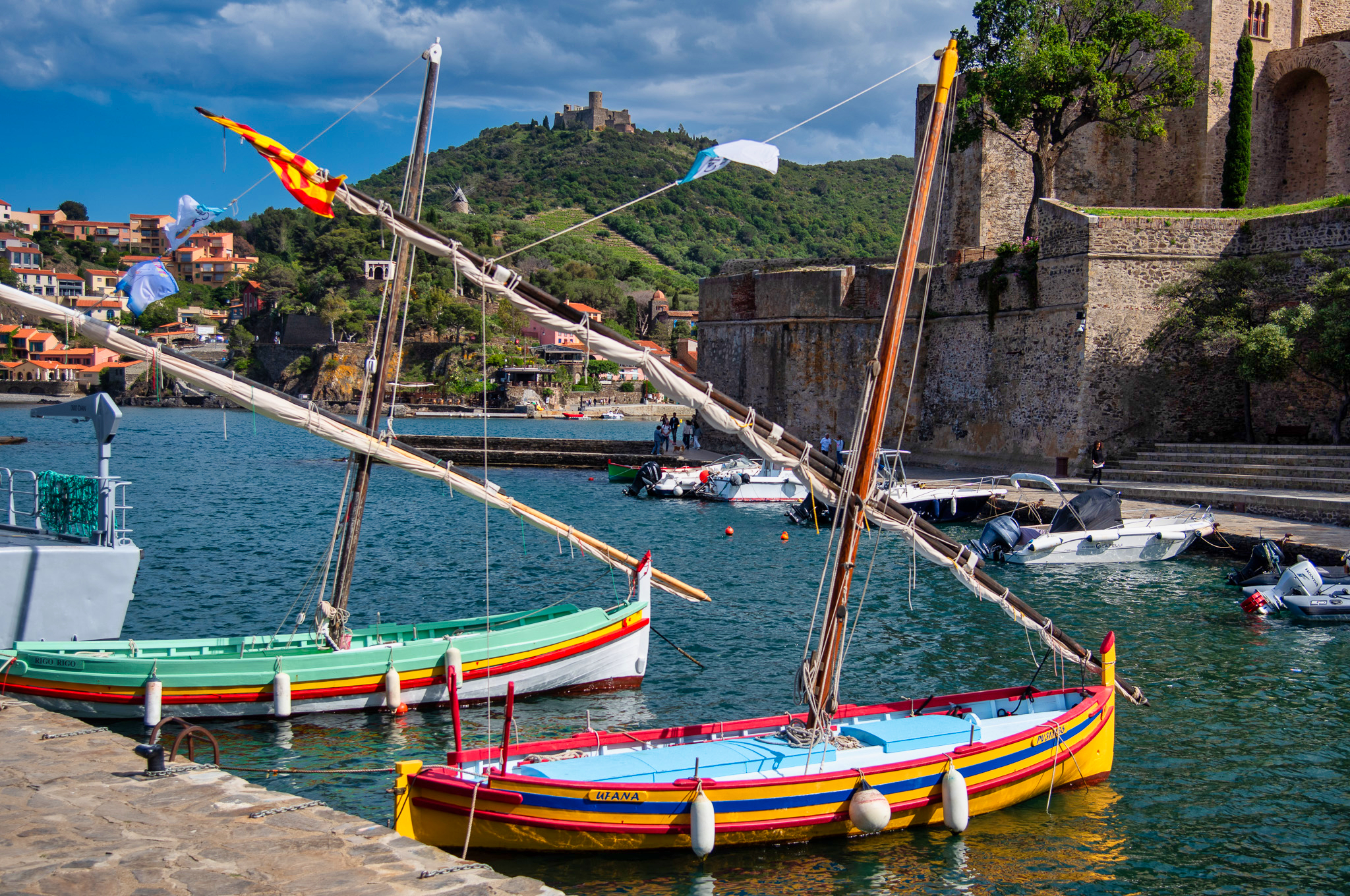
Catalan fishing boats with the Château Royal on the right and the Fort Saint-Elme on a hilltop in the distance © Ava Kabouchy
A light to be experienced
Visitors awake before the sun has begun to rise and before the spring or summer tourists awaken can experience the light the way that Matisse and Derain may have experienced it, a dazzling pink in the sky whose beauty might just take one’s breath away. Those who linger long enough over a croissant and cup of coffee can then watch the pink sky change to a brilliant, deep blue and see it as Matisse did and deeply understand why he said, “”In France, there is no sky as blue as the one over Collioure.”
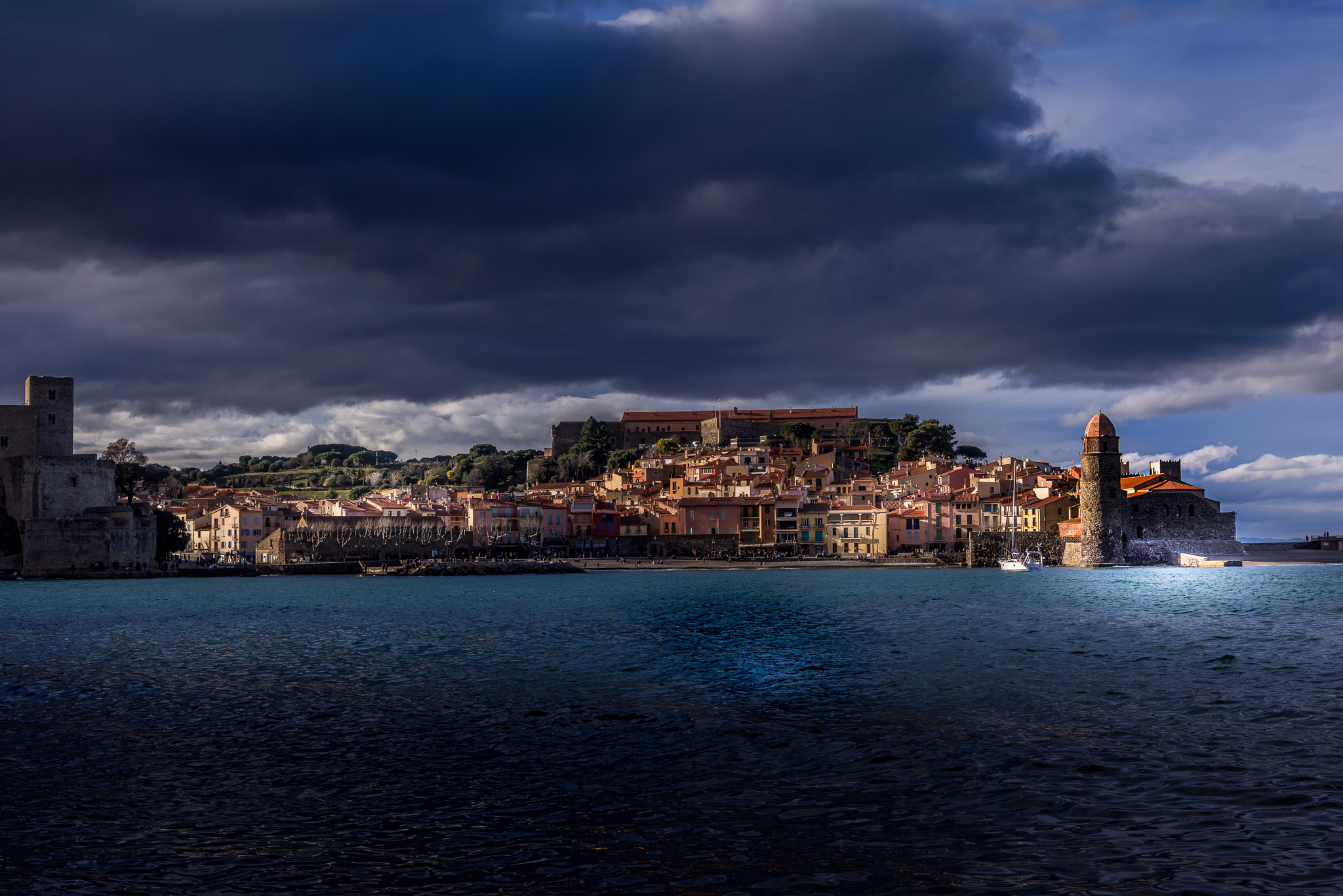
The ever-changing and intense light playing off the Mediterranean © Ava Kabouchy
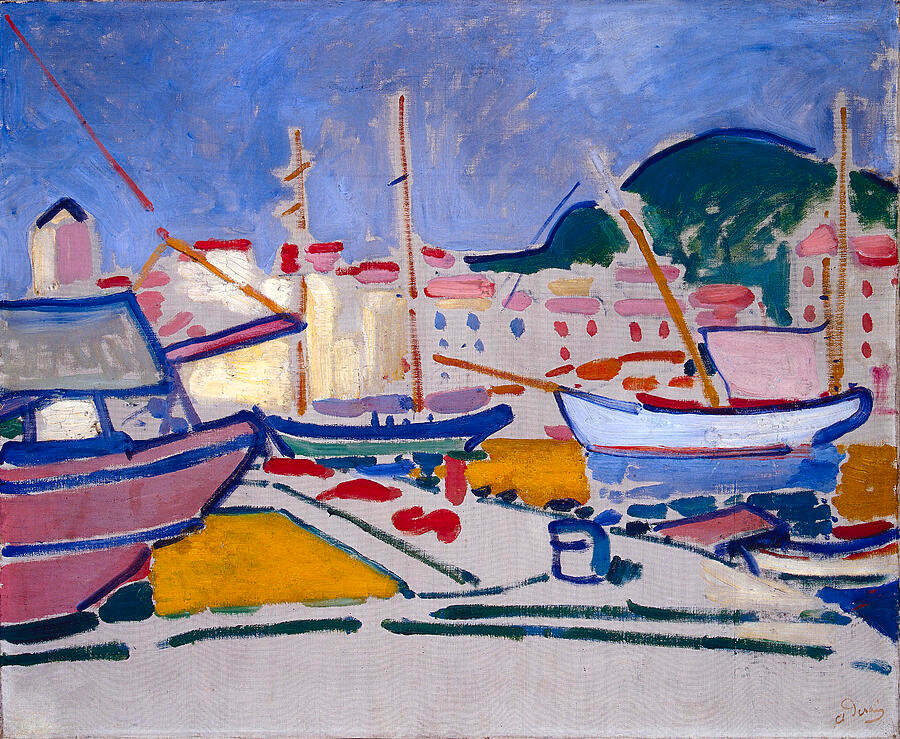
Port, André Derain, 1905
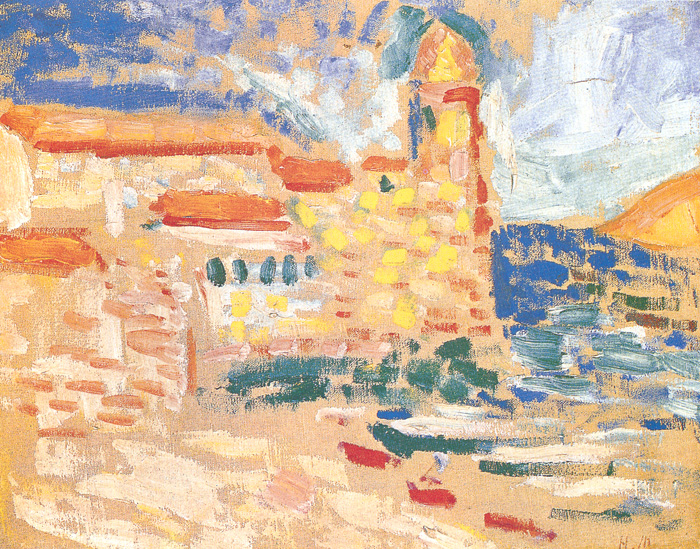
View of Collioure and the church, Henri Matisse, 1905
Lead photo credit : A turbulent sky and its light come over the Church of our Lady of the Angels, proof of Collioure's extraordinary light and why artists came here to capture it © Ava Kabouchy
Share to: Facebook Twitter LinkedIn Email
More in art, Art history, fishing village, French culture, French history, Mediterranean coast, South of France
Related Posts

By Ava Kabouchy
Leave a reply
Your email address will not be published. Required fields are marked *
REPLY