
The Rise of Women’s Wine Associations Across France
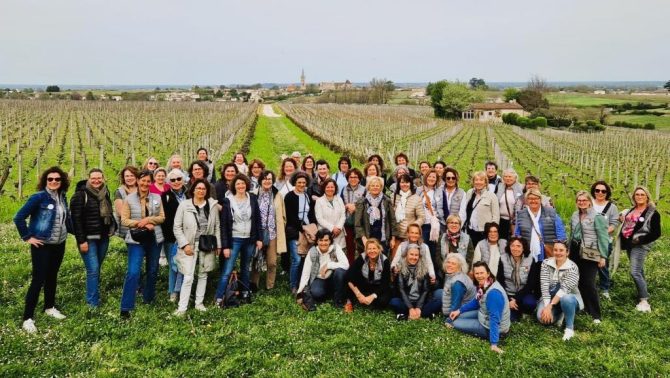
France’s dynamic women’s wine associations are championing female talent and reshaping the country’s renowned wine industry with solidarity and purpose.
Wine has traditionally been a man’s world, from winemakers to sommeliers to critics. There have been important exceptions, like champagne innovator Barbe-Nicole Ponsardin Clicquot of Veuve Clicquot fame, but women have generally been few and far between. An old legend even said that a wine would turn sour if a woman having her period came too close to the wine cellar!
How could women thrive in this world?
The first step
Things began to change in France in 1994 when the country’s first women wine association was formed in Bordeaux. At the time, fewer than 14% of the country’s wine estates were run by women. Women in the business often felt isolated, unsure of where to seek help and advice when needed.
The group, Les Aliénor du Vin de Bordeaux (Aliénor refers to Eleanor of Aquitaine) established a way for women wine professionals to exchange information and help each other in their professional practices.
Today there are now more than a dozen such associations in France. They include not only winemakers but others in the industry—sales and marketing professionals, oenologists, wine merchants, sommeliers, and more. Membership is often limited to a few dozen, to allow members to really get to know one another.
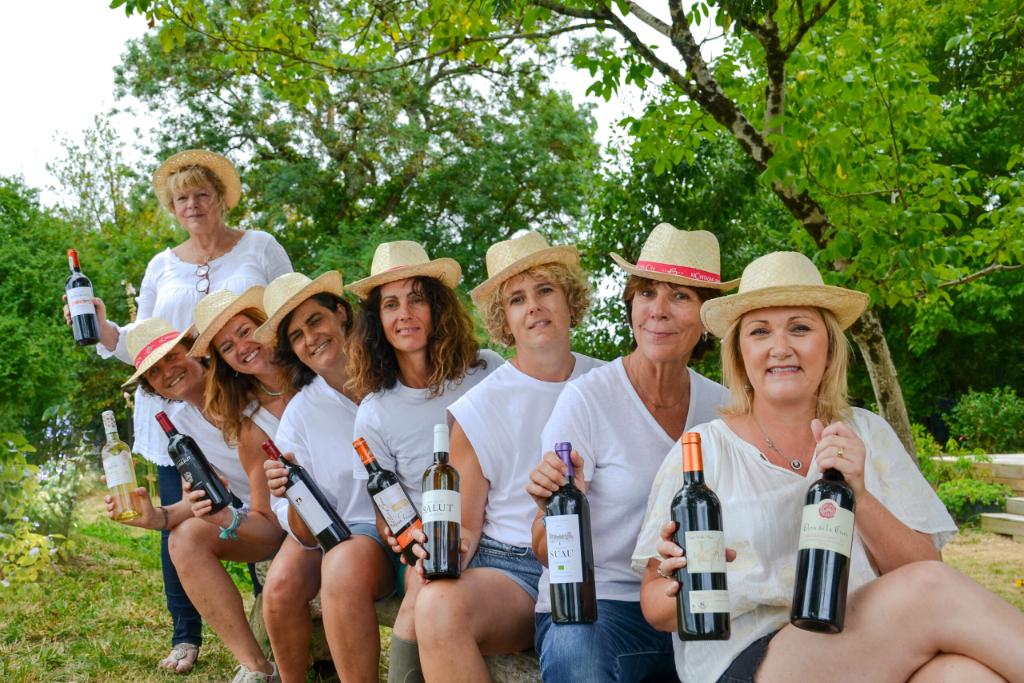
© Les Aliénor du Vin de Bordeaux
Working together
Professional exchanges are at the heart of these associations, especially the sharing of technical information. The Femmes et Vins de Bourgogne, for example, meet 4-5 times a year to discuss a specific theme, like corks or barrels. In many associations, the rising interest in biodynamic vineyard practices is another subject where information is shared. Tastings are organized among members to enhance wine knowledge.
Association members also share legal and commercial information. After Brexit, for example, what were the rules for exporting to the United Kingdom? If a customs inspection was scheduled, how should one prepare? Association members regularly pose such questions to one another, often via WhatsApp group chats, to find another member who can help.
Many groups find that there is strength in numbers, and work together at wine events. Les Aliénor du Vin de Bordeaux president Malika Faytout-Boueix notes that, “We’ve shared a stand at Wine Paris for years—it brings greater visibility to our wineries and lowers logistics costs.”
All of the associations are engaged in the transmission of wine culture. They consider themselves guardians of the culture of vine and wine and want to both defend its traditions and pass them on to future generations. Several groups have developed programs to encourage young people to enter the profession. Others make it easy for college students to participate in harvests.
Some of the associations engage in joint projects. Les Fa’bulleuses de Champagne make a cuvée of champagne together. Les diVINes d’Alsace organize a tasting course highlighting Alsace wines, as well as a summer oenotourism program. Les Eléonors de Provence raise money for local charities.
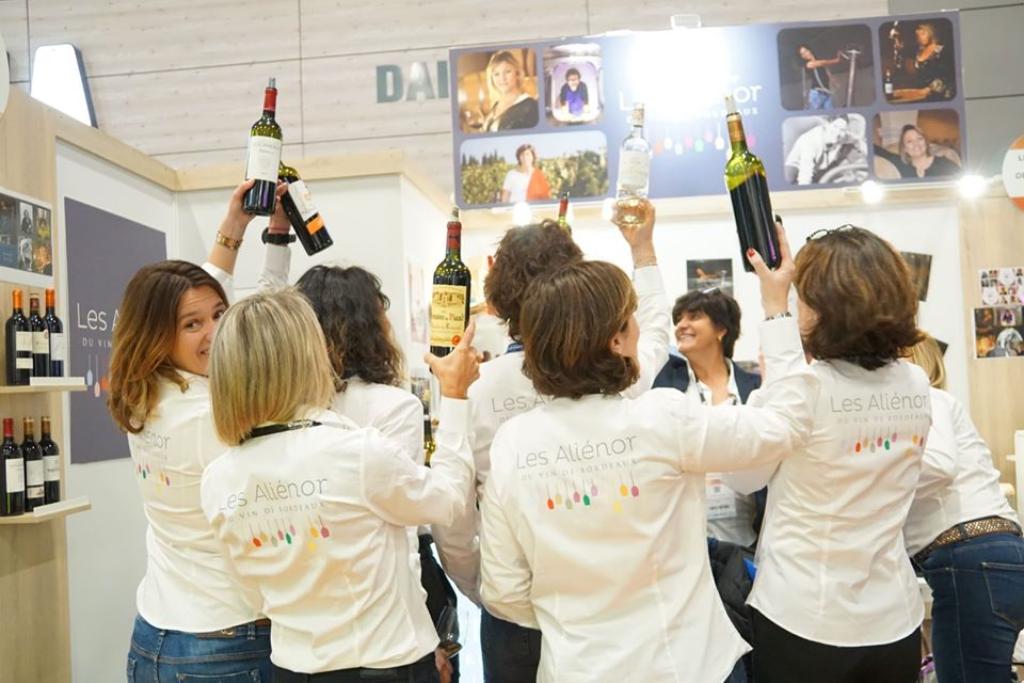
© Les Aliénor du Vin de Bordeaux
Solidarity
In many ways, the most important aspect of membership is moral support. As Françoise Roumieux, former president of Femmes Vignes Rhône says, “We educate people about the role of women in the wine industry and build confidence in women winemakers.”
Sometimes this goes beyond just moral support. When a member of Les Vinifilles en Occitanie lost all of her grapes due to hail one year, the others stepped up to help. They contributed wine that she could sell and held an auction of their old vintages to raise money. As president Françoise Ollier-Taillefer says, “Our number one interest is solidarity.”
Across France and the world
Ten of France’s regional associations have banded together as part of a larger group, Femmes de Vin. In addition to sharing information and providing mutual support, they get involved with government bodies, professional associations, and social networks to reinforce the importance of viticulture in France. Femmes de Vin, in turn, is part of a global network created under the leadership of the Italian women of Le Donne del Vino.
These national and international networks allow members to expand their networks and broaden their knowledge. As Faytout-Boueix says, “Our membership in Femmes de Vin is a source of inspiration and very interesting exchanges between the different wine regions of France. We just returned from the general meeting in Beaujolais, which allowed us to discover a wine region together.”
Progress!
In the 30 years since the first women’s wine association was created, the number of estates run by women has more than doubled, from fewer than 14% to over 30%. Women hold increasingly important positions throughout the French wine world. And while there is still more progress to be made, some of the success to date must surely be ascribed to the pioneering women of Bordeaux and the many women’s wine associations they inspired.
Lead photo credit : © Femmes de Vin
Share to: Facebook Twitter LinkedIn Email
More in female figures, French wine, French women, vineyards, women, women in wine
Related Posts


Leave a reply
Your email address will not be published. Required fields are marked *
REPLY