
Why is Champagne Everyone’s Favourite Festive Fizz?
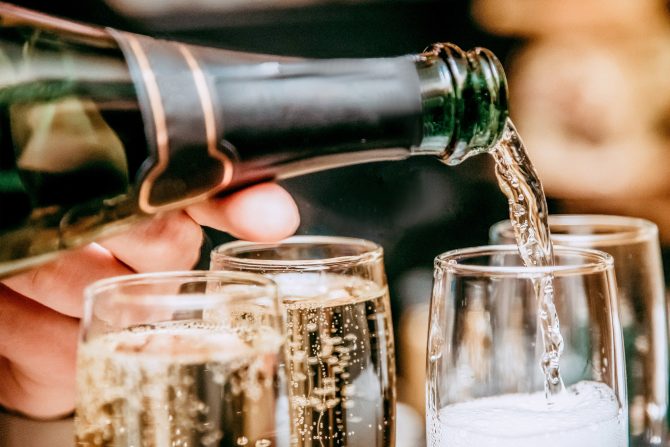
On the banks of the Marne, Dominic Rippon delves into why champagne is still everyone’s favourite festive fizz
Nothing says Christmas quite like champagne. From Christmas Eve to New Year, it is the tipple that defines the season’s spirit of (over)indulgence.
Most of us first encountered champagne through its grandes marques – Moët & Chandon, Veuve Clicquot, Bollinger and the rest. These houses dominate exports, their non-vintage blends built on the reputations of prestige bottles such as Moët’s Dom Pérignon and Roederer’s Cristal. Their labels offer a unique blend of glamour and familiarity that ensures they remain perennial festive fixtures. Yet champagne is not only about the famous names. A quarter of all bottles are now made by independent growers, crafting wines with individuality and flair. Much of their production stays in France, but for those who seek them out, these bottles bring character and often remarkable value ideal when the fridge is full and the season demands generosity.
Champagne’s enduring magic lies in its unique creation. Pinot Noir, Pinot Meunier and Chardonnay grapes thrive in the region’s chalky soils, yielding base wines that undergo a second fermentation in the bottle. Time spent ageing on the lees – the spent yeast cells-is crucial, building texture, richness and those unmistakable festive notes of brioche, citrus and cream.
Non-vintage blends must rest for at least 15 months, vintage champagnes for three years or more, while prestige cuvées often slumber for a decade before release. This patient winemaking helps explain their exquisite complexity, as well as the prices fetched for the best bottles.
Champagne’s main hubs are Reims and Épernay, divided by the Montagne de Reims: its vineyards dominated by the structured Pinot Noir variety.
Along the Marne, to the west, the lighter-bodied Pinot Meunier comes into its own, while Chardonnay – the region’s only white grape is found in smaller pockets. South of Epernay lies the Côte des Blancs, a strip of Grand Cru villages devoted entirely to Chardonnay, yielding the elegant Blanc de Blancs style: floral and citrus when young, developing biscuity richness with age. The result is a diversity of styles, all of which bubble with freshness yet with the weight to accompany Christmas fare -from smoked salmon and oysters to turkey, trimmings and beyond.
Champagne moves effortlessly between roles: a crisp aperitif, a refined food partner, or the midnight toast that begins the new year with a sparkle.
DOMINIC’S CHOICE
Champagne Le Mesnil
Choice wine: Le Mesnil Grand Gru Blanc de Blancs NV
Champagne Bollinger
Choice wine: Grande Année 2015
Champagne Pierre Paillard
Choice wine: Bouzy Grand Cru ‘Les Parcelles XIX’ NV
Lead photo credit : Shutterstock
Share to: Facebook Twitter LinkedIn Email
More in champagne, festive, wine
Related Posts
Leave a reply
Your email address will not be published. Required fields are marked *