
10 Reasons to Experience France Through Language Immersion
Sponsored

For many travellers, France is a country to be admired: its landscapes, markets, cafés, villages and cities offering endless reasons to return. But there is another way to experience it, one that goes beyond sightseeing. Learning French in France, while staying with a teacher, allows you to step inside daily life rather than simply observe it.
A French immersion stay combines language learning with the rhythms of the place itself: shared meals, local conversations, market visits and one-to-one lessons shaped around your level and interests. Here is why it can be such a rewarding way to improve your French and deepen your connection with the country.
1. Step beyond the postcard
It is easy to visit France and still feel slightly outside the culture. You may admire the beauty, enjoy the food and visit the sights, but without the language, many encounters remain brief and practical.
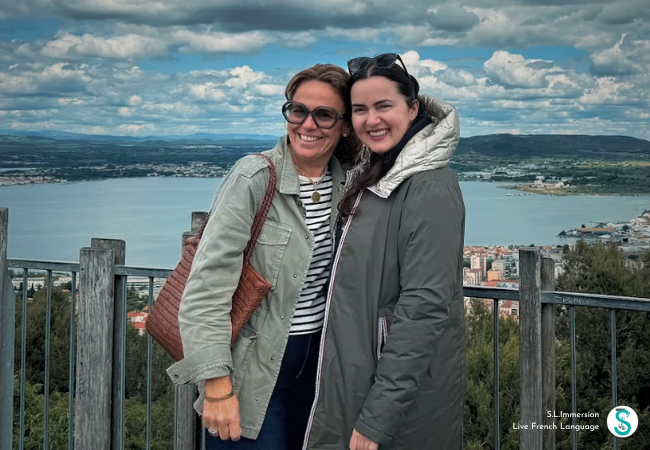
A stay in your French teacher’s home changes that dynamic. Instead of moving through France as a spectator, you become part of everyday life. Conversation happens naturally, around the table, on a walk, in the kitchen or at the market. Little by little, France becomes less of a postcard and more of a lived experience.
2. Learn French where it is actually spoken
Traditional classes can be useful, but they often feel disconnected from real life. You might learn a grammar point in the morning, then struggle to use it later when speaking to someone.
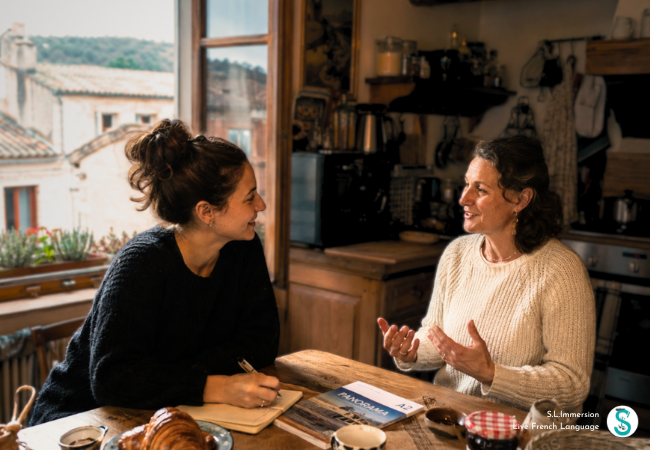
One-to-one immersion helps bridge that gap. French is not confined to lesson time. You practise while cooking, chatting, reading, discussing the news or planning the day. Because the language is rooted in real situations, it starts to feel more natural and easier to remember.
Discover how immersion works: https://slimmersion-france.com/french-immersions/
3. Live the culture, not just the itinerary
Cooking classes, guided tours and workshops can all be enjoyable, but they are usually designed for visitors. They offer a glimpse of French life, rather than the thing itself.

Immersion removes some of that distance. You might cook a family recipe with your teacher, visit a local market, talk to a neighbour or learn the small customs that rarely make it into guidebooks. These moments are often simple, but they are also the ones that stay with you.
4. Choose the France that suits you
France is sometimes spoken of as though it has one identity, but each region has its own character, traditions and pace of life. The experience of learning French in Brittany will not feel the same as learning it in Provence, Bordeaux, Paris, the Loire or Occitanie.
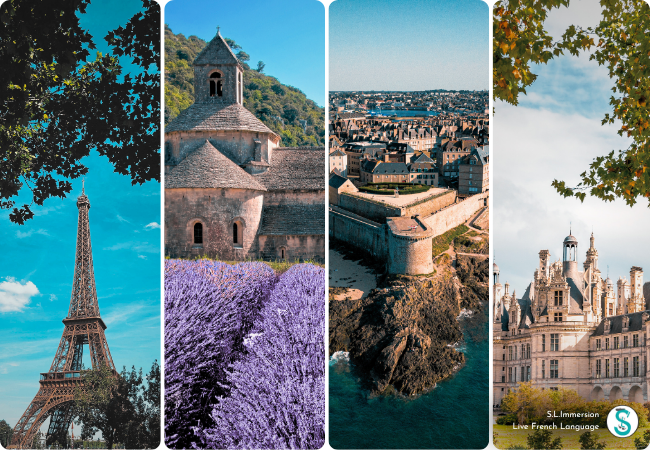
With teachers based across the country, you can choose a setting that reflects your interests. Perhaps you are drawn to the coast, to wine country, to historic towns or to the warmth of the south. Wherever you stay, the language becomes closely tied to the place around you.
5. Make French part of everyday life
Apps and online courses can be helpful, especially for building vocabulary or revising grammar. But without regular human interaction, it can be difficult to stay motivated or to turn knowledge into confidence.
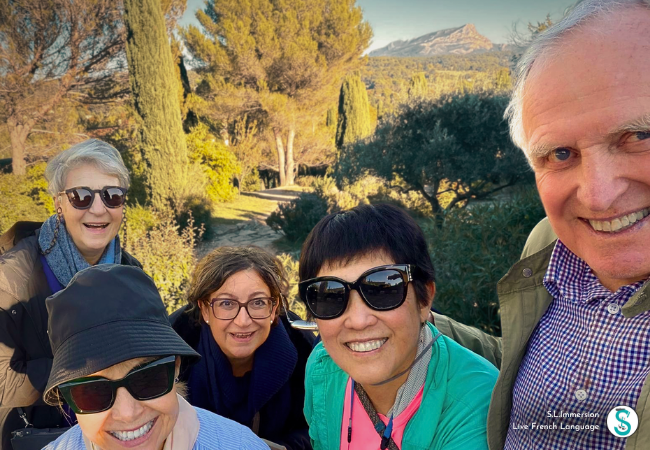
Immersion brings the language back to life. You are not only learning French, you are using it to express yourself, ask questions, share opinions and build connections. That emotional and practical involvement can make progress feel more meaningful.
6. Find confidence in conversation
Many learners understand more French than they feel able to speak. Fear of making mistakes, lack of practice or a bad classroom experience can all create hesitation.
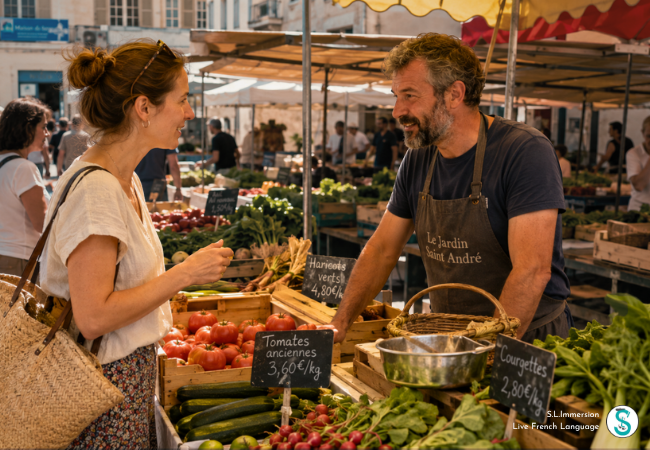
In a supportive immersion setting, speaking becomes less intimidating. Your teacher can adapt to your pace, correct you gently and help you try again. Mistakes are part of the process, not something to fear. Over time, confidence grows, and conversation begins to feel more spontaneous.
7. Learn around the table
Food plays a central role in French culture, not only because of what is served, but because of the conversations and rituals that surround it. Meals are moments of exchange, storytelling and connection.
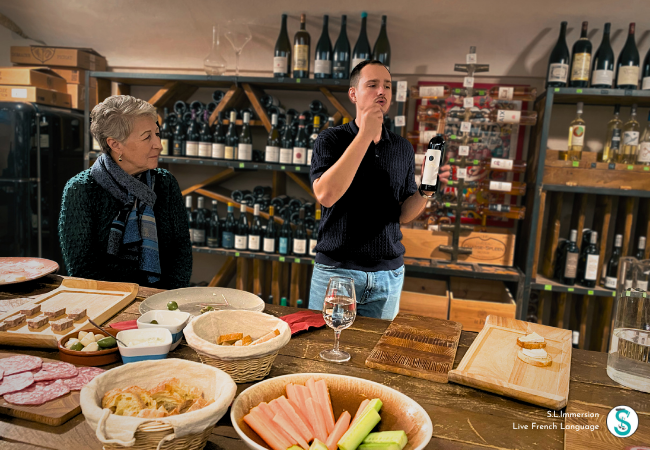
Sharing daily meals with your host teacher turns food into part of the learning experience. You pick up vocabulary naturally, discover local dishes and better understand the social importance of the table in France.
8. Follow a programme built around you
Every learner is different. Some want to focus on conversation, others on grammar, professional French or cultural fluency. Standard programmes can struggle to reflect those individual needs.
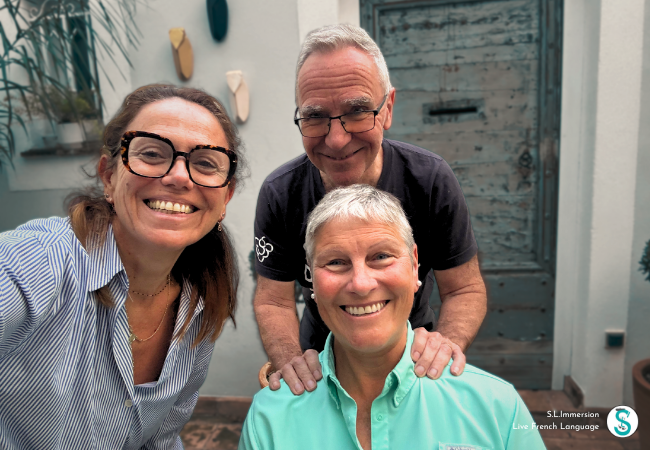
An immersion stay can be shaped around your level, goals and interests. The lessons, conversations and activities can all be adapted, making the experience more personal, more efficient and often more enjoyable.
9. Bring more home than souvenirs
There are trips you remember, and then there are experiences that change the way you see a place. Language learning has a way of doing that. It asks you to listen differently, to notice more and to take part.
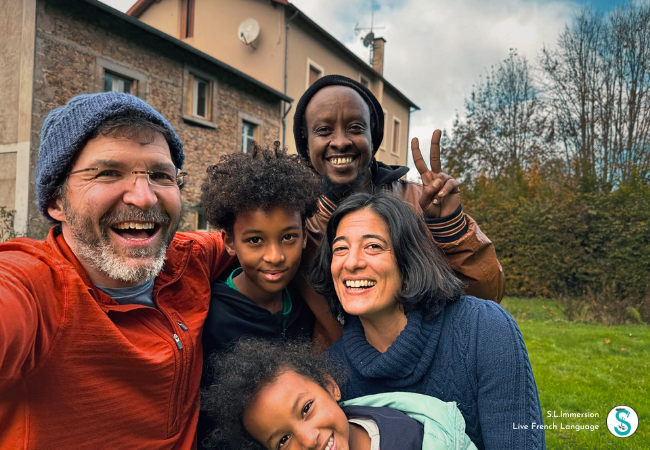
An immersion stay gives you more than memories. You return home with stronger French, greater confidence and a deeper understanding of the culture you have been living in, even if only for a short time.
10. Travel with reassurance
A language immersion stay involves more than booking accommodation and lessons. Teaching, hosting, local support and travel arrangements all need to be organised carefully.
For peace of mind, it is worth choosing an agency that is officially registered with Atout France, the body responsible for regulating travel professionals in France. Registration helps show that the agency operates within a recognised professional framework. Financial protection, such as that provided through APST, can also offer reassurance in the event of agency failure.

That means you can focus on the experience itself: improving your French, enjoying your stay and discovering France from the inside.
Get in touch to plan your experience: https://slimmersion-france.com/contact/
Lead photo credit : Shutterstock
Share to: Facebook Twitter LinkedIn Email
More in French, Immersion, Language, Learn French
Related Posts



Leave a reply
Your email address will not be published. Required fields are marked *