3 Small Museums in the Shadow of the Alps
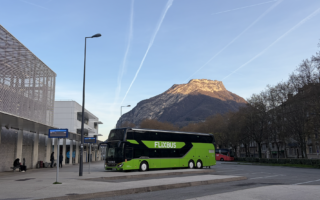
Many people come to Grenoble to go up. The city sits between three Alpine massifs, so it is easy to treat it as a launchpad for the mountains. On my train from Paris over a bank holiday weekend, the carriages were full of hikers and cyclists, with poles and helmets tucked above the seats.
But before it was a base for weekend climbs, Grenoble was a place people needed to control. Roads, rivers, and mountain passes meet here, making the city a strategic point between the French plains and the Alps. Whoever held Grenoble could influence what moved through the region: goods, armies, pilgrims, taxes, news.
The Romans saw this early, fortifying the town they called Cularo in the third century. Later, Grenoble became a bishop’s seat, when bishops were as much political as religious leaders. The Dauphiné became powerful enough that its rulers’ title later gave the French heir his name: le Dauphin.
Musée de l’Ancien Évêché
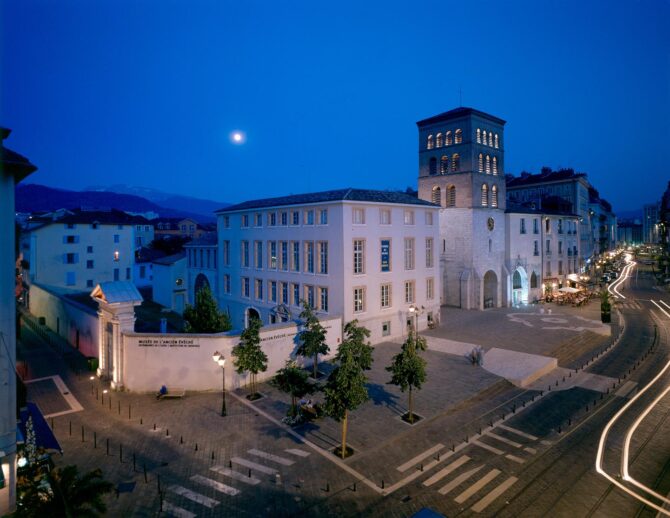
The former bishop’s palace, once one of Grenoble’s centres of power, is now a small museum tucked quietly behind the cathedral. Its permanent collection tells the local human history from prehistory to the present, but what makes it work is how physical the story feels.
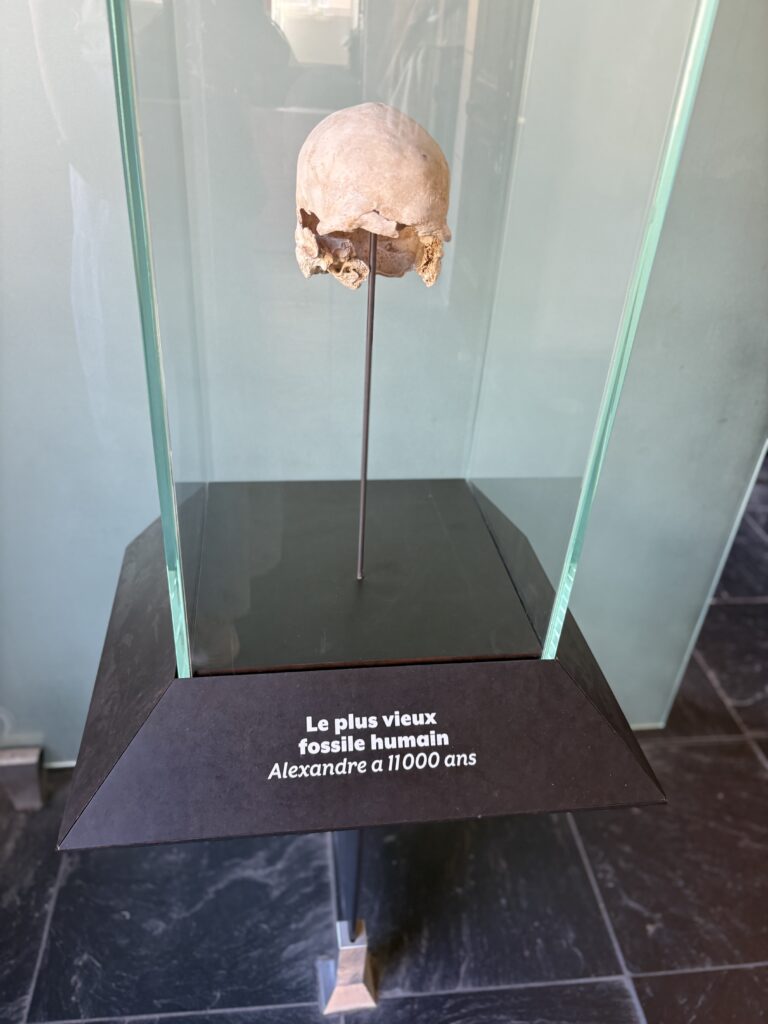
It opens with “Alexandre,” part of an 11,000-year-old skull found near Grenoble and presented as the oldest known human remains in Isère. Downstairs, walkways cross relics from the third-century Roman wall and the remains of a Christian baptistery. You are not just reading about Grenoble’s early history; you are standing above it.
My favourite part was the temporary exhibit on François Kollar. After moving through thousands of years of local history, the museum narrows to a single year: 1931. Kollar was a Slovak-born photographer who came to Paris in the 1920s and worked in factories before photography became his way out. That year, he won a commission for La France travaille, sending him across the country to photograph French workers. Kollar often shot workers from below, giving ordinary labour a monumental feel. After the skull, wall, and baptistery, the photographs bring you into modern France: factories, tools, bodies, and workers, captured as the country tried to picture itself as industrial.
Musée Dauphinois
From there, I went upwards, to the Musée Dauphinois, housed in a former convent on the slopes of the Bastille hill, with gardens blooming in May and Grenoble views below.
My favourite exhibit there was De tous bois, which tells the story of the Hache family, cabinetmakers who settled in Grenoble in the eighteenth century and built a reputation beyond the Dauphiné. Their skill was in making local wood do more of the work.
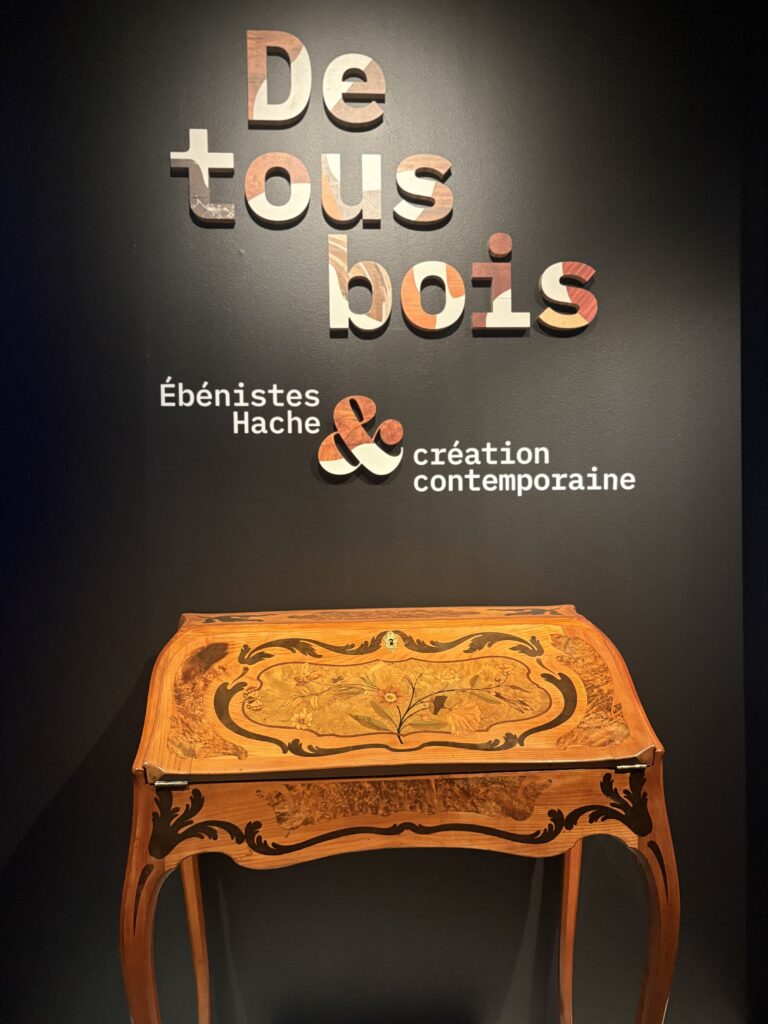
Instead of covering furniture with heavy carving, they used thin layers of wood on the surface, choosing pieces with interesting grain, knots, and colour: walnut with swirls and darker grain; lighter fruitwoods for contrast; sometimes imported woods for detail. They arranged those pieces so a drawer front or cabinet door had depth and pattern.
In doing so, they turned wood from a hard mountain region into something elegant. In a century when Paris claimed much of the language of taste, the Haches showed that beauty could also come from a workshop near the Alps.
Jean-François Hache, the grandson and the best known of the family, pushed the work further. What if beauty was not only for grand rooms, but for furniture people actually used: a desk, a hairbrush, a writing table? Today modest Hache pieces can sell for a few thousand euros, while major Jean-François Hache works can reach tens of thousands.
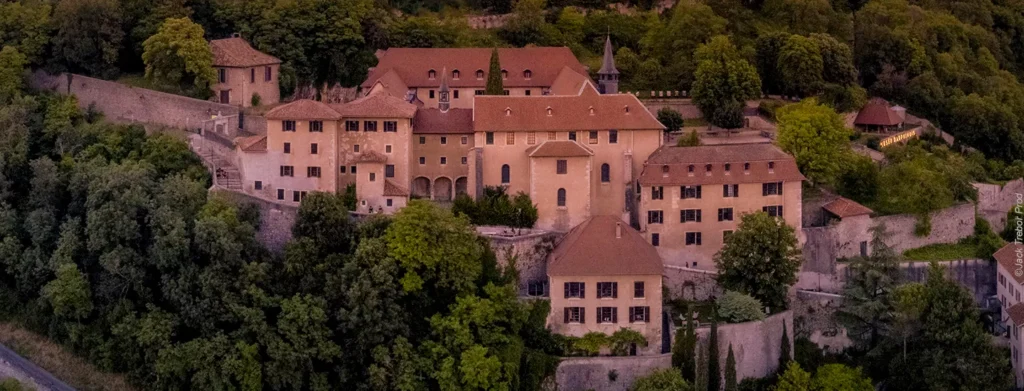
Here you also see what it meant to live among mountains for centuries, with exhibits on daily life showing wood as material, winter as routine, and distance as part of life. The top floor turns to the 1968 Winter Olympics, showing Grenoble recasting itself as a modern Alpine city.
ACONIT, the Association pour un Conservatoire de l’Informatique et de la Télématique
The final museum was the most unusual: ACONIT, the Association pour un Conservatoire de l’Informatique et de la Télématique. Founded in Grenoble in 1985, it was created to save the physical history of computing before it disappeared. It also ties to post-war Grenoble, when the city became an important centre for applied mathematics and computing.
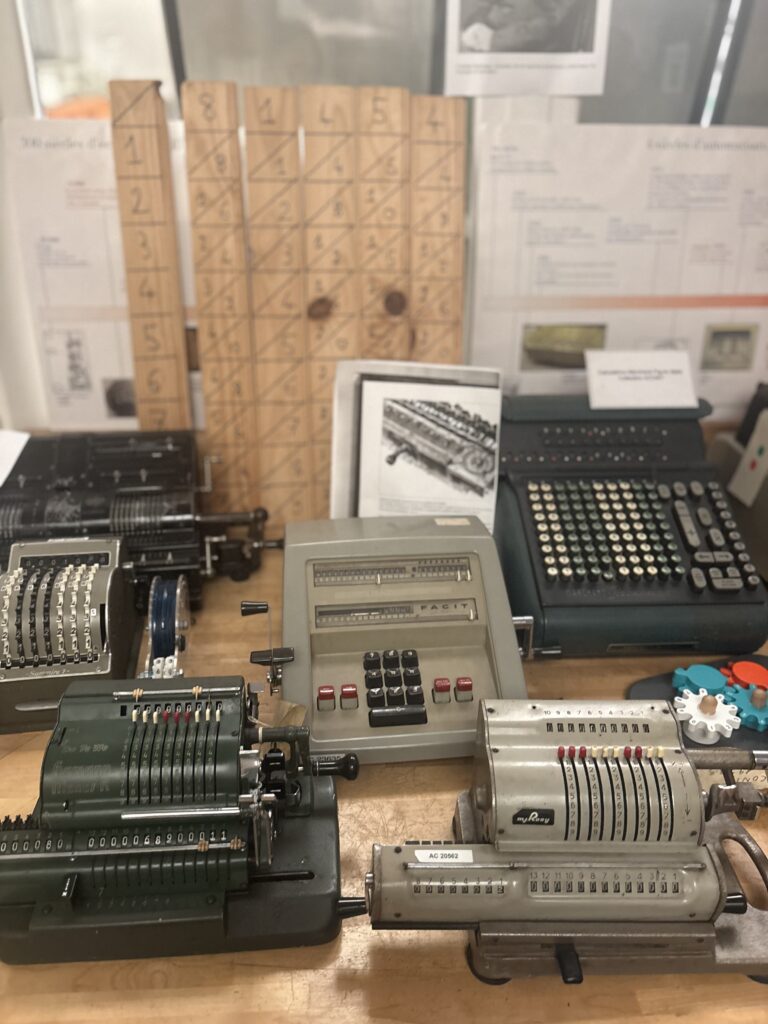
The collection starts with punched cards and early calculating machines, then moves through hardware, software, microprocessors, and the beginnings of nanotechnology. Some machines are taller than I am; others tell the opposite story, of technology shrinking until almost invisible.
But the best part is that these are not dead machines behind glass. Volunteers, like Xavier, who welcomed me, know how the machines worked and restore what they can. It feels less like a storage room for old computers and more like a living history of how the digital world was built.
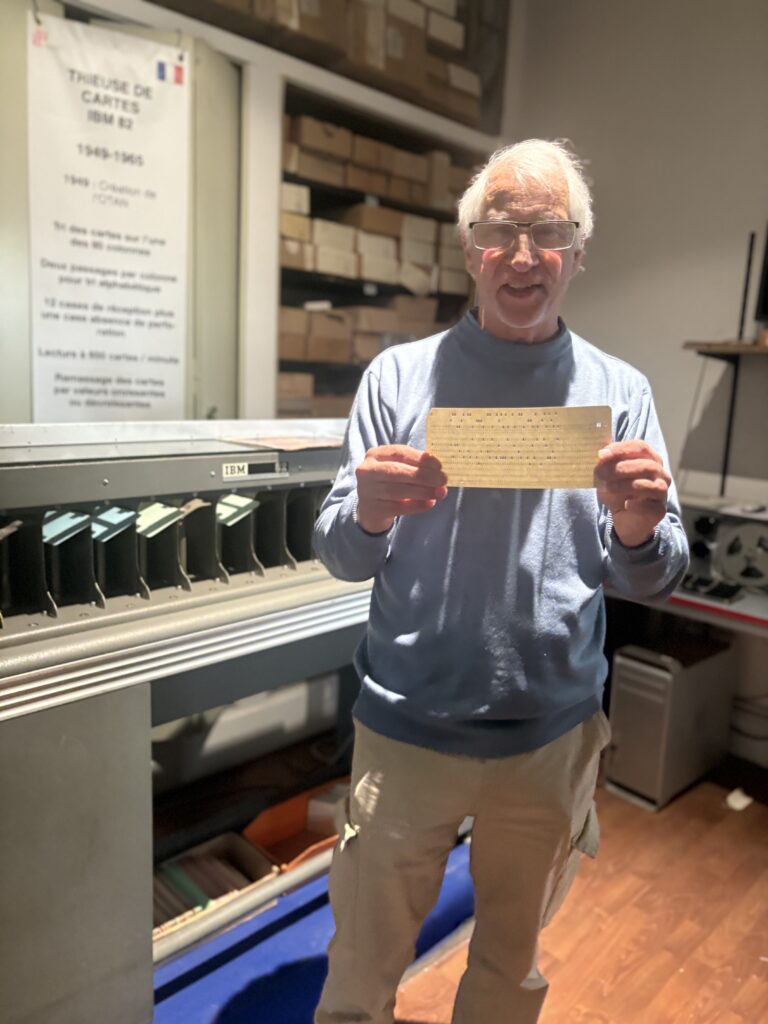
Among Grenoble’s big mountains, these three small museums are easy to overlook, but very much feel worth stopping for.
Lead photo credit : Isere-culture, CC BY-SA 4.0, via Wikimedia Commons