
From Prison to Paris: France’s Inmates Bestow a Literary Award
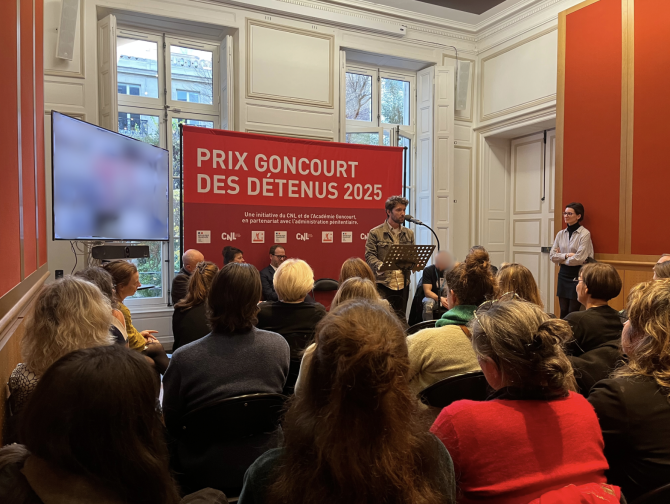
The Prix Goncourt, or Goncourt Prize, is France’s most prestigious literary award, similar to America’s National Book Award and the UK’s Booker Prize. Previous Goncourt winners include Marcel Proust, Simone de Beauvoir, and Nobel laureate Patrick Modiano.
While there are Goncourt Prizes in several categories, like poetry and biography, the most important is the one awarded to the best novel of the year, called simply the Prix Goncourt. It gets front-page treatment across the country, and the winning book is guaranteed to become a best-seller.
Some decades ago, a new category was added, the Prix Goncourt des Lycéens (Goncourt Prize of High School Students). This award, selected by thousands of French high schoolers, proved so popular that four years ago the academy created another new category, for a novel chosen by inmates in France’s prisons.

The Inmate’s Award
The Prix Goncourt des Détenus (Goncourt Prize of Inmates) is a joint effort of the Ministry of Culture and the Ministry of Justice, under the patronage of the Goncourt Academy. It is administered by the National Book Centre, which says that the goal is to “empower incarcerated individuals by making them active participants in a literary prize, valuing their critical abilities while also introducing them to contemporary literary works.”
France is a famously literate country, with more Nobel Prizes in Literature than any other, so it is not surprising that this love of books extends to the country’s prison population.
How it Works
Every September, the Goncourt Academy announces a list of 15 books, from which it will select the winner of the Prix Goncourt. These books then become the candidates for the inmates’ award.

The announcement of these 15 books kicks things off. In 2025, the process was launched at Dijon’s Châteauroux prison, at an event hosted by Paule Constant, a member of the Goncourt Academy, and Mokhtar Amoudi, who won the inmate’s award in 2023. After announcing the launch of the year’s selection process, these two took questions from the press and met with inmates who would be participating.
Participation is not easy—all 15 books must read over a period of three months. Inmates meet weekly to discuss them, evaluating elements like style, plot, and character development, then rating them from one to ten. As one inmate put it, “We are making a literary choice, not a prisoner’s choice.”
Despite the rigor, the program has proven popular—over 600 inmates in 45 prisons participated in 2025. Perhaps this is not surprising, given the boredom and claustrophobia of prison life. As one inmate put it, “One reads to learn, but it is also a form of survival. It takes you outside the walls.” He went on to say, “I’m worried about leaving prison after 23 years, but I feel that reading has armed me intellectually.”
Authors make regular visits to participate in these discussions—there were over 30 of these visits last year. These have an impact not only on the inmates but also on the authors themselves. As Hélène Laurain notes, “The people I’ve met have a different relationship with reading. It’s not a pastime, it’s more than that. It’s essential and it creates an exchange of a rare intensity.”

Emmanuel Carrère concurs, saying, “I’ve made a number of prison visits. These meetings count much more than for people on the outside. More than the prize, what we do is vital.”
The Selection
After months of weekly discussions, the readers in each prison select their top three books, plus a delegate. These delegates then travel to ten regional meetings, to discuss the books with delegates of other prisons.
Many of the meetings take place in prisons, but not all—last year’s meeting for the Paris area was held in the National Library. And because both men’s and women’s prisons participate in the program, the regional meetings are often mixed.
The results of the regional meetings are the same as those of the individual prison meetings—top books are selected, along with a delegate to represent the region. These ten regional delegates then travel to Paris for their final meeting at the National Book Centre.
This takes place in December, where the delegates meet behind closed doors and, through discussion and debate, choose their winner. This is immediately announced to the press and to the happy winner, who then takes questions from both the reporters and the inmates.
Who Won?

In 2025, the Prix Goncourt des Détenus was bestowed on La collision, by Paul Gasnier. Previous winners were Madelaine avant l’aube by Sandrine Collette (2024), Les conditions idéales by Mokhtar Amoudi (2023), and Sa préférée by Sarah Jollien-Fardel (2022).
Lead photo credit : Photo: Centre National du Livre ©
Share to: Facebook Twitter LinkedIn Email
More in books in french, french literature, Goncourt des Détenus, prix goncourt
Related Posts




Leave a reply
Your email address will not be published. Required fields are marked *