Hospices de Beaune: The Remarkable Story of Burgundy’s Palace of the Poor

Steve Turnbull heads to a charitable hospital from the Middle Ages in Burgundy, and uncovers its remarkable story
As well as world-famous wine, Burgundy is blessed with an abundance of historical sites. But the Hôtel-Dieu des Hospices de Beaune is special. Not only is it an architectural masterpiece, it is also one of France’s most extraordinary hospitals.
The idea of a ‘palace for the poor’ (a common description) may seem strange, but it captures the purpose of the Hôtel-Dieu well. Founded in 1443 by Nicolas Rolin (1376-1462), Chancellor of Burgundy, and built at the heart of the region in the town of Beaune, it was conceived as an act of Christian (Catholic) charity to help the poor, sick and destitute.
To put this into context, the Hundred Years’ War (1337-1453) had plunged Burgundy (an ally of England after Agincourt) into deep poverty. Moreover, the region was ravaged by famine and disease. But the institution also reflected the belief that care of the body and salvation of the soul were inseparable. Hence, Rolin established a religious order of ‘nurse-nuns’ (Communauté des dames hospitalières de Beaune) to run it, and later secured its consecration via a papal bull. In medieval Christian society, however, charity was not simply kindness, it was part of a social and religious contract. In return for their care, patients were expected to pray for the souls of their benefactor Rolin, and his co-founder wife, Guigone de Salins, herself of noble birth. So the rich helped the poor materially, and the poor (whose suffering was believed to bring them closer to Christ) helped the rich spiritually. It’s important to note too, that Rolin, who was in his mid-60s when he initiated the hospital, was a very old man in medieval terms, so getting to heaven rather than hell was very much on his mind.
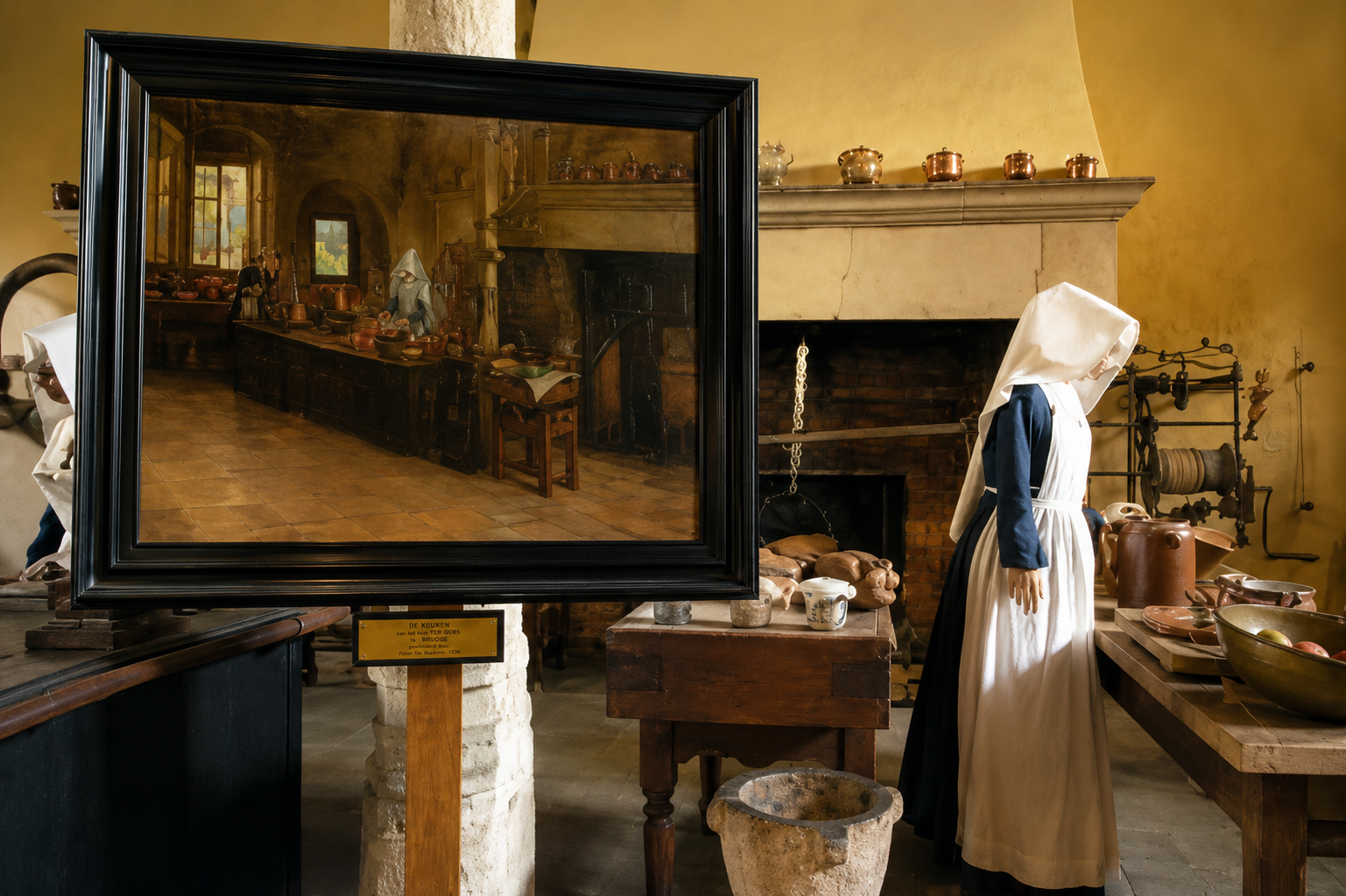
Not bad for hospital food – inside the Hôtel-Dieu kitchen
ALMSHOUSE AND SANCTUARY
As for the name, Hôtel-Dieu literally means ‘Hostel of God’ (from the Old French ostel or hostel, meaning house or lodgings). But a more accurate translation is ‘a charitable institution to house and care for the needy’, from which we get the word ‘hospital’ in English. Until the development of medical science in the 19th century, however, the establishment functioned less as a hospital and more as a hospice, almshouse and sanctuary. Later, it federated other hospital facilities in the Beaune area, which is why the plural ‘Hospices’ is used in the full title. It also became an important winemaking centre, with a sizeable estate.
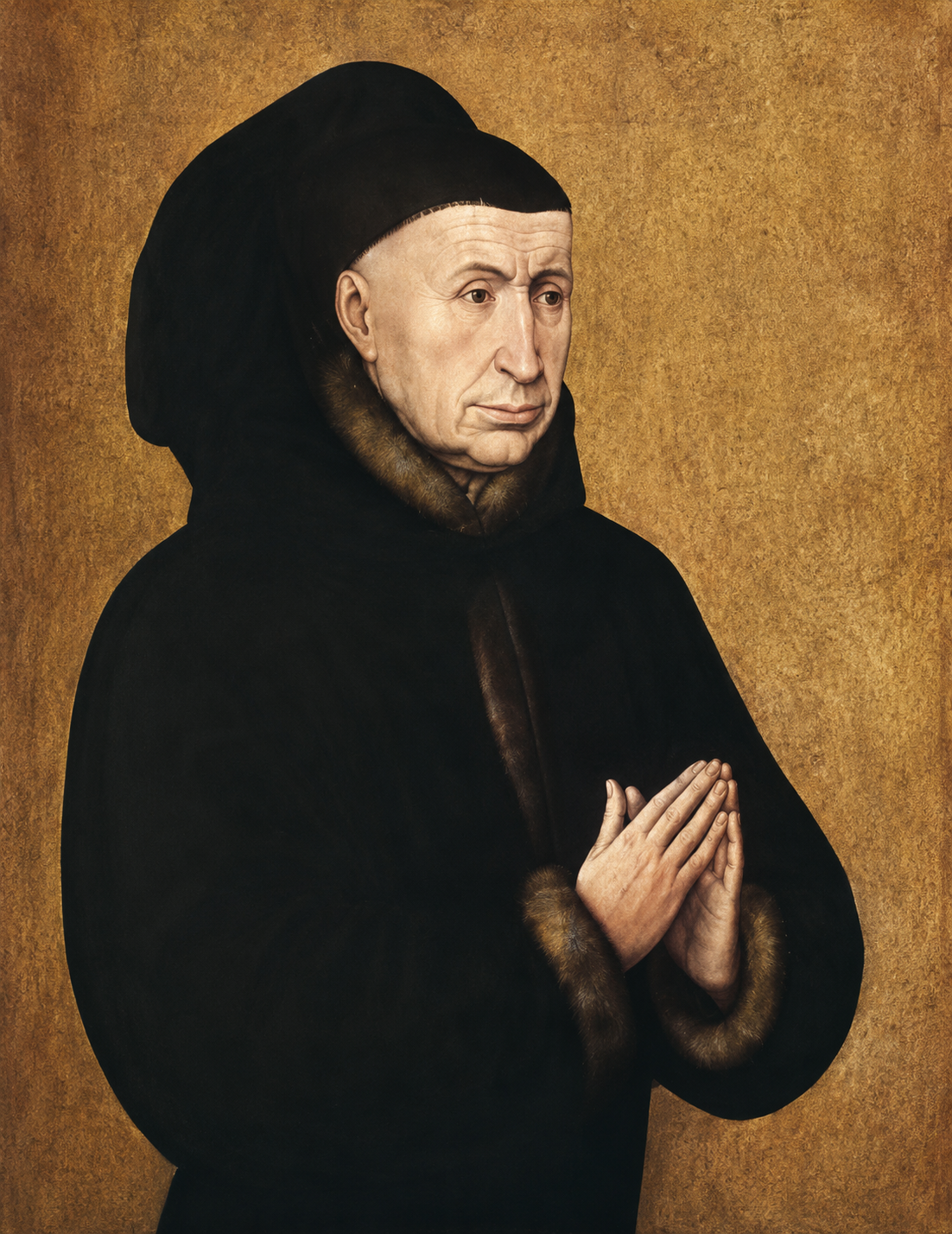
Rolin at prayer (detail from closed polyptych)
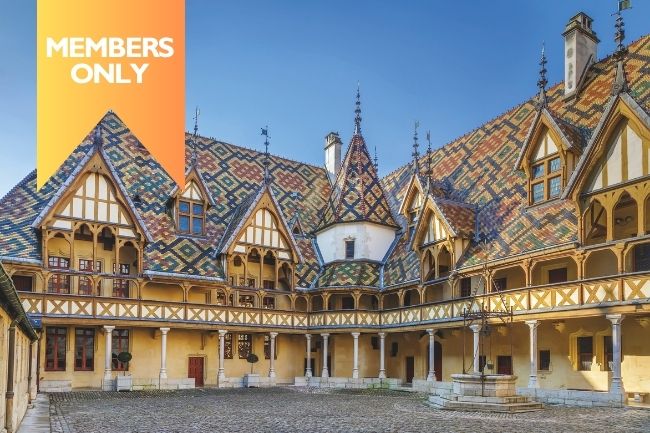
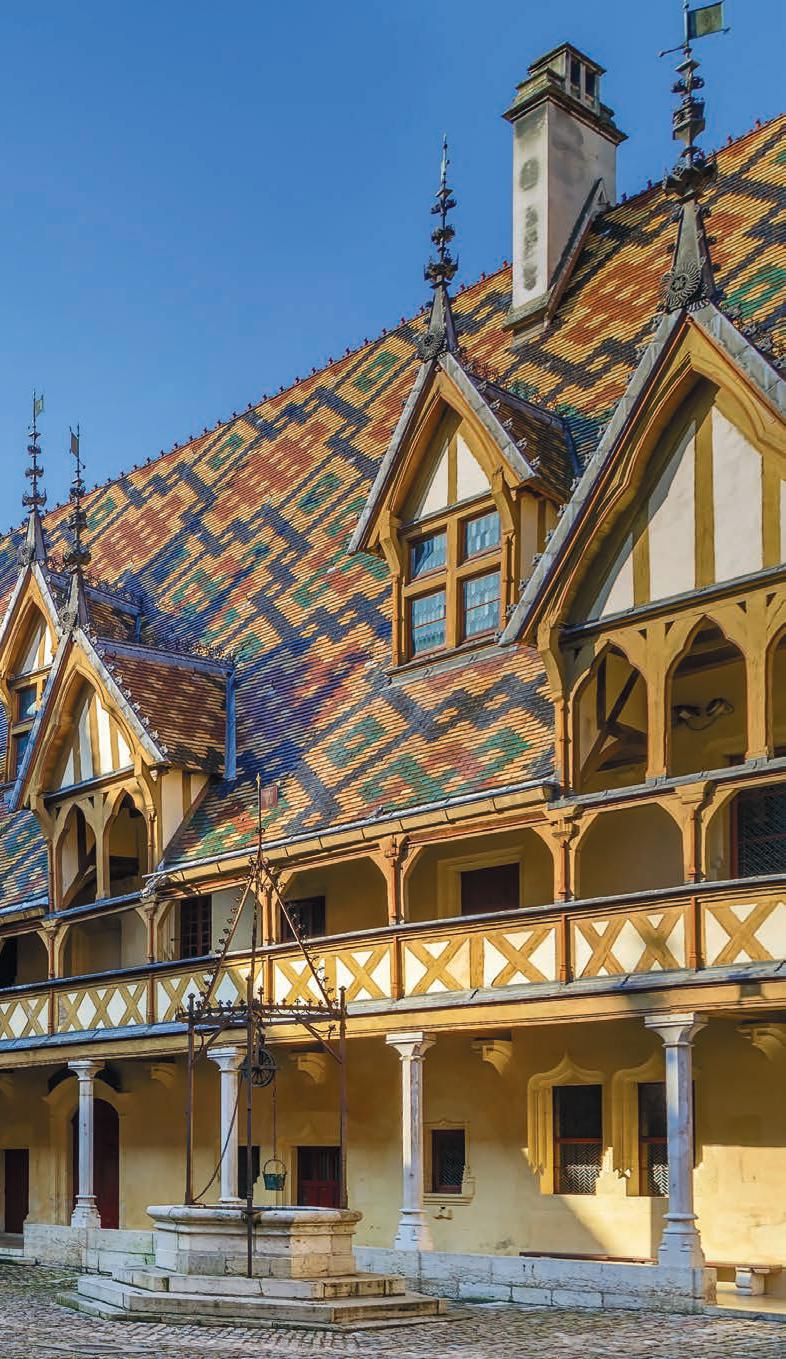
Stepping into the central courtyard (Cour d’Honneur) on the first part of my self-guided tour, I was met by a marvellous sight. With their half-timbered façades, ornate dormer windows, and polychrome roof tiles in intricate patterns, the buildings enclosing it are designed in a flamboyant, Flemish-Gothic style, typical of the region. They also project Rolin’s worldly wealth and power, whilst hinting at the treasures within.
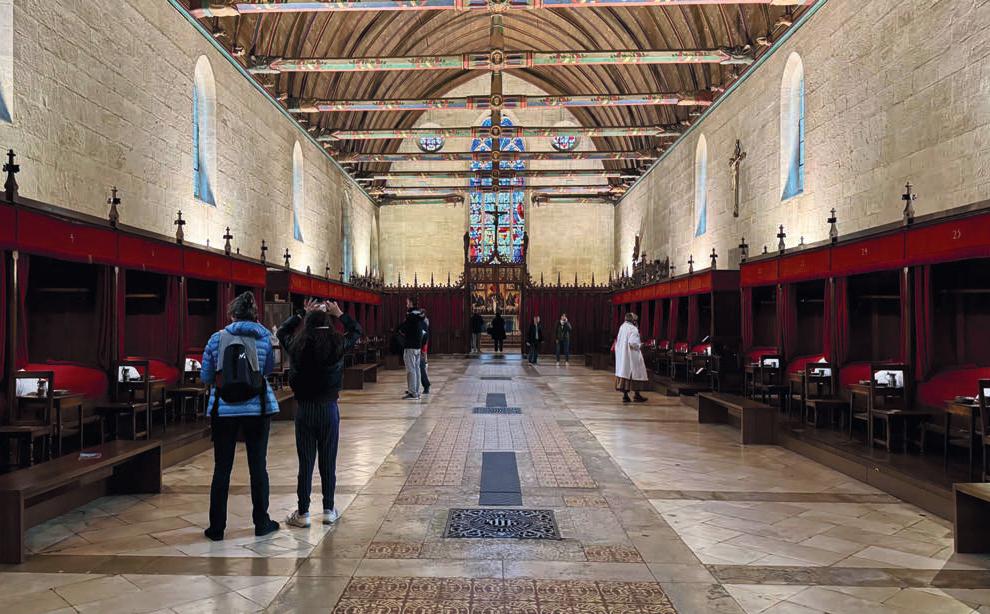
Next, I entered the Grand Hall of the Poor (Grande Salle des Pôvres). This vast (50m by 14m) room, with a vaulted oak-panelled roof that looks like the hull of an upside-down boat, is where most of the patients were cared for. At first sight, the beds – arranged in long rows either side of the hall according to Rolin’s instructions – look surprisingly plush, even for a ‘palace’. However, historical records show that they were often occupied by two patients. As well as offering more capacity, this was a practical solution to cold nights (the hall wasn’t heated originally), even if it risked spreading disease. Each patient had a personal chair and chest, though, and curtains ensured their privacy. They also ate from ‘posh’ tin (not wooden) dishes and were served wine with their meals – although this was viewed as a medical necessity, rather than a luxury.
“I EXPECTED THE ALTARPIECE TO BE IMPRESSIVE – BUT THE VIBRANT COLOURS AND THEME TOOK MY BREATH AWAY”
ARTS AND TREASURES
Continuing my tour, I came to the chapel, which was built adjacent to the hall, so patients could see and participate in Mass from their beds. As I discovered, it is also where Rolin’s beloved Guigone – as devoted as she was devout – is buried. I then moved through the sumptuously decorated Saint-Hugues room, where the ‘sick with means’ were treated from the 17th century onwards, and the Saint-Nicolas room, which features a slab of glass in the centre, through which I could see the River Bouzaize flowing beneath the building. As well as supplying the hospital with fresh water, the river also acted as a waste disposal system (I’ll leave the details to your imagination, dear reader).
Afterwards, I delved deeper into the hospital’s past at the kitchen, laboratory (supplied by the hospital’s medicinal garden) and dispensary, with its 128 different earthenware jars, before entering the penultimate Saint-Louis room. Here, I found an amazing straw model of the Hôtel-Dieu, which was built by a solider between 1738 and 1754 as payment for his stay. Given its faithful detail, it may well have served as a guide for the mid-19th century restoration of the Hôtel led by architect Maurice Ouradou (his pen and wash drawings in the museum are exquisite). This renovated the roof tiles in the courtyard and generally ramped up the Gothic styling. Intriguingly, the original designer of the building from the 15th century remains unknown.
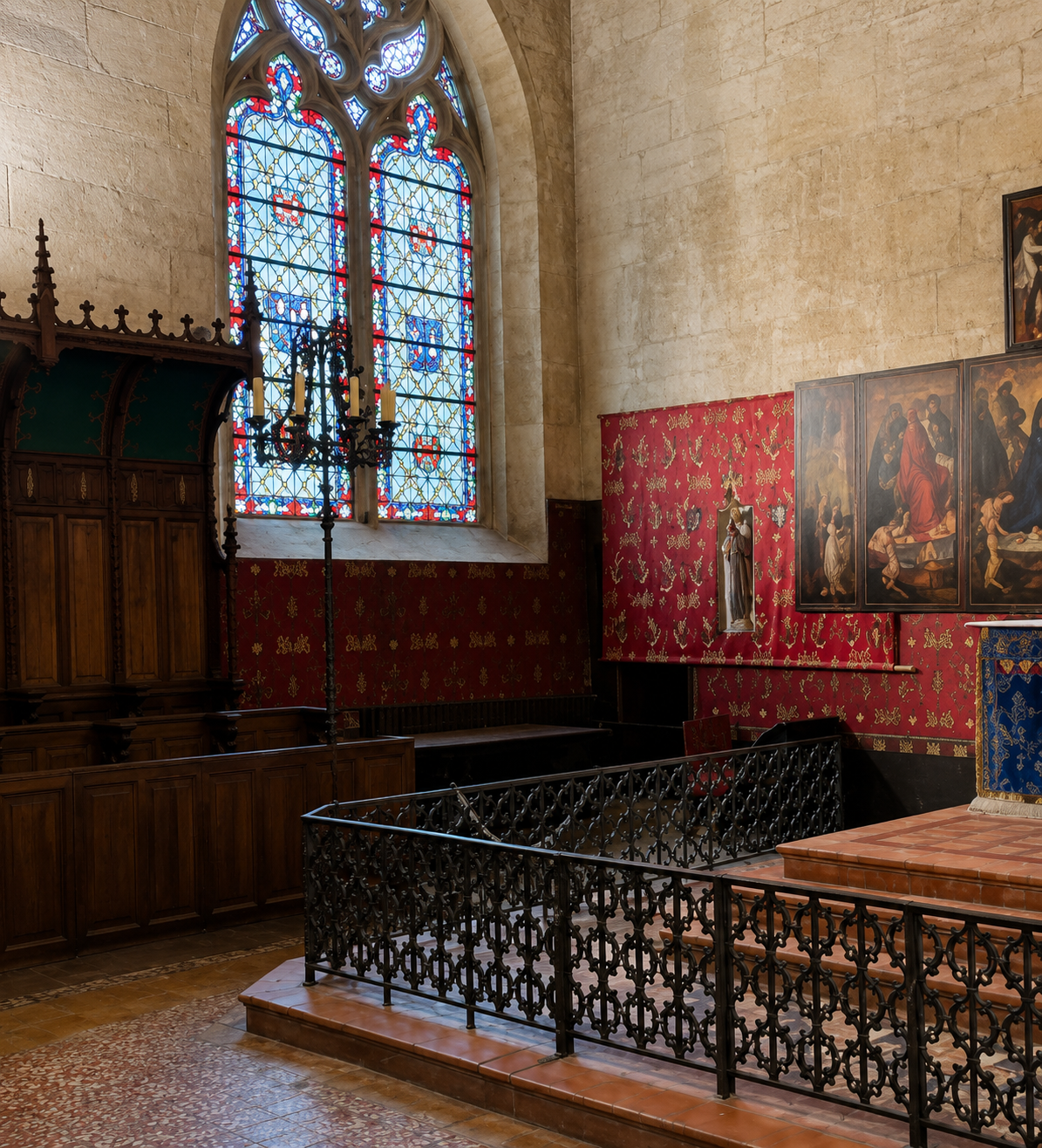
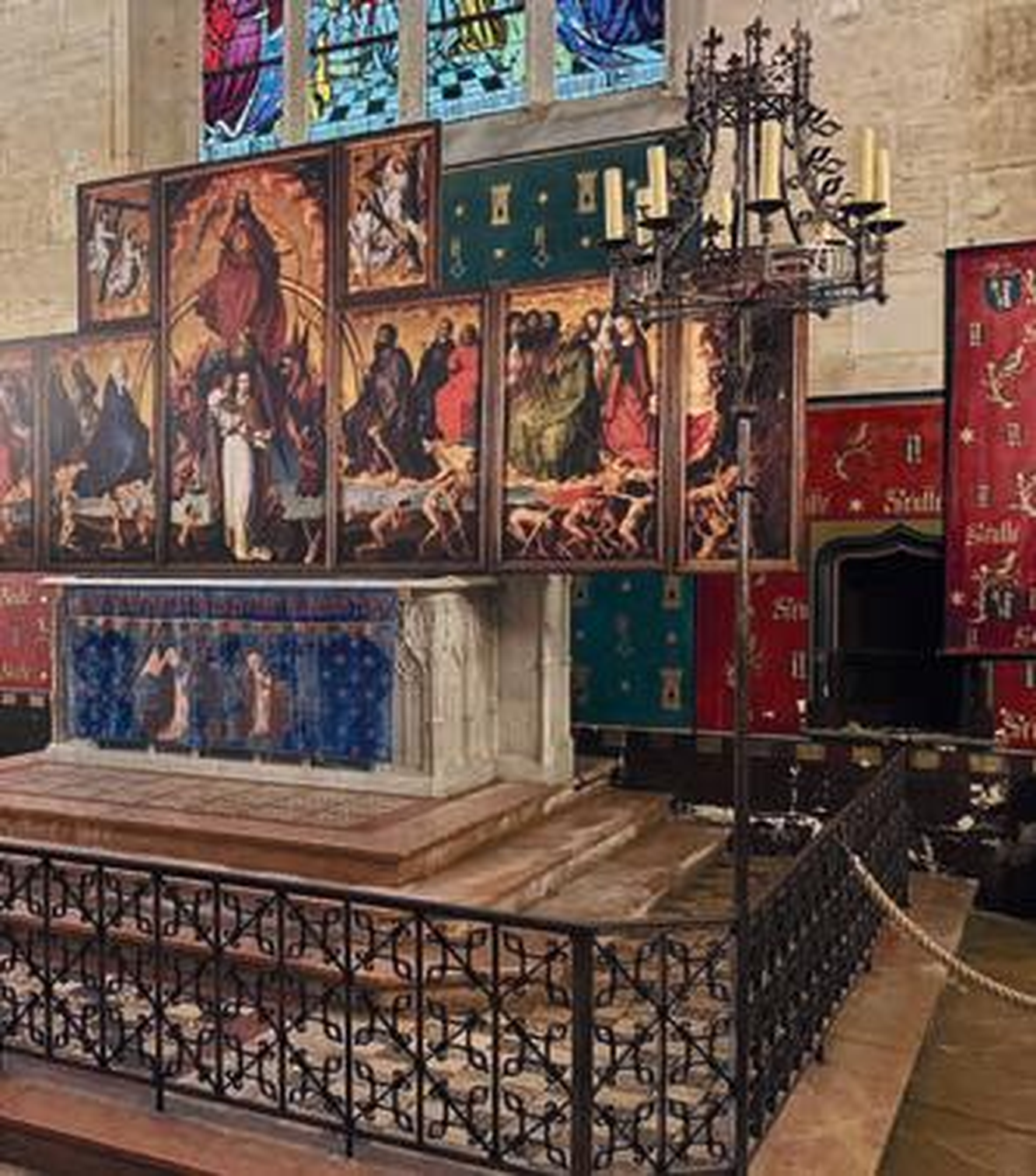
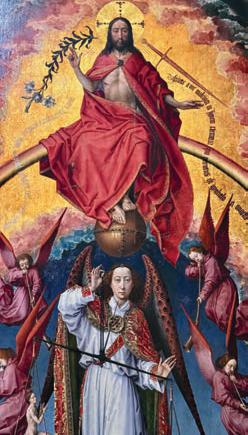
Finally, I reached the exhibit I was most excited to see: The Last Judgement altarpiece. Commissioned by Rolin and painted by the influential Flemish artist Rogier van der Weyden, this remarkably well-preserved painting typifies the Northern Renaissance style. It was also created in the form of a polyptych, consisting of nine oak panels. Originally, it was hung in the chapel, but the museum took the sensible decision in the mid-1970s to display it in a dedicated and darkened room. I expected it to be impressive – but the vibrant colours, astonishingly meticulous approach and dramatic (weighing of souls) theme, took my breath away. In contrast, the closed polyptych beside it (featuring Rolin and Guigone at prayer) is more sombre in tone, although it is still a stunning piece.
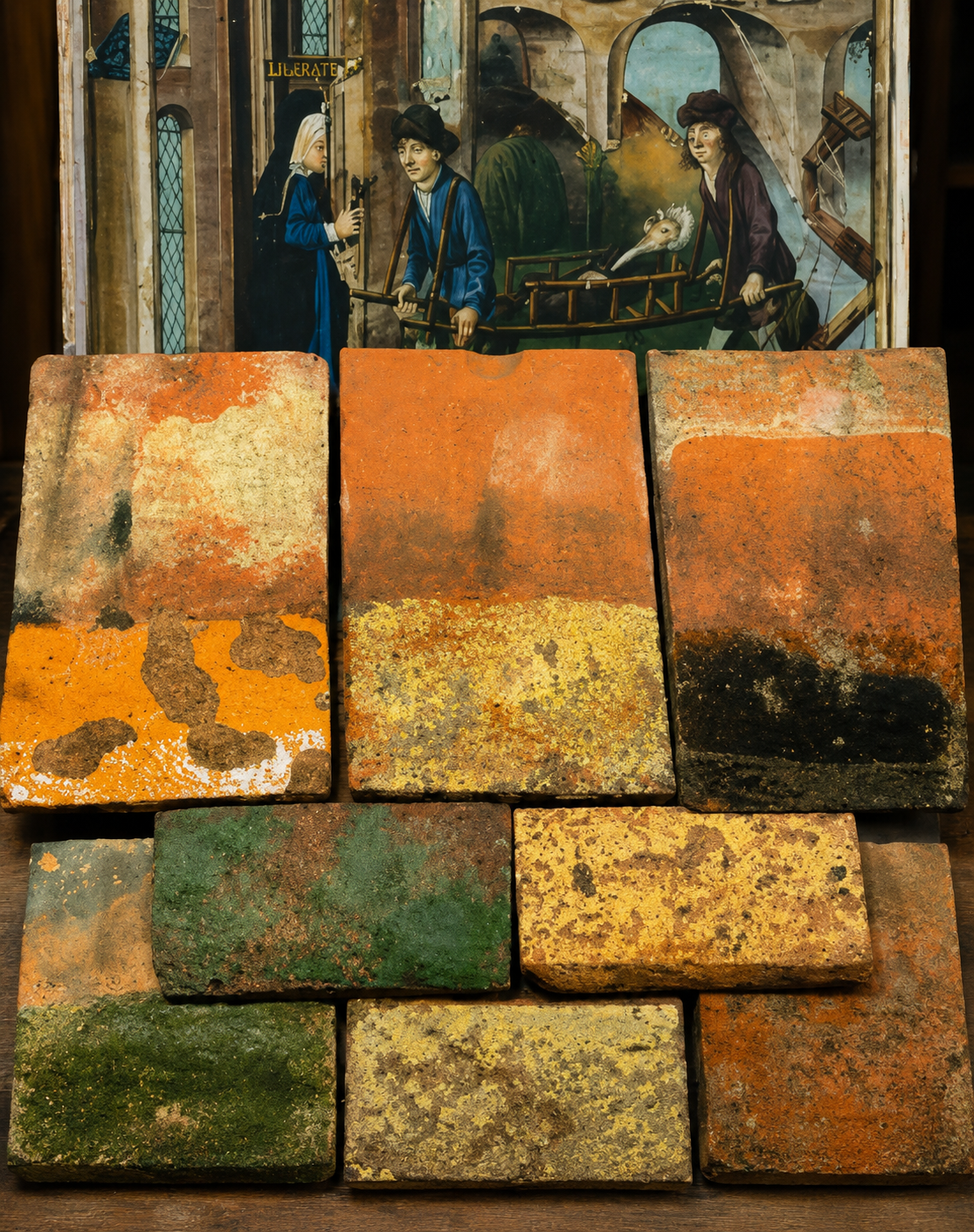
The Hôtel also holds an extensive collection of tapestries dating from the 16th, 17th and 18th centuries, which are hung in several of the rooms. If you’re an art lover like me, you’re in for a treat. For a bit of fun, you can play ‘spot the Rolin coat of arms’ in the museum (clue: golden keys) as it’s practically everywhere. Look out also for the very interesting display which shows how the roof and floor tiles were produced by artisans from the Middle Ages in three distinct stages, finishing with the glaze.
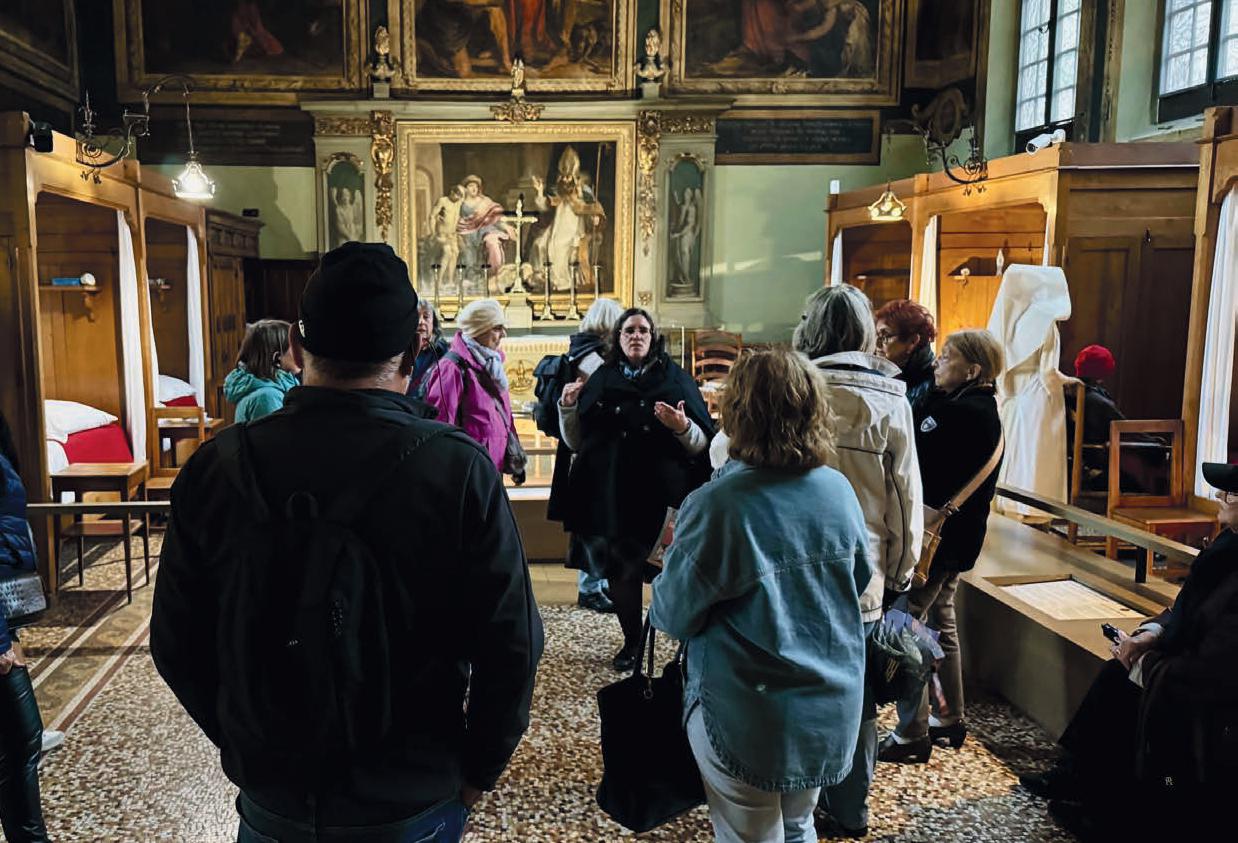
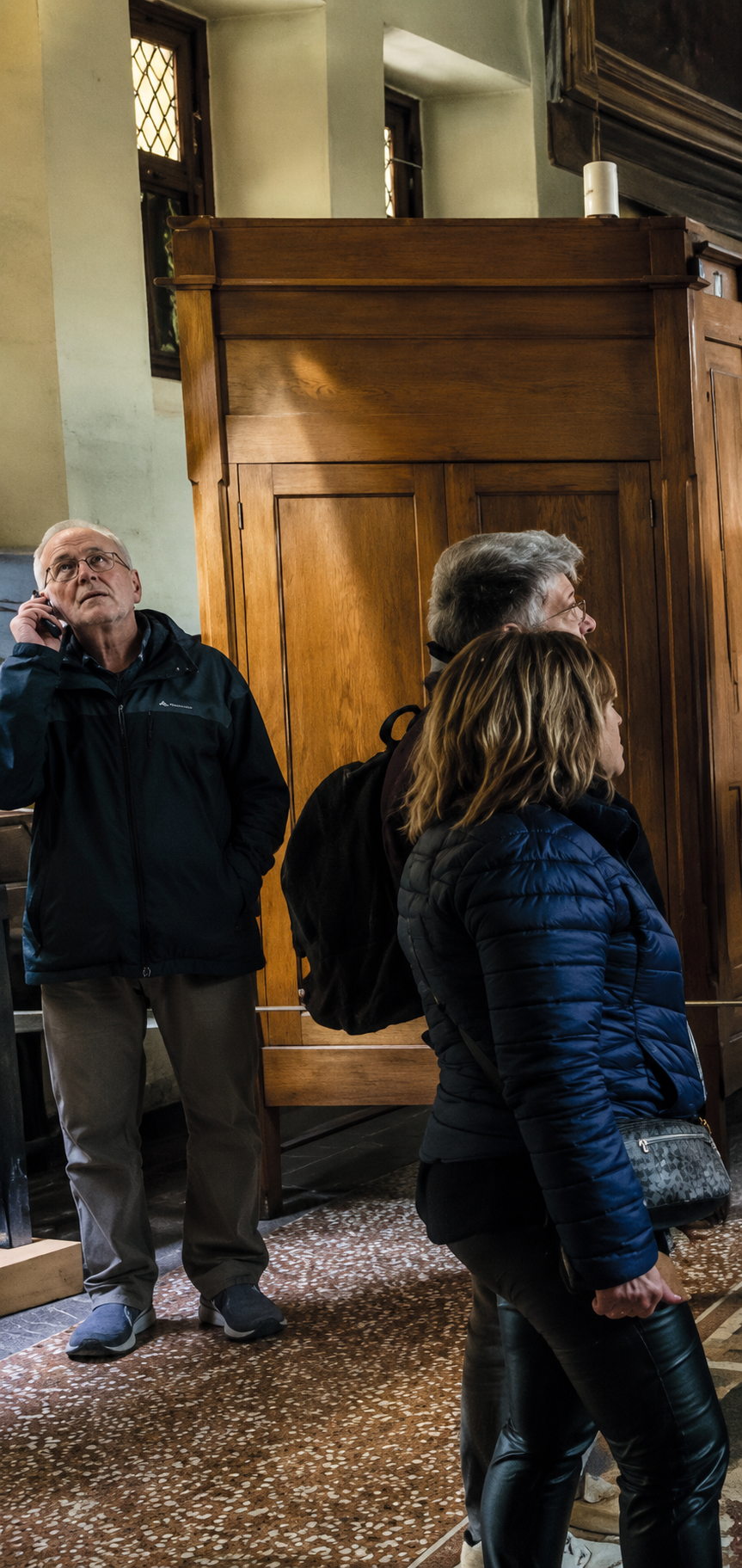
The vast Grand Hall of the Poor, lined with plush-looking beds where most of the patients were cared for; visitors enjoying a guided commentary in the Saint-Hugues room; the chapel with the altarpiece reproduction; a detail from The Last Judgement; some of the original roof tiles
END OF AN ERA
In 1971, a new general hospital opened in Beaune, named after Philip the Good, Duke of Burgundy, under whom Rolin served. It brought an end to the Hotel Dieu’s role as a hospital after five centuries.
Today, the museum on site welcomes almost half a million visitors a year, and the Domaine des Hospices de Beaune continues to produce prestigious (Grand and Premier cru) wines, aided by donations.
Every third Sunday in November, these are auctioned at the covered market in the charming town centre. The proceeds help to fund the hospital, as well as other care institutions in the area, run by the Hospices Civils de Beaune foundation. In fact, the auction – conducted by Sotheby’s since 2021 – is considered the biggest of its kind in the world.
The regional tourist site describes the Hôtel-Dieu des Hospices de Beaune as the ‘historic monument that best evokes Burgundy’ and I heartily agree. But it’s also a unique place in France that offers a fascinating insight into the history of the country’s charitable hospitals and much more besides. If Nicolas Rolin happens to be looking down from on high, I’m sure he would be proud of his legacy.
BEAUNE ESSENTIALS
GETTING THERE
FLIGHTS
Regular flights (budget included) operate from major UK airports to Lyon with around 2 hours’ flight time. It’s about 90 minutes’ drive to Beaune. Or you could take the regional (TER) train from Lyon to Beaune, which takes around the same time.
TRAIN
London St Pancras/Eurostar to Beaune station via Paris and Dijon takes around 5h 30 m.
ACCOMMODATION
Hôtel le Cep 5-star spa hotel in the centre of Beaune. www.hotel-cep-beaune.com/en
Beaune Sweet Home 4-star apartments in the centre of Beaune.
CONTACTS
Hôtel-Dieu des Hospices de Beaune
booking-hoteldieu.hospices-de-beaune.com
Burgundy Tourism
From France Today Magazine
Ohlala! It looks like you’re not a Member yet
Join to view this content!
(If you are a Member, log in or reset your password below or contact us so we can help)
- Log in
- Forgot password