
A Castle on a Hill
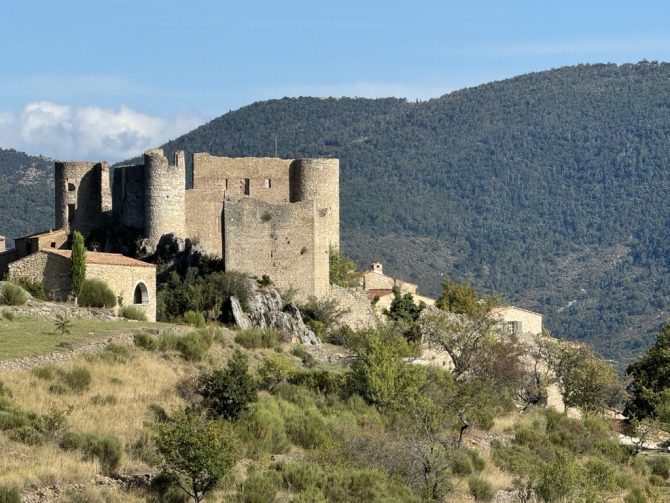
Winding through the sun-soaked hinterland of the Var, a road trip to the high-perched village of Bargème offers not just a glimpse of Provençal life—but a soul-deep sense of renewal.
I have often enjoyed forays into the Var region of Southern France, driving through old villages tucked into the hillsides, each with a story to tell. Today, heading north-east from Fréjus on the Côte d’Azur, I venture inland towards the red rocks of the Estérel Massif which stretch 10km wide and 15km long. Open country roads meander across the terrain, swathed with vineyards, their grapes drinking in the warm morning sunshine.
Medieval charm and natural gorges in Callas
Within 30 minutes I arrive in the ancient hilltop town of Callas with its central stone fountain overlooking a cobbled square where metal chairs spill out of small cafes and locals gather. Lured by the aroma of freshly baked croissants, I take a seat and order one with an espresso. The bell tower clock at the far side of the square sounds the hour as a small flock of birds fly out, startled by its chimes. A medieval gateway with its red and white banner of Callas leads into the old walled town where narrow streets weave past a quaint antique shop full of discarded treasures, tiny pottery studios framed by blue wooden shutters and ivy-covered facades disguising modern interiors. I notice several old properties with ‘A Vendre’ signs outside. This area of the Var, being so close to the beaches of the Gulf of Saint Tropez, attracts visitors from around the world who come to enjoy the tranquility, the impressive scenery of the azure waters of the Gorges du Verdon, Gorges du Blavet and the sporting activities available for all the family. The waterfalls of Gorges de Pennafort are stunning and I visit the nearby 4-star Hostellerie Les Gorges de Pennafort with its elegant Provencal-style villa. The hotel boasts a gastronomic restaurant, outdoor pool, tennis courts and spa and even has outlets to charge your electric car.
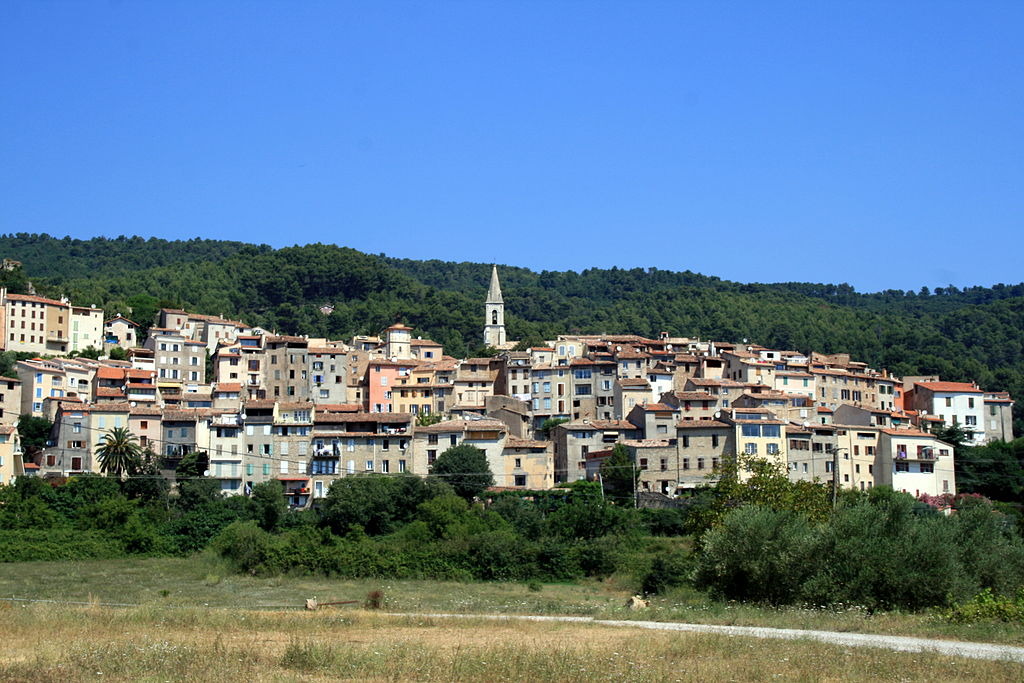
View of Callas
Bargemon, the provençal pearl
A little further north into the Estérel lies picturesque Bargemon, known as ‘la Perle du Haut Var’ (Pearl of the Haut Var region). It is famed for its numerous stone fountains, the ancient churches of Saint-Etienne and Chapelle Notre-Dame de Montaigu, and scenic lakes at Sainte Croix and Saint Cassien. There are also no less than 5 museums in a town of 1,500 inhabitants. Bargemon and its environs offers a good choice of places to stay including Chambres d’hotes at Villa La Roque in Figanieres and the charming La Belle Histoire in Claviers; or right in Bargemon the romantic B&B Maison Fontaines. At an altitude of 480 meters, Bargemon’s surrounding woodland trails, hamlets and rolling hills provide the perfect place for hikers. There are some good restaurants in town, including Restaurant Le Tandem with its lovely terrace where the lamb cooked in wood fire ovens is recommended. L’Estanco in central Bargemon offers pizzas, or delicious red mullet salad for lunch. If, like me, you are passing through and just want a nice cold beer, then try the Café du Commerce along the high street and chat to the locals.
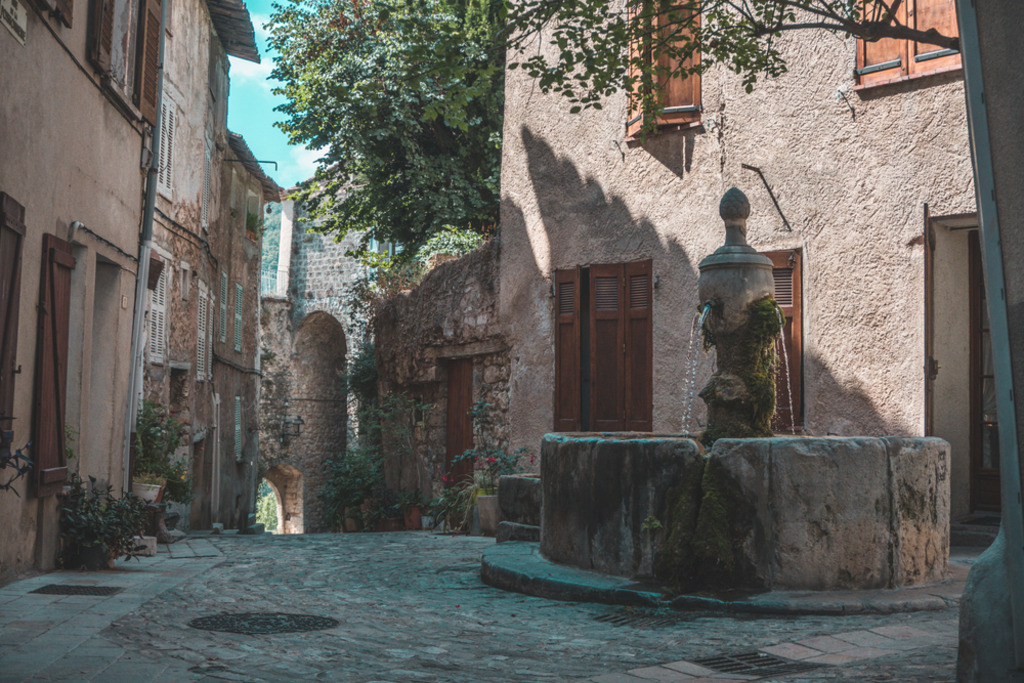
Bargemon © Shutterstock
A restorative experience in Bargème
My final destination, 75 minutes from Fréjus, is the 12th-century feudal village of Bargème, perched some 1,000 meters above sea level, at the highest point of the Var. The shell of the ancient castle still stands, high on a rocky summit, the worn face of its embattled stone walls and desolate towers a proud sentinel in the impressive landscape. At first sight, its ramparts shimmering in the blazing blue sky, I am reminded that this ancient place with its so-called ‘precious stone’ is a member of ‘Les Plus Beaux Villages de France’ (The Most Beautiful Villages of France). Its remote location has apparently preserved its seductive charm, and as I leave the pine forest and fields of red rose earth below to ascend the steep approach road, I cannot help but peer up at the imposing ruins.
I park my car at the foot of the path that leads to the portcullis gateway embedded in the old defensive walls. ‘Are there shadows within its shadows?’ I wonder as I marvel at the bloody history that weaves its strands back through the loom of past battles and sieges.
The place seems deserted as I climb the steep lane lined with a terrace of old stone cottages and walled gardens. At the very top of the village stand the medieval ramparts of the Château de Sabran de Pontevès – a once illustrious Provencal family originating from the 9th-10th century when they owned lands stretching between the Cèze and Rhône valleys. The Sabrans were faithful to the Counts of Toulouse, joining the First Crusade and earning the military title of Baron, approved by then King of France. In the middle of the 13th century, the castle was subsequently built in Bargème to reinforce the Sabran’s status in the area. By the 16th Century, in the midst of religious wars, the castle was gravely damaged, not to be restored until the 1980s and 90’s and in 2016 was declared an historical monument. Nowadays, the site hosts concerts, exhibitions, guided tours and manifestations of Provencal culture. In summer, it holds its Grand Aioli food festival and concerts of ancient music.
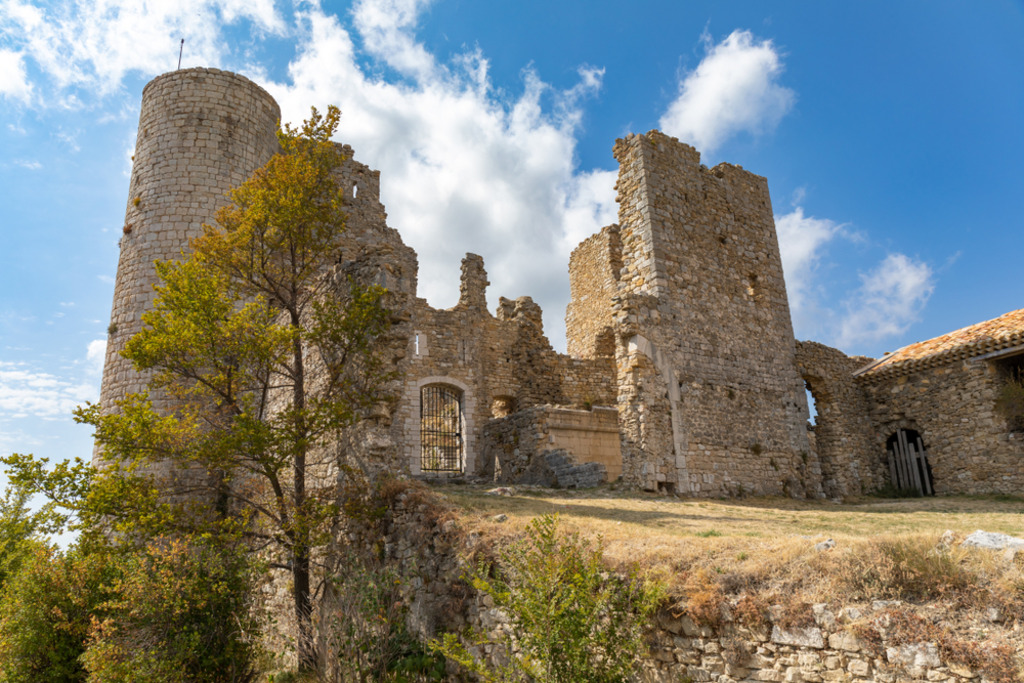
Château de Bargème © Shutterstock
Next to the castle ruins, and still intact, sits the Church of Saint-Nicolas, its side-entrance sheltered from the shimmering heat and hot wind stirring the towering plane trees. The interior is in typical Romanesque-style with small, semicircular arches, decorative altar figures and elaborate guilt-edged paintings on each wall. At the western end of the chateau’s esplanade is the Chapel of Notre-Dame des Sept Douleurs (‘Our Lady of the Seven Sorrows’) – once the site of a bloody massacre. In atonement for the massacre, which included 5 members of the Pontevès family, the villagers were ordered to build the chapel.
Time for lunch, as I tread down century-worn stone steps leading away from the ridge and back to the main Rue des Ormeaux to a delightful little restaurant I passed earlier, L’Amandier Rose, run by Charlotte & Charles. This is one of half a dozen restaurants in the village, where during winter months the number of locals drops from 214 to 28! The dining room, the main room of the original house, overlooks the valley with a door onto the adjoining terrace, ablaze with bougainvillea, that enjoys the perfect vista. Today it is too windy to sit outside. Inside, the ambiance is cozy and tables are set with linens and fresh flowers, all framed by exposed stone walls. The set 3-course menu, etched on the blackboard is excellent value at €31 – I order risotto to start – in cream of aubergines with roasted tomato coulis and fresh goat’s cheese with a zest of lemon. For the main course I choose filet de St. Pierre a fish roasted with pistachios, creamed polenta, caramelized onions in a light lemon dill sauce. The cuisine boasts family recipes inspired by local produce such as goat cheese, raw honey, fresh seafood, meats and vegetables, all lovingly prepared and presented. I heartily recommend the Profiteroles de Nana for dessert!
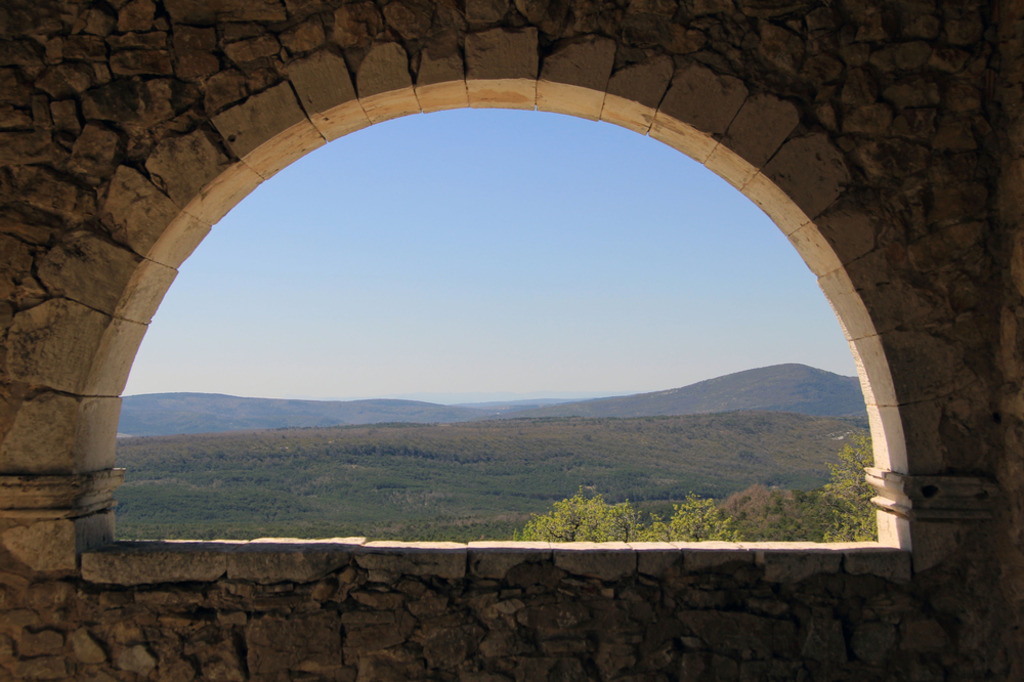
View from the castle of Bargème © Shutterstock
After my delicious lunch, I take a last blustery stroll to check the B&B accommodations available. I pass the Chambres d’hotes La Fontaine with its pretty courtyard garden, and on to L’Esprit des Collines nestled below the ramparts, an outdoor ‘breakfast’ terrace clinging to the cliffside. It is owned and run by an effusive French/Italian sculptor Hugues Liberato. Hugues spends part of the year at his villa in Positano but is very much a part of local life in Bargème when he’s here, having tea with the locals and displaying his quirky metal goat sculptures along the top of the ramparts!
I sit and enjoy a glass of wine with Hugues in his rustic kitchen as he recounts stories of his life – friends in Italy, his constant passion to make art, and the many visitors he welcomes to his home in Bargème. His good-tempered dog listens patiently at Hugues’ feet, as if he’s heard it all before. I study the large, expressive canvases and quirky sculptures filling the space, all reflecting the man I see before me, and begin to appreciate a certain magic emanating from the ‘precious stone’ that surrounds us.
Hugues then asks if I’ve ever read the book Castle on a Hill by Evelyn Watts, an enchanting tale of hope and renewal written as a true part of Bargème’s more recent history. It tells the story of two young English women, who, in 1949, gave up everything and came to Bargème to open a home for children, damaged by the suffering in occupied France during WWII and provide them a healthy place in which to recover.
I can quite believe it as I say my goodbyes to Hugues, to the ancient castle with its prolific history and magnificent views. Standing there with the wind pressing against my skin, I feel my own sense of renewal at having been to this special place.
Share to: Facebook Twitter LinkedIn Email
More in Castle, Provence, villages
Related Posts
Leave a reply
Your email address will not be published. Required fields are marked *