
Discover Corrèze: France’s Hidden Treasure of Villages and Valleys

Quieter than its neighbours, Corrèze doesn’t receive the attention it deserves… thankfully.
📢 As you scroll through the beautiful images, why not listen to our narrated article? It’s a great way for France Today Members to dive deeper into the story while enjoying the visuals. We hope you love this experience, and we’d love to hear what you think—feel free to share your thoughts in the comments below! Happy listening!
Shhh. Don’t tell anyone. I think you might like Corrèze. And you won’t want anyone else to know. You see, most visitors remain within the departmental lines of neighbouring Dordogne to the west, or the volcanoes of the Auvergne to the east. Corrèze, one of the least-populated departments in France, is tucked quietly between the two without fanfare, a rural outpost with one excellent city, Brive-la-Gaillarde, and a multitude of preposterously charming villages.
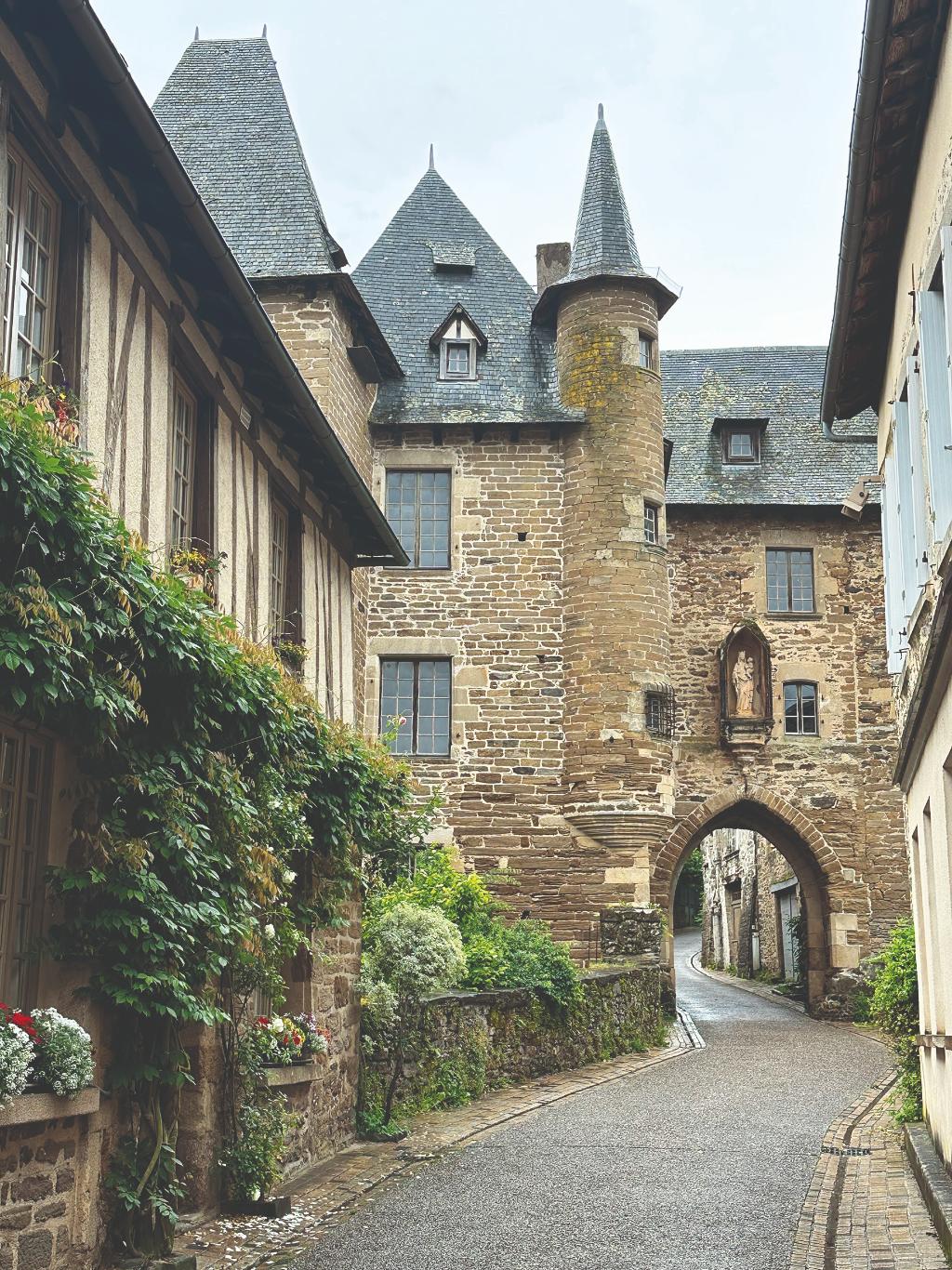
Pretty Uzerche is a fortified town full of narrow alleyways
I zigzag my way through the department from one village to another. Ségur-le-Château, in the northwest corner of Corrèze, is my starting point. It is one of six villages deemed Plus Beaux Villages de France within the department (I visit five of them). It’s rained in the night, and mist seeps through the Auvézère valley, like a spectre’s cloak weaving among oak trees and encircling Ségur’s church tower, which pokes through the haze.
The flooded River Auvézère that, but for a flower-adorned bridge, bisects the village, gurgles chocolate brown against riverside 15th- and 16th-century buildings. They sit below the imposing remains of a hilltop castle, the seat of the first Viscounts of Limoges. Coffee and cake in Café Lou Castel, one of these historic buildings, is like sitting down to breakfast in a private home, with rustic tablecloths, jam jar posies of fresh flowers and a little snug with a log-burner.
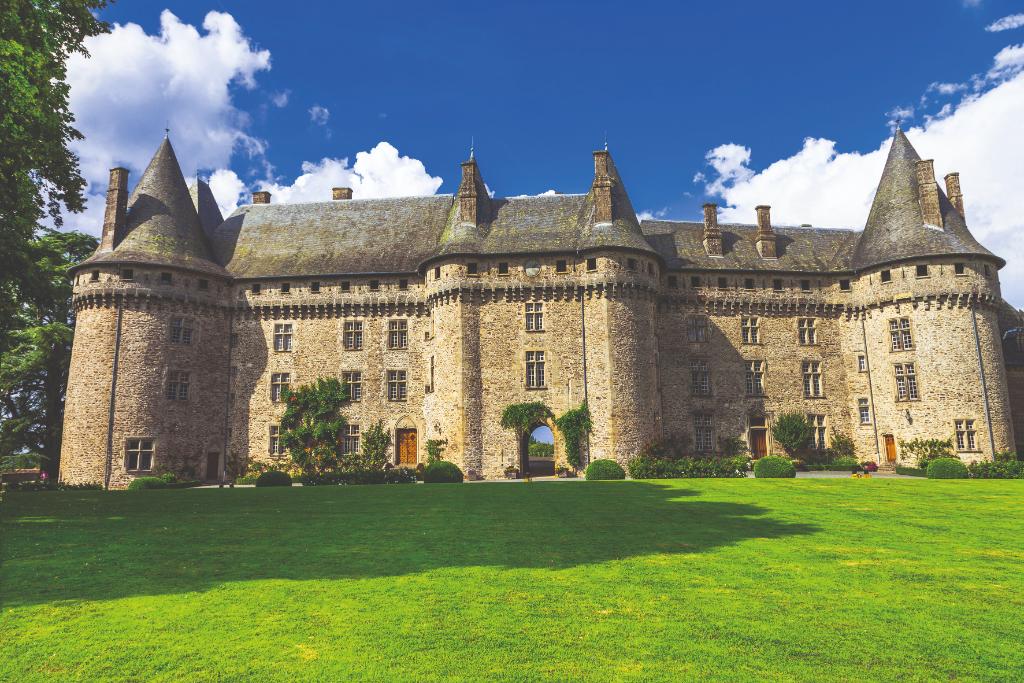
Arnac Pompadour chateau, Photo: shutterstock
I travel the short distance to Arnac-Pompadour, known for its extensive château gifted by Louis XV to his mistress Madame de Pompadour. Pompadour, the village, is also renowned for its National Stud, which breeds Anglo-Arabian horses; the racecourse and show jumping arena can be viewed from the château. Within the castle walls are exhibitions on the life of the king’s favourite mistress, while a visit to the Marquise’s stables offers a glimpse into daily life at the stud. Driving east through scenic countryside filled with woods and meadows, I reach Uzerche, the first of Corrèze’s small towns I visit. Perched on a hill above the River Vézère, the fortified town is full of narrow alleyways tucked between rows of appealing stone houses, each with its own round tower, like miniature châteaux. La Porte Bécharie is the only survivor of the original nine gates within the ancient walls that once circled the town.
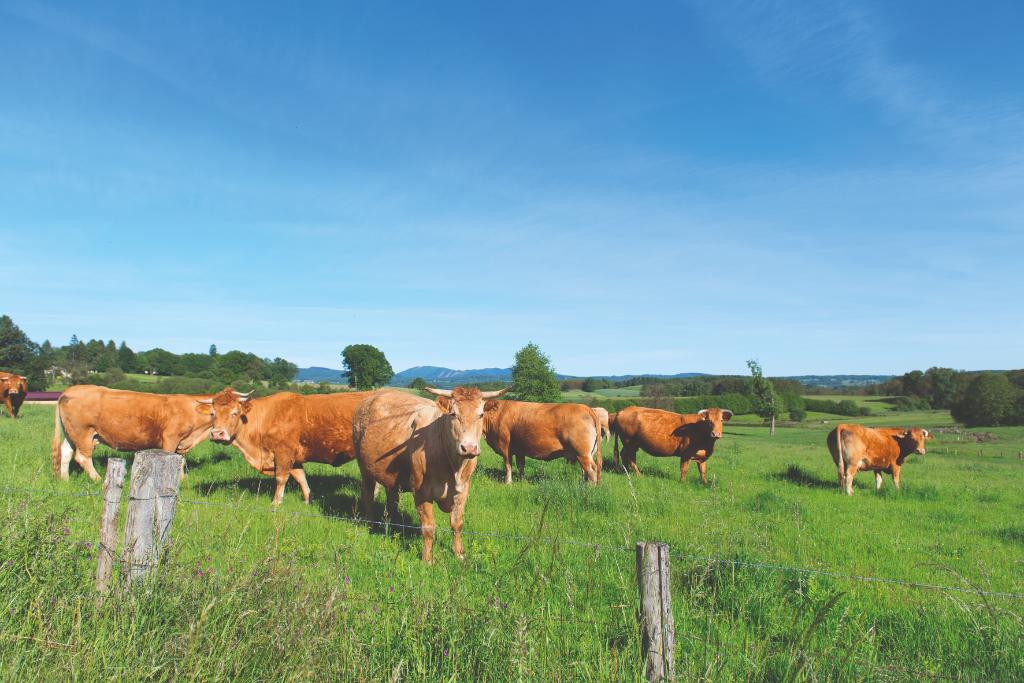
Salers brown cows Treignac, Photo: Shutterstock
Brown Salers cattle dot the rolling countryside as I continue east, followed by a noticeable increase in trees as I approach the Parc naturel régional de Millevaches en Limousin. Affieux offers a 12th-century church and a château, but it pales in comparison to Treignac, designated a Petite Cité de Caractère. The Thursday evening market is taking place beneath Treignac’s stone-pillared marketplace when I arrive, local producers tempting customers with artisanal breads, cakes and plants. Among the boucherie, fantastic épicerie and posh chocolaterie is Treignac’s church of Notre-Dame-de-la-Paix, with its unique twisted bell tower. The town is a popular stopover for Saint Jacques pilgrims en route to Rocamadour.
A mellow landscape of oak, birch and pine unfolds as I continue east, through pretty Saint-Hilaire-les-Courbes, whose church shelters lakeside in the Vézère valley. Turning east, I cross the Vézère once more as it passes through the vast Lac de Viam (popular for angling and boating) to Meymac. The scenery as I climb to the Millevaches plateau – on the western edge of the Massif Central – is striking, though thick mist makes any search for Mont Bessou, the highest point at 1,000m, futile.
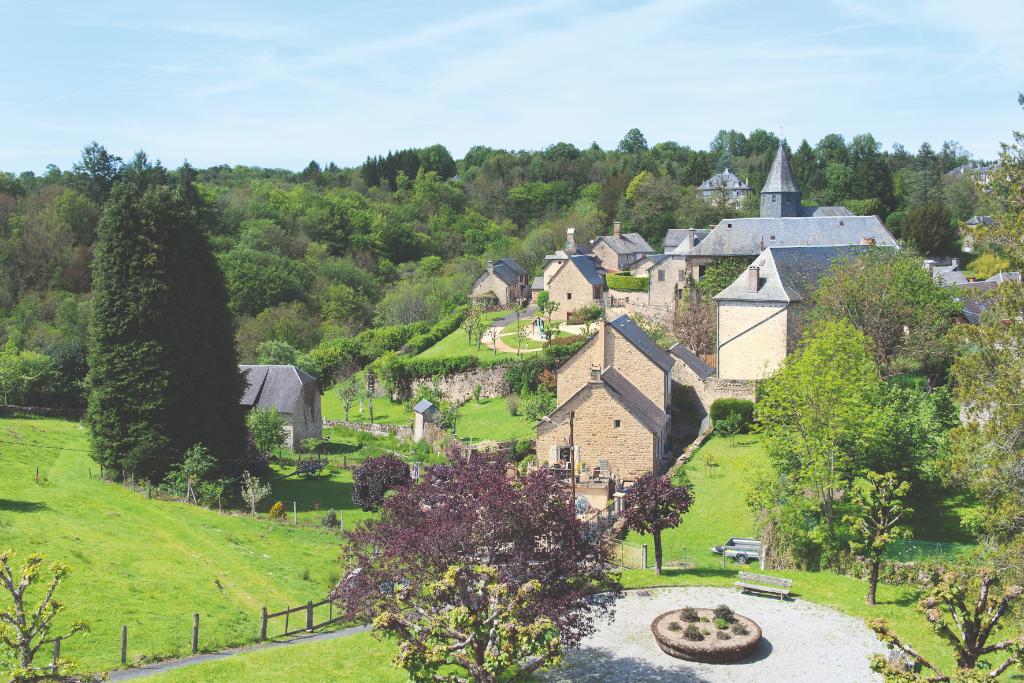
Treignac, Photo: shutterstock
This is Haute-Corrèze, with the village of Meymac at its centre. There’s the air of a mountain village, with houses made of granite sporting steep slate roofs to ward off winter snow. Life is focused on the upper town, with its water fountain and charming clock tower. In the lower town is the former Saint-André abbey, now a contemporary art centre.
Journeying southwest towards the village of Corrèze, I spot a signpost for a museum in the tiny village of Sarran. Its name is intriguing, and so I take a short detour to the Musée du Président Jacques Chirac. Housed in a purpose-built, contemporary architectural block is the most unanticipated museum in so rural a location amid quiet, wooded countryside.
Chirac, one of two recent presidents to have close connections to Corrèze (the other being François Hollande), bequeathed to the department his collection of 5,000 diplomatic gifts presented to him during his tenancy in the Élysée Palace. More than 1,000 of these ‘treasures’ are on display in the museum: everything from football shirts and carpets to trinkets, bling and gewgaws that wouldn’t look out of place on a vide grenier stall. Alongside is his presidential car of choice, a Citroën CX Prestige, and a reconstruction of the Salon Doré from Paris’s Élysée Palace, which houses a fascinating exhibition about the eight presidents of the Fifth Republic.
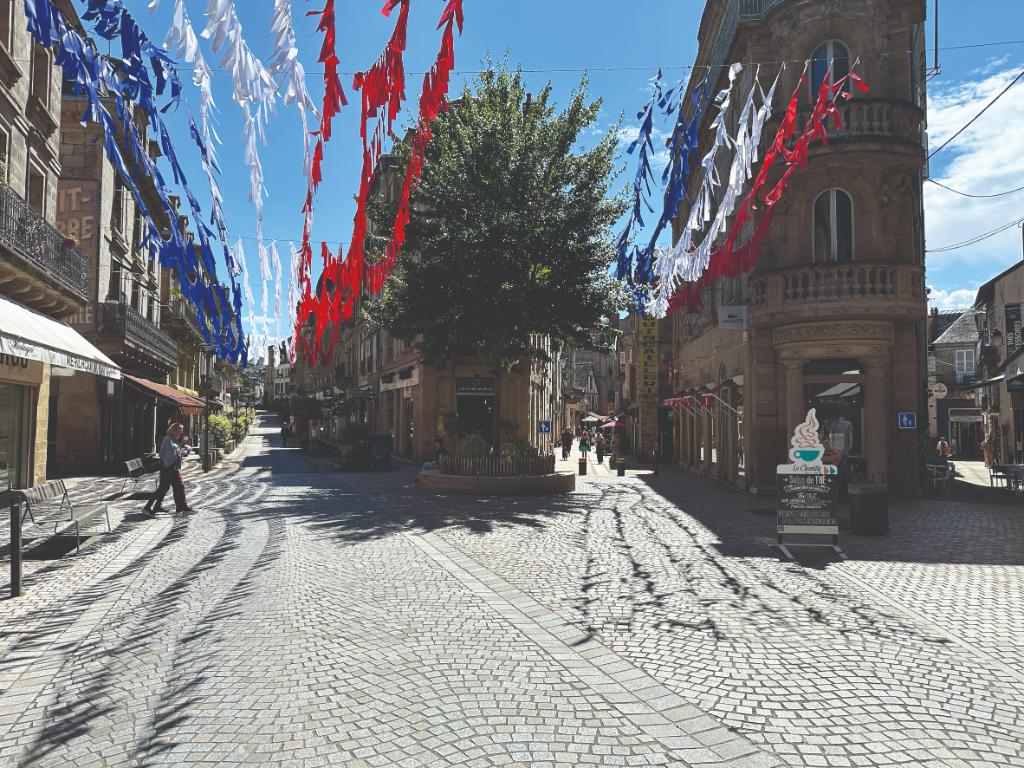
Brive la Gaillarde
I take a tiny, single-track lane through beech woods high above the River Corrèze to reach the village of the same name. The ancient, fortified town dates to the 9th century, and, like Uzerche to the northwest, there are many narrow passages with gateways to pass through, and a wealth of alluring granite stone houses. A waymarked circular walking route points out historic buildings from the 16th century, the golden era of the village.
Tulle, home of the French accordion and the fine, silk netting used to make ballet tutus, is the préfecture of Corrèze. Its narrow streets lie on the steep slopes of the river valley. But it’s Brive-la-Gaillarde to the west, near the departmental border with Dordogne, that is the largest city, and a fine cultural centre at that. Its elegant streets are a pleasure to wander, while Musée Labenche, the city’s art and history museum housed in an exceptional Renaissance mansion, is a must. Exhibits include the piano which belonged to composer Claude Debussy and a remarkable collection of tapestries from manufacturers in Aubusson and, anomalously, Mortlake in the UK.
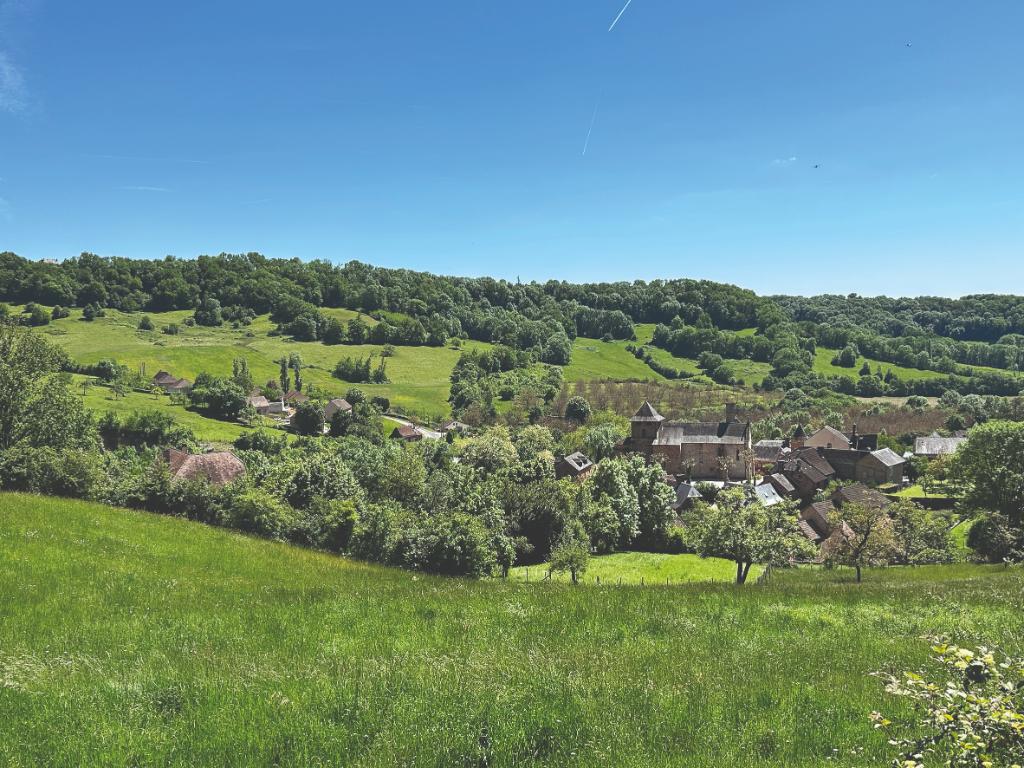
Noailhac
A visit to Denoix, one of the oldest family-run liqueur distilleries in France, is also a must while in Brive. Walking into the distillery is to step back a century, where among the various liqueurs and apéritifs created and bottled by hand here, is its most renowned, Suprême Denoix, made from green walnuts.
Following a short detour to discover the medieval hilltop village of Donzenac, to the north of Brive, I complete my exploration of Corrèze by stopping at numerous handsome villages in the south of the department. I have, arguably, saved the best until last. At the border with Dordogne, I stop first at Saint-Cernin-de-Larche, followed by the Lac de Causse, popular for water-based activities and its shoreside walking and cycling circuit. The gently undulating landscape is soothing as I pass through Rignac, Lissac-sur-Couze, Le Soulier and Chasteaux.
Wildflowers are in abundance – meadowsweet, pyramidal orchids and more – along the roadsides as I journey through Noailles before climbing to Turenne, the first of a string of Plus Beaux Villages. Three walking routes survey the village and its surrounding landscape; this is the seat of the Vicomte de Turenne, with eight centuries of history on view. I continue to first Noailhac, then Collonges-la-Rouge, the pair showcasing an anomalous streak of red sandstone amid the hills. Noailhac is the more peaceful of the two, with some charming walks along quiet lanes. Collonges-la-Rouge can be exceptionally busy, its lure of rust-red castellated mansions and pepper-pot towers attracting thousands of visitors each year. That’s, in part, thanks to the village’s former mayor, Charles Ceyrac, who created the Plus Beaux Villages de France categorisation; Collonges was the first village to be awarded the label.
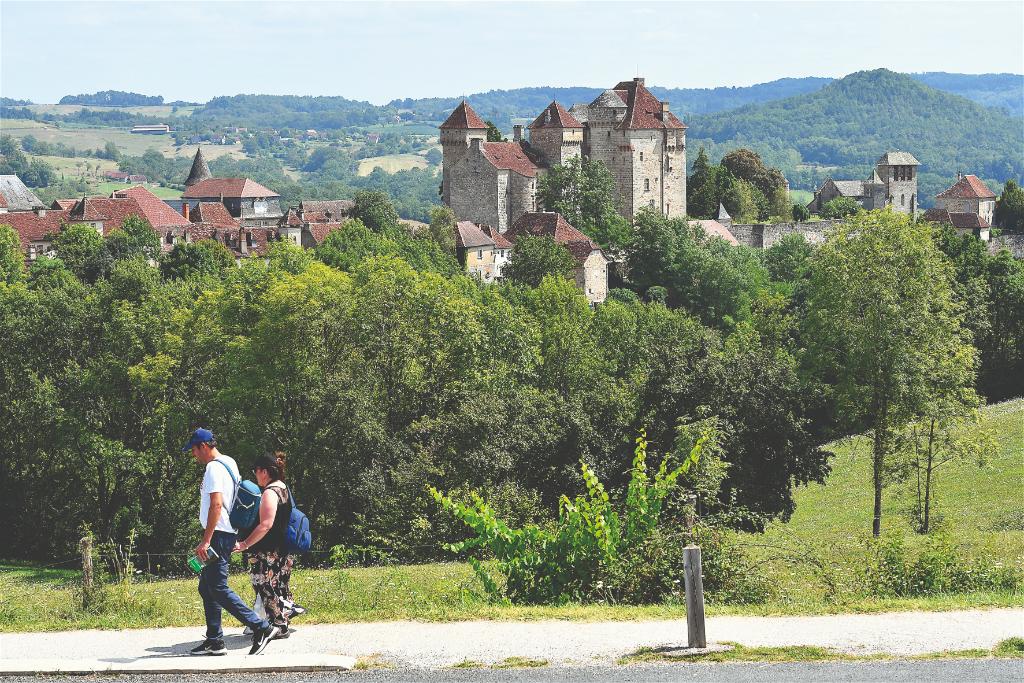
Curemonte, Photo: shutterstock
Close to perfection
To the southeast is medieval Curemonte (also a Plus Beau Village), built on a rocky spur with three châteaux. One of the best all-encompassing views is from the table d’orientation to the north of the village. Travelling east, I reach the Vallée de la Dordogne and, perhaps, Corrèze’s best-loved jewel, Beaulieu-sur-Dordogne. The Plus Beau Village is, as its name implies, on the River Dordogne. It’s rained heavily in the days before my arrival; the river is thundering through sluice gates, seeping over the right bank and leaving village street lights marooned.
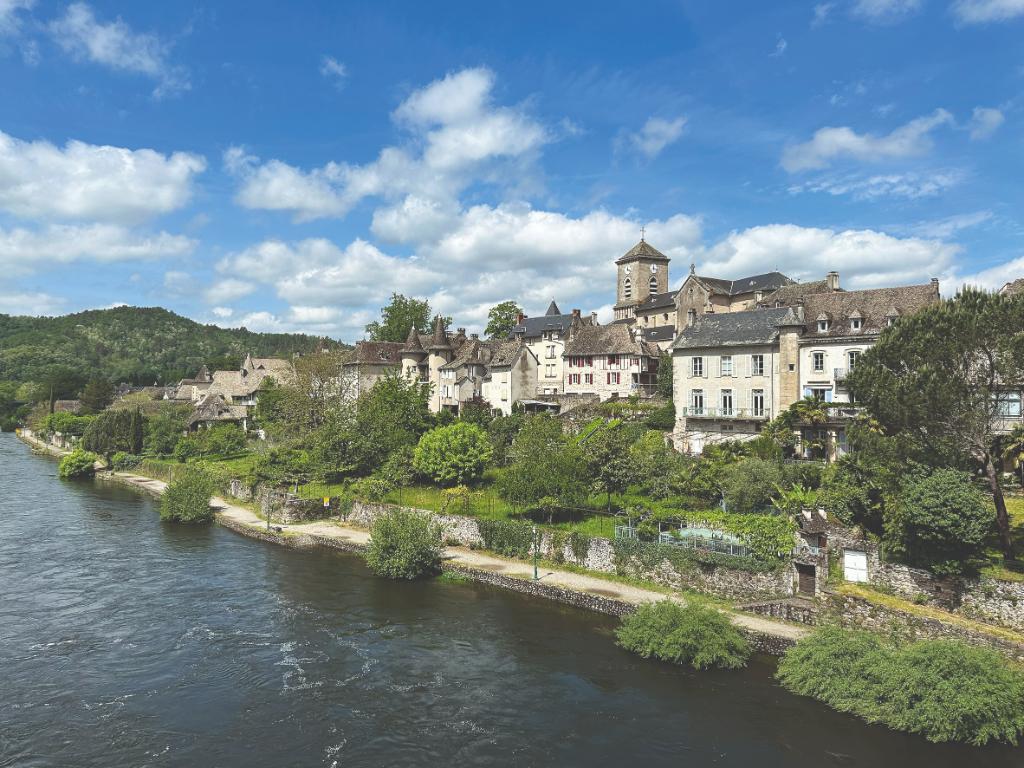
Argentat sur Dordogne
Corrèze’s fertile soil means thousands of tonnes of strawberries are grown in the fields around Beaulieu, and the Fête de la Fraise celebrates this each May. The bells of Saint-Pierre Abbey church ring out as strawberry tarts and ruby red cordials are devoured alongside punnets of just-picked fruit.
I follow the river upstream, stumbling upon hamlets like Saulières and Bassignac-le-Bas, close to perfection high above the river. Wildflowers carpet the landscape, replicating earlier visions of the department – a combination of undulating meadows and woods. Argentat-sur-Dordogne is my final stop, an eastern gateway to Corrèze. Houses dangle over the river, a hotchpotch of slate roofs and turrets, the homes of merchants who once used the town as a trading port, the river their thoroughfare. As I wander along the riverside path, coloured by vivid orange poppies, I deem Corrèze to be my new favourite department in all France. I think it will be yours, too.
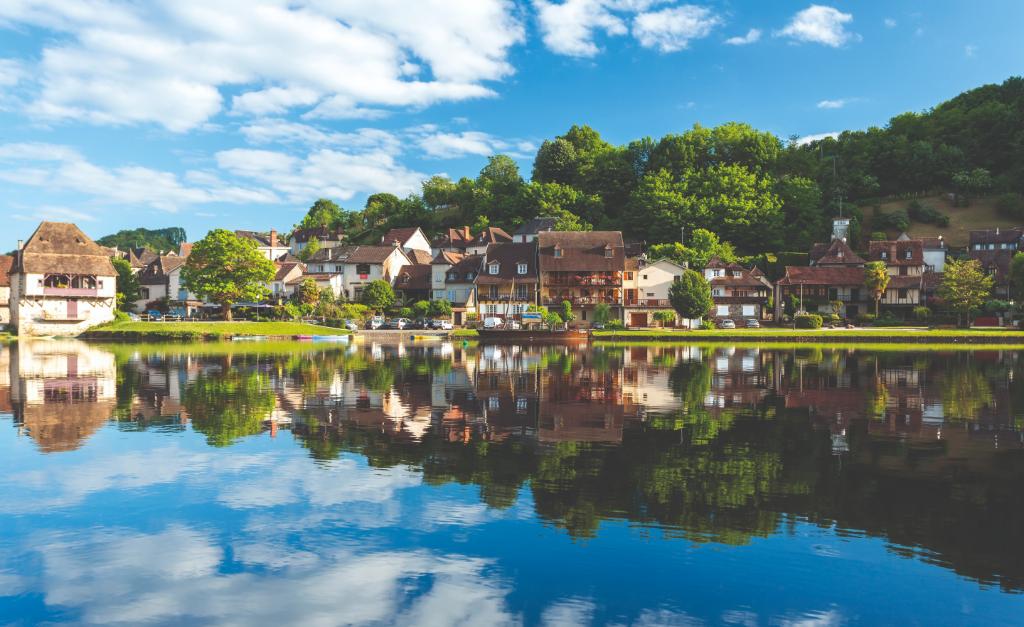
Beaulieu sur Dordogne, Photo: Shutterstock
CORRÈZE ESSENTIALS
GETTING THERE
BY PLANE
Brive Vallée de la Dordogne from London Stansted with Ryanair.
www.aeroport-brive-vallee-dordogne.com
Bergerac from Birmingham, Bournemouth, Bristol, East Midlands, Leeds Bradford, Liverpool, London City, London Stansted, Manchester and Southampton with British Airways, Jet2com and Ryanair
Limoges from Bristol, East Midlands, Leeds Bradford,
London Gatwick, London Stansted and Manchester with easyjet and Ryanair.
BY TRAIN
Paris – Brive-la-Gaillarde: 4.5 hours. Bordeaux – Brive-la-Gaillarde: 2.5 hours.
BY CAR
Paris A10 to Orléans/A71/A20 to Brive-la-Gaillarde and Tulle Lyon A89 to Tulle.
TOURIST INFORMATION
From France Today Magazine
Ohlala! It looks like you’re not a Member yet
Join to view this content!
(If you are a Member, log in or reset your password below or contact us so we can help)
- Log in
- Forgot password
Share to: Facebook Twitter LinkedIn Email
More in countryside, France Today Membership, French villages, south-west
Related Posts

Leave a reply
Your email address will not be published. Required fields are marked *
REPLY