
Paris set to transform Pont Neuf into a cave
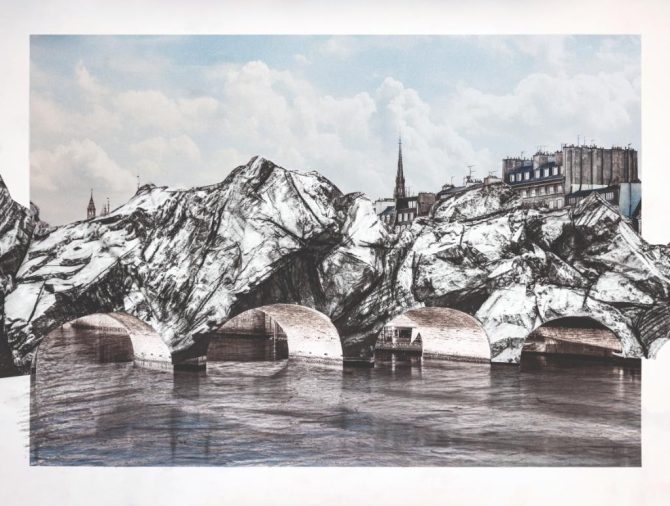
From the Eiffel Tower to JR’s cave-like Pont Neuf, Paris has long been shocked and delighted – by architecture, as Marian Jones reveals…
One topic sure to be on everyone’s lips in Paris this summer is La Caverne du Pont Neuf, a massive temporary art installation which will see the photographer and street artist JR transform the Pont Neuf- the oldest and most iconic bridge in the city into a giant cave. Between June 6 and 28, the bridge will become an immersive artwork, a rocky grotto through which everyone will be able to stroll for free. JR drew inspiration from the quarries that supplied the original limestone used to build the bridge, seeking to contrast this raw material with the elegance of the city today. It is also an homage to another art installation which got everyone talking 40 years ago Christo and Jeanne-Claude’s The Pont Neuf Wrapped. They enveloped the Pont Neuf in over 40,000m² of fabric, creating an artwork experienced by three million visitors in just two weeks. Christo explained at the time that they wanted to transform the bridge from “an architectural object, an object of inspiration for artists, to an art object itself” in other words to shock Parisians into looking at the bridge anew.
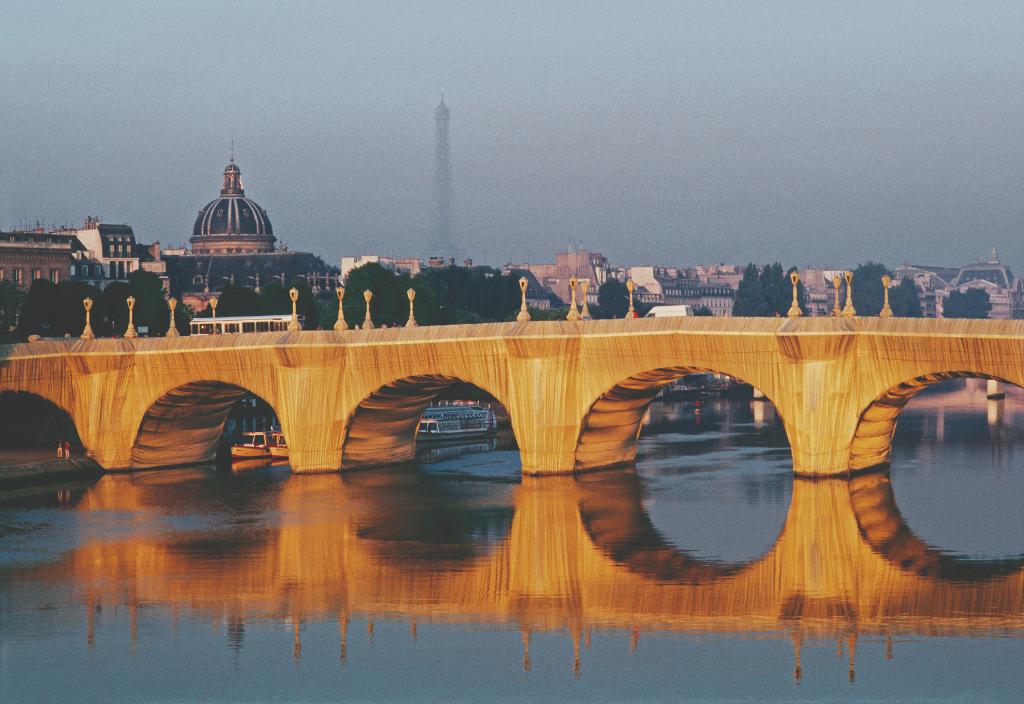
Pont Neuf installation Christo
The grand designs of rulers such as Louis XIV and Napoleon show that the desire to leave a mark on the architecture of Paris goes back centuries. Sometimes big changes were wrought in the name of progress, such as in the 19th century when Napoleon III engaged city-planner Georges-Eugène Haussmann to sweep away dozens of medieval streets and replace them with wide new avenues and much better infrastructure. “Let us,” he urged, “make this city beautiful and improve the life of its citizens.” There were objections on the grounds of cost and the destruction of the city’s history, but nothing like the outrage caused by what came next.
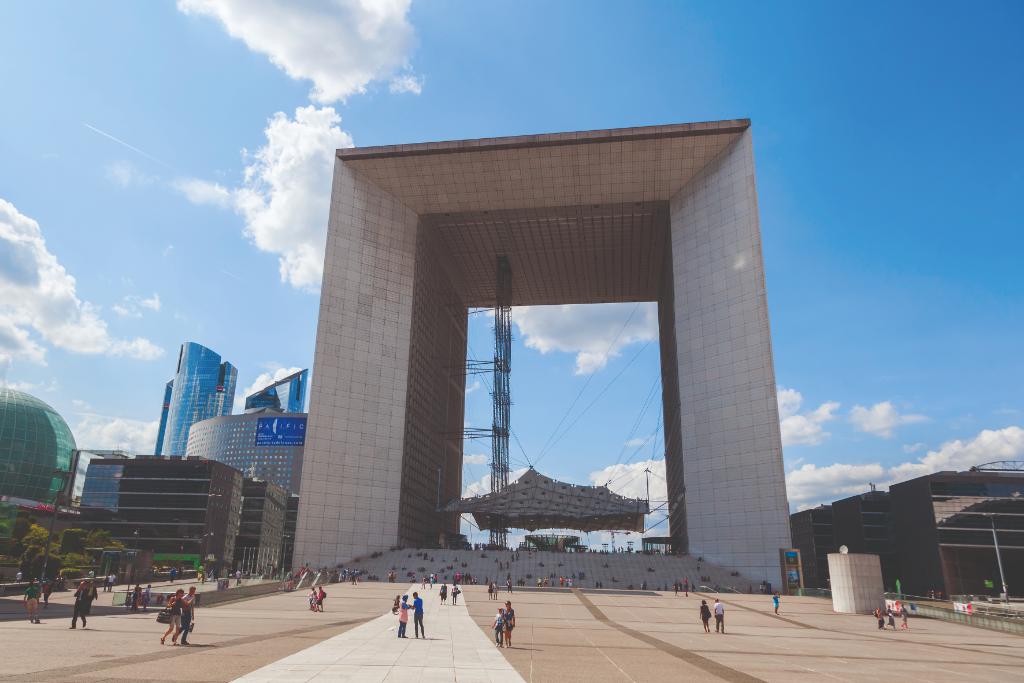
Photo: Shutterstock
The shock of the new really began in 1889 when the Eiffel Tower was built. The 300m tower was designed as the central attraction of that year’s Universal Exhibition, a bid to impress the world with the expertise of French engineers. But before it was even finished, leading writers and artists led a ‘Protest against the Tower of Monsieur Eiffel’, railing, as they put it, “with all our strength and all our indignation” against the “useless and monstrous Eiffel Tower”. Guy de Maupassant summed up their disdain by remarking that he intended to eat in the Tower’s restaurant every day because it was the only place in the city where he could avoid having to look at it.
Gustave Eiffel refused to be cowed, saying: “I believe, for my part, that the Tower will have its own beauty” and he was proven right. It attracted immediate public acclaim and was visited by 2m people in the first year alone. It turned out to be profitable, too, and the original plans to dismantle it were swiftly abandoned.
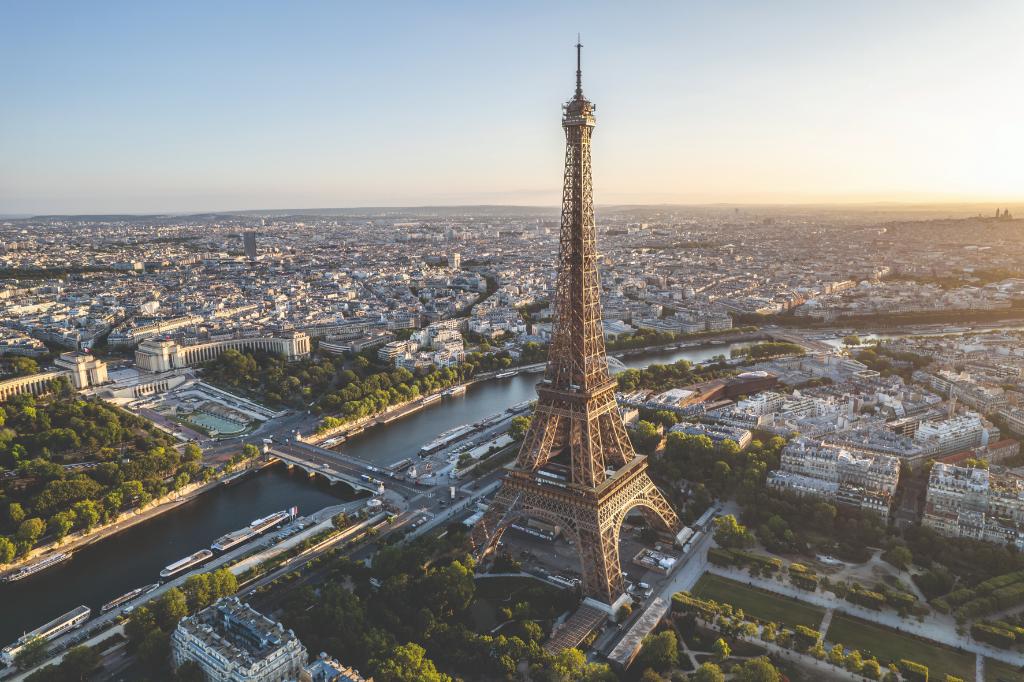
Photo: Shutterstock
La Tour Eiffel, the tallest tower in the world when it was built, remains one of Paris’s best-known icons almost 140 years later. Its image is regularly beamed around the world when France has a message to send, perhaps lit up in solidarity with Ukraine or to support Breast Cancer Awareness.
A POPULATION UP IN ARMS
There was equal consternation when the Centre Pompidou, a unique ‘inside-out’ structure built to showcase modern art and culture, opened in 1977. The exterior of this vast steel, glass and reinforced concrete structure was crisscrossed by coloured pipes carrying services such as air, water and electricity, with escalators housed in a transparent external tube. Many Parisians compared it to an oil refinery, disparagingly calling it ‘Notre-Dame des tuyaux’ (Notre-Dame of tubes). And yet once complete, it gained wide acceptance from the public who flocked to enjoy its many cultural facilities and to glide up the external escalator for magnificent views over Paris.
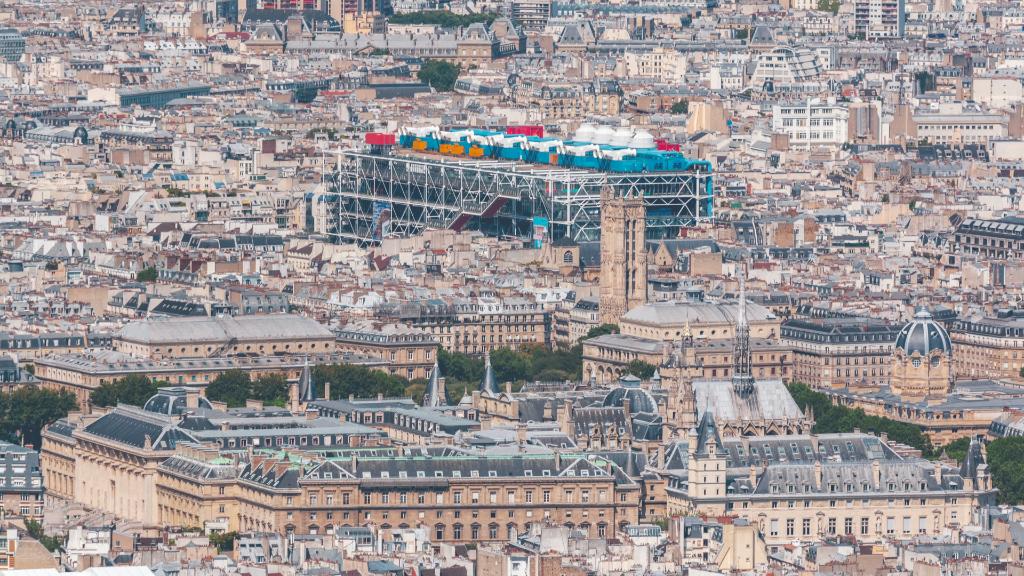
Photo: Shutterstock
The bicentenary of the French Revolution in 1989 was the year of at least three architectural shocks, the most symbolic of which was the Opéra Bastille. This vast edifice of granite and stainless steel was deliberately a contrast in every way to the Second Empire splendour of the Opéra Garnier across town. Its utilitarian style had numerous detractors, who likened it to a beached supertanker, an over-budget factory and a rhinoceros. The Arche de la Défense was designed as a foil to the Arc de Triomphe in a bathtub. The interior didn’t find much more favour and soprano June Anderson, who starred on its opening night, remarked that “the place looks like a gymnasium”. And yet the Opéra Bastille has drawn sizeable audiences who enjoy its populist approach: a diverse programme, state-of-the-art technology and, very often, cheaper tickets.
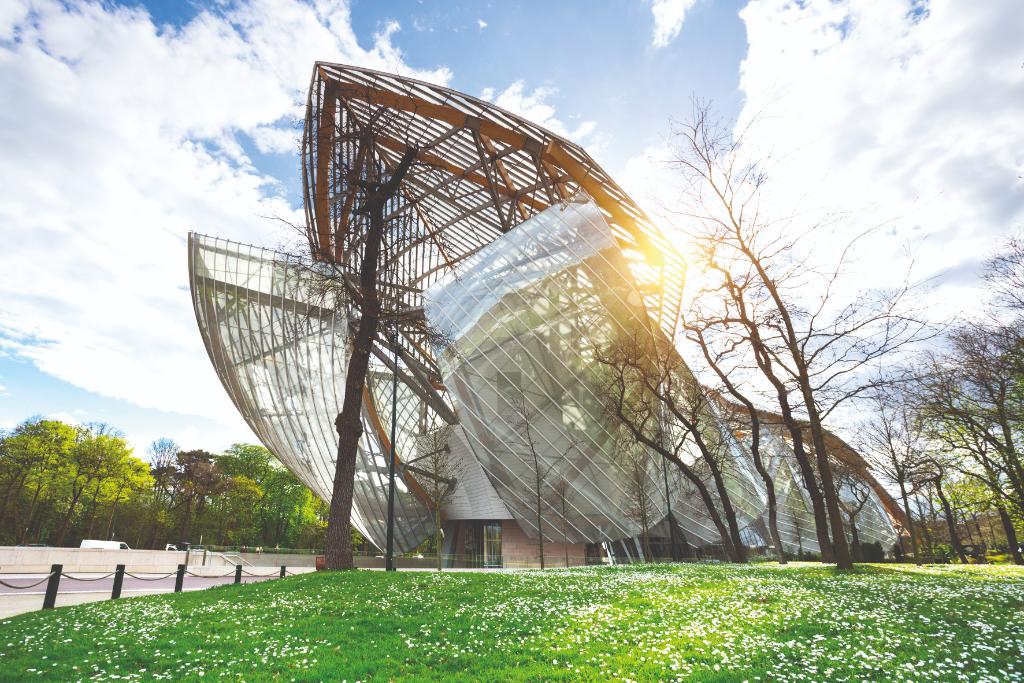
Fondation Louis Vuitton, Photo: Shutterstock
Even more immediately striking was the Arche de la Défense, a 300,000 tonne marble-clad structure in La Défense, the high-rise business area northwest of the city centre. It is a deliberate take on the Arc de Triomphe, with which it stands neatly in line, and it is so huge that the whole of Notre Dame would fit into its archway. It was another building no one could possibly ignore and its reception was mixed, some viewing it as President Mitterrand’s vanity project, others praising the monumental structure as a stylish modern counterpart to historic monuments in central Paris.
A CALM NEW CENTURY
1989 was also the year everyone had an opinion on IM Pei’s glass pyramid in the Louvre courtyard, another revolutionary design, variously slated as an eyesore, an architectural joke and the ‘Disneyfication’ of a much-loved historic building. Why had President Mitterrand sanctioned this Egyptian-style architecture in Paris? Why had he commissioned a Chinese architect? Yet former Louvre director Jean-Luc Martinez has praised the way it “brought the Louvre Museum into modernity”, and it has certainly become an iconic feature of the first arrondissement. It will surely be kept in place, even as plans are in hand for another rethink of the museum’s entrance. This century, however, two huge opportunities for radical new architecture passed by without much fanfare. Few new buildings were designed for the 2024 Olympics. Many existing stadia were repurposed; for example the Stade de France became the main Olympic Stadium and temporary venues were set up in iconic locations such as the Place de la Concorde (BMX) and the Invalides (archery). Also, as the restoration of Notre Dame after the 2019 fire was being planned, speculation was rife that something dramatically 21st century might be incorporated. But ultimately almost everything was restored to its original state, using traditional building techniques, some of which dated from the Middle Ages.
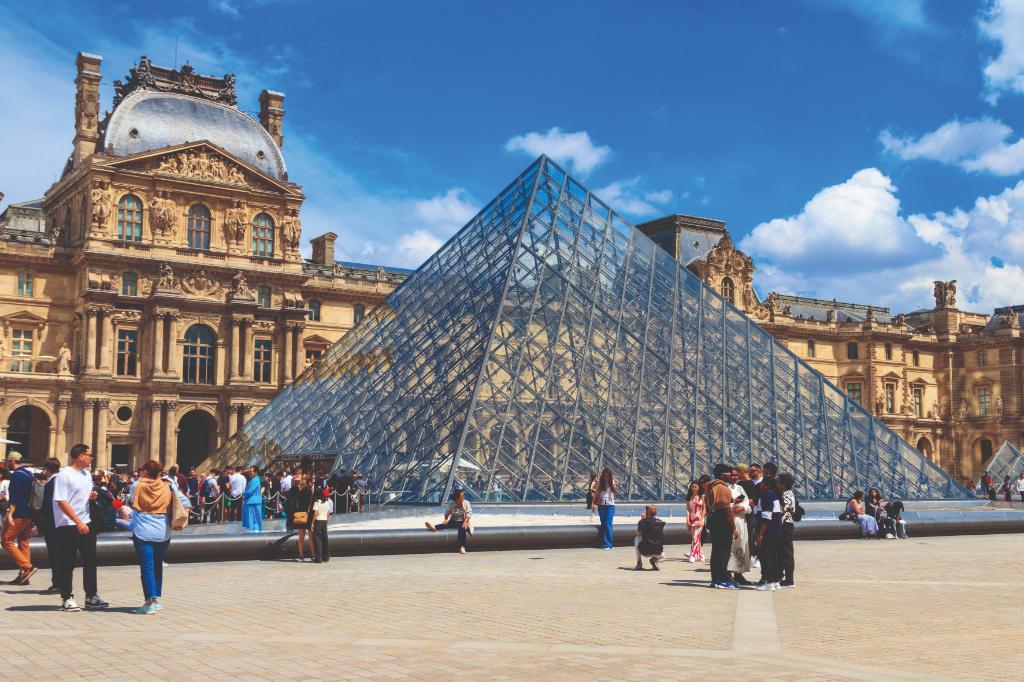
Photo: Shutterstock
Stunning new buildings that opened this century include the Fondation Louis Vuitton art museum and the Seine Musicale concert venue. The 180m Tour Triangle, due to open later this year at Porte de Versailles, will dominate the Paris skyline and offer exceptional panoramic views. But these have not had the whole city talking in the way earlier projects such as the Eiffel Tower and the Pompidou Centre did.
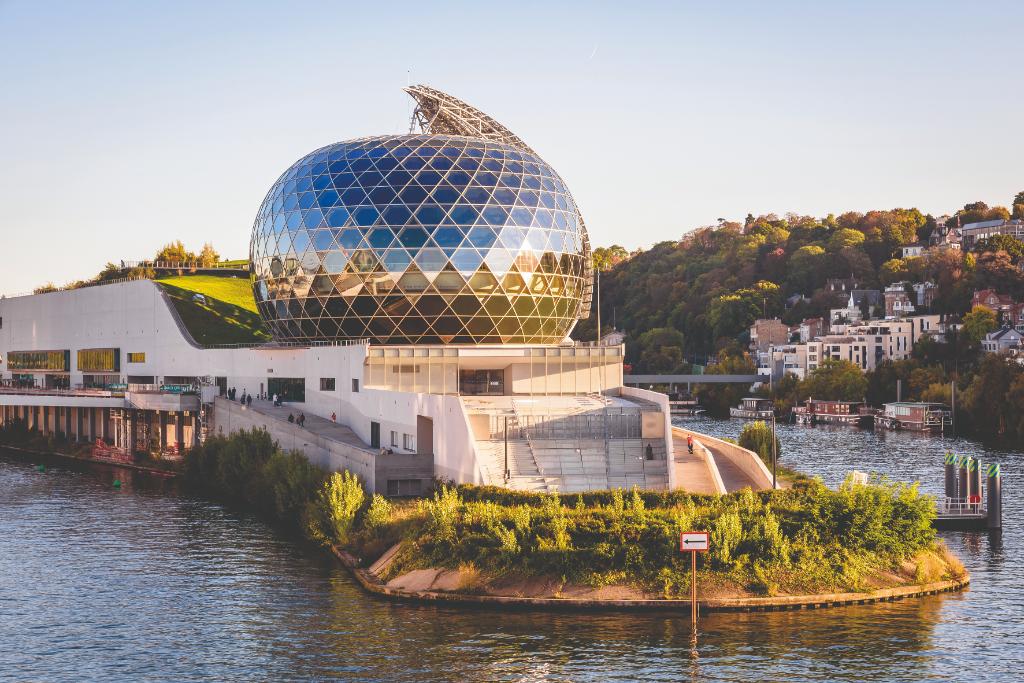
Photo: Shutterstock
Perhaps Parisian architecture is mellowing? Maybe thought-provoking new structures will tend to be temporary from now on, like the Caverne du Pont Neuf? Or perhaps there are architects already planning the next huge shock for the Parisian skyline. Watch this space.
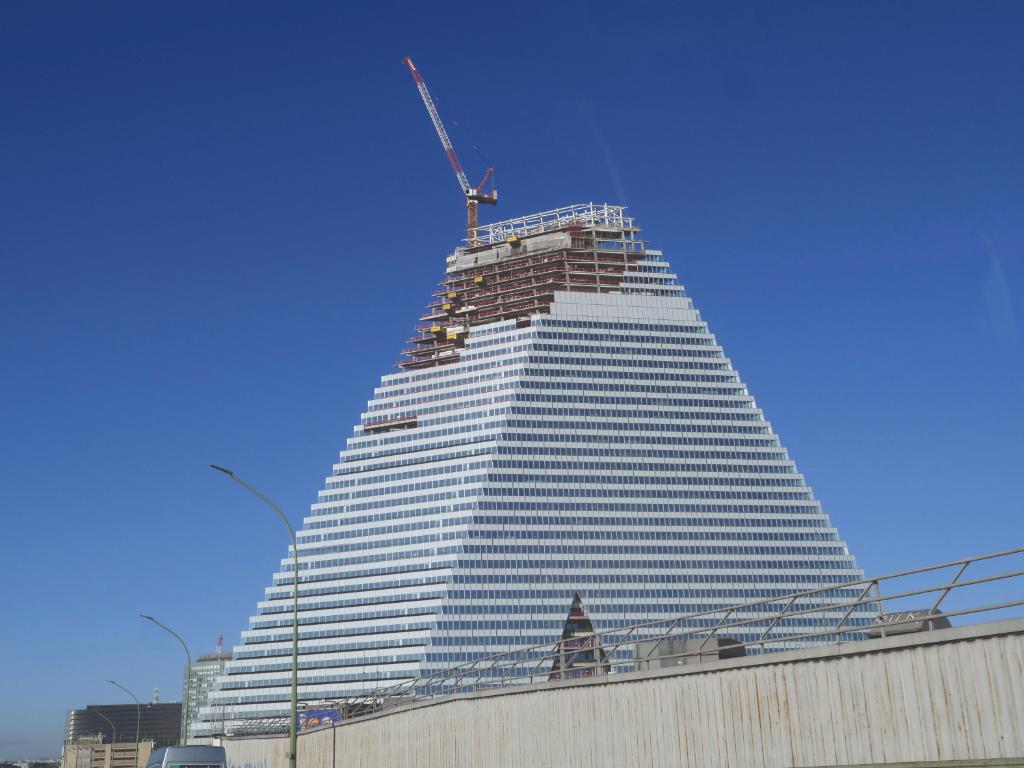
Tour Triangle, Photo: Shutterstock
See La Caverne du Pont Neuf from June 6-28. Entry is free. Paris tourist office: parisjetaime.com/eng
From France Today Magazine
Share to: Facebook Twitter LinkedIn Email
More in Paris, Pont Neuf, Summer in Paris
Related Posts

By Marian Jones
Leave a reply
Your email address will not be published. Required fields are marked *