
Off-season Quiberon on the Wild Coast
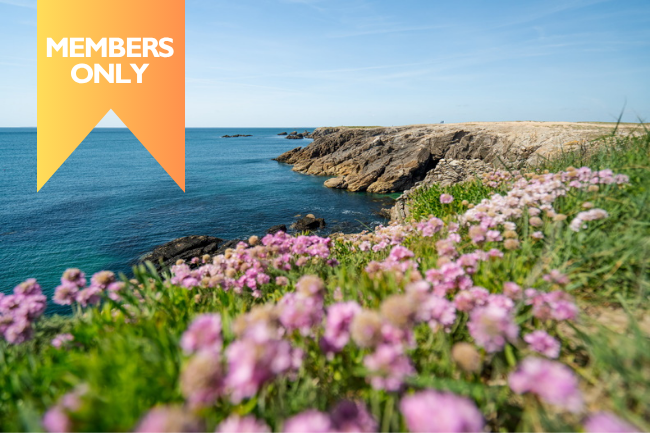
On the south coast of Brittany, the Quiberon Peninsula is a 14-kilometre stretch of land reaching into the Atlantic. Bustling and lively at the height of summer, it’s a perfect spot for an off-season break, as you can enjoy the windswept beaches, pretty villages and seafront promenades without the crowds.
Only 22 metres wide at its narrowest point, the sea is ever-present on this peninsula and the sky feels immense. This is a dream location for photographers, cyclists and walkers, and off-season it’s also perfect for dog-walkers as our four-legged friends are allowed on the beach from 1st October to 31st March. The tourist office has a list of all the dog-friendly beaches (caniplages) including those that are open to dogs all year round.
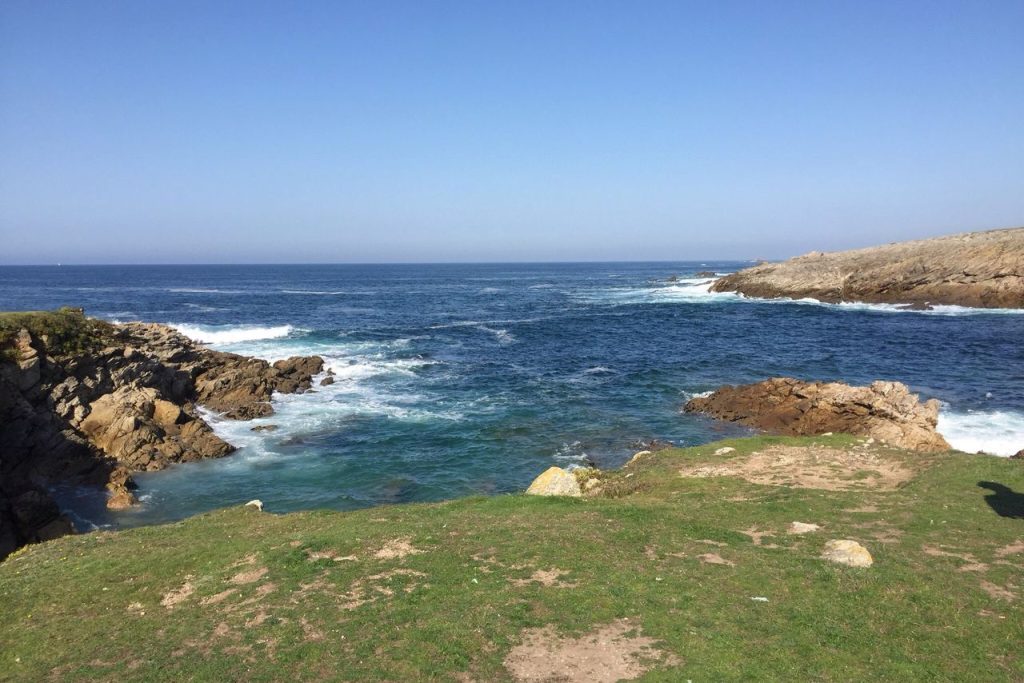
As you come into the north of the peninsula, head off the main road towards Portivy Port, where you can take the coastal path to discover the wild western coast. Follow the shore to Beg-An-Aud coastal point or around to Port Blanc – famous for its natural stone arch carved out by the waves – then continue to Port Bara, with its stunning contrasts of sandy beaches and granite rocks. These spots are great for winter and spring walks, and if you time it right you’ll be mesmerised by the sunset over the horizon. If you’d prefer to explore on two wheels, the signposted Green Way (voie verte) will lead you south all along the wild coast.
Saint-Pierre-Quiberon
The laid-back little town of Saint-Pierre-Quiberon is also in the northern part of the peninsula and here you can wander around narrow residential streets that have a timeless charm reminiscent of the Île de Ré. Enjoy a meal in one of the brasseries and restaurants or head to Maison Boblique, a bakery hotspot whose well-deserved reputation means that there are often queues out of the door in summer. By visiting off-season, you can take your pick of their incredible pâtisseries and mouthwatering bread.
British-born Tricia Tilley runs a holiday home in Saint-Pierre-Quiberon and has spent holidays here herself for 30 years.
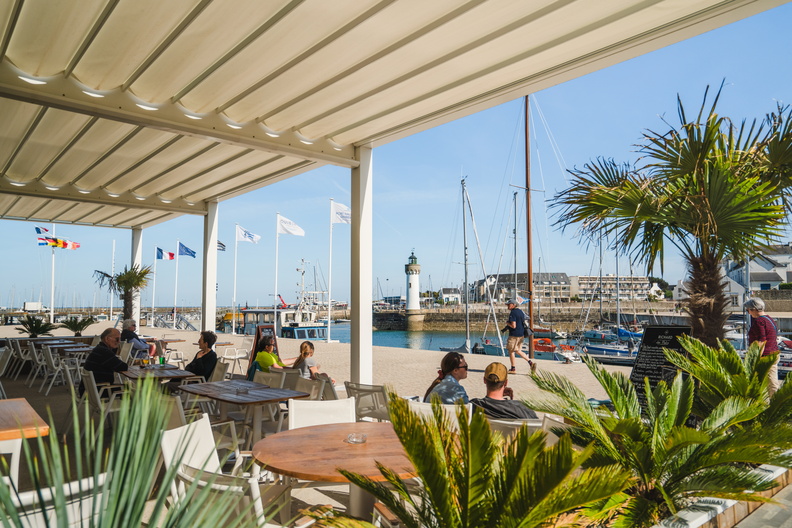
“I never get tired of it,” she says. “It’s peaceful, the beaches are wonderful, and if you enjoy walking, there’s a fabulous coastal path that you can follow south to Port Haliguen with its bars and restaurants. The landscapes are always beautiful but out of season it’s a real spectacle, with ever-changing clouds and crashing waves. It’s different every day.”
Quiberon
As you follow the central road towards the south of the peninsula, you’ll arrive in the main town of Quiberon that has all the elements of a true seaside resort. The central street is lined with shops and boutiques, so you can buy everything from a quick snack and clothing to sports gear or cameras. This street leads you to the real star of the show, the grande plage with its expanse of golden sand and an esplanade spreading both left and right, inviting you to stroll and enjoy the view. In summer, the pavements are lined with racks of sunhats, shorts and summer dresses, and tourists perching on the benches to enjoy ice-creams and snacks. Off-season, the esplanade feels more subdued and unhurried, offering cafés and restaurants overlooking the sea where you can linger over hot drinks or a meal and enjoy a little people-watching.
While you’re on the seafront, look across to your right and you’re sure to spot the medieval-looking Château de Turpault, which was actually built in 1904. Although not open to visitors, its iconic silhouette is a key feature of the coastal landscape – you can walk there in about 15 minutes.
Island visits
Between the main beach and the château is Port Maria, which was France’s top sardine-fishing port in the 1950s and its fish market continues to handle around 1,150 tonnes per year. However, this port is now best-known as the departure point for cruises all year round, with additional crossings in high season.
Pointe du Conguel
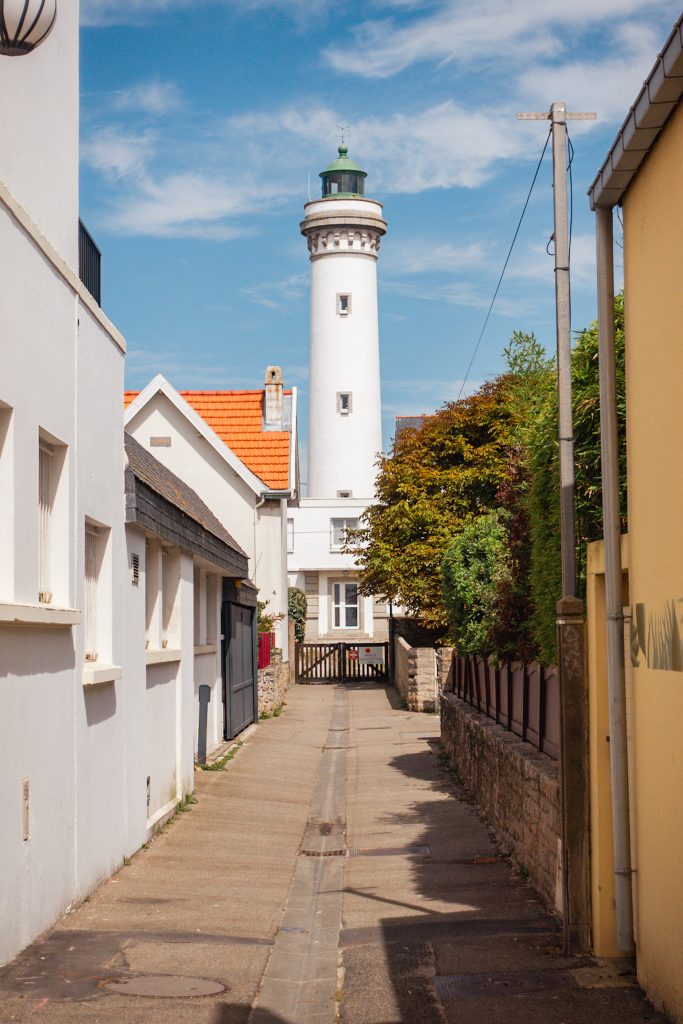
On the far southeast of the peninsula, Pointe du Conguel is an unspoilt biodiversity site managed by the coastal protection agency. As well as offering stunning views, this coastal point has historic interest: look out for the fours à goémon, which look like shallow open graves but are in fact seaweed kilns that were once used by local peasants to burn seaweed to extract iodine that could then be sold. You’ll also be able to see La Teignouse lighthouse standing on a rocky outcrop, marking the spot where the battleship ‘France’ sank in 1922 after hitting an uncharted rock. The two tiny islets offshore are grand trou (big hole), home to ancient Gallic burial sites, and petit trou (small hole), which you can actually walk to at low tide, but make sure you can get back again before the tide rises!
Port Haliguen
To the north of Conguel and a 30-minute walk from Quiberon beach is Haliguen port, an extensive marina with mooring for 1,150 boats. In summer, it’s a real hive of activity, with visiting sailors, a Wednesday market and a shuttle bus bringing tourists to and from the town; off-season it takes a breath and you get a glimpse of its former role as a fishing harbour for sardine boats and coastal schooners. Port Haliguen has a main square lined with a few cafés and brasseries, and on the other side, the masts of all the moored boats rise to the skies, pinging gently in the breeze.
Take time to admire the statues, Le Pêcheur et l’Ondine, which were gifted by the sculptor Karsten Klingbeil of Berlin. The first depicts a fisherman gazing out across the water, and if you follow his eyeline you’ll find that he’s looking at Ondine, the immortal water spirit.
Get out on the water
For modern-day water spirits, Saint-Pierre-Quiberon is home to the Presqu’île Surf School and Surfing Paradise, so it’s an ideal place for learning to surf, or you can go whizzing along the beach in a sand-yacht (char à voile). If that’s too energetic, there’s yoga on a paddleboard, or try your hand at sailing at any of the sailing schools. Quiberon offers everything from sailing dinghies and catamarans to wingfoil, windsurfing, and even jet-skiing, so you’ll be spoilt for choice when it comes to nautical adventures here.
Why wait?
While the whole of Brittany has a rugged charm off-season, Quiberon Peninsula is hard to beat. Its long stretches of coast include everything from pebble coves and granite cliffs to protected dunes and long sandy beaches, making it an ideal destination for nature-lovers. If you prefer to enjoy restaurants and pavement cafés or even a relaxing spa break, you can do that, too. Take a look at the tourist office website for more information on how to get here, where to stay and what activities to enjoy while you’re here.
Do the rounds
If you enjoy walking, you can follow the coastal path all the way around Quiberon Peninsula: it’s a challenging trail that’s about 30km long, but you will certainly be rewarded with some fantastic views. Alternatively, follow the example set by extreme swimmer Stéphane Krause in 2020, who swam the entire 25 kilometres around the peninsula in just ten hours!
Ohlala! It looks like you’re not a Member yet
Join to view this content!
(If you are a Member, log in or reset your password below or contact us so we can help)
- Log in
- Forgot password
Lead photo credit : ©Thibault Poriel-Baie de Quiberon
Share to: Facebook Twitter LinkedIn Email
More in Brittany, Wild coast
Related Posts
Leave a reply
Your email address will not be published. Required fields are marked *