
5 Most Beautiful Ruins in France
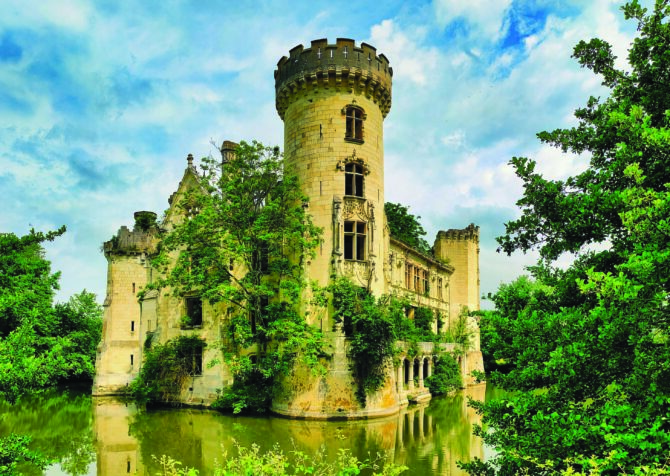
Justin Postlethwaite takes us from abandoned abbeys to crumbling châteaux to discover the ruins that reveal France’s turbulent past…
France is blessed with glittering palaces, sumptuous châteaux and other architectural wonders to make us swoon. But there is also a ghostly beauty to her many unloved, neglected, abandoned or unrestored edifices that speak of yesteryear, of uprisings and war, of fire and fury.
While an immaculately refurbished old castle leaves little to the imagination, in these fragile stone shells one’s own picture of the lives of former residents must be imagined. From Roman ruins to Benedictine monasteries, the past lives on. While some of France’s most famous architectural vestiges are today entertainment venues as well as historic sites – including Nîmes’ amphitheatre, the Roman theatres of Lyon and Orange, and Carcassonne’s medieval walls, which all serve as dazzling backdrops for concerts – many other lesser-known ruins are well worth seeking out.
Run-down buildings are so important to French heritage that organisations such as historian Stéphane Bern’s Mission Patrimoine raise funds for their preservation. “The Heritage Foundation supports property owners whether local governments, individuals, or organisations – who are committed to making France more beautiful,” it says. “We support each project in securing public and private funding so that our cultural heritage can become a source of employment, discovery, education and community connection.” Read more about the project, which, with the help of Loto du patrimoine (heritage lottery) receipts, helps restore everything from church roofs and stained-glass windows to bridges and windmills, and donate at www.fondation-patrimoine.org.
As for some of the most notable ruins to visit, here is France Today’s subjective selection of eye-catching edifices with a story to tell. We have not included any Cathar castles – medieval fortresses in the Languedoc that served as refuges for the Cathars during the 13th-century Albigensian Crusade. These merit their own article in a future issue. If you have visited an unheralded yet fascinating ruin and wish to recommend it to other readers, please send an email to [email protected].
1. CHÂTEAU DE LA MOTHE-CHANDENIERS, VIENNE
It is hard to picture a more romantic French ruin than Château de la Mothe-Chandeniers, located about one hour from Poitiers in the commune of Les Trois-Moutiers. It came to prominence in 2017 when a crowdfunding effort saw the 19th-century neo-Gothic gem – ravaged by fire in 1932, then abandoned and now overgrown with vegetation- bought by an international array of ‘co-lords’ with the aim of keeping it alive and making improvements. Visitors can enjoy a stay in a nearby eco-lodge and take part in various activities including treasure hunts, while investors can still become part-owners via the Dartagnans website.
2. ABBAYE DE JUMIÈGES, SEINE-MARITIME
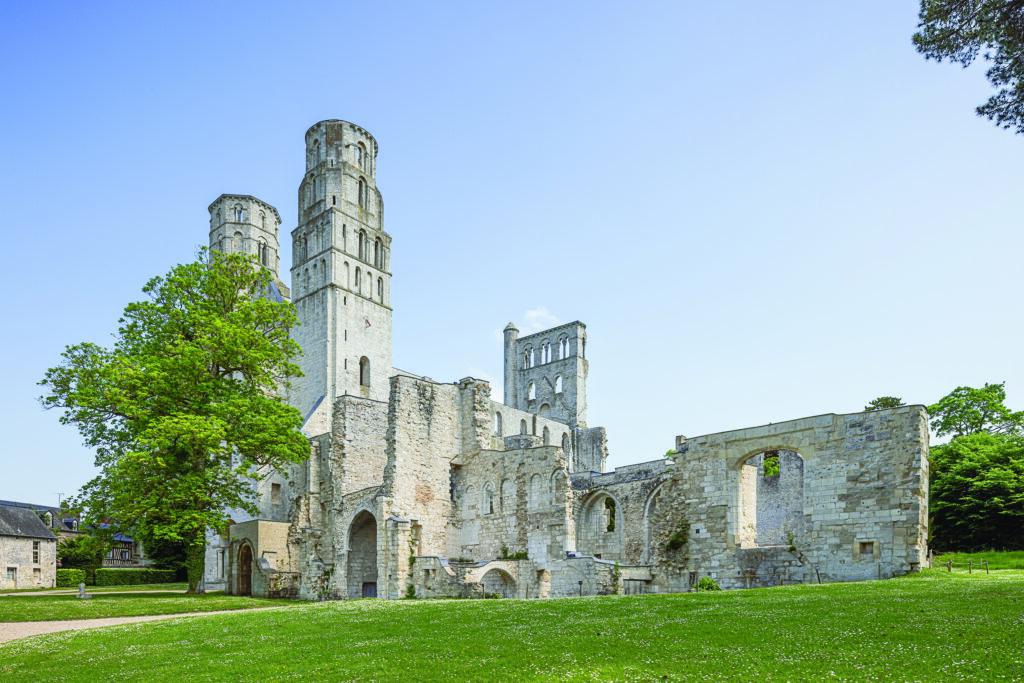
Idyllically set in a bend of the Seine in Normandy, Jumièges Abbey’s story is long and fascinating. Since its foundation in 654 by St Philibert, dramatic highlights include being destroyed by the Vikings in 841 and again during the Hundred Years’ War, before it served as a quarry after the French Revolution (it was sold off at auction in 1793). Yet the stone shell escaped destruction, providing an impressively elegant silhouette in white limestone-notably its 46m-high twin towers that overlook the remains of the cloister and convent buildings.
The surrounding 15-hectare park is equally pleasing to the eye no wonder Victor Hugo called Junièges Abbey, one of the oldest and most important monasteries in Western Europe, “the most beautiful ruin in France”.
3. CHÂTEAU DE LA FERTÉ-VIDAME, EURE-ET-LOIR
First built in the 14th century, then reconstructed in the 18th century before being destroyed during the French Revolution, Château de la Ferté-Vidame is in the Centre-Val de Loire region.
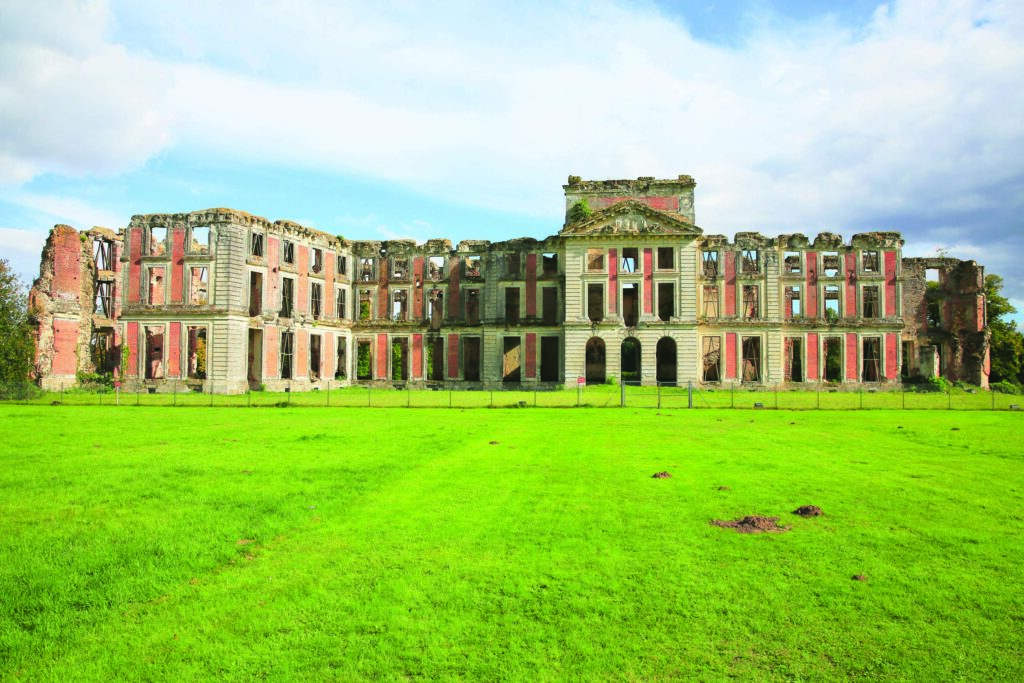
A key resident was the courtier and diplomat Louis de Rouvroy (1675-1755), the second Duke of Saint-Simon. He wrote his memoirs here, providing unique insight into the court of Louis XIV. He also had new outbuildings constructed, known as the Petit Château. The main château was looted in 1795, then three years later its demolition was announced: the interiors were destroyed, the roofs removed and the woodwork and ironwork stripped away. In 1815, Louis-Philippe, Duke of Orléans and later King of the French, reclaimed the estate and planned to restore the Grand Château, but this never happened.
Visitors today can enjoy its epic, faded majesty from the surrounding parkland – one of the last and largest French-style parks from the Age of Enlightenment.
4. CHÂTEAU DE BONAGUIL, LOT-ET-GARONNE
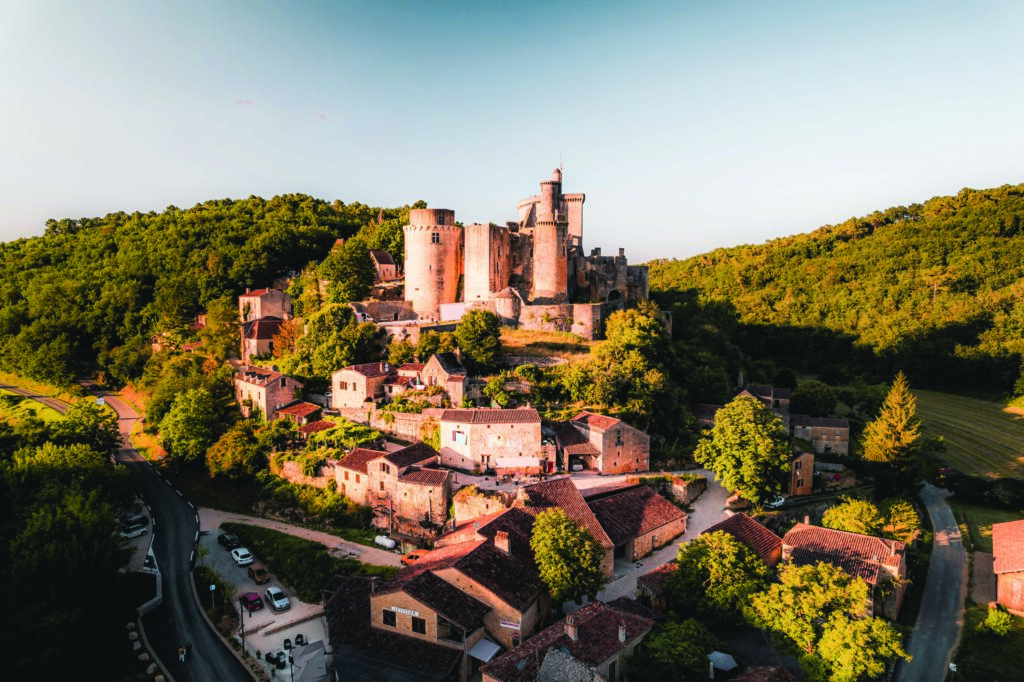
Your first vision of the mighty Château de Bonaguil in Saint-Front-sur-Lémance lives long in the memory. Built on a rocky spur in the 13th century before being expanded and fortified over the centuries-notably by Bérenger de Roquefeuil from the end of the 15th century it was one of the last great fortified castles to be built in France.
Constructed on three layers of rock with walls four metres thick, it is the epitome of defensive architecture and was said to be impregnable although, perhaps due to this reputation, it never came under attack. It remains in a remarkable state of preservation -explore its keep, cave and drawbridge on an audio-guided tour while fun period events take place here throughout the summer season, including music and dance shows.
5. ABBAYE DE BEAUPORT, CÔTES-D’ARMOR
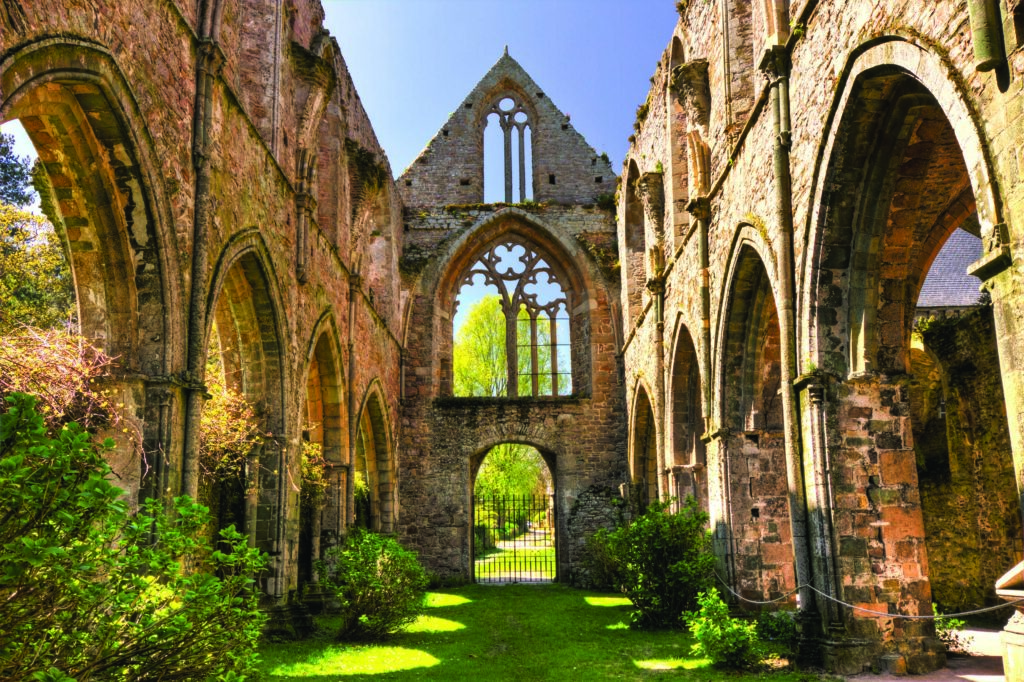
Hikers on Brittany’s GR34 coastal walking route, also known as the Sentier des Douaniers (Customs Officers’ Path), which runs from Mont-Saint-Michel to Saint-Nazaire, should make a beeline for this stunning abbey ruin in the Bay of Paimpol.
It was Premonstratensian monks from Normandy’s Abbaye de La Lucerne who founded the site in the 13th century and, for the next 600 years, Beauport Abbey was a religious and economic hub, with influence extending across a vast area in the northern Côtes-d’Armor. It closed after the Revolution following the decree of secularisation of 1790, and was sold off to three local families.
Under preservation guidance from the French coastal protection agency since 1992, it is today an important cultural hub hosting exhibitions, live performances and other events. Explore the now-roofless Gothic buildings arranged around the cloister – including the guest hall, chapter house and cellars – and its superb gardens.
Lead photo credit : Château de la Mothe-Chandeniers abandoned castle in Les Trois-Moutiers - Shutterstock
Share to: Facebook Twitter LinkedIn Email
More in abandoned, abbeys, châteaux, days out, heritage, history, ruins, Top 5
Related Posts



Leave a reply
Your email address will not be published. Required fields are marked *