Carnet de Voyage: Mystery Art

   1
Carnet de Voyage: Mystery Art
Travel notes from the real France. Carnet de Voyage is a weekly personal travel story in France sent in by readers. If you’d like to write a story for Carnet de Voyage, head here for details on how to submit.

This letter originally appeared in issue 199 of France Today magazine.

First of all, I love your magazine. Beautifully written and marvellously presented! I have a little French art mystery on my hands, as I try to figure out the location of the château ruin in this drawing by the famous Fauvist painter André Derain, from perhaps 1930 or so.

It’s quite possibly in Provence, but the artist travelled all around the country, and was associated with the towns of Collioure, Cagnes, Cassis and other places during his life. I thought if anyone knows where these ruins might be, it would be the readers of France Today!
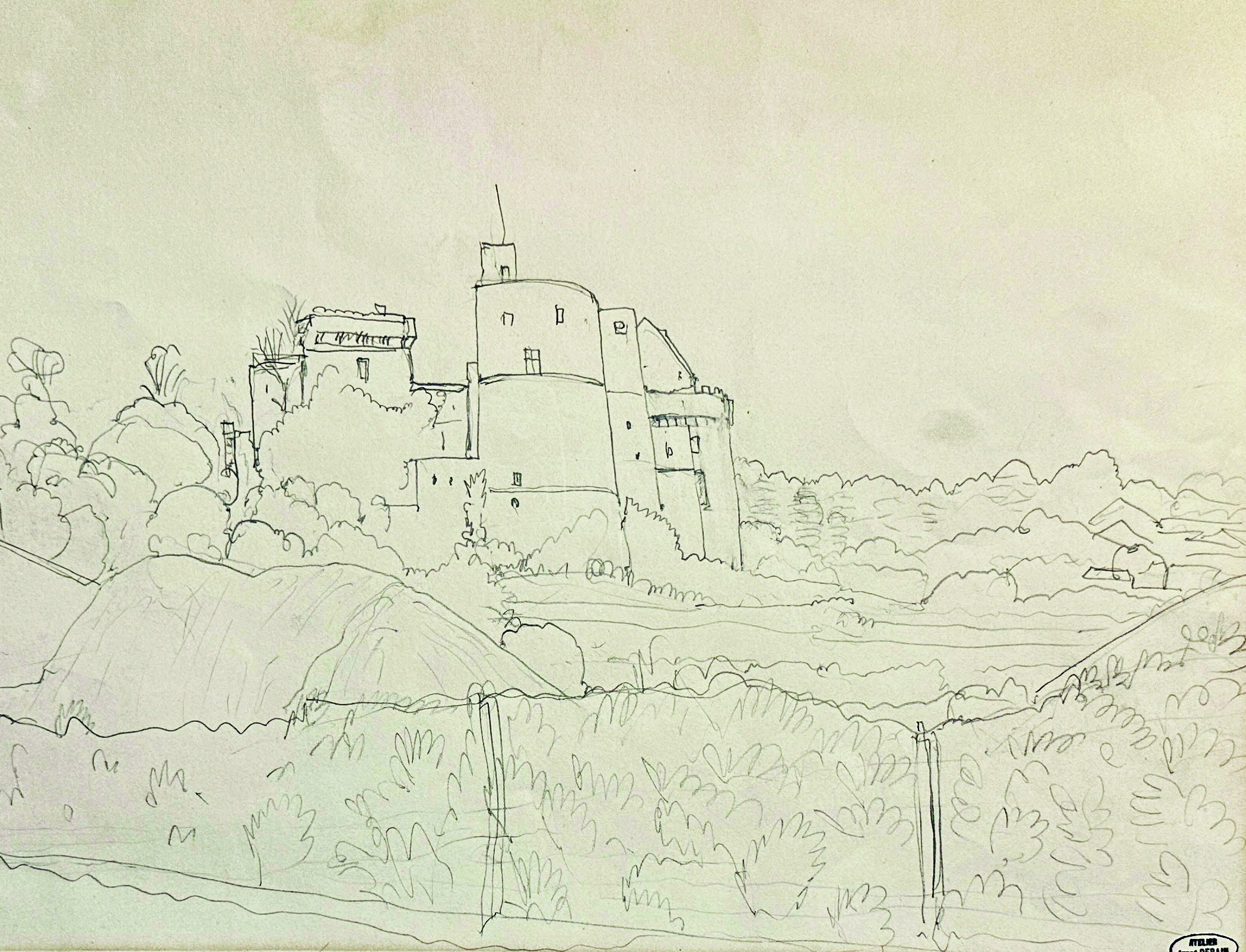
Do you know where this castle is in France?

Read our other Carnet de Voyage entries here.

Share to:  Facebook  Twitter   LinkedIn   Email

More in art, Carnet de Voyage, French artist, French painter, mystery, Provence

Previous Post A Tour de France with a Difference 
Next Post Should Champagne Still Be Your Bubbly of Choice?

Related Posts


Leave a reply

Your email address will not be published. Required fields are marked *

Comments

  •  Robin Heisey
    2025-10-29 12:53:22
    Robin Heisey
    Update: I had no idea this letter had been published – delighted to find it has been. For anyone interested, the mystery has been solved, in part by searching online for lists of "ruined castles in France". The Derain drawing shows the Château de Clisson, a 13th-century ruin southeast of Nantes. From the wikipedia entry about the Château: "Most of the present castle was built in the 13th century. Constructed by Guillaume de Clisson, on a rocky outcrop dominating the Sèvre Nantaise… In the 14th century, Olivier III de Clisson incorporated the gatehouse into a massive quadrilangular keep. The two semicircular towers of the gatehouse collapsed in the 17th century. The castle became the setting for the turbulent lives of Olivier IV de Clisson and Olivier V de Clisson, named Constable of France in succession to Du Guesclin in 1380. The castle is said to be haunted by Jeanne de Clisson wife of Olivier IV." Derain's drawing employs a distinctively precise drawing style he often used in depicting architectural subjects, of which the most famous might be Paris' Pont Neuf – of which he did a well-known etching, created in 1937.

    REPLY