
Where Life Begins: Jakob Kudsk Steensen’s Psychosphere asks the big questions at UNOC

The Art Explora Foundation and itinerant festival moored up in Nice during the United Nations Ocean Conference to present ground-breaking art installations destined to raise awareness on ocean protection.
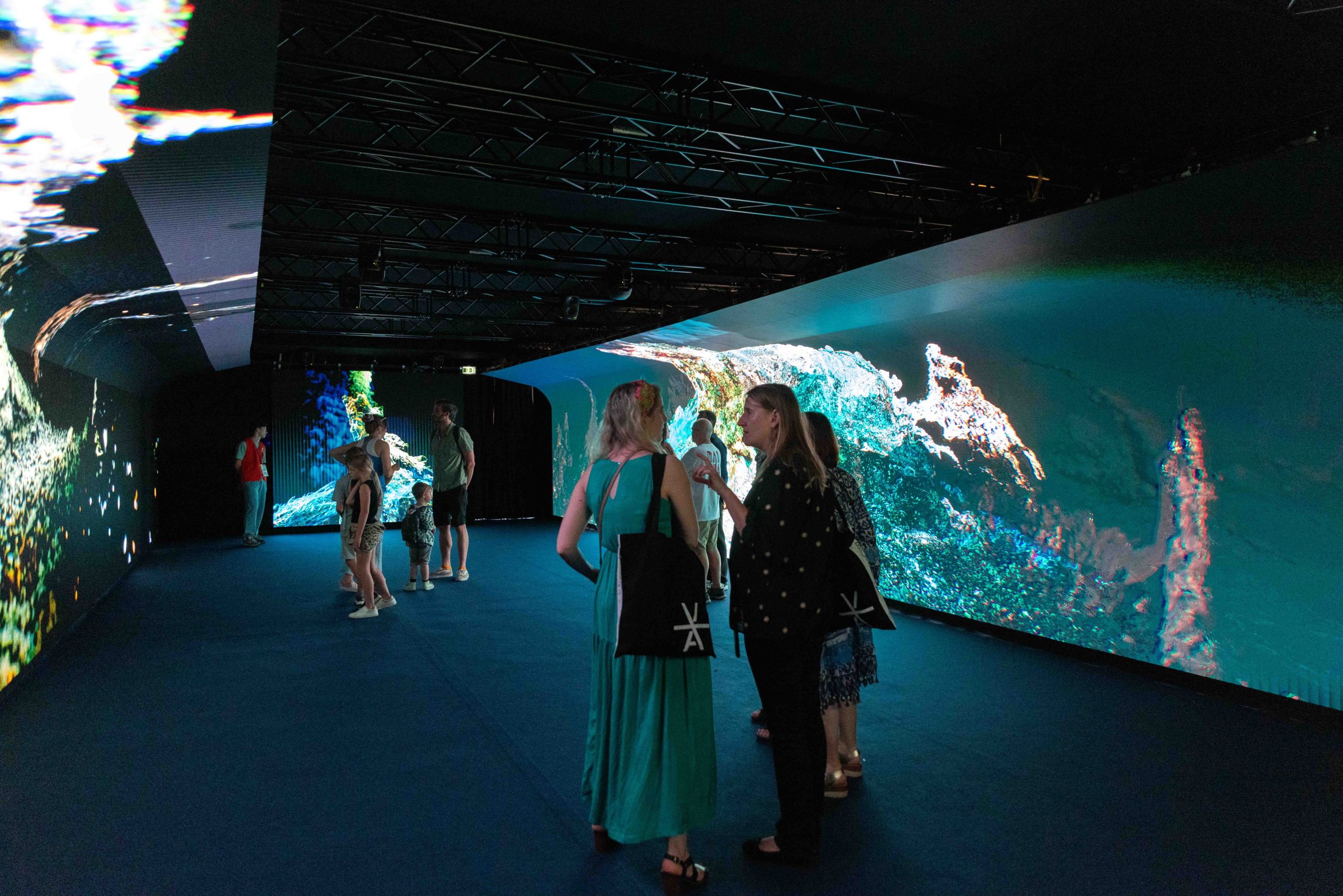
What if life began in the volcanic depths of our oceans? This is one of the questions posed by Psychosphere, an immersive digital art installation by Danish artist Jakob Kudsk Steensen. Presented by the Art Explora Foundation, the work was on view at La Baleine (Palais des Expositions) in Nice until June 13, 2025, as part of the Art Explora Festival and in tandem with the United Nations Ocean Conference (UNOC3).
I sat down with Jakob on the inaugural day of the exhibition in Nice to talk about the science, emotion, and urgency behind his latest creation; and what it means to physically dive down into the origins of life.
© Adrien Chupeau
A Common Heritage Beneath the Waves
“We’re at a big moment in time,” Kudsk Steensen says. The future of our oceans are being decided and there are lots of clashing opinions; do we protect it through conservation and technology, or do we exploit it through extraction and deep-sea mining?
This tension is one of the driving forces behind Psychosphere. “Right now there is a legal clause that says the deep sea is the common heritage of all of mankind,” he continues. Anything extracted therefore; data, minerals, knowledge, belongs to all of us, and it can no longer be mined, explains the artist. Unsurprisingly, deep sea mining companies aren’t fans of this perspective.
Psychosphere explores the potential origins of life and sentience amongst deep sea volcanic landscapes, the common heritage sites of all living things.
Jakob Kudsk Steensen ©smaltheivarsson
Science and storytelling
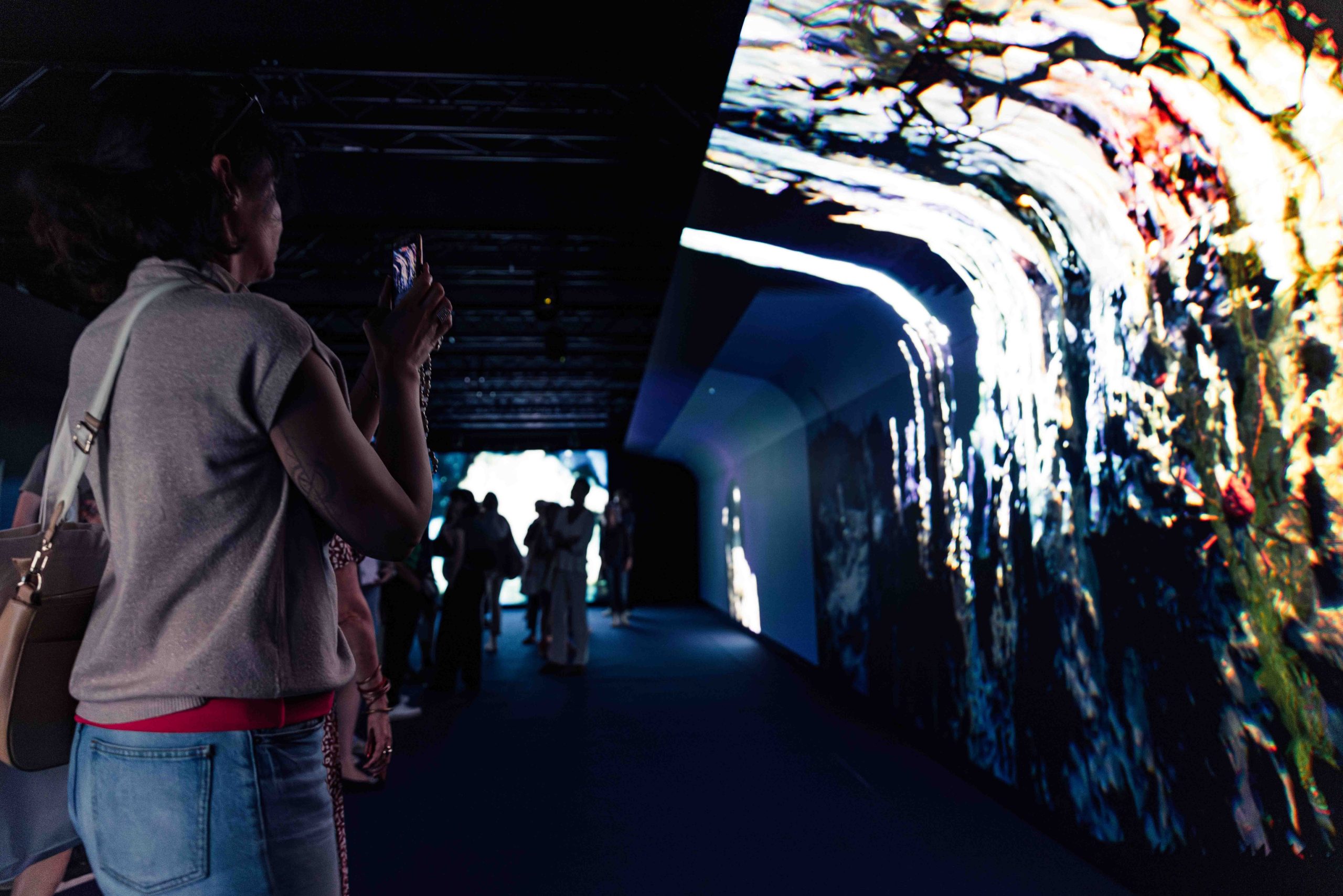
Set inside a 16-meter tunnel covered with 120 square meters of LED screens, Psychosphere is a luminous, subaquatic journey through digitised volcanic landscapes, deep-sea lifeforms, and ambient sonic environments. The effect is meditative and transporting, asking the question: what does it mean to engage with environments few humans have seen, and even fewer truly understand?
The installation is the result of six years of collaboration with marine scientists and research expeditions. Kudsk Steensen has joined missions to underwater volcanic regions including the Azores, Stromboli, and the Barents Sea.
“Some of it is from my own dives,” he explains. “There are a few places in the world where you can actually go into the top of a volcanic vent with the human body. You can only stay for about ten minutes. We recorded sounds, captured images. Other areas were explored using robots.”
A highlight of the project is a newly discovered volcanic landscape in the Barents Sea. “It’s a completely new environment, a first,” he says. “We were the first to visualise it and show it to the world in this way.”

Psychosphere, presented at Art Explora Festival in Nice
The emotional dimension
The artist’s work is not about instruction but more about immersion and emotion.
“As an artist, what excites me is the feeling of your psyche and your senses becoming part of these worlds,” he explains. “Everything here [at UNOC] is very literal; facts, figures, headlines. Psychosphere is about giving people a deep emotional resonance. Something inside of them.”
Sound plays a major role. Field recordings from underwater vents and marine life are blended with original compositions, to create an ambient sonic environment that deepens the experience.
© Adrien Chupea
A portal to the unknown
When Jakob visited one of the volcanic vents that inspired the work, the effect was profound. “It felt like a portal,” he says. “I’ve been inspired by these realms since I was a kid. But being there was extremely emotional. It felt like opening a door to the moon.”
Through that portal, Psychosphere offers audiences a glimpse into the unknown, and maybe into the very cradle of life.
“People don’t really understand the impact we’re having,” he adds. “Life in the deep sea evolves slowly, but it’s more resilient. It could be the very foundation of our entire food chain. Of all life.” That’s why we need to see it, and feel it, as something to protect.
© Adrien Chupeau
The floating museum: Art Explora
Alongside Psychosphere, Art Explora was docked at Nice Port right in the heart of UNOC. It is the world’s first floating museum, a 47-meter-long, 55-meter-high catamaran equipped with solar and wind power, designed by Axel de Beaufort and Guillaume Verdier.
The Art Explora Festival is an itinerant festival accessible free of charge travelling across the Mediterranean until 2027. Their mission? To bring art and culture to a wider audience.
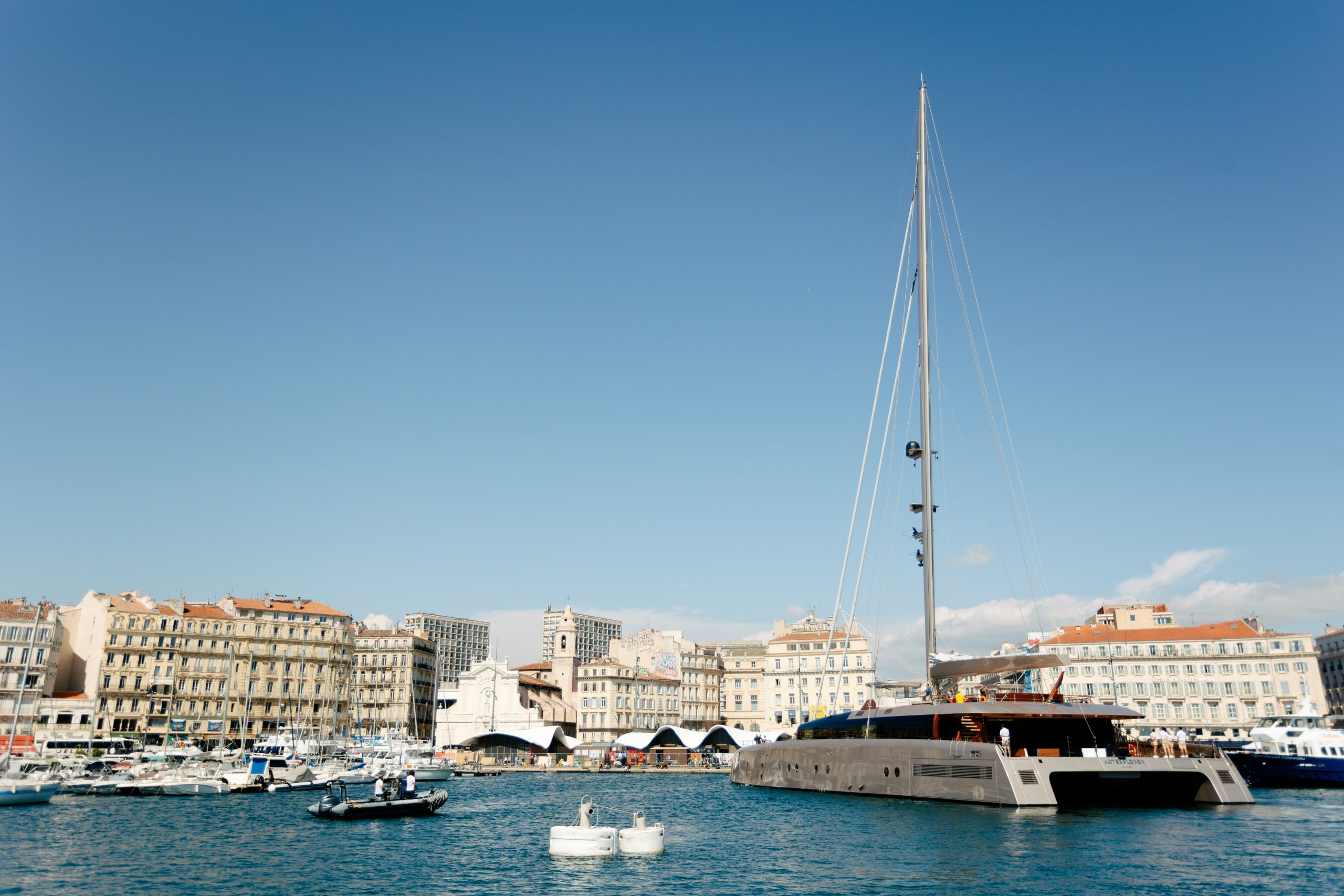
The Art Explora floating museum © octastudio
Atop of the stunning catamaran. I experienced the Mediterranean Audio Journey. Developed in partnership with Le Centre Pompidou and Ircam (France’s national acoustic research institute). The acoustic recordings share sounds and voices across coastlines from France to Cyprus and everywhere in between. Including improvised singing from refugee women rescued by the Ocean Viking vessel. The boat also features a beautifully immersive VR experience that combines mythical storytelling and marine biology to highlight the threat to coral reefs.
The floating festival has already visited Cannes and Marseille, then from Nice Art Explora will continues its journey to Rijeka (Croatia), Athens (Greece), and Limassol (Cyprus). Expanding its mission of mobile art, and cultural dialogue across the Mediterranean.
Jakob Kudsk Steensen’s Psychosphere is also showing until 30 November in Cisternerne, Copenhagen, Denmark.
Art Explora Museum Boat’s future public stops: Rijeka, Athens, Limassol
For more information, visit: www.artexplora.org/festival
Lead photo credit : The Art Explora festival in Nice, June 2025 © Adrien Chupeau
Share to: Facebook Twitter LinkedIn Email
More in Art Explora, exhibition, French Riviera, nice, ocean preservation, oceans
Related Posts

Leave a reply
Your email address will not be published. Required fields are marked *