
At Jean-François Millet’s Barbizon Studio, Discover the Roots of Van Gogh’s Inspiration
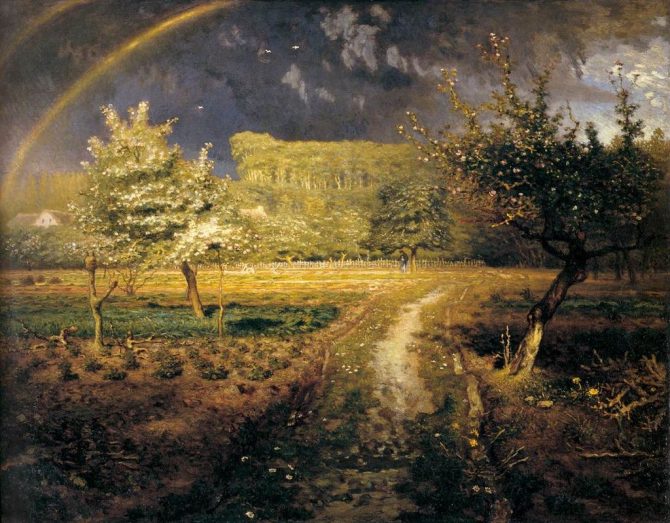

Step inside Jean-François Millet’s preserved studio in Barbizon, where the celebrated painter lived and created some of his most celebrated pieces.
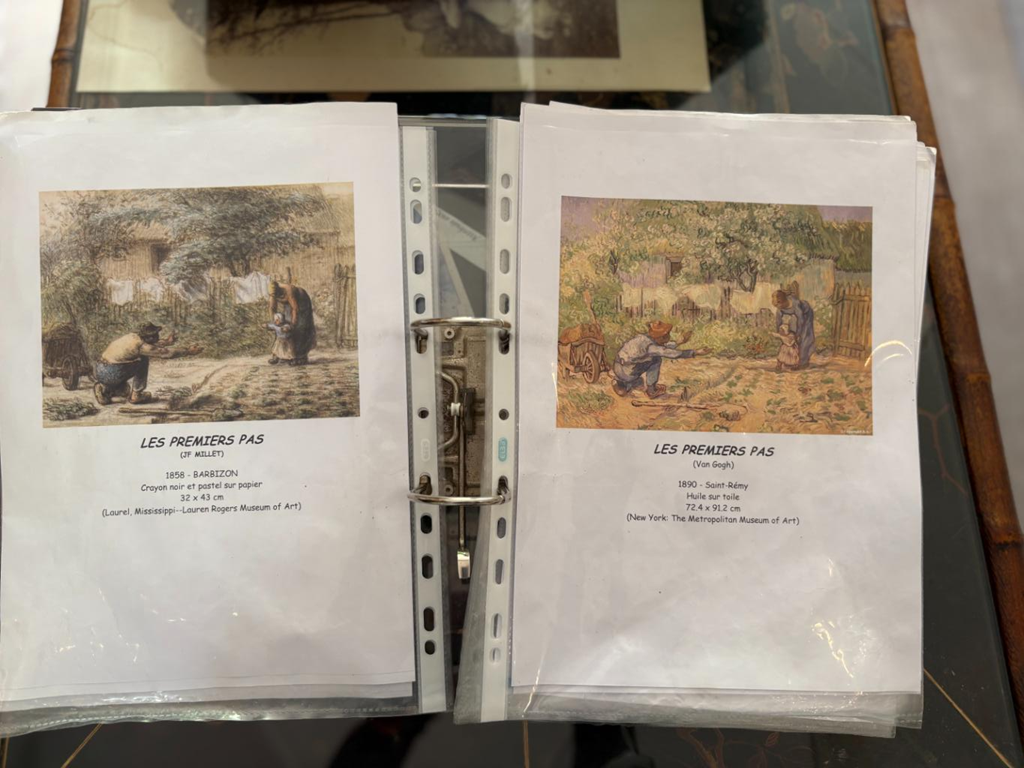
In the middle room of the three-room museum sits a small table with a white binder on top. It is usually open, and clearly well-thumbed. Inside are dozens of plastic sleeves, each holding a single printed image of a painting. On the right, the strokes are recognizable before the name. The signature swirling skies and bold contrasts of cobalt blue and chrome yellow. Unmistakably, paintings by Vincent Van Gogh.
But on the left, though nearly identical in subject and setting, the scenes feel different: the lines are more restrained, the mood quieter, the colors more natural. The name beneath those works: Jean-François Millet.
Which makes sense. After all, this is the Musée Millet, the House and Workshop of Jean-François Millet, in the village of Barbizon, about 60 kilometers south of Paris.
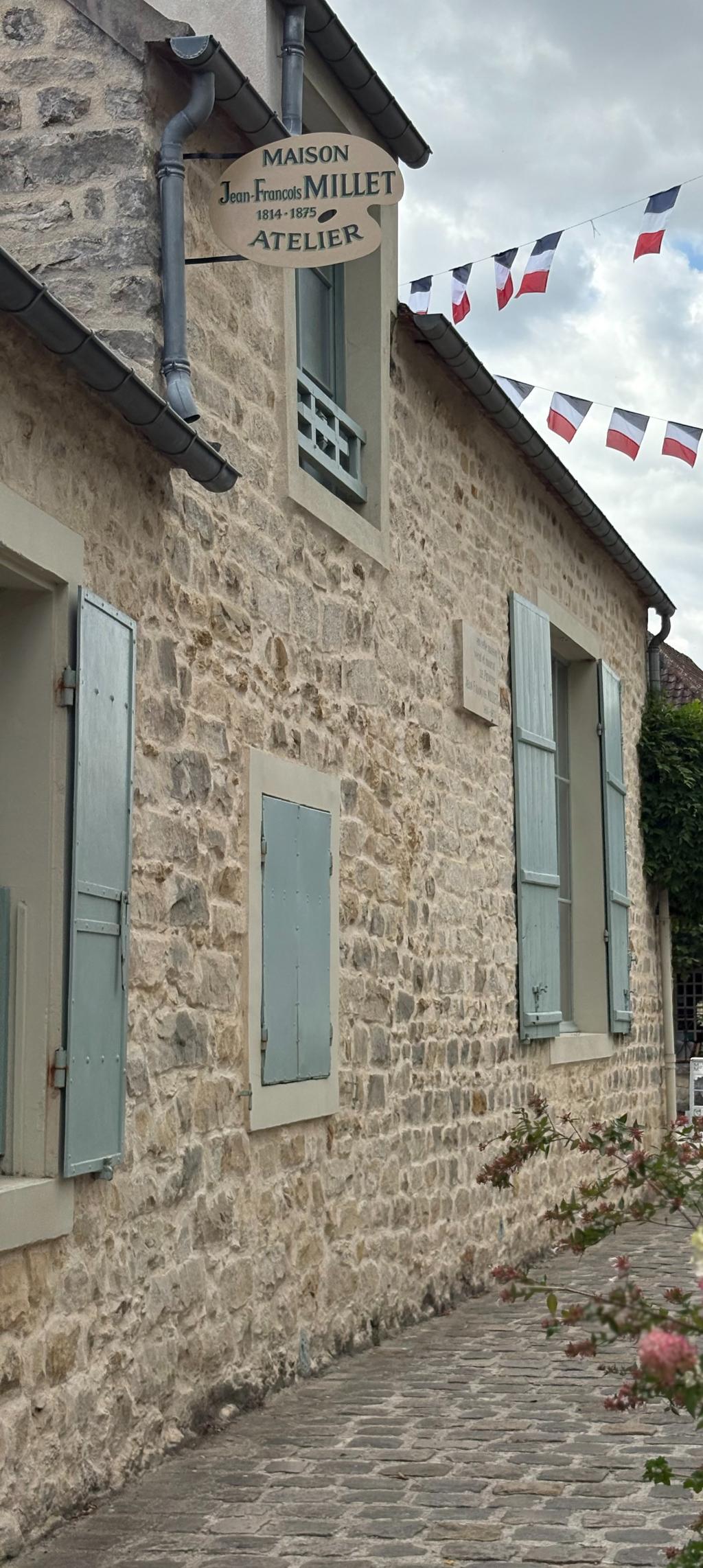
And as the binder quietly suggests, this is not a museum that presents Millet as a footnote to Van Gogh; it is the other way around.
“Millet is Father Millet, counselor and mentor in everything for me,” Van Gogh wrote to his brother in 1888. “He is that essential modern painter who opened up a horizon to us.”
Today, scenes of peasant life may not strike us as modern. But in the 19th century, the choice to portray rural labor seriously, empathetically, and with beauty was precisely that. Millet centered the present over the classical or mythic past. He painted farmers and field hands with the same weight once reserved for kings and saints, and in doing so, brought focus to the dignity of their ordinary life.
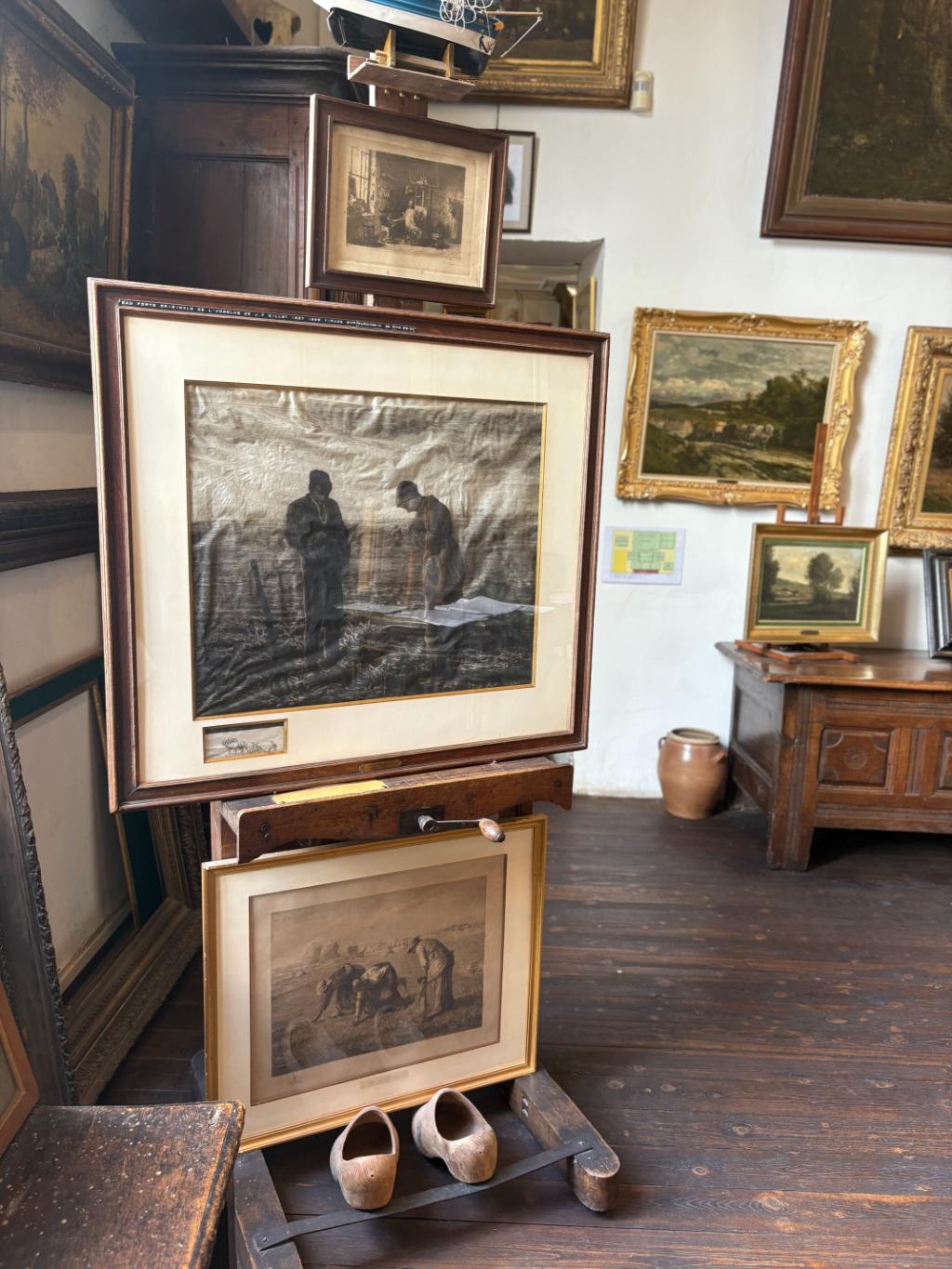
One painting in particular captured France’s imagination: The Angelus, showing two field workers pausing at sunset for prayer, a faint chapel in the distance over a harvested field.
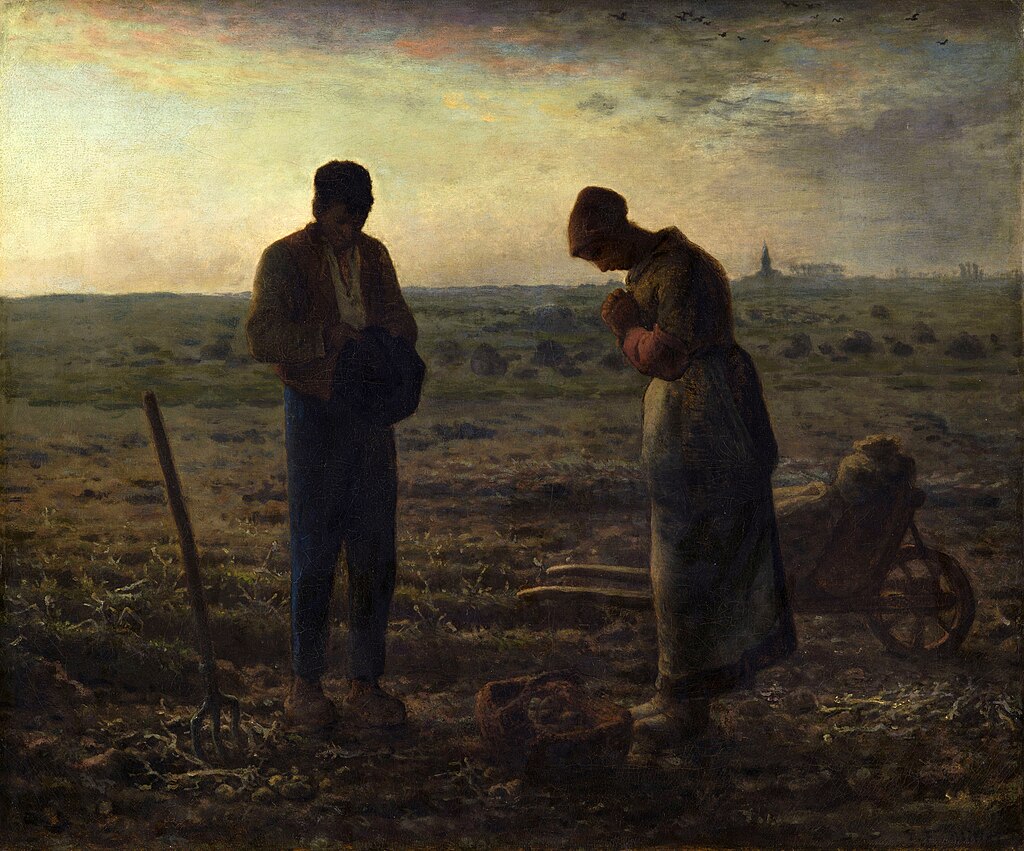
L’Angélus, Jean-François Millet
That stillness resonated in post-revolutionary France, a country navigating modernity, nostalgia, and social change. Barbizon, in Seine-et-Marne, already a gathering place for artists seeking to escape academic conventions, became the heart of this shift, with Millet one of its leading figures.
In Millet, Van Gogh found a model, someone who gave weight and meaning to working people, which Van Gogh aspired to in his own work. While living in the south of France, Van Gogh obsessively copied Millet’s compositions, producing dozens of studies inspired by The Sower, The Gleaners, The Angelus, and more.
Those translations are what fill this binder. That same reverence for simplicity and humility is what drew the museum’s current caretakers, Hiam and Bachar Farhat, to Millet’s legacy.
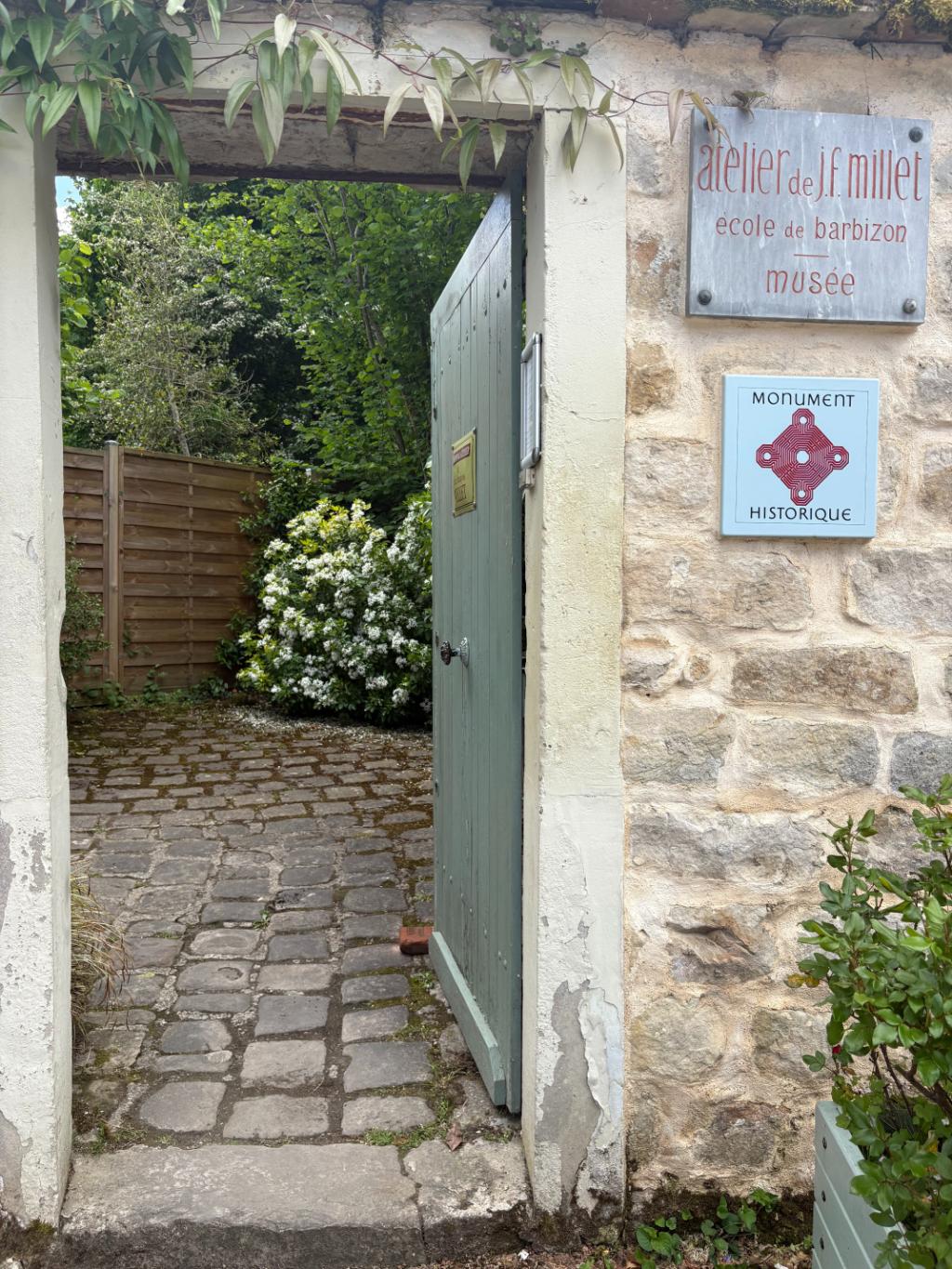
After Millet’s death in 1875, his former studio remained in private hands, passed down until a group of admirers began preserving it out of respect and devotion. By 1923, it had opened to the public.
In 2009, Hiam had the chance to take over the museum. She had told her husband, Bachar, she wanted to do something that touched the soul. A year later, he joined her.
Both come from lives shaped by the arts, and Bachar also has roots in agriculture. When Bachar speaks about Millet, you can feel the quiet kinship. He recognizes how agricultural life is hard, but not without endurance and grace. But when I try to ask more about his own story, Bachar gently shifts the focus. He tells me he and his wife are animated by passion, but Millet is the star here, not them.
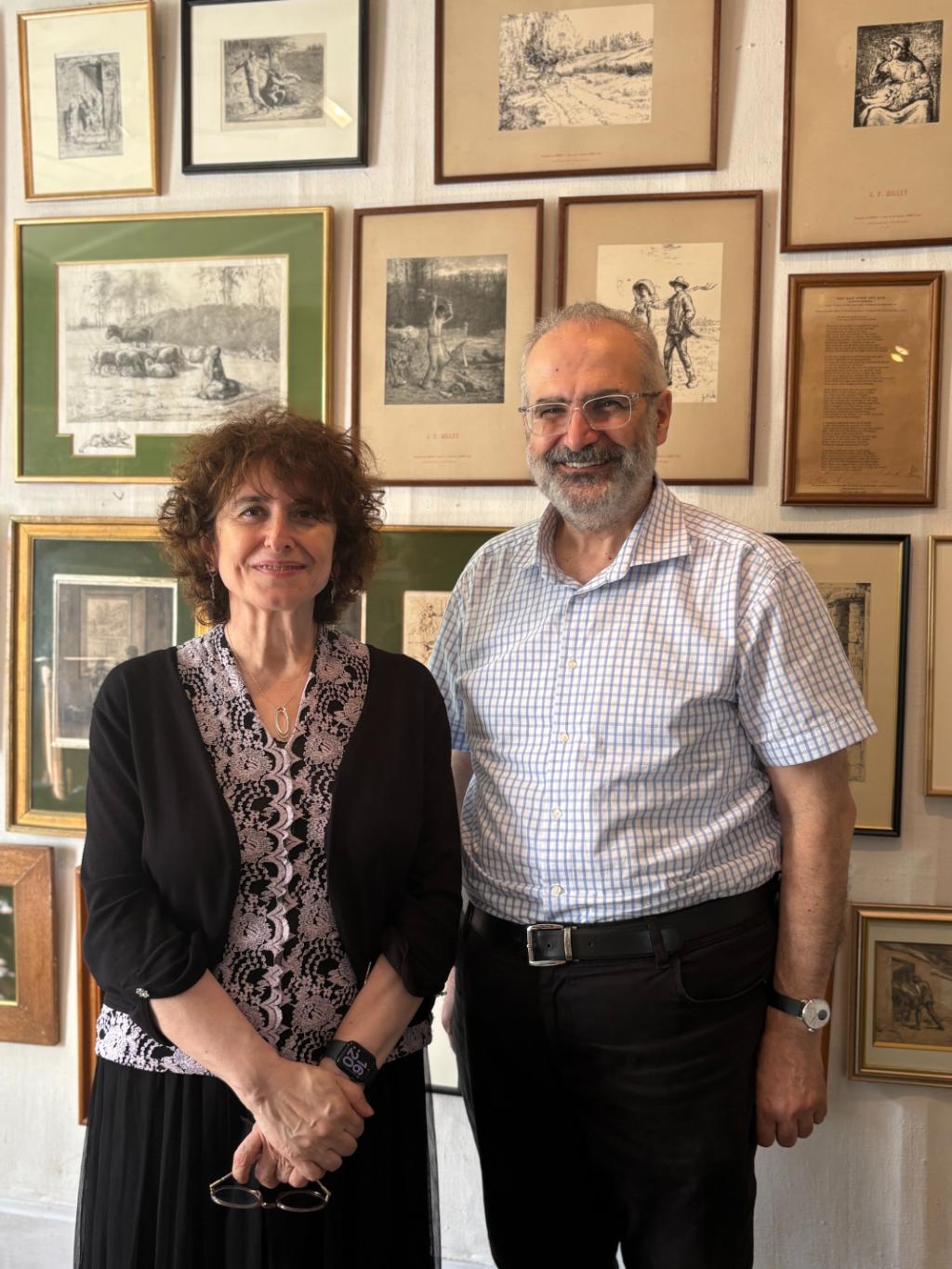
He would rather I read Millet’s own words to understand the artist’s spirit, and shows me this passage by Millet:
“In fields that are ploughed, or difficult to plough, you can see people wielding spades and picks. From time to time, they straighten up and wipe their forehead with the back of their hand. ‘You shall earn your bread by the sweat of your brow.’ Is this the kind of joyous, playful work that some would have us believe? In any case it is where, in my view, you find truth.”
Bachar or Hiam will usually greet each visitor personally at the museum’s door, offering a warm welcome and a brief introduction.
Something like: ‘Millet was a peasant’s son, who came from the soil, and stayed close to it. His career unfolded in three phases: portraits, mythological scenes, and, from 1848 onward, rural life. That final phase, the one pursued here in Barbizon, is what defined him.
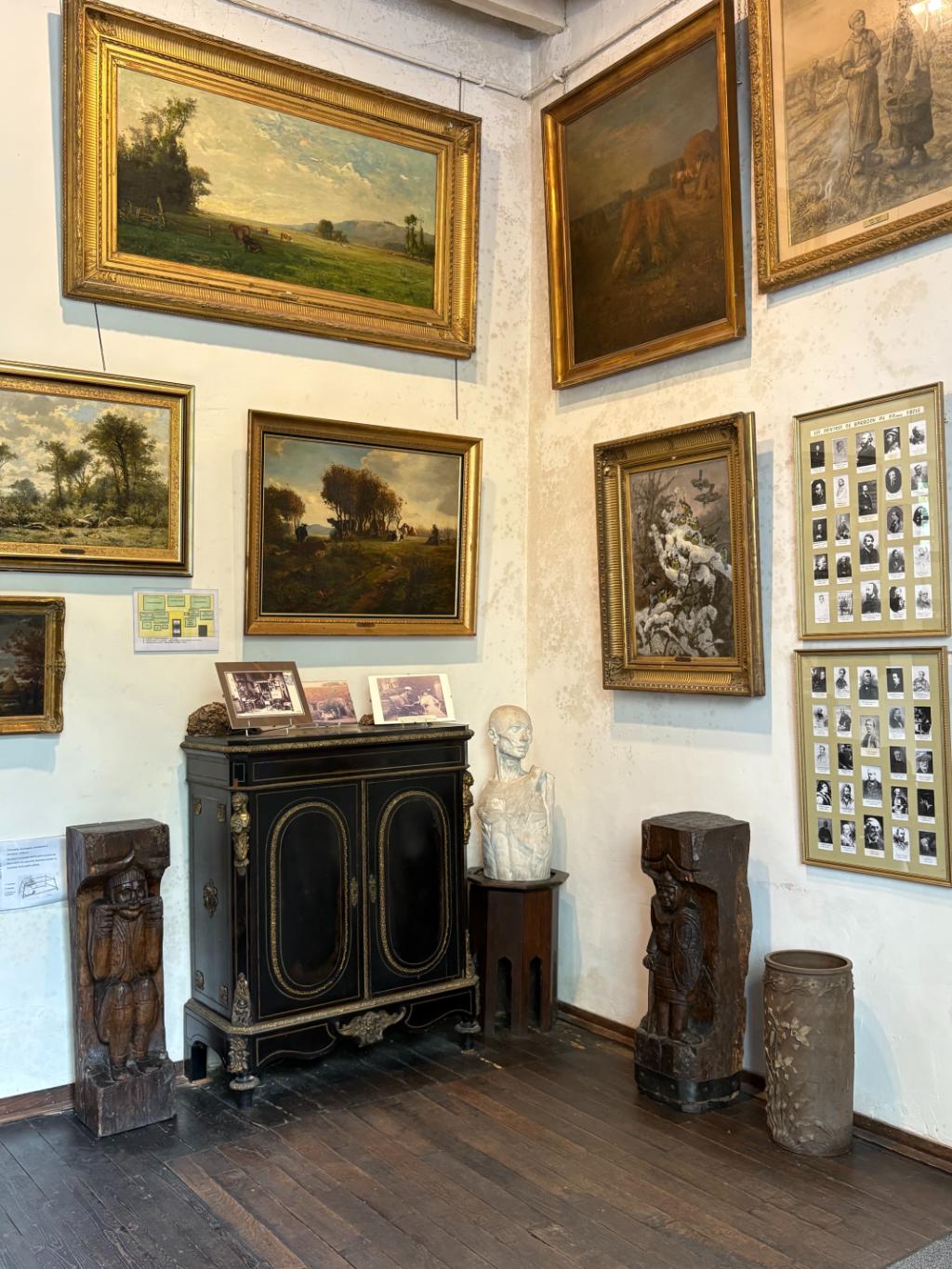
‘When Millet first arrived in Barbizon, fleeing a cholera outbreak in Paris, he found more than refuge. He found a circle of like-minded artists who, just as he was, were turning away from academic formalism. Together they became known as the Barbizon School, a movement that foreshadowed Impressionism. Millet would remain in Barbizon for the rest of his life.’
After this introduction, Hiam or Bachar hands visitors a slim, four-page booklet, translated into several languages, then step back. It’s one of the few interpretive tools in the museum’s three rooms. But stepping back, again, is intentional. They prefer visitors to discover the meaning on their own.
It is much more a place of objects than narratives.
The first room is Millet’s workshop. Once a barn, he converted it into a north-facing studio. The objects range from floor to ceiling; on the wall are boards featuring his friends, allies, and followers of the Barbizon painters. Across the floor: sculptures that inspired him, a desk, old shoes, an easel with etchings, and a photo of “Beautiful Marie,” the seventeen-year-old girl who posed for The Angelus.
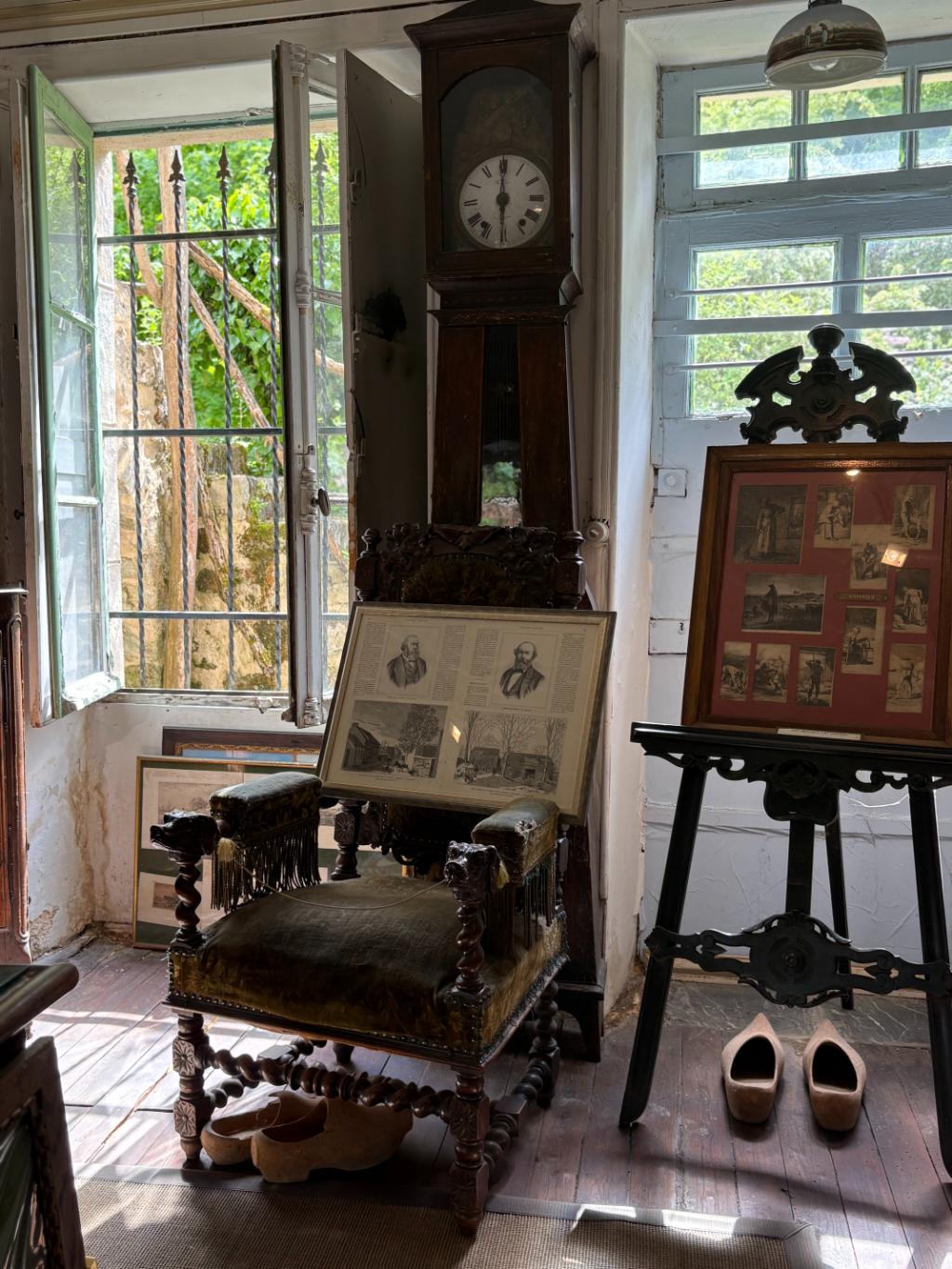
The second room was the family’s living space. It contains personal objects: his palette, religious books, engravings, early photographs, and a mass book. A clock stopped at six, the hour of Millet’s death. This is also where you’ll find the binder, quietly pairing Millet’s originals with Van Gogh’s tributes.
The third and final room is a rotating gallery and shop, featuring 19th-century prints, contemporary works, and pieces for sale that extend the Barbizon tradition into the present.
The museum does not contain Millet’s most famous works. Those are in Paris’ Louvre and Musée d’Orsay, and Russia’s Hermitage. But it offers something else: the context of his life.
Of course, Bachar will answer any question, and his knowledge runs deep. I watched him spot a figure on a postcard among dozens, walk across the room, pull the right book from a crowded shelf, and flip to the matching sketch in seconds.
But again, he takes the back seat.
It is a refreshing way to get to know someone, not through one’s grand work, but through the many quiet pieces that made a legacy possible.
And still, it was in this modest place that Millet painted his most iconic works. But the museum does not dwell on all that acclaim. It gives you the rest of the story; the man behind the masterpieces, in small objects and influences that shaped his days. And thanks to two caretakers who, like Millet, believe in creating space to highlight the attributes of another… through the small things.
Visiting Info
From April to October, it is open Monday, Wednesday, Thursday, Friday, Saturday, and Sunday, 10:00–12:30 and 14:00–18:00.
From November to March, hours shift to 10:00–12:30 and 14:00–17:30.
Admission is 6€.
From Paris, the most practical route is via Gare de Lyon. Take the Transilien (R line) to Fontainebleau–Avon (~25–30 minutes). From there, walk (~1 km), take local bus line 21, or a taxi to Barbizon — or if you’re up for a journey through the Fontainebleau forest, you can bike or hike on scenic trails (about 8 km from Fontainebleau town center).
Lead photo credit : Le Printemps, Jean-François Millet
Share to: Facebook Twitter LinkedIn Email
More in art, French artist, French painter, Impressionism
Related Posts
By Jen Flanagan
Leave a reply
Your email address will not be published. Required fields are marked *
REPLY