
Beautiful Staircases You Have to See (and Climb!) in France

From château showstoppers to vertigo-inducing climbs, France’s staircases are full of drama, beauty and ingenuity. Here are some of the most striking steps in the country.
From breathtaking flights of steps up to iconic Parisian landmarks to sublime and creatively avant-garde internal staircases in Loire Valley châteaux, France is blessed with an amazing array of escaliers for the curious to explore.
Here we present the France Today pick of the most inventive or eye-catching. Some are not for the faint of heart if you do plan on walking from bottom to top, but all are seriously photogenic… Got your own personal favourite or recommendation? Drop us a line, with photos if you have them, to [email protected]
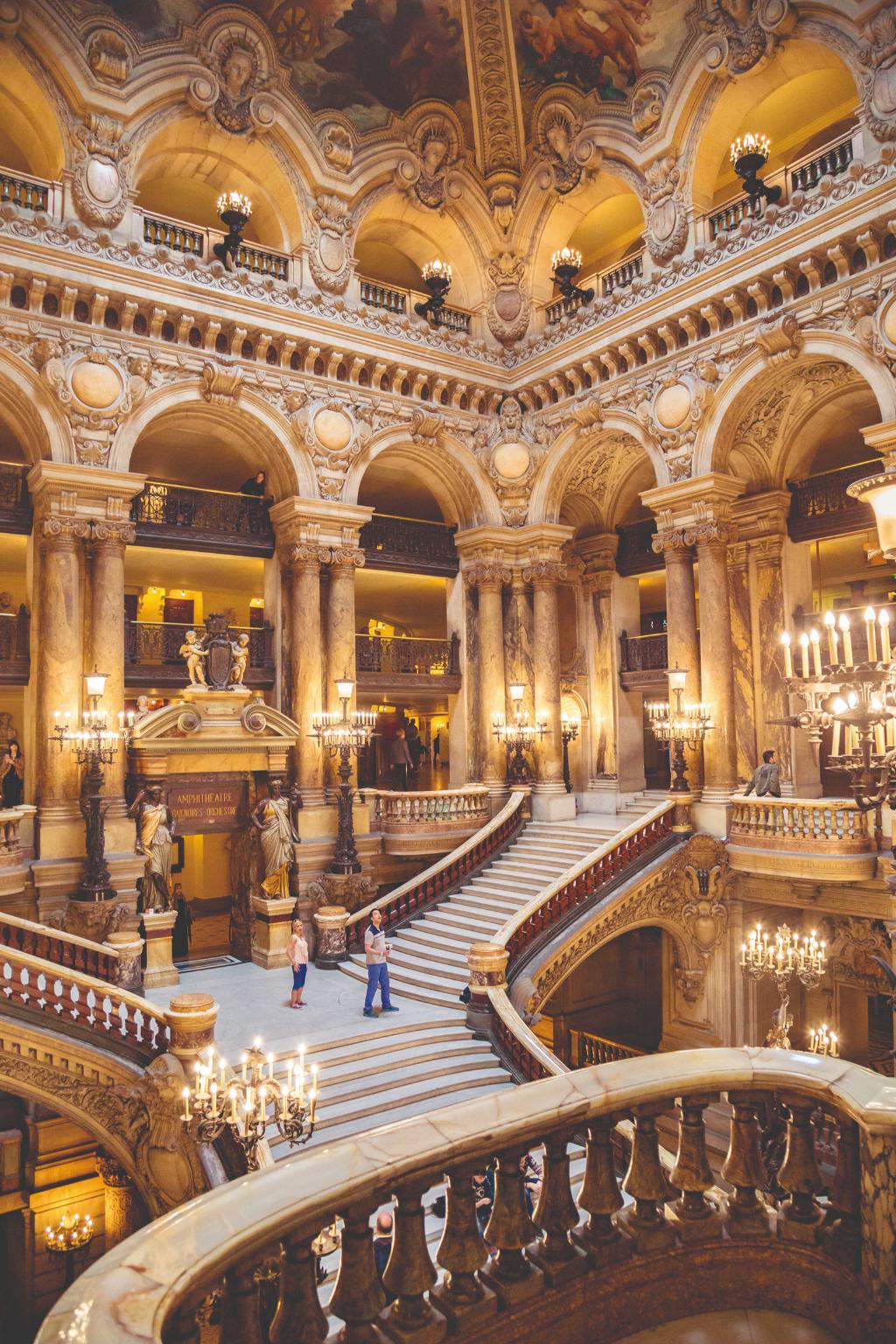
1. Le Grand Escalier, Opéra Garnier (Paris)
You may have just caught your breath after seeing the building’s stunning exterior, but whether you are off to an Opéra de Paris performance of La Bohème whilst dressed to the nines, or simply popping into the Palais Garnier for a tourist visit, the majestic entrance hall and triple flight of steps has spellbinding wow power. The grand marble ceremonial staircase, conceived as a theatre itself within a theatre, was designed by architect Charles Garnier (1825-1898). “The design is very elaborate: no two steps have exactly the same curvature, and only one is straight. The effect is one of great fluidity,” writes the Bibliothèque Nationale de France. Amazingly, after 13 years in charge of the building’s creation, for the grand opening in 1875, Garnier had to pay 120 francs for his second-floor box.
© Shutterstock
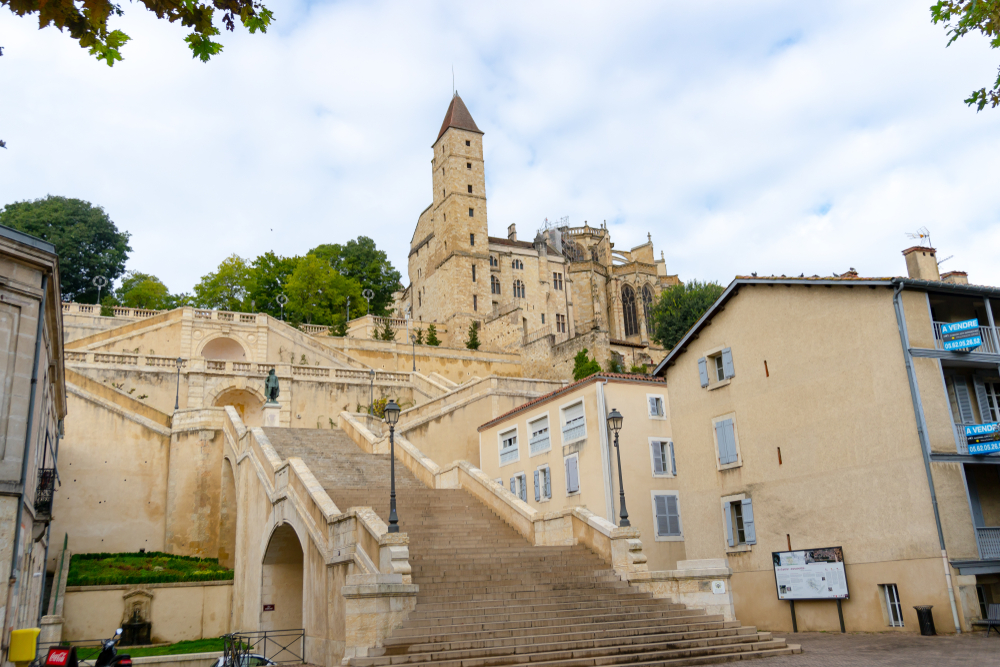
2. Auch (Gers, Occitanie)
The spectacular staircase in Auch, the capital of the Gers, offers Gascon grandeur to the tune of 374 steps. It was created in 1863 as part of a project to link the historic upper and newer lower towns over a 35m incline, and is listed as a Historic Monument. Featuring three landings, it beautifully frames the town’s superb cathedral at the top. It was renovated in 2008. The most obvious selfie opportunity is provided by a bronze statue of the Gascon hero Charles de Batz de Castelmore, better known as D’Artagnan, captain of the King’s Musketeers. He was born at the Château de Castelmore in Lupiac, some 42km away, and you will find him on the first, lowest landing.
On the top landing, in front of the fountain in the wall, you’ll see the 1992 contemporary sculpture L’Observatoire du Temps by Catalan artist Jaume Plensa. Its engraved text is a biblical evocation of the Flood, and recalls the catastrophic floods that devastated the city in 1977.
Auch © Shutterstock
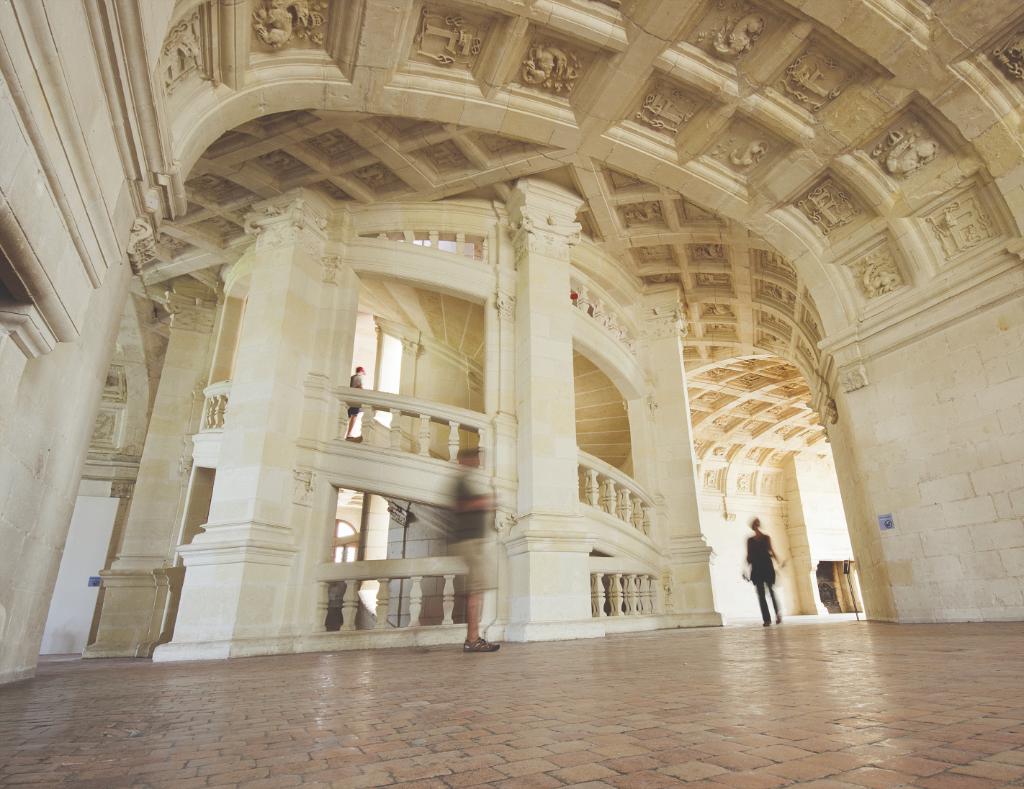
3. Château de Chambord (Loir-et-Cher, Centre-Val de Loire)
No Loire Valley château impresses from afar quite like its largest, the epic French Renaissance architecture masterpiece, the Château de Chambord. Constructed as a hunting lodge for Francis I between 1519 and 1547, today it is one of the most iconic visitor sites in the whole of France. Yet despite its exterior splendour (the gardens are magical too), there is one architectural feature that truly sets it apart: a double helix (sometimes called double spiral) staircase.
Located in the middle of the immense, square-shaped keep at the convergence of four rooms, it ingeniously allows users to ascend and descend three floors at the same time, without encountering each other on the steps.
The drama and mystery that it provides enthrals visitors, though any suggestion that Leonardo da Vinci – who spent the last three years of his life in the region after an invitation by Francis – designed it, has never been proven. However, the château itself does claim the double helix was inspired by the Italian genius.
© Shutterstock
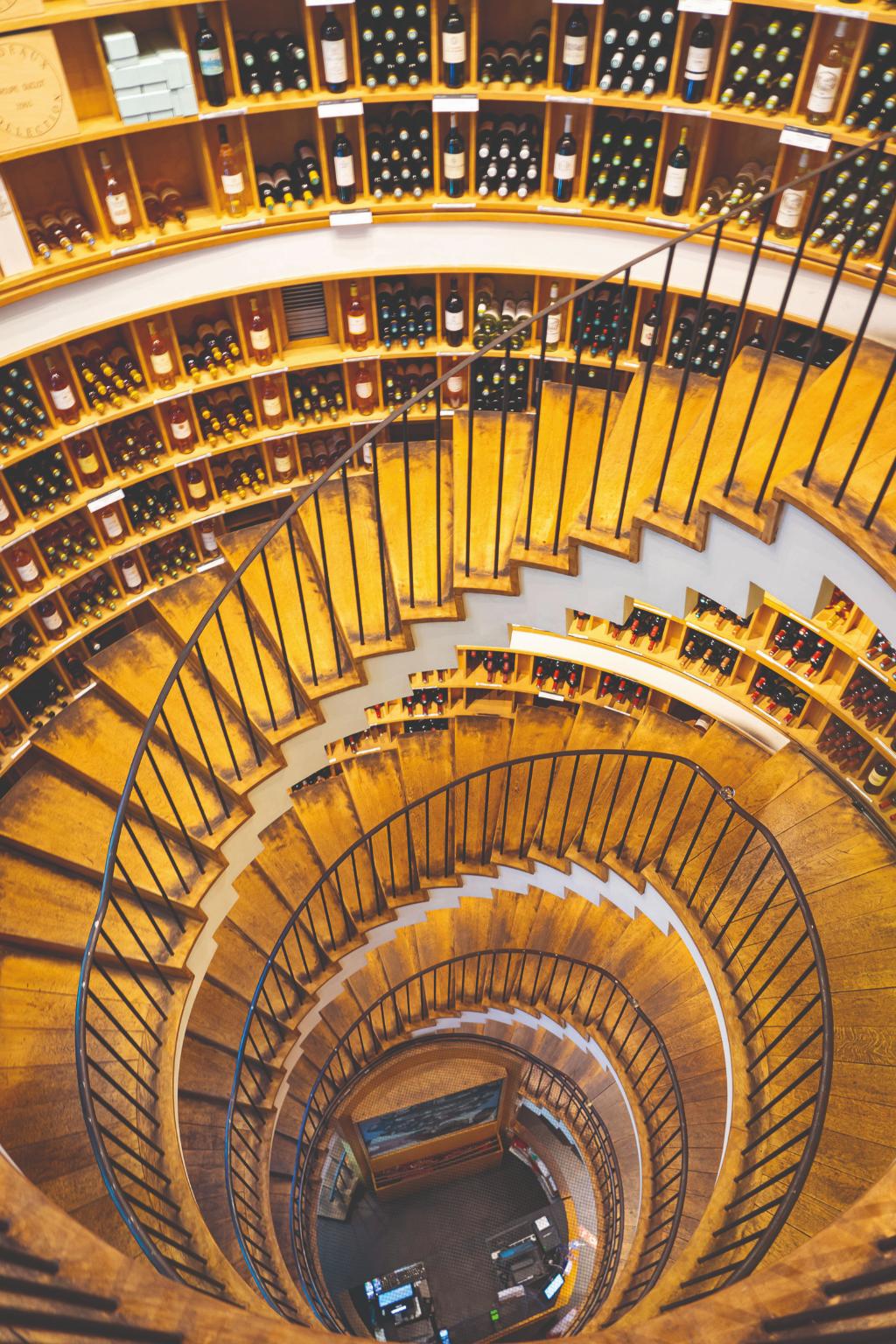
4. L’Intendant wine shop, Bordeaux (Gironde, Nouvelle-Aquitaine)
Not a staircase to be meddled with after a prolonged wine-tasting session, the most unusual in our selection of escaliers is to be found in the resplendent L’Intendant wine boutique, which is located just opposite the Grand Théâtre at 2 Allées de Tourny in Bordeaux. The cellar, designed by JMR-Architects, features a spectacular 12m tower where bottles are displayed over five levels. Yes, this might seem like a wine retailer -for serious buyers only the 1,600 references on offer are devoted exclusively to Bordeaux vineyards: Grands Crus Classés, confidential estates, exclusivities and winegrowers’ vintages – but do not be intimidated. There are plenty of ready-to-drink bottles to enjoy.
© Alamy
5. Montmartre and Sacré-Coeur (Paris)
Many separate sets of steps point the way up the large hill in Montmartre, in Paris’s northern 18th arrondissement. The most iconic is Rue Foyatier, which leads right up to the Sacré-Cœur Basilica and whose 222 steps are grouped into nine sections of 23 to 25 steps each. These are perfect for taking a breather; after all, between the lower and upper parts of the street, there is a 36m difference (with a lung-busting 35% gradient). Once you approach the summit of the butte de Montmartre, the famed white dome of the Sacré-Coeur appears and you climb the last of the steps on Square Louise-Michel with its lawns and shrubs.
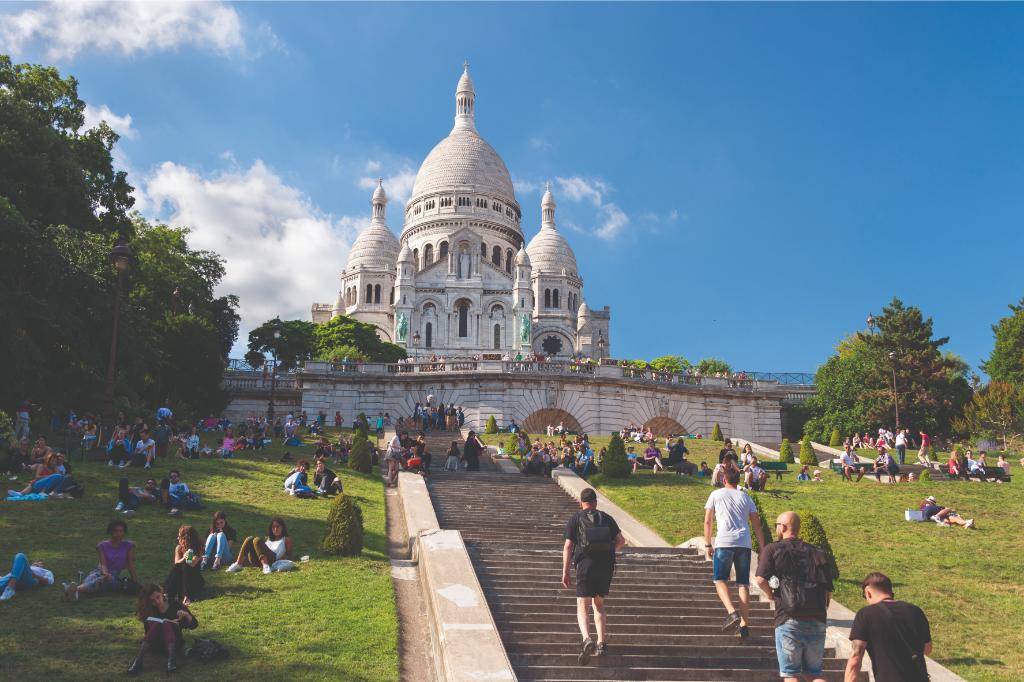
© Shutterstock
HONOURABLE MENTIONS
Sometimes the simplest of ancient stone steps in a perched Provençal village are equal in charm to more highfalutin walkways. Wander around a village such as Lacoste (pictured) in the Luberon and you’ll see pierre pathway perfection wherever you turn.
1. While many take the lift up the Eiffel Tower, you can climb the 674 steps stairs to the second floor too and it’s the cheapest option (though it’s not for use by parents with very small children and babies, and people with reduced mobility.)
2. Every year, the stairs to climb Dune du Pilat (La Teste-de-Buch, Gironde), France’s biggest sand dune, are erected at Easter and dismantled after All Saints’ Day.
3. Le Chemin de Nietzsche is more a rugged pathway than a set of steps but it offers the intrepid rich rewards when hiking down from the medieval village of Èze (Alpes-Maritimes) to the seaside below.
4. Sometimes the simplest of ancient stone steps in a perched Provençal village are equal in charm to more highfalutin walkways. Wander around a village such as Lacoste (pictured) in the Luberon and you’ll see pierre pathway perfection wherever you turn.
From France Today Magazine
Ohlala! It looks like you’re not a Member yet
Join to view this content!
(If you are a Member, log in or reset your password below or contact us so we can help)
- Log in
- Forgot password
Lead photo credit : Auch © Alamy
Share to: Facebook Twitter LinkedIn Email
More in architecture, art, France Today Membership, French culture, French monuments
Related Posts

Leave a reply
Your email address will not be published. Required fields are marked *