
7 Reasons to Visit the Musée Dobrée in Nantes
Sponsored
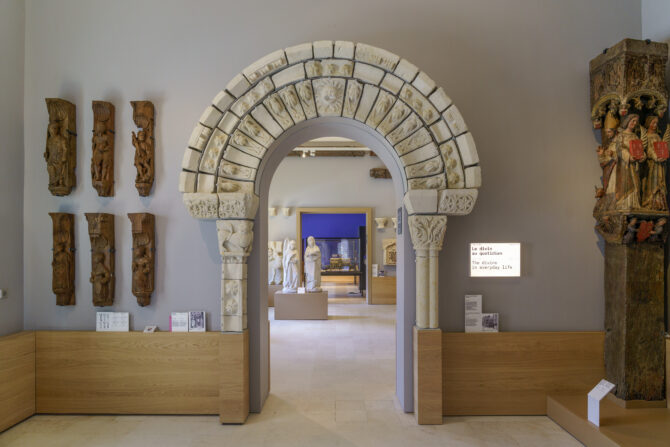
A shipowner’s son spent decades and most of his fortune assembling a cabinet of curiosities on the edge of Nantes city centre. Reopened in 2024, this museum is one of the most quietly surprising in western France.
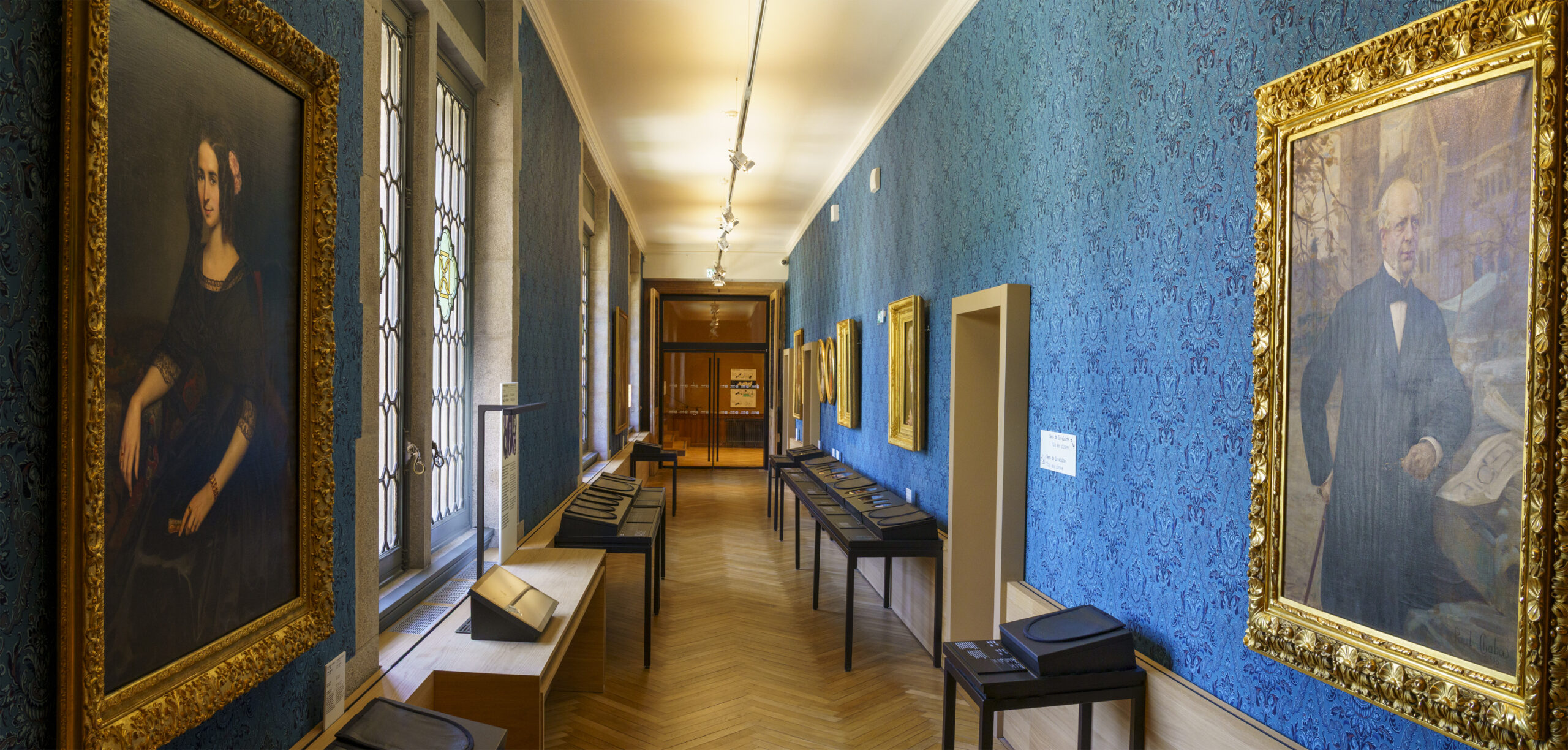
There is a moment at the Musée Dobrée, when you realise you have gone from a Gallo-Roman shrine to a Sèvres porcelain plate to an Egyptian mummy case without ever consciously leaving the same house. This is not an accident of curation. The museum reopened after a top-to-bottom overhaul, and its guiding principle was to keep the pleasant disorder of a collector’s home rather than iron it into perfect chronology.
1. Three buildings, four centuries, one site
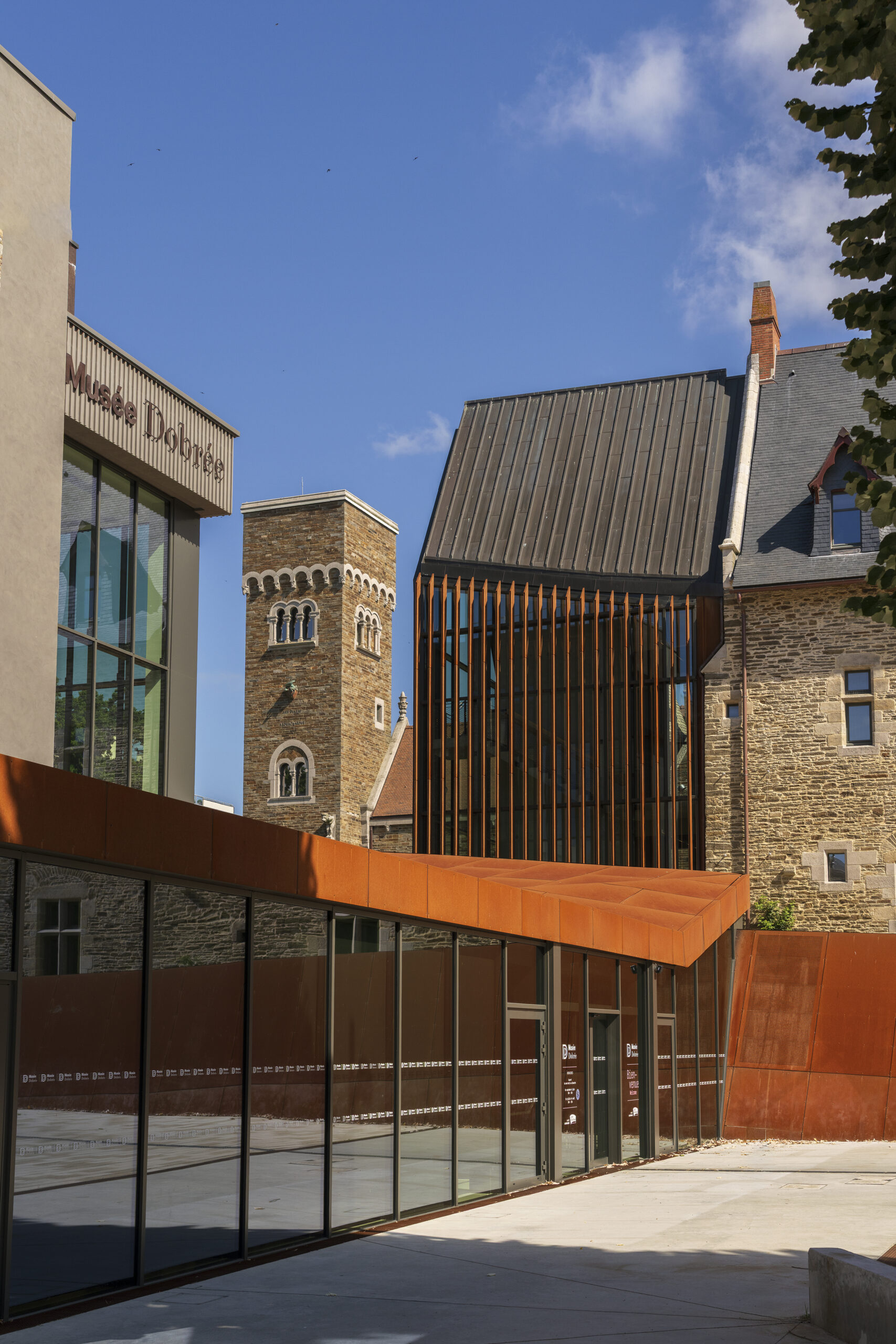
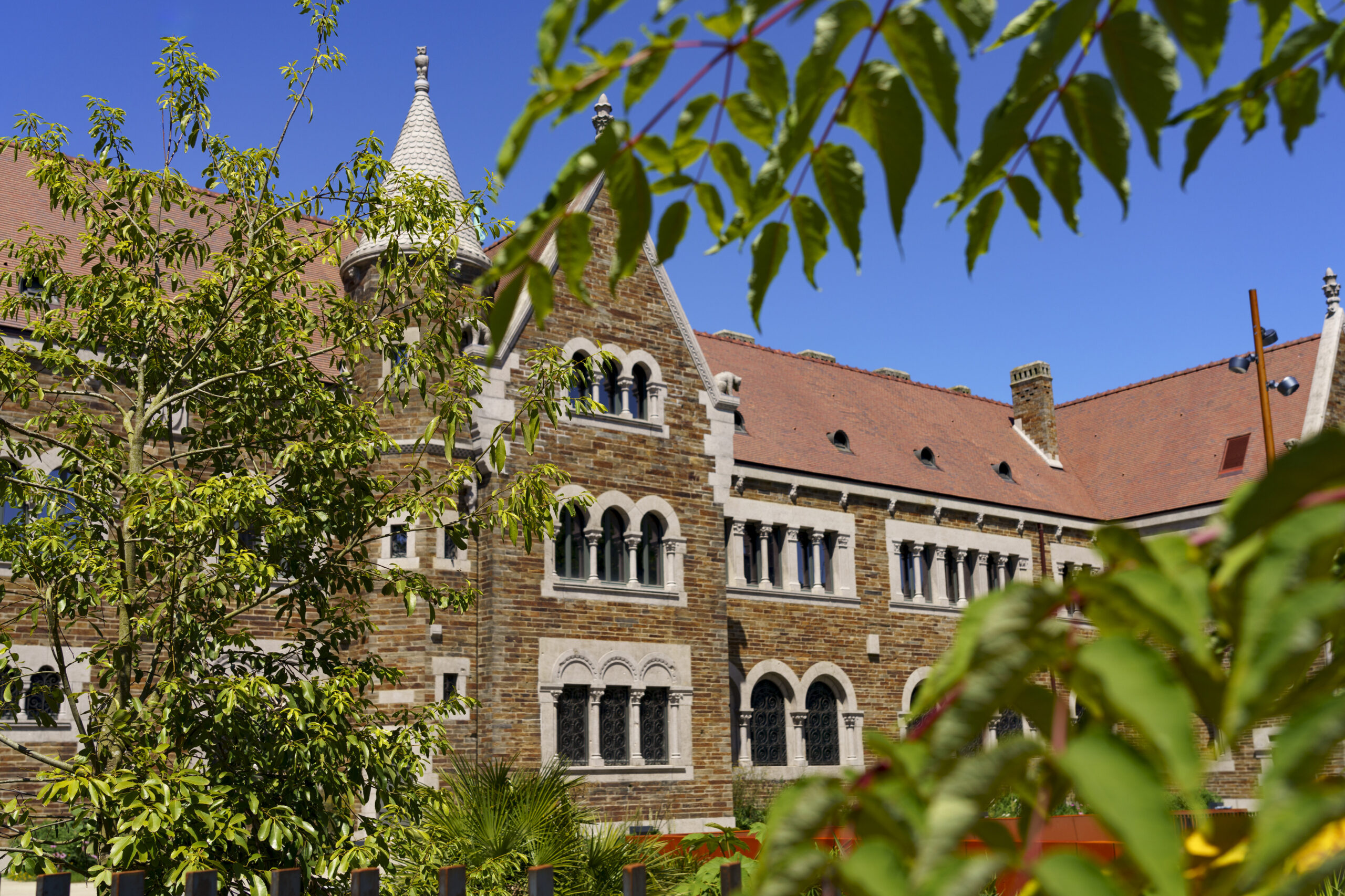
The Musée Dobrée is really an architectural collision. There is the Manoir de la Touche, a 15th-century bishops’ country residence. There is the neo-Romanesque mansion Thomas Dobrée commissioned in 1863 from Viollet-le-Duc, whose Gothic sketch he promptly rejected, redrawing it himself and adding a 30-metre tower for good measure. And there is the Voltaire building, a slab of 1970s brutalism that now holds the entrance, café and shop. Atelier Novembre’s renovation stitched the three together with weathered Corten steel: a canopy, a ramp, an underground passage beneath the garden. The rust-orange plays off everything already there, the granite rubble of the manor, the schist and Chauvigny limestone of the house, the raw concrete of the 1970s block.
2. The heart of Anne of Brittany
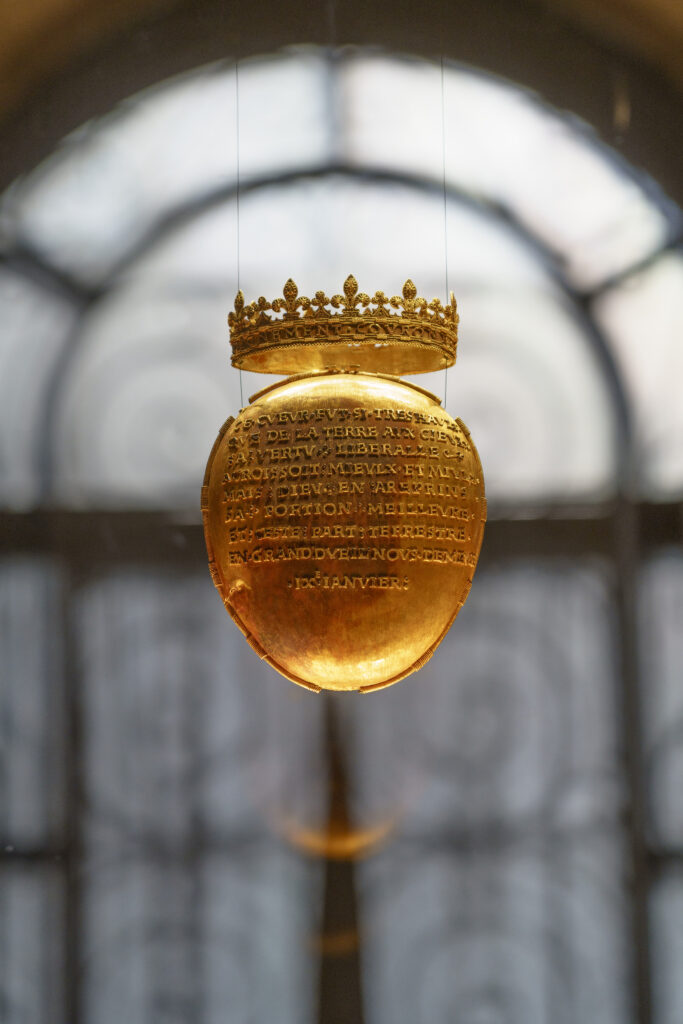
If the museum has a single celebrated object, it is the small gold and enamel reliquary made to hold the heart of Anne of Brittany, Duchess of Brittany and twice Queen of France. She commissioned it in her lifetime so that her heart could rest beside her parents in Nantes while her body went to Saint-Denis with the kings and queens of France.
3. A collection that refuses to stay in its lane
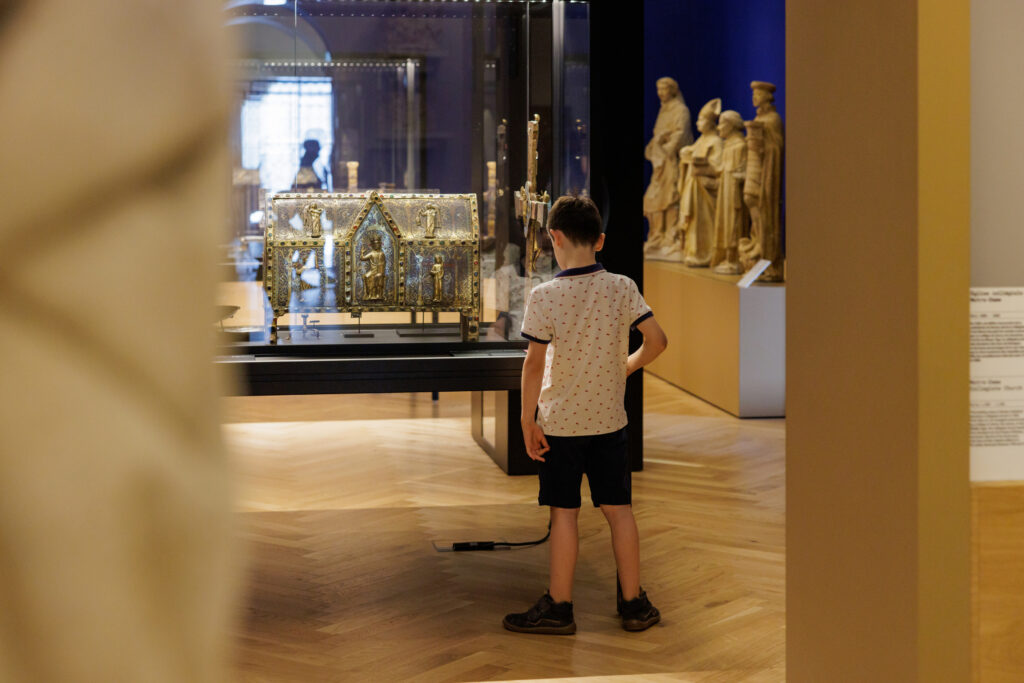
Some 2,400 objects are on show across four floors and 36 rooms. The span is 500,000 years and five continents: a polished stone axe head from around 4,500 BC, a Gaulish gold stater that Dobrée considered one of the finest coins ever struck, a Roman household shrine dug up beneath the church at Rezé, a city nearby, with its figurines still in place, a Limousin reliquary chest of saint Calmin, 119 weapons in the Rochebrune gallery, a Mochica bottle from northern Peru, an Antwerp cabinet of curiosities in tortoiseshell and ivory, Art Nouveau glass by Daum and Majorelle. And, yes, a mummified cat.
4. The collectors are part of the exhibition
Most museums hide their donors in wall labels. The Musée Dobrée puts them at the centre. Each floor is punctuated by portraits of the people who built the collections: Fortuné Parenteau, who came to archaeology through coins and jewellery; Auguste Cullère and his 300 Amazonian objects; Marie-Madeleine Fourgheon-Salce and her husband passionate about pre-Columbian art. Thomas Dobrée himself emerges as an engaging obsessive. In an 1861 letter he wrote of how much there was still to hunt down and buy to make his house precious in books, furniture and antiquities. He died in 1895 with the building unfinished giving his assets to the Département de Loire-Atlantique, which opened the museum on January 8th 1899.
5. A museum designed for families
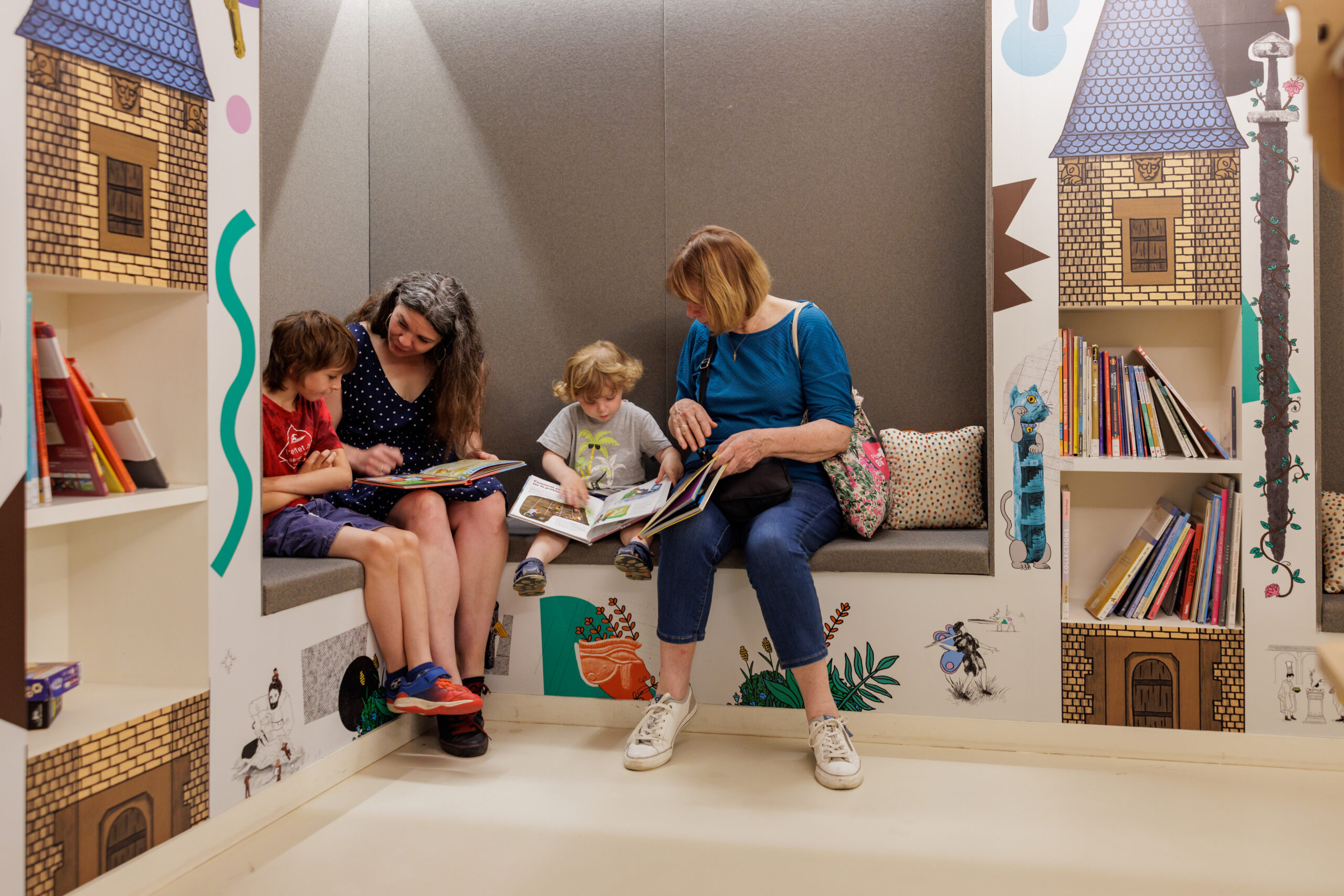
The museum holds the “Musée Joyeux” label from the family-museum association Mom’art, and it shows. There is a family lounge by the ticket desk with books and games, play-and-sensory tables through the permanent exhibition and a free smartphone app with routes to choose from, including one built around the museum’s more frightening objects for over-tens.
6. A green area in the heart of Nantes
The Anglo-Norman garden and the café Dobrée is free and open to all. The central section is planted as a collection in its own right, a nod to the Dobrée family’s Channel Islands roots and their taste for acclimatised exotics: palms, yuccas, gingers, bananas, with a Corten fountain at its heart. North of it is a children’s garden with a climbing tower and slide. The café on the south forecourt is one of the better places to sit in the Graslin quarter.
7. A museum accessible to everyone
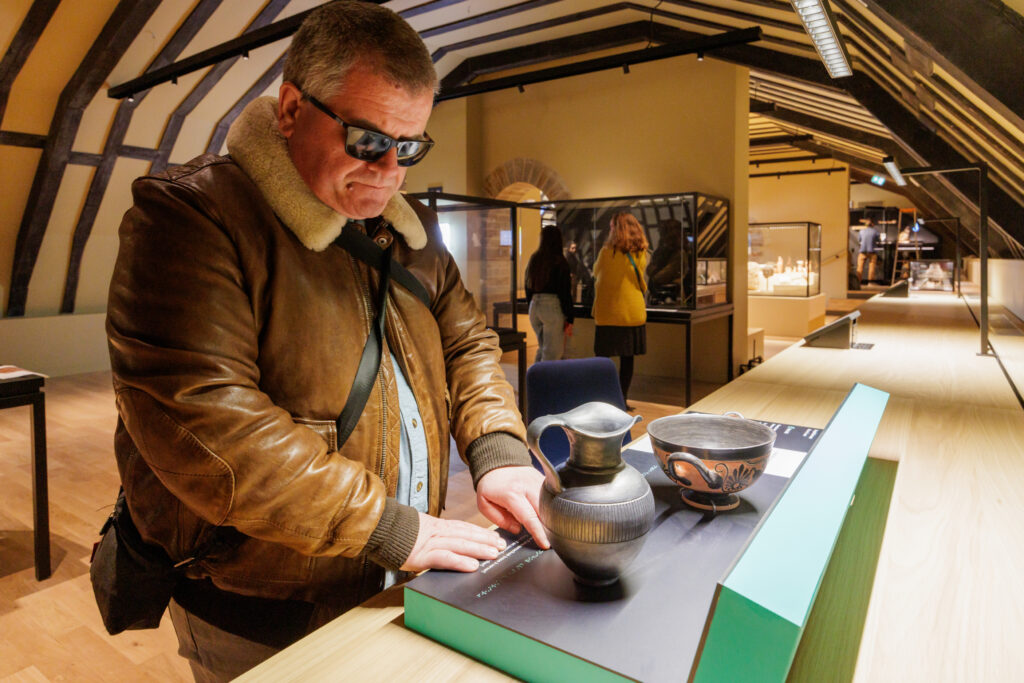
Accessibility was treated as a founding condition rather than a retrofit: sensory tables for blind and partially sighted visitors, subtitled films, French-sign-language content, magnetic loops, large-print plans, simplified-French booklets, sensory bags with ear defenders and fidget toys.
Musée Dobrée, 1 place Jean V, 44000 Nantes. Open Wednesday to Sunday, 10am–6pm (until 7pm in July and August); closed Mondays and Tuesdays, and on 1 January, 1 May, 14 July and 25 December. Admission €9, concessions €6, free for under-26s, jobseekers, visitors with disabilities and a companion, and holders of the Pass Nantes. The gardens, café and shop are free to enter. A five-minute walk from place Graslin; bicycle parking on place Jean V. musee-dobree.fr
Share to: Facebook Twitter LinkedIn Email
More in Musee Dobree, museum, Nantes
Related Posts


Leave a reply
Your email address will not be published. Required fields are marked *