Exploring France’s Golden Triangle

Between the red-brick grandeur of Albi, the vineyards of Gaillac and the medieval streets of Cordes-sur-Ciel lies one of southwest France’s best-kept secrets: the Triangle d’Or, or Golden Triangle. Rich in history, food and spectacular scenery, this corner of the Tarn offers a slower, more authentic side of France.
For four days, we used Château Gaillac, part of Oliver’s Travels’ collection of more than 1,700 curated homes across France, as our base: a grand, baroque former wine estate just north of medieval Gaillac. Its setting feels wonderfully representative of the region itself, surrounded by the green, terracotta and ochre landscape of the Tarn Valley, where vines have been cultivated for more than a thousand years. From here, markets, hilltop villages, historic cities and long, sun-soaked lunches were all within easy reach.
Day One: Arrival in the Tarn
Our journey began with an easy flight from Bristol to Toulouse. With no delays and a smooth arrival, we collected our hire cars and set off on the 45-minute drive towards the château. The route wound through the beautiful landscapes of the Pays de Cocagne, a region whose name originates from a medieval legend describing a mythical land of abundance and prosperity. As the countryside unfolded around us in shades of green, gold and terracotta, it was easy to understand how such stories were born here.
Then came the moment we first arrived at Château Gaillac.

As the drive opened up, collective gasps filled the cars. Ahead stood the château, framed by a grand circular driveway and elegant fountain. The gentle sound of flowing water mixed with the chorus of croaking frogs, cicadas and birdsong felt like arriving in paradise.
There is a real sense of history here. Built during Gaillac’s wine-making boom in the late nineteenth century, Château Gaillac was once the centre of a working estate. Its classical main house, former chais and stables sit around a handsome courtyard, with two pigeon towers rising above the old buildings. Today, the estate’s historic character remains, from the baroque façade overlooking the park to the terracotta terraces and pool area. It is a setting that feels as much a part of the stay as the château itself.

Inside, every room seemed to reveal another surprise. The château balances grandeur and comfort beautifully, with elegant period features sitting comfortably alongside rustic touches and welcoming living spaces. But it was the swimming pool that truly stole the show. Within minutes of completing the tour, bags were abandoned, swimming costumes magically appeared and any lingering pretence of professionalism disappeared as we made a beeline for the water.
Of course, no self-catered holiday is complete without the obligatory supermarket visit. For some, it may be a chore; for me, it remains one of the greatest pleasures of travelling. Before long, the farmhouse-style kitchen was stocked with French essentials: Brets crisps, jars of Bon Maman jam, Milka chocolate, endless varieties of cheese, local wines and beers, charcuterie, Dijon mustard, fresh orange juice and crusty baguettes. We arrived with the best intentions of buying only what we needed and left as though we were preparing for a six-month lock-in.
That afternoon, a friend and I headed out for a stroll around the tiny hamlet surrounding the château. The quiet lanes, warm evening sunshine and rolling countryside offered the perfect introduction to the slower pace of life here.

Back at the château, the barbecue was fired up for our first evening together. Toulouse sausages sizzled alongside fresh salads and local produce while conversations stretched long into the evening beneath the stars. Between courses, we found ourselves playing pétanque, attempting increasingly ambitious basketball shots and climbing into the treehouse overlooking the grounds. It was impossible not to feel a little carefree in surroundings like these.
Day Two: Cordes-sur-Ciel
Every morning began with deliveries of freshly baked croissants, pain au chocolat, pain aux raisins and warm baguettes, enjoyed with coffee on the terrace and, in my opinion, there is no better way to start a day.
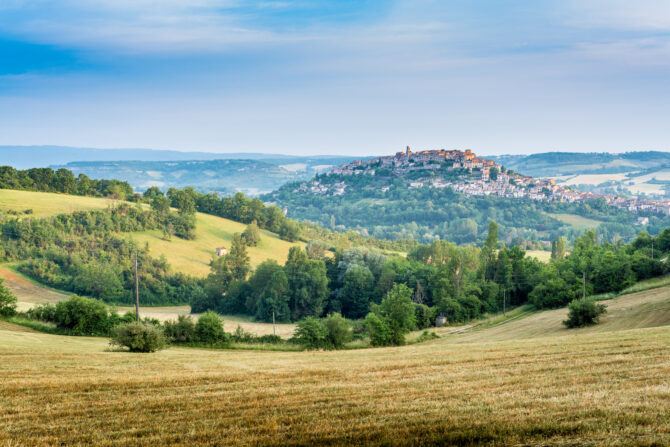
Our first full day took us to Cordes-sur-Ciel, often cited among France’s most beautiful villages. It holds official membership in the prestigious Les Plus Beaux Villages de France and was voted France’s Favourite Village in 2014. The town also captivated Albert Camus, who famously declared, “Everything is beautiful here, even regret.”

Arriving on market day only enhanced its charm. Perched dramatically on a hilltop, the medieval town rises above the surrounding countryside like something from a pop-up storybook. Its steep cobbled streets wind upwards between Gothic facades, artisan workshops and hidden courtyards, revealing breathtaking views at every turn – much to the dismay of my ever-depleting camera storage.

The climb is rewarded not only by the scenery but by the food. Lunch at Auberge de la Halle showcased the hearty flavours of the region. My goat’s cheese salad was excellent, while around the table plates arrived laden with oozing aligot, confit de canard, Toulouse sausage and other local specialities, all accompanied by generous glasses of wine.
Back at the château that evening, the pizza oven took centre stage. Making pizzas from scratch, debating the perfect topping combinations (prosciutto, mushrooms and artichoke for me), and cooking them together became a wonderfully chaotic yet wholesome evening.

Day Three: Albi
The following day brought another opportunity to explore. Some of the group headed into nearby Gaillac for its Sunday flea market, where streets were lined with stalls selling curiosities, antiques and treasures of every description.

From there, we regrouped and headed to Albi, arguably the cultural heart of the Golden Triangle. The city’s magnificent red-brick cathedral dominates the skyline and serves as a reminder of the area’s rich history. Around its base, another lively market was in full swing. Among the stalls, I found a beautifully crafted clay espresso cup made from the distinctive clay found around Albi itself.
One of the highlights of the afternoon was crossing La Passerelle, which offers spectacular views across the River Tarn towards the Pont Vieux and the city beyond. The sight of Albi’s terracotta skyline reflected in the water is one that is made for postcards.

Naturally, food once again featured prominently. After browsing the produce stalls of the Marché Couvert, we settled into lunch at La Boussole. Carpaccio, fresh prawns, sea bass and yet more confit de canard appeared across the table. Afterwards, in search of something sweet, I discovered Glaces Moustache. Faced with more than a hundred flavours, I spent an embarrassingly long time making my decision before settling on their award-winning tiramisu ice cream – a choice I stand by wholeheartedly.
That evening, our final night at the château was wonderfully simple. Leftover cheeses, charcuterie, bread and wine were gathered around the pool as the sun began to set. Sometimes these are the meals that are the best – perhaps the least elaborate, but shared with good company in beautiful surroundings.
Day Four: A Slow Farewell
Soon enough, and sadly enough, it was time to leave. After leisurely breakfasts, one final coffee on the terrace and a last look across the surrounding countryside, we retraced the easy route back to Toulouse Airport.
The Golden Triangle may not enjoy the same international recognition as Provence or the Côte d’Azur, but perhaps that is part of its appeal. On the drive back, all of us agreed we would love to return to this area of France. Here, medieval villages, historic cities, vineyards and markets sit side by side in a landscape that feels authentically French and refreshingly slow.
And with Oliver’s Travels’ Château Gaillac at its heart, we found the perfect base from which to discover it.
Lead photo credit : Shutterstock