
Restaurant Review: Louison, Le Puy-Sainte-Réparade
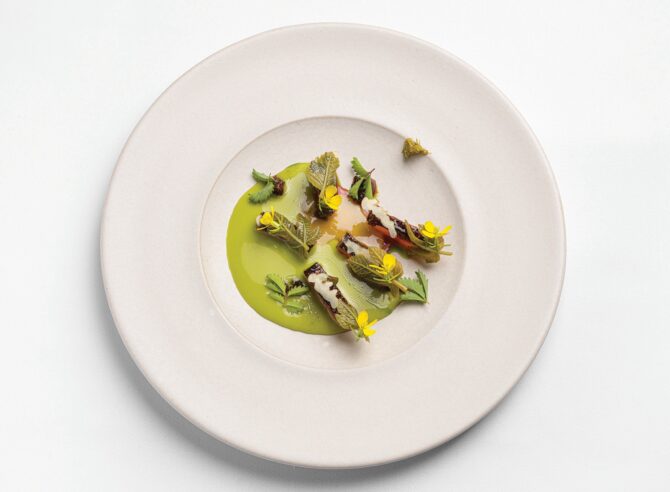
Chef Florent Pietravalle, a native of Montpellier, earned a big reputation for himself during the 10 years he ran the kitchens of the enchanting La Mirande hotel in Avignon. What won the 39-year-old cook a Michelin star and a following of exigent local regulars was his bold and brawny cooking style. He’s deeply in love with the vegetal world, including all herbs, vegetables and fruits, and also cooks offal and other off-cuts many chefs shy away from. He’s fascinated by fermentation as a way of creating energetic new tastes, and as a keen environmentalist, he’s deeply committed to sustainability, cooking almost exclusively with local seasonal produce and running a zero-waste kitchen.
The reason I loved the meal I recently had at Pietravalle’s new restaurant, Louison, at the beautiful Villa La Coste hotel on the estate of the Château La Coste, which has one of the great outdoor art parks of France, is that he also has an exceptional talent for reinterpreting traditional Provençal recipes and making them light, fresh and modern.
Chatting briefly with him before dinner, I mentioned that La Cuisinière Provençale by J.B. Reboul is one of my favourite cookbooks. He grinned. “It’s my Bible,” he replied. “Because it documents the whole canon of Provençal cooking, including many dishes that are rarely made any more. These are often my inspiration.”

On a damp gusty winter day in Marseille a very long time ago, I found myself in the middle of a boot sale in the Cours Belsunce. A stall-holder asked me if I cooked. I must have looked confused. “Because the best find on my stand today is this original copy of La Cuisinière Provençale by J.B. Reboul.” Having been in love with Provençal cooking ever since, I read then obsessively reread a book about a boy and a girl who lived with their hotel-keeper grandparents during the summer. They ate deep-fried courgette flowers, petits farcis (stuffed baby vegetables), daube Provençale and Alouettes sans Têtes (literally larks without heads, but actually stuffed beef rolls in tomato sauce), dishes I yearned to try but most of which missed the mark when my mother kindly attempted to replicate them with the produce of a New England supermarket in the 1970s.
Still, I bought the cookbook and after an excellent lunch at Maurice Brun, which was then the best of a disappointingly small number of Provençal restaurants in Marseille, I read it in the train all the way home to Paris. And through the years, I’ve cooked my way through this trove of sunny recipes, which are rarely found in restaurants, even in Provence. I love Provençal cooking because it’s the interface between France and the Mediterranean world, a kitchen that shares the same ingredients as those in Spain, Greece, Italy and other countries, but approaches them with Gallic exigence and a preference for subtlety.
After we’d chosen our tasting menu, we were invited to the kitchen to formally meet the chef and his team and to taste a delicious warm pissaladière, the open tart topped with caramelised onions, black olives and anchovies that’s one of the defining gastronomic emblems of the region’s cooking. Back at the table, the meal opened with the thrilling rusticity of a roustido, traditionally grilled bread topped with anchovies and olives – but here it became a gelée of bread with caviar and an anchovy bouillon, a brilliant dish of unexpected elegance, at once so rustic and so knowingly balanced and restrained. Next came a pesto made from fig leaves with marinated mackerel and pickled tomatoes, a racingly avant-garde take on the traditional Provençal palate, and then squid with tender ribbons of Lardo di Colonnata (Tuscan fatback) and a wild pepper sauce.
Veal sweetbreads with eel from the Camargue, artichokes and sea anemone followed, an intriguing and carefully choreographed encounter between food from the land and food from the sea. Dessert was remarkable as well: roasted chocolate with olive oil and Camargue rock salt, a sort of chocolate mousse tweaked by two of Provence’s signature products. The wine list here is splendid as well, and to be able to enjoy it, I recommend you book a room for the night. Big rollers might opt for a suite at the Villa La Coste, while others might prefer the affordable comfort of the Auberge La Coste. After a first taste of Pietravalle’s talent, I’m already looking forward to my next meal at Louison.
2750 Route de la Cride, Le Puy-Sainte-Réparade,
+33 04 42 28 35 59, www.villalacoste.com
Lead photo credit : Villa La Coste, Louison-Lisette © JPVauresSantamaria
Share to: Facebook Twitter LinkedIn Email
More in À la Carte, chefs, fine dining, French cuisine, regional cuisine, restaurants, where to eat
Related Posts

Leave a reply
Your email address will not be published. Required fields are marked *