
Crémant de Limoux: France’s First Sparkling Wine Region
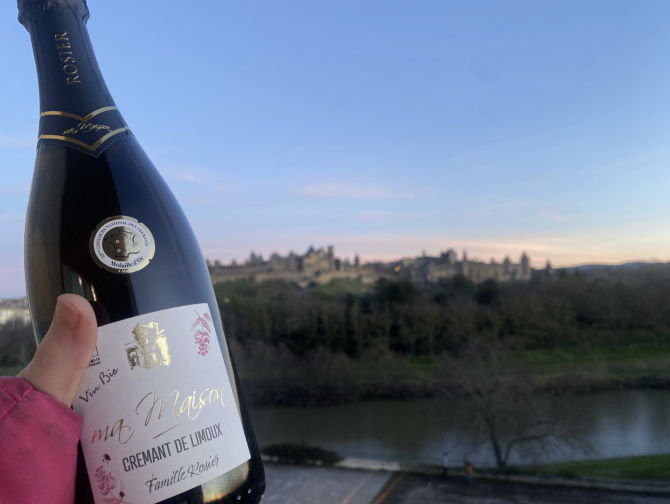
Why you should swap the Champagne for Crémant, France’s first sparkling wines, which were made long before the country’s most famous fizz took centre stage.
In the 1500s, centuries before the Champagne region became famous for its bubbles, Benedictine monks from Limoux’s Abbey of Saint-Hilaire created the first sparkling wine, Blanquette de Limoux, after discovering that bottling the wine before fermentation produced bubbles.
Later, Limoux’s status as a legendary producer of sparkling wine was boosted in 1990, when AOC certification was given to Crémant de Limoux – a sparkling wine made using the méthode traditionnelle also used to make Champagne, but made in Limoux, not Champagne. Tamara Hinson heads to Limoux to meet the producers of the region’s fantastic fizz.

Last year, I spent a weekend visiting various maisons in Champagne. At Champagne Pommery, I got lost in the 18-kilometre network of tunnels after pausing to admire a subterranean art installation, and at Veuve Clicquot’s boutique, I watched fizz-loving fiends splash out on sunshine yellow deckchairs and insulated bottle holders emblazoned with Veuve Clicquot’s logo.
Fast forward to January 2026, and I’m visiting Limoux’s family-run Domaine Pasquetto, which produces some of Limoux’s finest crémants and wines on 24 hectares of land. But I’m not clinging to the tail end of a group tour, waiting for my allocatedthimble of wine.
I’m in the kitchen of a beautiful house owned by Jean-Marie and Maria Angeles Pasquetto, who founded the domaine in 1992 and who have joined their sons, Clement and Adrien, for a fabulously informal wine tasting. Clément is an oenologist who has honed his skills at Bordeaux’s Institute of Vine and Wine Sciences, as well as during stints at vineyards in Champagne and Chile. Adrien has a similarly impressive wine-themed CV.
Further proof of the family’s passion for wine comes when I’m introduced to the family’s cat, named Blanquette – a nod to the world’s first sparkling wine, produced in Limoux.
“Crémant’s AOC designation was one of the first awarded in France,” says Adrien during a walk around the vineyard. He explains that the climate is perfect for producing crémant.
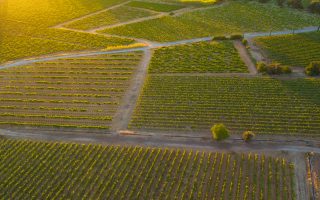
“It’s fresher here, and our proximity to the Pyrenees is important.” It’s one of the reasons Limoux has cooler temperatures than most of the Languedoc region. “We’ve also got dense, clay-rich soil which retains humidity – perfect for sparkling wine.”
Like many Limoux crémant producers, Domaine Pasquetto shuns over-reliance on chemical intervention. Adrien points to neat lines of leafy fava bean plants separating the rows of vines. “They capture nitrogen, return it to the soil and keep it there – a natural fertiliser!”

Limoux’s domaines are mostly small, family-run, independent producers, but Sieur d’Arques, where visitors can sign up for tours and check out a small museum packed with winemakers’ tools, is the exception, producing its own (enormous)range of wines while serving as a cooperative for smaller producers.
It also produces Morrisons’ The Best Crémants De Limoux, which James Martin propelled to stardom by raving about it on his Saturday Morning cookery show.
It’s not just crémants Limoux is known for. Many winemakers use mauzac grapes, which originated here and flourish in south-west France’s limestone soil, producing wonderfully fresh and fruity wines.
I learn more about these notes at the Maison des Vins de Limoux, created to offer an insight into the region’s history of winemaking, as well as the aspects which set its wine apart.
I love a good crémant, but regularly confuse notes of blackcurrant and blueberry (especially after a glass or two), which is why my personal highlight is the museum’s scent zone, a row of metal tubes topped with cork lids, filled with ingredients blended to create the scent of various wines.

The tube marked La Blanquette de Limoux offers a delicious blast of tropical flowers and apples, and I learn that the Méthode Traditionelle approach is what gives this sparkler its toasted notes. Tube-side tasting notes reveal that it goes especially well with a tarte tatin.
Next to a nearby photo showing an ancient mosaic found nearby and depicting men plucking grapes from a vine, a caption explains that evidence suggests wine was first made here in the second century BC. And behind a glass frame, I spot a faded manuscript – a letter written in 1544, requesting four pints of Limoux’s blanquette sparkling wine for the Lord of Arques.
It’s hard not be impressed by the passion for environmentally friendly approaches in Limoux. Many vineyards are dotted with ancient stone huts, deliberately abandoned so that pipistrelle bats and lizards can use them as habitats. The fauna is spectacularly diverse; there are bursts of wild orchids and swathes of lavender, and hedgerows and forests are respected as ramparts to protect vines from pests.
Many of Limoux’s domains are accredited by Terra Vitis, which promotes sustainable viticulture. One example is Château Martinolles, a domaine with a vineyard filled with biodiversity-enhancing olive groves and oak trees.

At Limoux’s Domaine du Grès Vaillant, I meet owners Aigline and Laurent, who take the ecological approach one step further. The estate was founded by Benedictine monks, and wine has been produced here for hundreds of years.
Current residents include a flock of sheep, which trim their allocated patches of greenery without disturbing the earth, and three horses, which pull machinery and turn the soil while maintaining the health of the soil (and the insects) by avoiding over-compaction.
Currently, the vineyard produces around 35,000 bottles in a good year. Its history is clearly respected, and in one of the outbuildings Aigline shows me what I assume is a disused room.
She tells me that the concrete chamber is actually a former wine tank, used by a previous winemaker. Tidemarks on the walls are a reminder that at one point, it contained a swimming pool-sized amount of wine.
Later, in a tasting room stuffed with antiques, I taste Aigline and Laurent’s Blanquette de Limoux. Made with Mauzac grapes, it’s deliciously dry and crisp. Next up are sips of Domaine du Grès Vaillant’s Sauvignon and a fabulous orange wine also made with Mausaz grapes. All are made with hand-harvested grapes from vines maintained with the help of horses, fermented in tanks using yeasts made with a starter culture.

Like other Limoux winemakers I speak to, Aigline says that there’s growing interest in Limoux’s wines from further afield. Many hope to start scaling up to meet demand. “There’s more and more interest in our wines from the Chinese market,” says Aigline.
“But the problem is that you’ll go to a trade show, chat to a Chinese buyer who says he loves your wine and would like to place an order, and he’ll request 150,000 bottles, which isn’t feasible.” It’s a reminder that quality, not quantity, is the main driver here, and I suspect more wine lovers will soon start swapping Champagne for Limoux for their grape escapes.
But if Maison des Vins de Limoux does start selling deckchairs emblazoned with the names of Limoux winemakers such as Domaine Pasquetto, I’ll be seriously tempted. As long as there’s still room in my suitcase for some crémant, of course.
Share to: Facebook Twitter LinkedIn Email
More in cremant, French sparkling wine, French wine, limoux, Limoux Cremant
Related Posts


Leave a reply
Your email address will not be published. Required fields are marked *