
The Other D-Day: the Forgotten Landings in Southern France

In August 1944, Operation Dragoon saw Allied forces storm southern France, liberating key ports and accelerating Nazi Germany’s collapse but its legacy is often overshadowed by the June landings in Normandy of the same year.
📢 Enjoy a free trial of this exclusive Member-Only content! As you scroll through the images, why not listen to our narrated article? It’s a great way for France Today Members to dive deeper into the story while enjoying the visuals. We hope you love this experience, and we’d love to hear what you think—feel free to share your thoughts in the comments below! Happy listening!
In the south of France, 15th August is the Feast of Assumption and is a public holiday. As a child, holidaying in the Maures hills, I remember spectacular fireworks and bals and many sailors from the UK, France and America enjoying their shore leave in Sainte Maxime.
The sandy beaches are hedonistic, and the Maures hills wild and rugged. It’s where people go on holiday, not a warzone. I remember seeing the wreaths laid next to Ste Maxime’s war memorial and the sombre ceremonies in Le Muy. They felt incongruous on the Côte d’Azur.
For 15th August is also the anniversary of the Provence Landings – after D-Day, the largest amphibious landings ever undertaken in wartime. These are the forgotten landings. If they are remembered at all, the Allied landings in Provence in August 1944, are seen as a sideshow supporting Operation Overlord, the crucial D-Day landings in Normandy.
Last August, President Macron attended a series of ceremonies to commemorate the 80th anniversary of the Provence Landings. He was making a statement that the Provence Landings were more than just a footnote in history. Macron was joined by the UK Ambassador to France, Menna Rawlings and Defence minister Maria Eagle.
Perhaps more pertinently, six African leaders took part in the official events to highlight the major role played by African troops, and President Macron paid tribute to the contributions made by the soldiers recruited in French overseas colonies, notably in Africa. It has taken decades for France to highlight the crucial role of Algerian and other African soldiers in the fighting. Forgotten soldiers in a forgotten military operation.
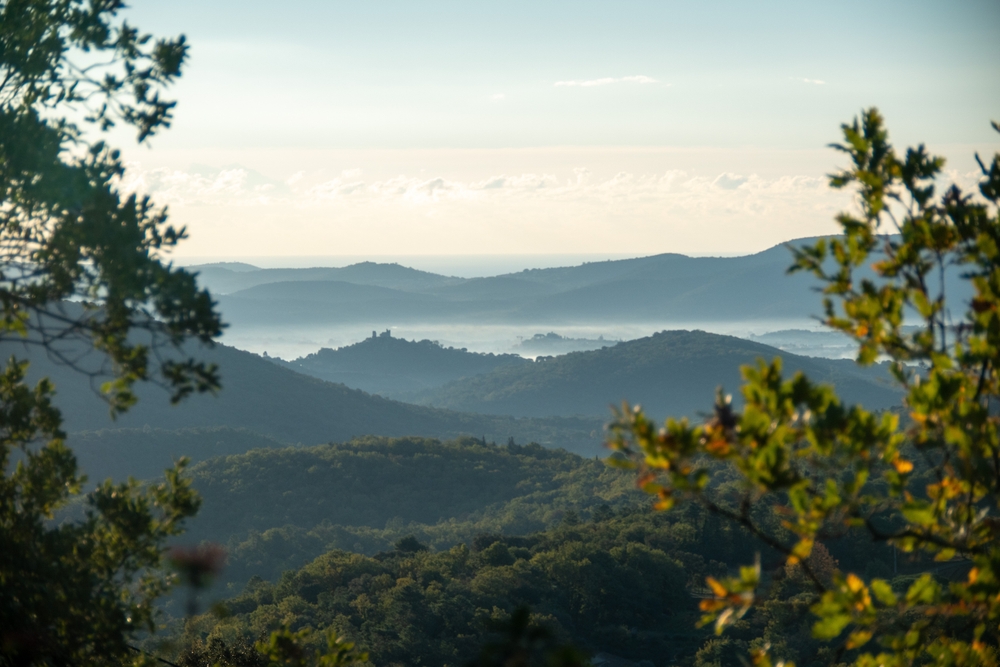
The Maures hills © shutterstock
A controversial operation
Operation Anvil, renamed Operation Dragoon, was controversial from the start. The landings were originally planned to coincide with the Normandy landings two months earlier. However, the invasion was postponed, partly because of slower than expected progress by Allied troops in Italy, and also because of the logistical challenge of a lack of landing craft for two simultaneous seaborne invasions. As a result, the landings were pushed back to 15 August 1944.
It wasn’t the timing of Operation Dragoon that was controversial, however. It was the strategic choice of liberating Europe through the south of France. The planning for Operation Anvil quickly showed a split between the Americans and the British. President Roosevelt saw Operation Anvil as part of what he called the “grand strategy” of defeating Germany first which was discussed at the 1943 Tehran Conference.
Operation Anvil was strongly opposed by Winston Churchill until the last minute and may have changed the political map of Europe for decades afterwards. For Churchill, post war politics were high on his agenda. He reasoned that by attacking the Balkans, or even continuing the Italian campaign, the western Allies could deny Germany oil, halt the advance of the Red Army, and achieve a superior negotiating position in post-war Europe, all at a single stroke. He was concerned that a concentration of effort and resources in France would enable the Russians to enter and occupy the territories of central Europe.
Even after Operation Anvil was delayed until August, Churchill repeatedly lobbied for the operation to be cancelled; the name change to Operation Dragoon supposedly reflected his feeling that the UK had been ‘dragooned’ into it.
President Roosevelt disagreed with Churchill and said: “I see no reason for putting the lives of American soldiers in jeopardy in order to protest real or fancied British interests on the European continent. We are at war and our job is to win it as fast as possible, and without adventures.”
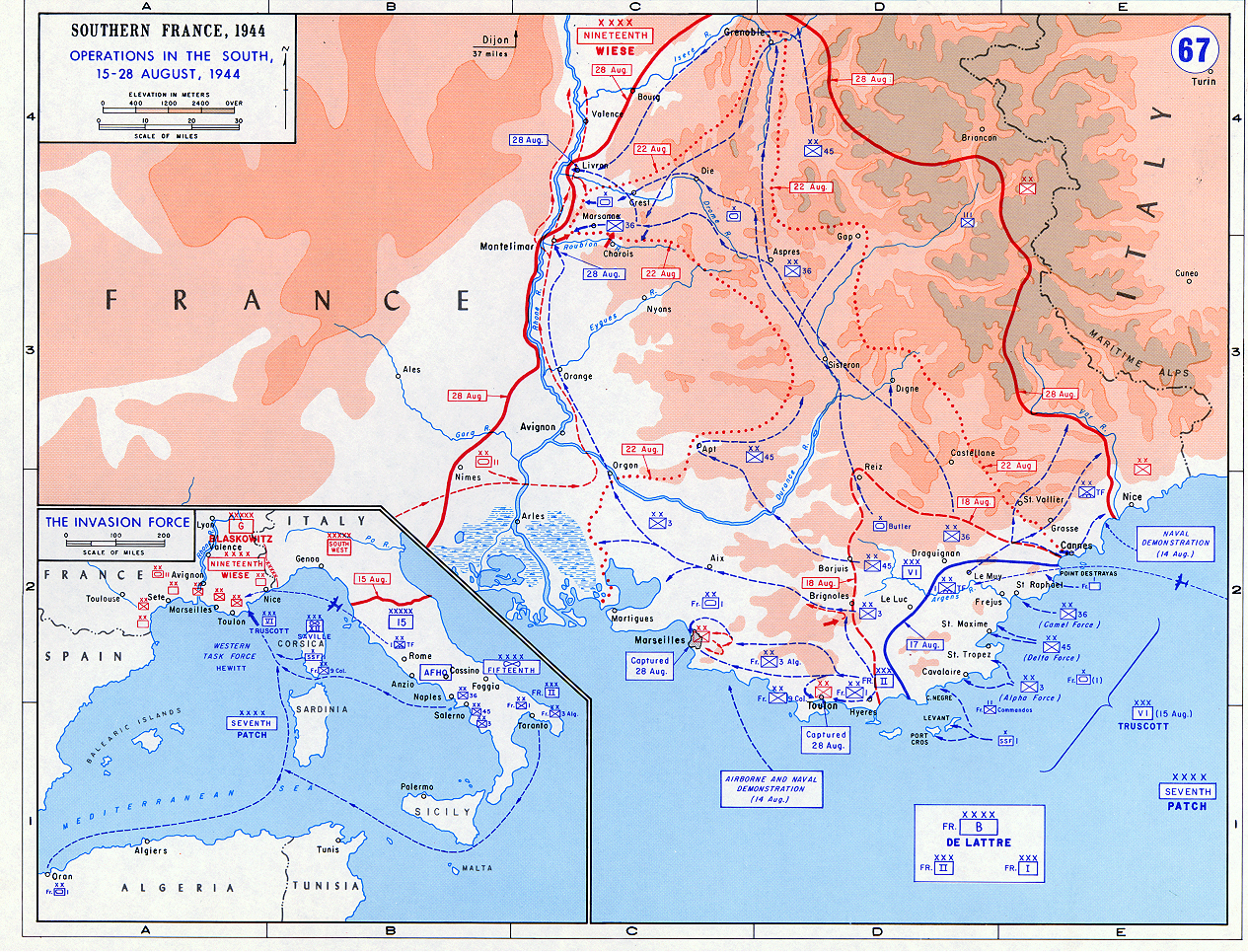
Map of Operation Dragoon © Wikimedia Commons
“The chef is hungry”
The Germans were very much aware of Allied activities in the Mediterranean and the likelihood of an invasion of southern France. According to German intelligence, 500 warships including the battleships USS Nevada, HMS Ramillies, and French battleship Lorraine, carrying 100,000 American, British, Canadian, Free French and Algerian forces had sailed from Corsica, and were presumed to be heading for the Italian port of Genoa. However, during the night of the 14th of August, the ships changed course and headed directly for the French Mediterranean coast.
Also, on the evening of 14th August, the French Forces of the Interior – the Resistance -were informed of the Landing in Provence via a coded message broadcast on the French radio station BBC Londres. The first message, “Nancy has a stiff neck“, warned them that it was imminent. In all, around 12 messages were broadcast, the last of which – “the chef is hungry” – announced the beginning of hostilities.
The operation began with seaborne and parachute landings, followed by three separate US infantry landings. Over 5,000 British and American paratroopers took off from Italy and headed to the French south coast. At 4 AM, they landed around the rendezvous area north of the coast (code named Rugby) to the north of the villages of Le Muy and les Arcs and to the south of La Motte, Their task was to capture and hold the vital bridge and road out of le Muy for the soldiers landing on the coast. La Motte became the first village in Provence to be liberated.
Just after midnight on August 15, Allied forces attacked the Hyeres island batteries. Mostly French colonial troops from Africa, these soldiers landed and later took Cap Nègre.
Later that morning, British, American and French forces came ashore on the beaches – code named Romeo, Garbo, Alpha, Delta, Camel and Rosie – at Cavalaire, Rayol, Ramatuelle, St. Tropez and St. Raphael.
By 17 August, 130,000 men and 18,000 vehicles had landed. Toulon and Marseilles were liberated on 28 August. The US 7th Army and the newly constituted French 1st Army moved northward, establishing a fifty-mile belt of liberated territory along France’s eastern border. On 15 September the combined forces met the US 3rd Army on its drive south from Normandy and Paris.
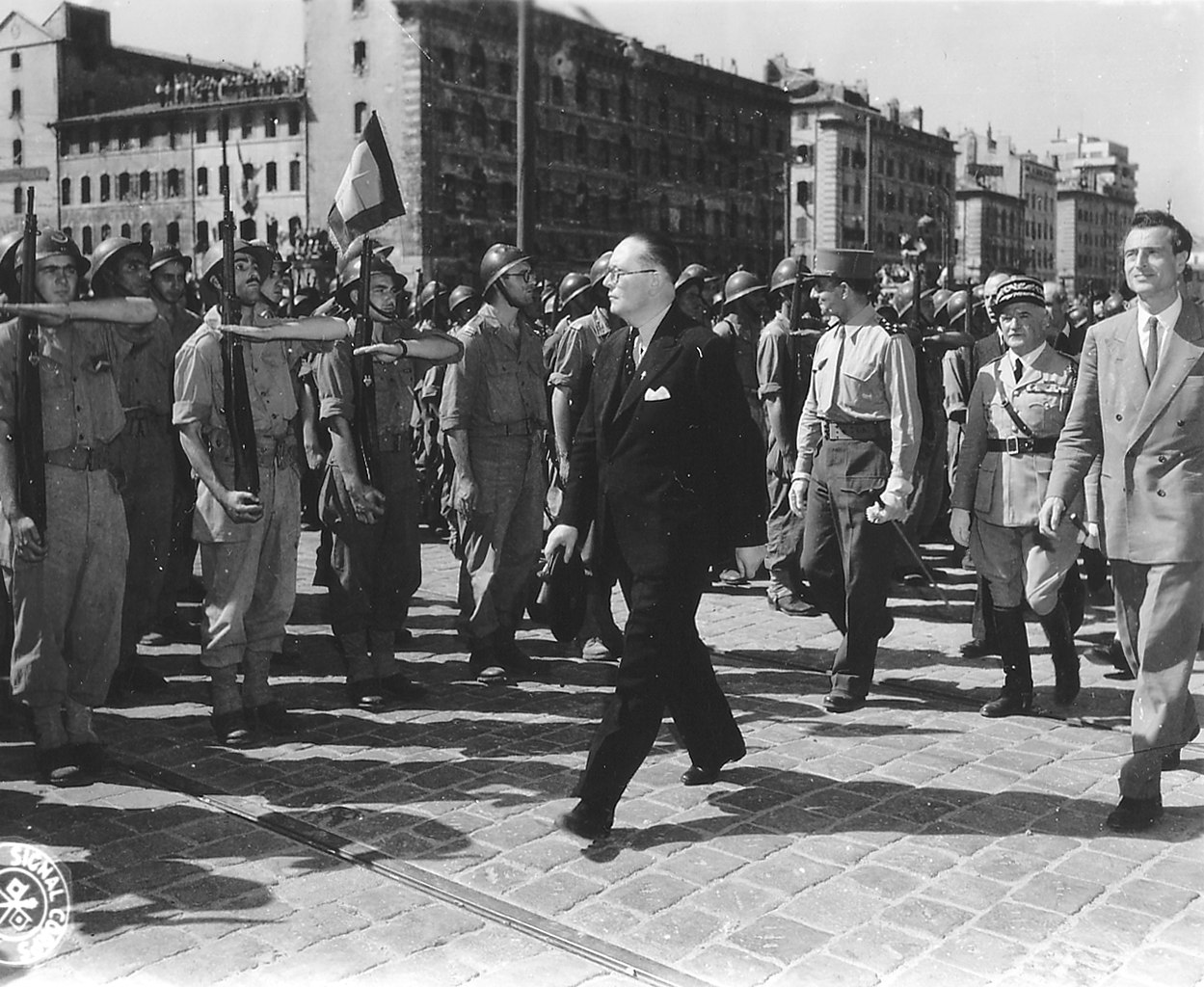
Liberation of Marseille, August 1944 © Wikimedia Commons
An expensive diversion of resources?
In purely military terms, Operation Dragoon was a stunning success. In less than a month, Allied troops advanced 500 miles up the Rhône valley, and liberated major French cities including Toulon, Marseille and Lyon at a cost of 3,000 Americans killed and 4,500 wounded. The French suffered 10,000 casualties killed and wounded although German casualties were far higher, and over 100,000 Germans were taken prisoner – about a third of total German strength in south France.
Nevertheless, Operation Dragoon has continued to be criticised as an expensive diversion of men and equipment from the struggle against the German armies in Italy. After the war ended, the US commander in Italy, General Clark, supported Churchill and called Operation Dragoon “the outstanding political mistake of the war”.
Is this a reason why Dragoon is not very well known? Because it was a tactical victory but a strategic mistake?
Perhaps, but that would be unfair. Much of southern France avoided death and destruction because of the speed of the Allied advance. The invasion spectacularly exceeded expectations. Toulon and Marseille were liberated a month earlier than expected, but their liberation was eclipsed by that of Paris, which was symbolically more important.
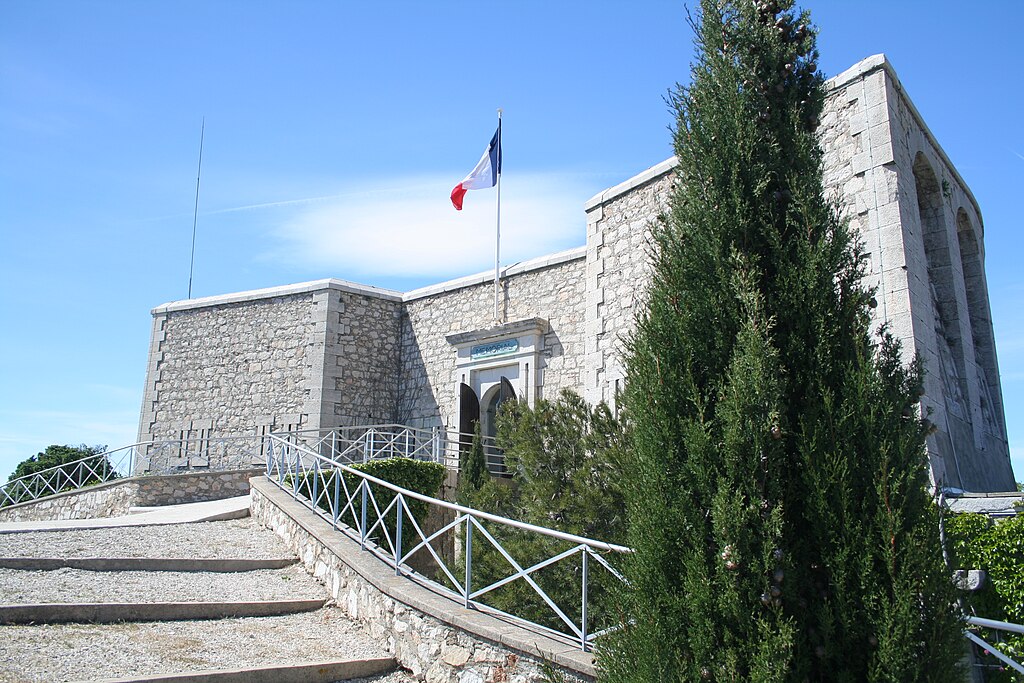
Mémorial du Mont Faron © Wikimedia Commons
An overlooked legacy
Another reason Operation Dragoon has been overshadowed could be because of the origins of many of the liberating soldiers. This was addressed head on by President Macron last year, when he highlighted the key contribution by soldiers recruited, often forcibly, in French overseas colonies, especially Africa. African troops in particular paid a heavy price, with 55,000 killed over the course of the war.
The majority of the approximately 250,000 soldiers of the liberating army – “Army B” – came from French colonies. This is why six African heads of state were invited to attend the ceremonies (although this was fewer than at previous ceremonies, reflecting ongoing tensions between France and African countries).
President Macron said that Africa’s role in France’s liberation was a “legacy that the country must remember”, and that the names of these soldiers “must continue to be given to our streets, to inscribe their imperishable traces in our history and never forget their courage and fight”.
The President of Cameroon, Paul Biya, said, “There would have been no Allied victory without the contribution of other peoples, without foreigners and other African riflemen.”
“Africans paid a large price for the Allied victories,” Biya said, adding that the fight was “fought together, to defend the universal values and ideals of peace and justice”.
After the war ended, Gaston Monnerville, a deputy from the overseas territory of French Guyana, said, “Without its empire, France would have been just a liberated country. Thanks to its empire, France is a victorious country,”.
That is something the citizens of Provence, and summer visitors alike may wish to dwell on.
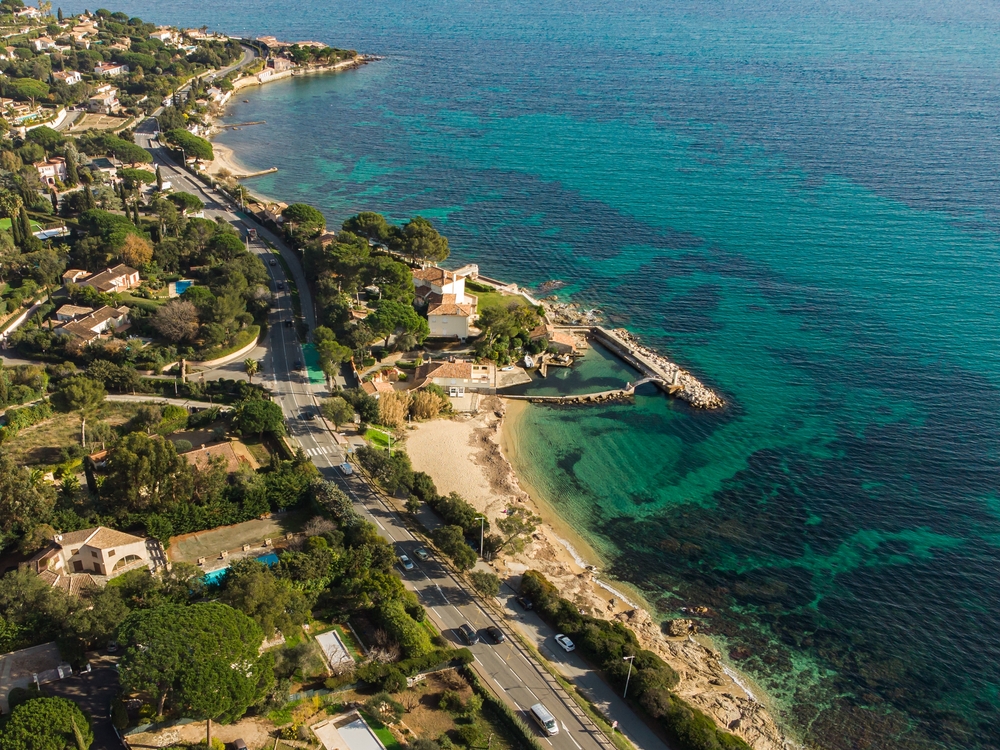
Sainte-Maxime © Shutterstock
Visit the Mont Faron Memorial, dedicated to the operation: www.memorialdumontfaron.fr
Join the France Today Membership!
Did you enjoy this article? Dozens of other audio-enhanced stories like it await within the France Today Membership – and so much more!
Share to: Facebook Twitter LinkedIn Email
More in D-Day, D-Day landings, French history, Provence, Riviera, South of France, WWII
Related Posts


By Rob Williams
Leave a reply
Your email address will not be published. Required fields are marked *
REPLY