
Lyon’s Funicular of the Dead
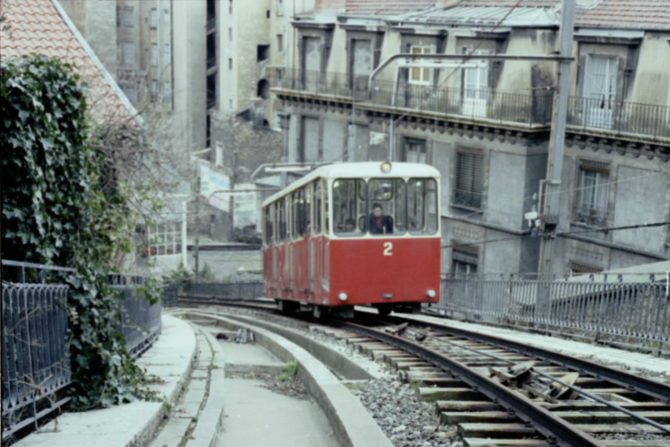
Fans of haunted tales will enthuse over the eerie story of Lyon’s former Funicular of the Dead, the Ficelle des Morts . The rest of us might want to clutch our rosary beads and choose a less haunted mode of transport, but Lyon’s Funicular of the Dead hauled corpses far uphill to reach Lyon’s cemeteries outside the city, although probably not quite as far as Heaven.
Lyon is a city of hills. The Roman city of Lugdunum and the pre-Roman Gaulish settlers lived in the high hills to the north and west of the rivers Saône and Rhône before urbanization spread into the lowlands between the rivers and to the east. Most Roman temples and cult centres for worshiping Roman gods were built on these hills at Fourvière, and when the Romans built their necropolises in Lyon, they put them on the hills near present-day Saint-Just. Another local folklore tale says that the remains of Lugdunum are haunted by werewolves, but that’s another story…
The early and medieval Christians kept up the tradition, and when the growing city began to run out of burial space, the Municipal Council acquired land on the hills at Loyasse in 1807 to relieve pressure on the already chock-full cemetery at Saint-Just church, Burials started immediately in 1808, and by the late 19th century, the Cimetière de Loyasse (Loyasse Cemetery) had earned a reputation as the richer and grander cemetery, compared to the Guillotière Cemetery east of the Rhône. Prices for plots were simply too expensive for the common people.

Lyon’s hills cried out for funicular railways, and the city’s first track opened in 1862. In 1893, a Monsieur Cornillon applied for a concession to build a funicular railway from the railway station at Saint-Paul to Fourvière, and a tramway to link them. The plan was to replace the slow and costly horsedrawn cortèges that wound up the steep hill of Fourvière, and the initial proposal even offered to carry dead paupers from the Hospices Civils de Lyon for free. The project was inaugurated in October 1900, and the tramway began operation in the following year As well as a tunnel, the funicular also included a metal-framed bridge to carry the tramway, linking Lyon’s landmark metal tower to the entrance of the Loyasse cemetery itself. Mourners and other passengers travelled in the tramway’s powered cars, while the corpses in their coffins travelled on separate wagons. Separate access tunnels were provided for the living and the dead.
However, the line suffered financial problems, since the cemetery only had a substantial number of visitors at All Saints’ Day, but perhaps also because the public avoided a line specifically created for the dead. Also, horsedrawn cortèges were a well-respected tradition that is still occasionally seen in France today,and some people may have seen transporting the dead by funicular as tastelessFinally, the funicular closed on Christmas day 1937, except for services for All Saints’ and other rare occasions, and the tramway was similarly closed on 18 September 1939, and the bridge was demolished in 1952.
Ever since the closure of the funicular, and quite possibly before, rumours have circulated that it’s haunted by the ghosts of its onetime “passengers”. These suspicions include reports of black masses, mysterious noises, sinister shadows, and an unexplained feelings of not being quite alone.Modern ghost-hunting tours in Lyon start outside the cathedral of St John the Baptist, below Fourvièreand finish at Loyasse Cemetery. The old route of the tramway is now retraced by the Passerelle des Quatre Vents, a footbridge built on the supports of the old bridge giving a fine view of the surrounding park and the outskirts of Lyon. Meanwhile, the Renaissance du Vieux-Lyon association has made well-received proposals to restore the old funicular to ease tourist traffic to popular sites on the hills. When I spoke to the association, they laughed off concerns about ghosts. Surely nothing could possibly go wrong…

Nowadays, the remains of the Ficelle des Morts are listed on urban explorer websites for anyone who wants to brave the security cameras at the entrance, and whatever else might still be lurking inside. Going further than typical urban exploration challenges, this is one I really wouldn’t want to try, especially after dark but it’s there – if you dare.
Lead photo credit : Funiculaire de Fourvière, Lyon Municipal Archives
Share to: Facebook Twitter LinkedIn Email
More in French history, Halloween, lyon, Trains
Related Posts



Leave a reply
Your email address will not be published. Required fields are marked *