Cruising the Canal du Midi: Medieval Cities and Quiet Backwaters
A leisurely cruise along this iconic waterway reveals medieval cities, picturesque villages and one of France’s greatest engineering triumphs. By Jane Keightley.
I had come across the Canal du Midi on a trip to Toulouse a few years ago but had no idea of its history.
So when I discovered that this year is the 30th anniversary of it being named a UNESCO World Heritage site, it seemed an ideal time to find out more.
The Canal du Midi is one of the most popular tourist attractions in France and stretches for 240 km between Toulouse and the Mediterranean Sea near Sète in the Languedoc-Roussillon region.
Together with the Canal de Garonne, which connects Toulouse with the Atlantic Ocean, it forms a connection between the two seas, so the entire waterway bears the name Canal des Deux Mers.
It was the brainchild of Pierre-Paul Riquet, a wealthy tax collector, who presented his ambitious plans to King Louis XIV and persuaded him to support the project.
Forty per cent of the costs were borne by the Crown, 40 per cent by the State and 20 per cent by the Riquet family, with the latter becoming the owner after the death of the King.
Around 12,000 people worked on the canal over a 14-year period. It opened in May 1681 and was initially called the Canal Royal en Languedoc. Fed by water from the Montagne Noire, it boasts 328 structures such as locks, tunnels, harbours and aqueducts, all built by hand.
It was such an exceptional feat of hydraulic engineering that UNESCO designated it a World Heritage Site in 1996.
I was so fascinated by this story I decided I would love to have my own adventure cruising down the canal. Happily, for me, Le Boat gave me the chance to do so.
We were flying into Carcassonne, so we made sure that we arrived a day early so we could explore this wonderful medieval city before heading off to Homps to start our boat trip.
Situated just outside the medieval city walls with a panoramic roof terrace and friendly owners, the Hôtel du Pont Vieux was the perfect base from which to enjoy our flying visit.
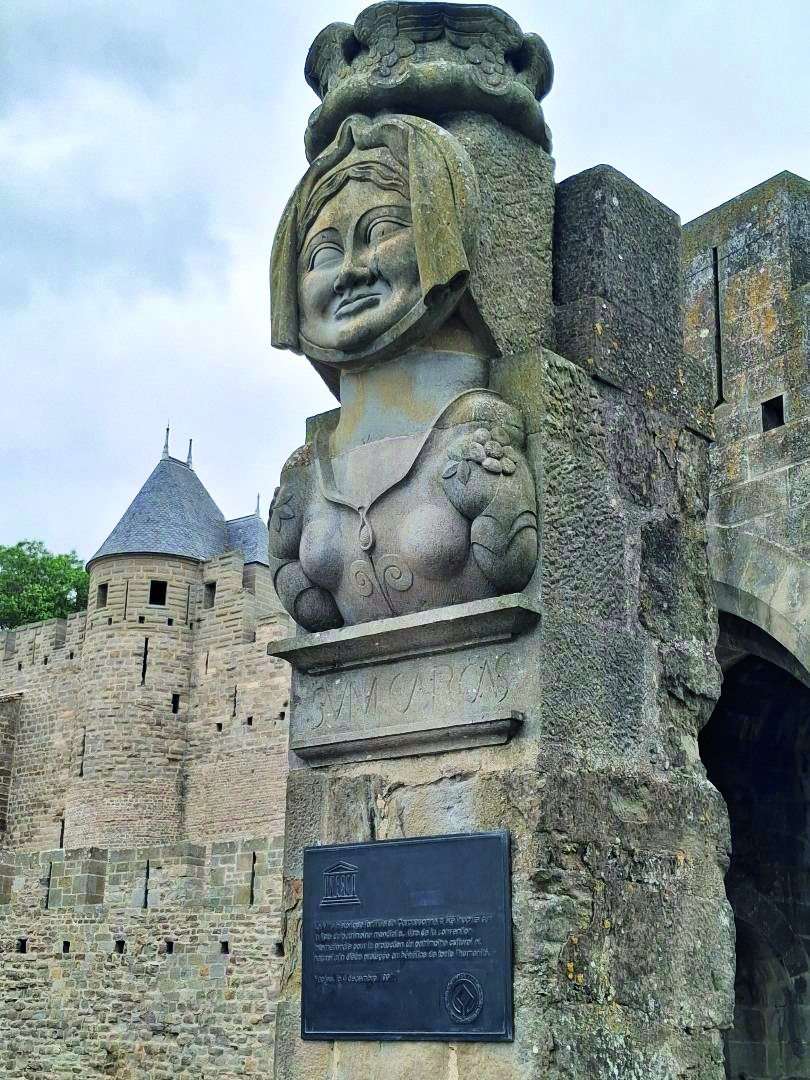
The city was founded by the Romans in the first century BC. During the Middle Ages it was a Cathar stronghold, but the Cathars were expelled in 1209. The Canal du Midi used to bypass Carcassonne, but after realising they were missing out on the trade it brought, the locals had it diverted through the city.
Carcassonne is divided into the old town, La Cité and La Bastide Saint-Louis, which is situated on the canal. The whole city was declared a UNESCO World Heritage Site in 1997.
We heard the legend of Dame Carcas, who is said to have saved the city by tricking Charlemagne into believing its food supplies were plentiful. As the siege was lifted, she ordered the bells to be rung in celebration, prompting one of Charlemagne’s men to exclaim, “Carcas sonne!” (“Carcas is ringing!”) – a tale that supposedly gave Carcassonne its name.
The real origin of the name is rather less romantic: it is generally traced back to the ancient settlement of Carsac, later known as Carcaso.
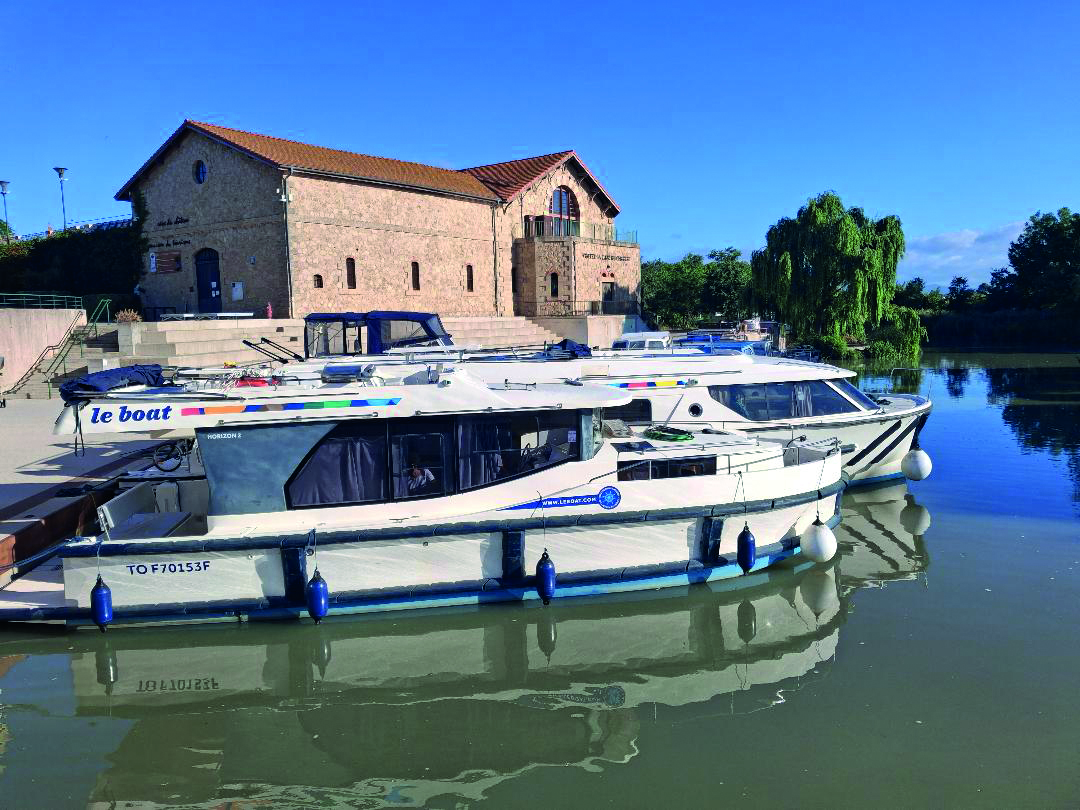
Arriving at Le Boat’s marina at Homps, we saw a huge array of vessels moored up and wondered which one was going to be our home for the next week. We soon found out and were raring to go, but of course you must have a short lesson on how to steer.
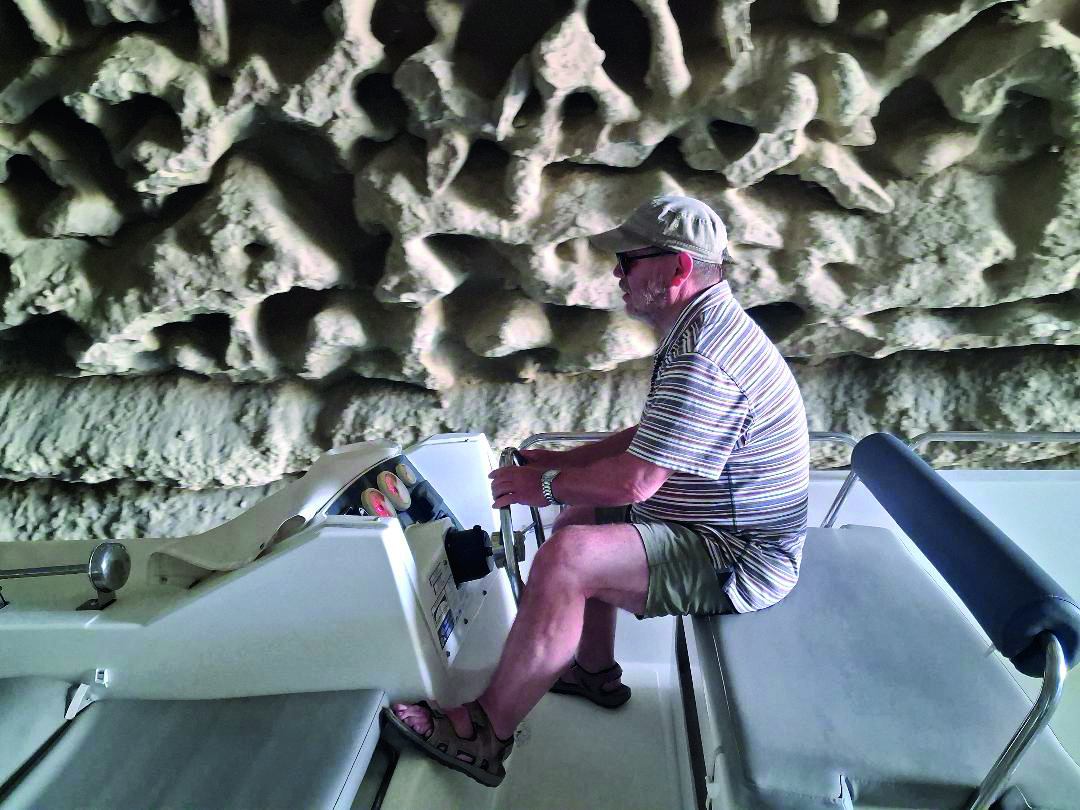
My husband had been designated as Captain, which I was very happy about as I certainly didn’t want to drive. That left me with all the hard work mooring up and sorting us out at the locks, but I was sure I’d be able to manage it.
At last, we headed off along the canal where we immediately came upon two double locks and a single one. ‘My goodness what have I done?’ I thought.
I had done canal trips in the UK but with younger family members doing all the hard work while I looked on sipping a glass of wine!
It was late afternoon by this time, and we moored up in the Marina at Argens-Minervois. Finally, we could settle into our new home.
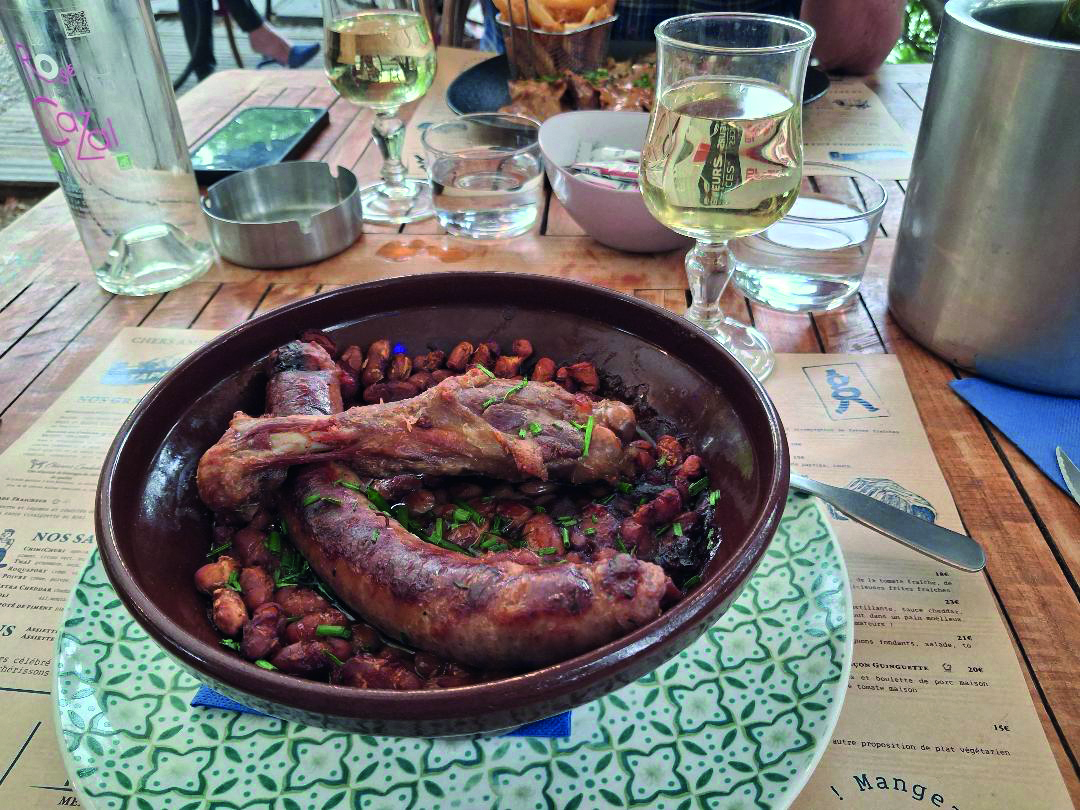
We headed to the nearby restaurant, La Guinguette, where I ordered the local speciality, cassoulet – a hearty casserole of beans, chicken and sausage. Back on the boat, sipping a glass of wine while the sun went down, we finally relaxed and started planning the week ahead.
We decided to cruise as far as Béziers before turning back towards Trèbes, where we were due to return the boat at the end of the week. This meant staying the night at various canalside villages along the way.
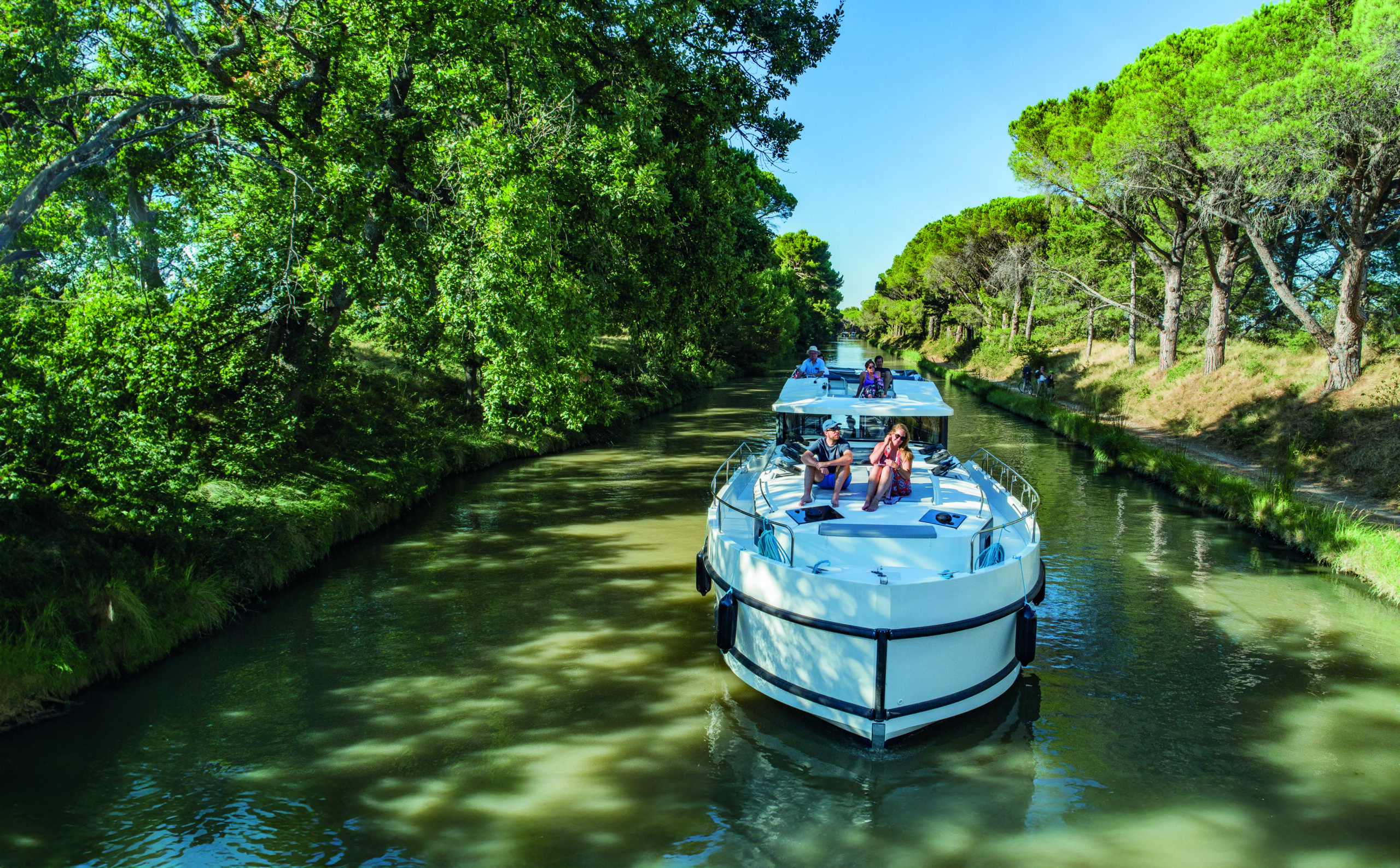
The canal was going to be lock-free right up to Béziers so for the next few days we could relax and cruise peacefully through the countryside. I loved the quiet.
It felt as though we were the only people left in the world – all we could hear was the gentle hum of the engine and the birds tweeting. Now and again egrets flew by and occasionally a snake swam across in front of us.
All the way, we were accompanied by swallows diving for insects on the canal. These were the times I enjoyed the most.
A LOCK TOO FAR
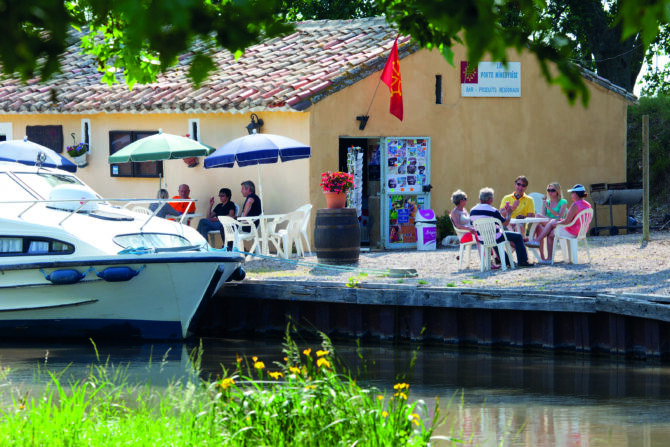
Our next stop was Le Somail, a pretty village popular with tourists. Here there is a grocery barge and a huge second-hand book shop and a string of canalside restaurants.
Capestang was our next port of call. A bustling town with a huge church that looked like a castle, this was where our boat nearly floated away! Luckily it all ended well.
Béziers, Hérault, France
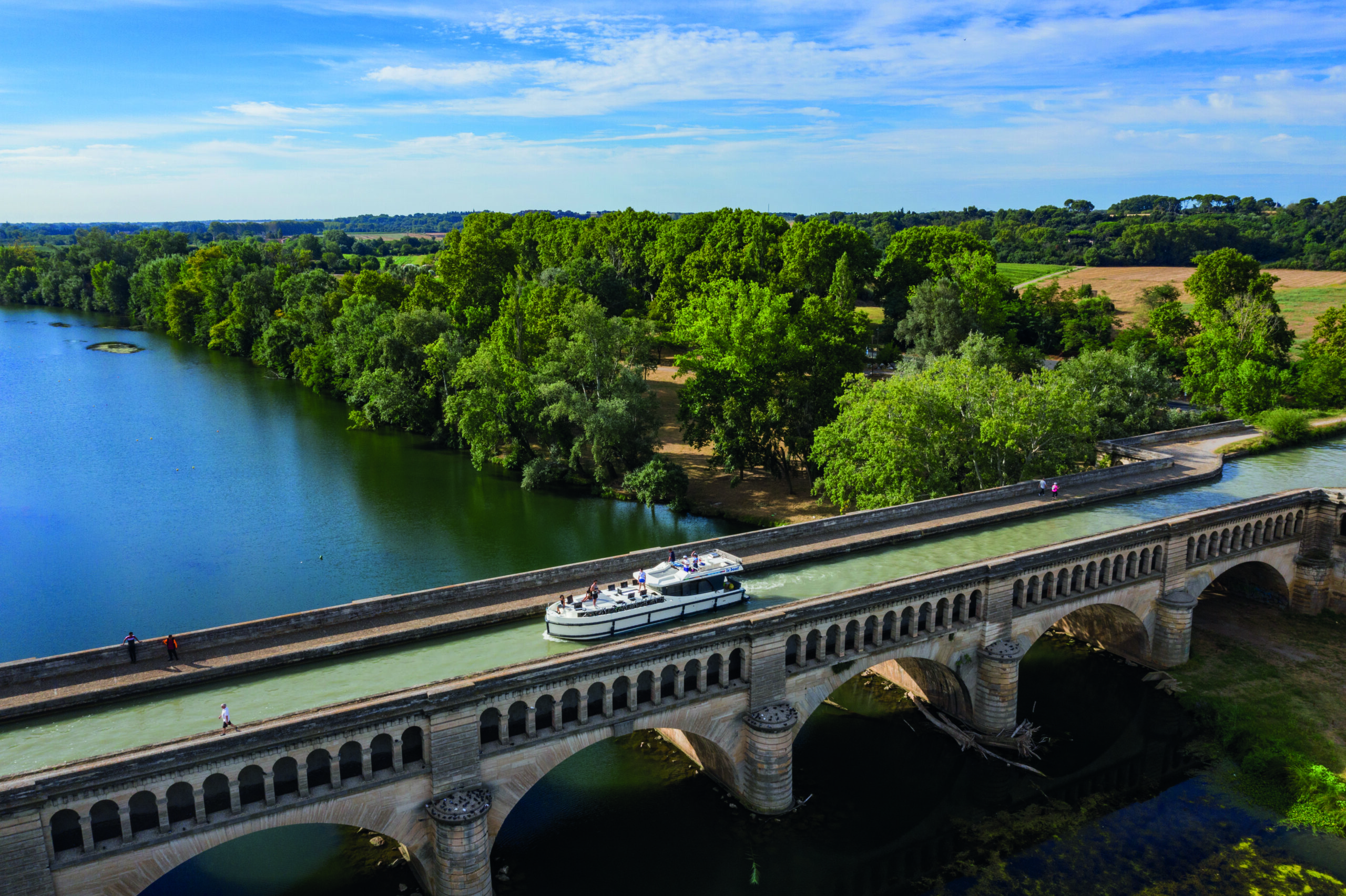
The day after, we cruised to Colombiers and stayed there overnight. We had discussed tackling the eight-lock staircase at Béziers, but decided there wasn’t enough time to do it and return the boat to Trèbes on time, so, we cheated and caught a local bus to Béziers from Colombiers for €2 each. Béziers was well worth a visit, and I would have liked to have stayed longer.
We did get chance to go and look at the impressive Fonseranes Locks and decided we had definitely made the right decision by avoiding them. Suddenly realising the days were going by far too quickly, we decided we should head back towards Trèbes.
We covered a lot of ground on this day and stopped again at Le Somail, where we had lunch.
After another overnight stop at Argens-Minervois, we set off on what was to be our busiest day so far. We had 16 locks to negotiate in a single day. I was not looking forward to this but happily we were getting much more proficient at tackling them and we coped admirably.
We certainly slept well that night – I didn’t even have the energy to go to watch the locals playing boules with my husband.
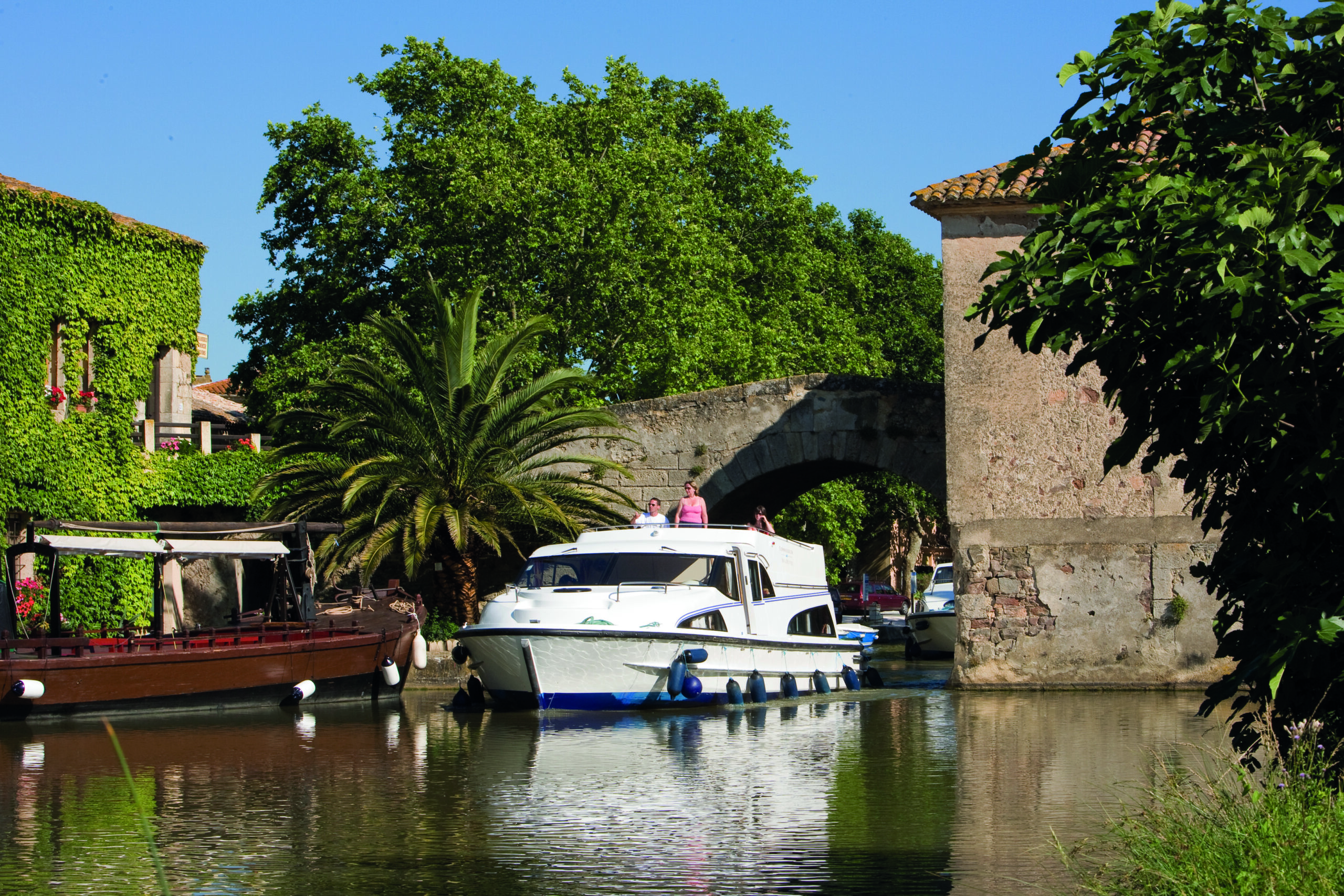
Our next and final day was more peaceful – only one triple lock before we arrived in Trèbes, which is a beautiful village filled with flowers.
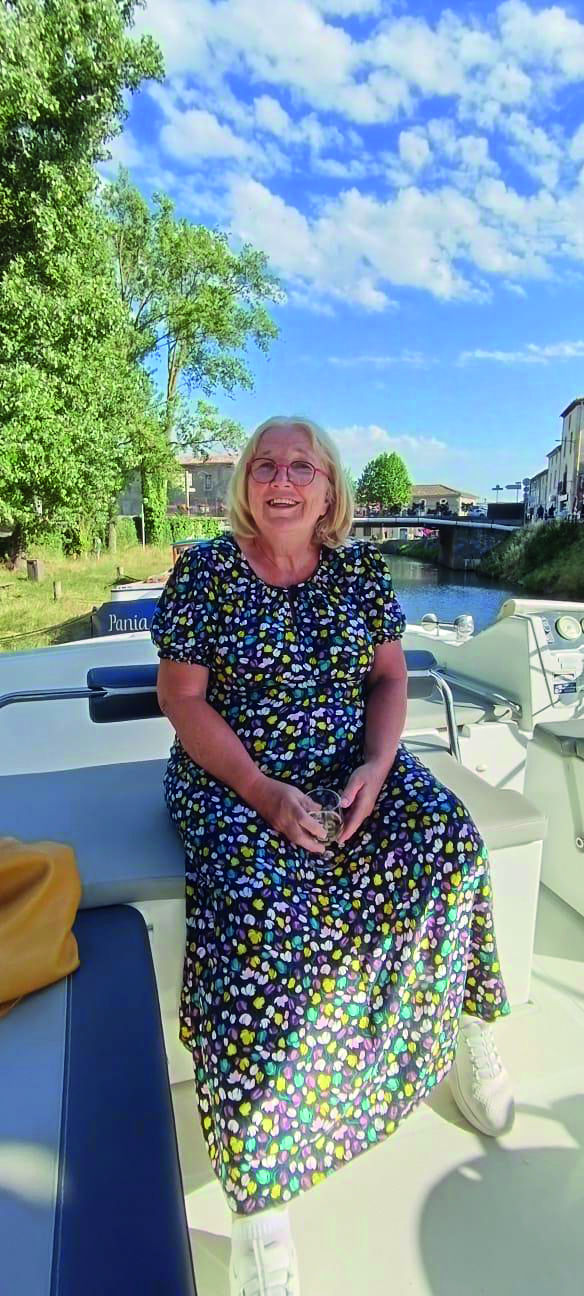
We made the most of it by sitting on deck and sipping the local wine, having eaten in one of the numerous restaurants along the canal.
We had a wonderful week on the Canal du Midi, full of adventures, sunshine, good food and fun. And along the way, we marvelled at Pierre-Paul Riquet, whose foresight and determination made such an amazing hydraulic project possible back in the 17th century.
I wonder what he would think of it now. I hope he would enjoy the fact that it gives so much pleasure to so many people