
Le Grand-Bornand: Cows Cheese and Sporting Thrills in the French Alps
From cows and cheese to skiing and biathlon, Dominic Bliss discovers the many charms, traditions and sporting thrills of Alpine village Le Grand-Bornand.
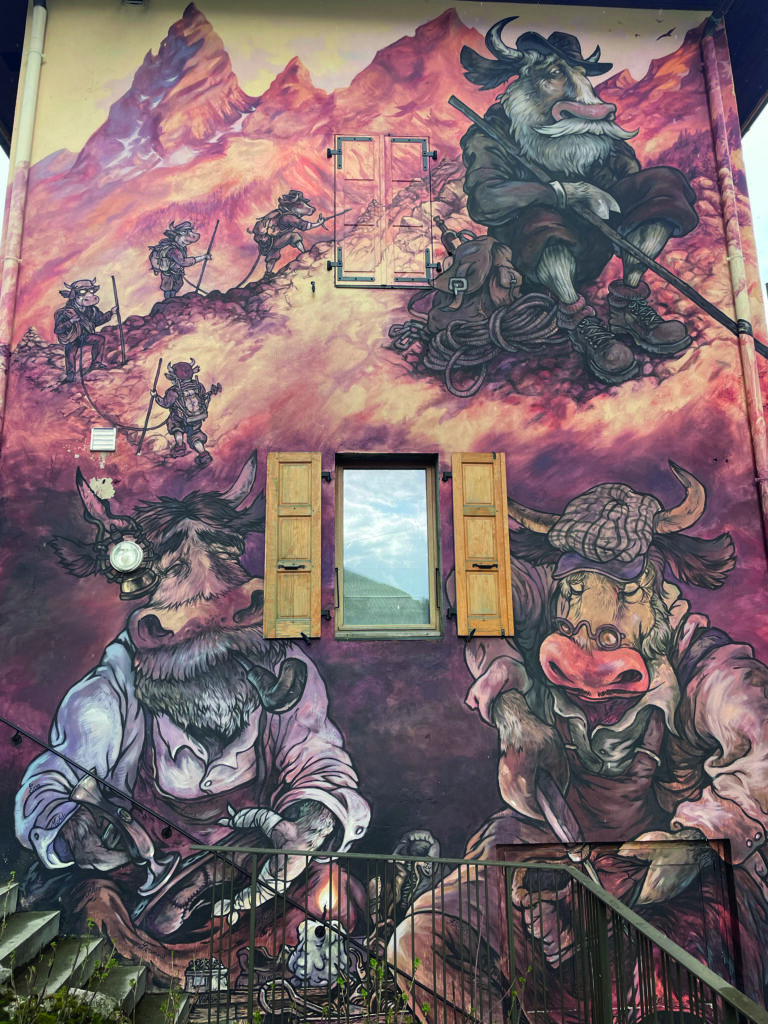
They adore their cows in Le Grand-Bornand. In this Haute-Savoie Alpine village there are as many bovine reddents as there are humans around 2,000 aplece So celebrated are these uddered ruminanta that they even have their own art trail. Le Parcours de l’Art Vache leads visitors on a walking trail around the village, displaying various cow-themed mural paintings and sculptures en route.
There are 25 in all, dotted around the streets and along the River Borne, the watercourse that gives this place tis name. “A herd of cows both artistic and unexpected” is how the tourist office describes this street art which was first displayed at the turn of the millennium and has been added to ever since. Unlike many of the French Alps’ more modern ski resorts, Le Grand-Borrand or Le Grand Bo, as locals call it has remained loyal to its agricultural origins.
There are still 35 working farms within the commune and virtually every building you see is constructed in the style of the classic Alpine chalet. Many are centuries old, dating back to when the village was first established in the 1600s.
One of the oldest has even been turned into a museum: the Maison du Patrimoine is laid out just as it would have been in the 19th century, with typical Savoyard bedrooms, living areas, kitchen, décor and animal quarters.
Anyone wanting to explore Le Grand-Bornand should start at Place de l’Eglise, right in the centre. From here, tight medieval streets twist up the hill: Passage du Fournil, Chemin de la Forclaz, Chemin de la Vignette, Impasse de la Limonade. And thanks to strict local planning laws, there’s none of that Brutalist concrete you find in the larger ski stations.
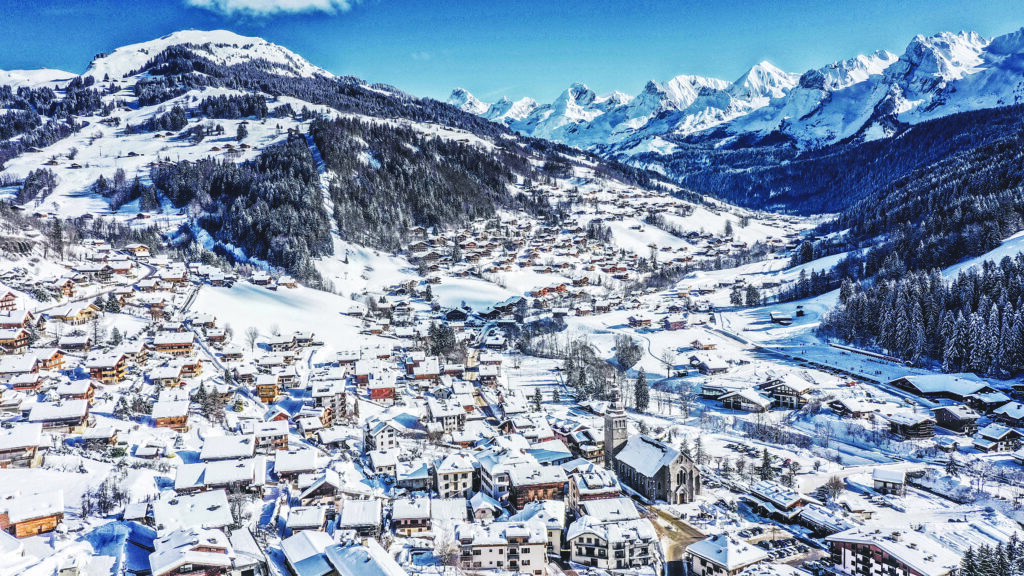
The village may be low in altitude-just 1,000m above sea level-but it’s hugely convenient for visitors arriving by air, with Geneva airport less than an hour’s drive away. It sits in a wide valley created by the pretty and trout-rich River Borne.
Dominating the whole area is the magnificent Aravis mountain range to the east, with its distinctive line of sharp peaks interspersed by long, steep gullies.
When my wife and I arrived here late in the season, we weren’t surprised to find just a light dusting of snow on the village streets. But once we’d ridden the gondola up to the ski area on the Rosay plateau at 1,445m, there was an abundance of the white stuff thanks to a recent dumping. Even better, with the resort soon to close, there were very few other skiers clogging up the slopes.
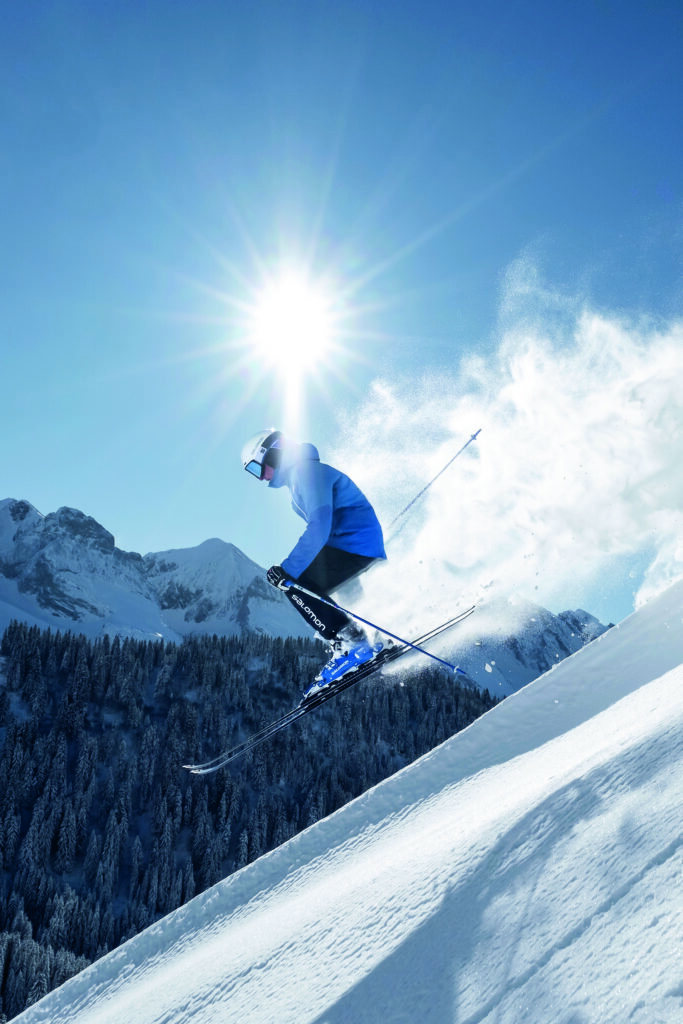
Le Grand-Bornand boasts a ski area served by 24 lifts and 90km of pistes, 15 of which are green, 14 blue, 13 red and live black. There is also a snow park, a freestyle area for kids and a umed slalom course.
With so few other skiers around, we had the run of the place. Most fun of all was skiing down from Mont Lachat, the resort’s highest point, at 2,100m. From here, the Dentvel Maxx swoops non-stop for 3km right back down into the village. Granted, in early April, as we negotiated the lower slopes near the village, there was substantial slush. But to descend non-stop was a thrill all the same.
Given Le Grand-Bornand’s small size and scarelty of après-skt facilities, visiting skiers tend to fall into certain demographies. Older couples love the low-key atmosphere and old-fashioned picturesque surroundings, while families with young kids appreciate the abundance of nursery slopes and the junior snow parks. But if you desire a high-octane ski holiday, this is not the place for you: there are no nightclubs, no DJs, no late-night bars, no drinking games, no dancing on tables…
“Virtually every building you see is constructed in the style of the classic Alpine chalet. Many are centuries old”
In fact, the closest to a party you’ll find is just off Place de l’Église at a bar called Les 2 Guides. According to the tourist office, half of the skiers who come here are international visitors, the other half opportunistic locals who drive up the mountain at the last minute when they spot that conditions are good. As one local told me: “In Le Grand-Bornand, après-ski isn’t about having a party, it’s about eating reblochon cheese.”
Milking the system
Just as we discovered when, one morning, we wandered around the famous village market which has been luring in customers since the late 1700s. There were plenty of cheese-sellers, as you’d expect, with reblochon dominating the fare on offer. This lovely Haute-Savoie cheese, with its distinctive nutty taste, is the core ingredient of the famous tartiflette. I discovered its name comes from the Savoyard dialect word reblocher, meaning, rather bizarrely, to pinch a cow’s udder again.
It refers to a crafty tax-evasion trick Alpine dairy farmers used to employ back in the Middle Ages. When tax inspectors turned up to measure the milk yield, farmers would stop milking their cows halfway. Later, once the inspectors had departed, the farmers would return to their cows and pinch the udders for a second time in order to continue the milking.
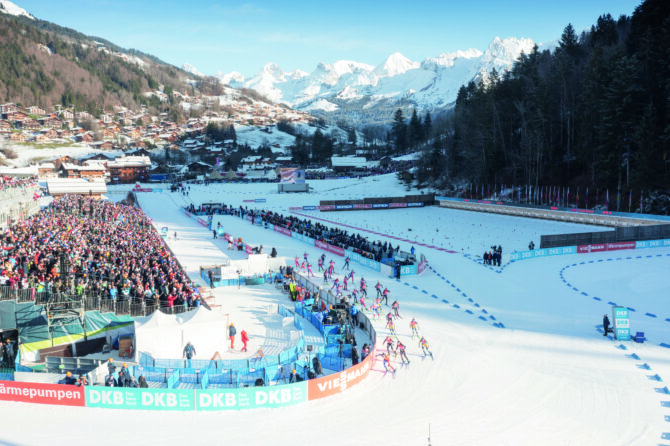
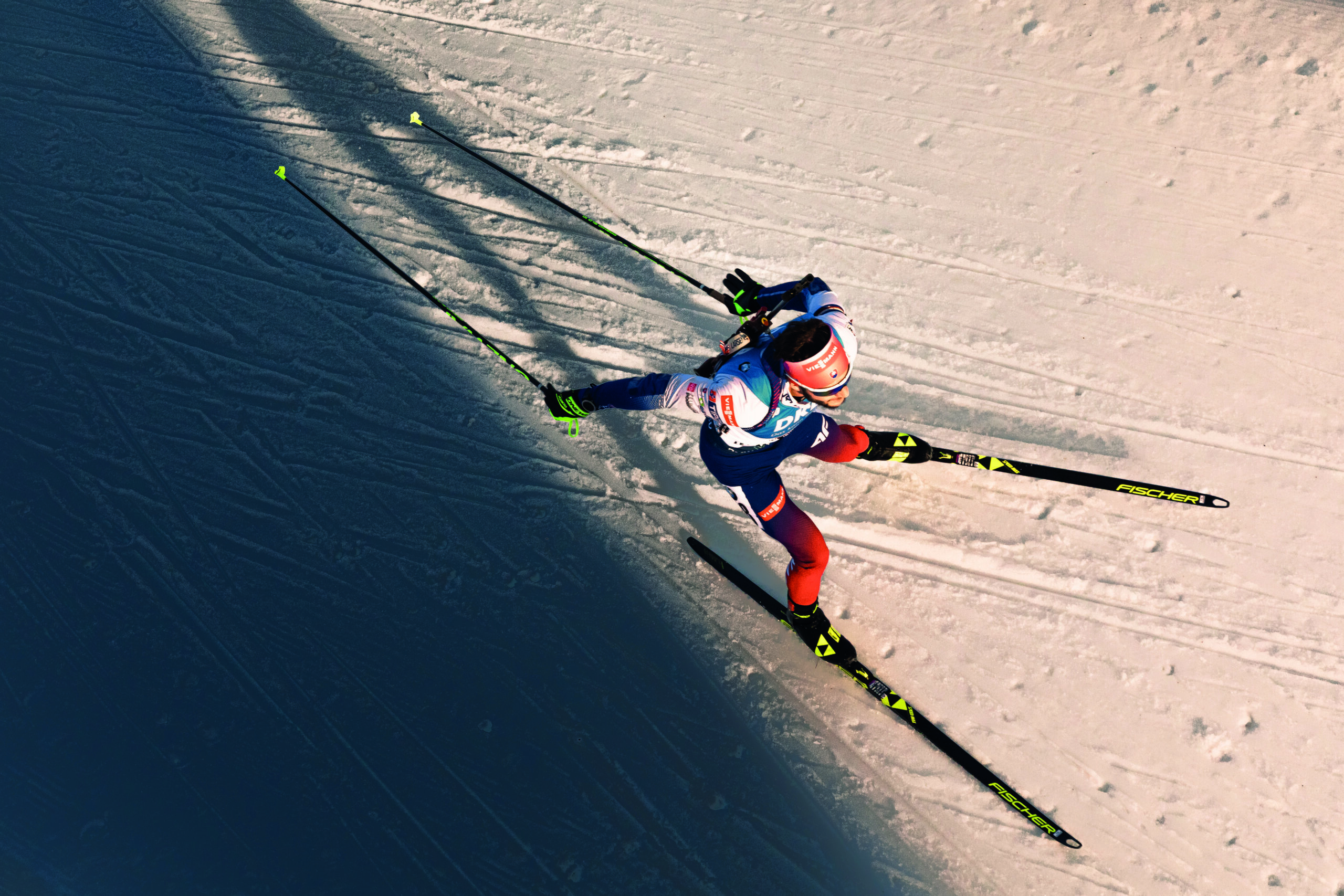
This second yield would give a richer, creamier and, crucially, tax-free milk – ideal for making the cheese. Le Grand-Bornand is also famous for the winter sport biathlon. World Cup events are regularly staged at the Stade de Biathlon Sylvie Becaert, named after the two-time world champion who made Le Grand-Bornand her home.
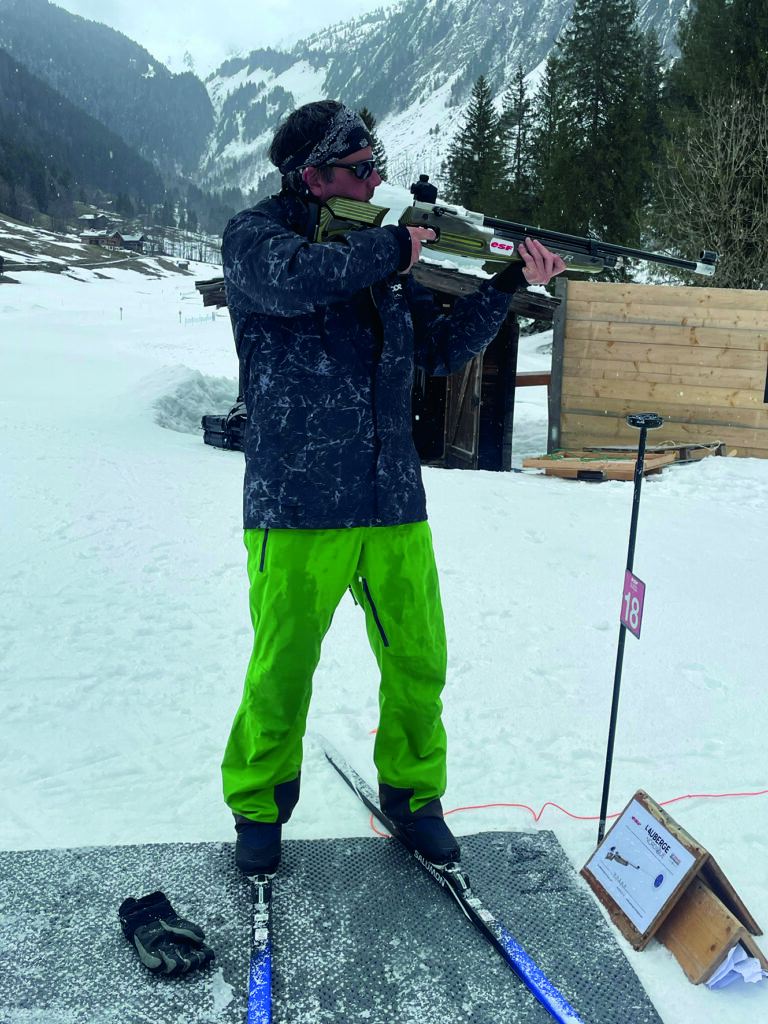
In 2030, the Olympic biathlon will take place at this venue, with its cross-country ski trails, grandstands and shooting range with 30 targets. Unfortunately, the stadium was closed when my wife and I were there, so we headed up the valley instead to a smaller Nordie ski centre called Les Plans. Here we were given a beginners’ course in the sport.
Skiing and Hunting
Rathlon is a mixture of cross-country skiing and target-shooting with a rifle, testing both coordination and aerobie fitness like no other sport. In the UK, given our lack of snow and stringent gun laws, there’s not much call for IL. But in Europe’s mountainous and rural areas, where hunting and cross-country skiing used to keep youngsters out of trouble over the winter months, It’s still popular.
The sport has its roots in early Scandinavian hunting. Picture a hairy Viking on wooden skis, with bow and arrows, all wrapped up in antmal furs, and you’re pretty close to what the first błathletes looked like.
Ancient Scandis used to revere the Norse detty Ullr, god of both skiing and hunting, Modern-day cross-country skiers all over northern Europe still consider Ullr their patron saint. The French are incredibly skilled at biathlon, too, winning six gold medals at the last Winter Olympics, while the current male and female world champions in long-distance individual events -Érte Perrot and Julta Simon are both French. All of which encouraged me to try my hardest when it was my turn to learn.
I started off skiing a few laps of a short, flat piste, egged on by my Instructor. It was completely different from downhill skiing; more like inline skating.
The skis are longer, stick-thin and prone to slipping out to the side, while the poles come almost up to one’s shoulder. Eventually, with much persistence and just a couple of undignified face plants, I managed to get the hang of it, using skaling motions and pushing with my poles. Keeping momentum and balance is crucial.
Then came the shooting. Armed with an air rifle, I lay chest-down on a rubber mal, with my legs splayed and skis still attached. Then, with the utmost concentration, I aimed at a steel target 10m away. Before each shot my Instructor told me first to breathe in, then to breathe out fully, then to pause, and finally to squeeze the trigger gently. It turned out I was far more accurate with my shooting than I was with my cross-country skiing. But 1 was doing it fully relaxed, with a resting heart rate. Professional
Le Grand-Born and Essentials
GETTING THERE
Le Grand Hormand is just over an hour’s drive from Geneva arport which it served by a selection of airfines. The nearest TGV station is Annexy 30km away with direct bus friks
WHERE TO STAY
Chalet Valora – This three-star hotel, a short walk up the hill from the man town, offers suites with large kitchens and living areas. There’s an indoor swimming pool and very fnendly staff.
chalet-valora.com
Hotel Chalet Les Cimes – This is one of the resort’s most luxurious hotel, rated fourstar li’s small with only five rooms and threm uatem, but very clean to the piotes in Chinallon Grand-Bormand. www.hotel-les-cimes.com
Hotel La Croix Saint-Maurice – Slap hang in the main village, the three star hotel offers cosy rooms with bakonies or terraces and great views of the Aravin mountain range. There’s abo a small spa. www.hotel-lacroixstmaurice.com
WHERE TO EAT & DRINK
L’Ancoly – This charming mountan chalet dates back to the 18th century. On offer arm panoramic views and traditional Savoyard cusine www.restaurant-ancoly.fr
La Table du Chalet – Part of the Best Western hotel this restaurant prides itself on mesonal Anaves produce. A terrace and fire pits add to the atmosphere. tinyurl.com/latableduchalet
Les 2 Guides – Don’t come to Le Grand-Bomand for its aprés do. But if you want a lively atmosphere, this pub in the man village is your best bet. www.facebook.com/pubLeGrandBornand website; www.legrandbornand.com
Ohlala! It looks like you’re not a Member yet
Join to view this content!
(If you are a Member, log in or reset your password below or contact us so we can help)
- Log in
- Forgot password
Lead photo credit : Stade de Biathlon Sylvie Becaert; Le Grand-Bornand is affectionately known as Le Grand Bo; fun on the slopes; Le Grand-Bornand's charming Christmas festival
Share to: Facebook Twitter LinkedIn Email
More in Alpine village, biathlon, cheese, french alps, Haute-Savoie, Le Grand-Bornand, Reblochon, skiing, winter sports
Related Posts
Leave a reply
Your email address will not be published. Required fields are marked *