
Hiking the Stevenson Trail in the South of France
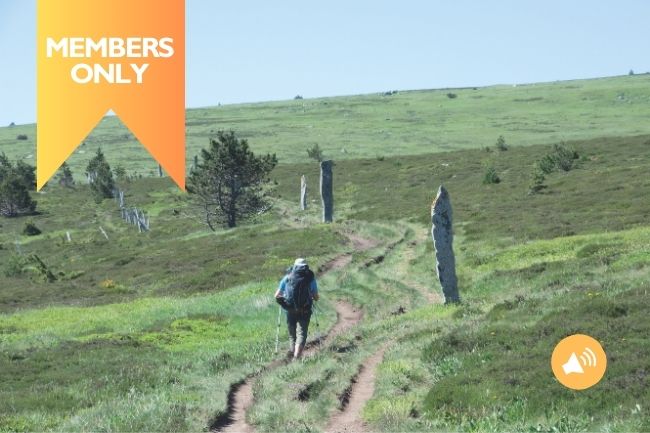

The GR70 walking route follows in the footsteps of Robert Louis Stevenson. Like the writer, you can travel with a donkey, or you can go on the trail without but you will certainly find beauty and inspiration aplenty amid the diverse landscapes of the Cévennes.
📢 As you scroll through the beautiful images, why not listen to our narrated article? It’s a great way for France Today Members to dive deeper into the story while enjoying the visuals. We hope you love this experience, and we’d love to hear what you think—feel free to share your thoughts in the comments below! Happy listening!
Οn the night of July 24, 1702, in the village of Pont-de-Montvert in the heart of the Cévennes, French Huguenot rebels known as the Camisards approached the house of François Langlade, the Catholic Abbé de Chaila and scourge of the region’s Protestants. The Camisards were seeking release of several of their number who had been imprisoned and tortured by Langlade; when he refused, they set about his brutal murder. Proclaimed a Catholic martyr, the Abbé was buried some 20km to the south in Saint-Germain-de-Calberte.
The 230km GR70 runs from near Le Puy-en-Velay to Saint-Jean-du-Gard, passing through Pont-de-Montvert, Saint-Germain-de-Calberte and other pretty villages set in the wild forests and mountains at the centre of 17th-century French Protestant resistance. It follows the route taken by Robert Louis Stevenson, described in his pioneering travelogue, Travels with a Donkey in the Cévennes. An enduring interest in the Huguenots developed from his Scottish Presbyterian upbringing, with stories about Protestant resistance by the Covenanters. It was this influence, in part, that brought him to Le Monastier-sur-Gazeille in September 1878 to begin his 14-day walk through the land of the Camisards.

The GR70 path on the Velay plateau © Nigel Bruce
Stevenson was also struggling emotionally. Two years previously he had met and fallen in love with Fanny Osbourne, an aspiring artist and writer. Torn between love and duty, she had returned to California where her unfaithful husband was gold prospecting. Stevenson and Osbourne would later marry, but in the autumn of 1878 he was seeking solace in travel. I walked the Stevenson Trail in June so as to enjoy the wild flowers, so prolific at that time of year. As I set out through rolling countryside west of Le Monastier-sur-Gazeille, the oppressive humidity presaged a storm, frequent and often ferocious here in summer.
I diverted from Stevenson’s original route to stay in the stunning mediaeval village of Arlempdes, set on a rocky hilltop in the upper Loire gorge. The storm struck during the night, cutting my hotel water supply and depositing great piles of hailstones. Next morning, I found roads torn up by the torrential rain, while in the next village, Landos, residents were queuing for bottled water in the café. There would be no morning coffee for me that day. On reaching Pradelles, I discovered a village that, like much of this region in the late 16th century, had borne witness to the Wars of Religion. In 1588, the Catholic garrison held off a spirited Protestant attack, a victory attributed to a wooden statue of the virgin found nearby.

Chemin Stevenson © Nigel Bruce
Wars of religion
South of Langogne, I followed the Chemin de la Regordane (GR700). This former pilgrimage and muleteer route took me through great forests, where myriad butterflies thronged the air like snowflakes as they flitted between the luxuriant wild flowers. Roaming these lands between 1764 and 1767, the infamous ‘Beast of the Gévaudan’, possibly a wolf, terrorised the population, killing more than 100 people.
From Luc, I headed up towards l’Abbaye Notre-Dame-des-Neiges, where Stevenson had stayed. I had Travels with a Donkey in the Cévennes in my backpack and each day compared his perceptions of the journey with my own while they were still fresh. It was here that Stevenson faced his own small war of religion in the company of a country priest and a soldier who had recently become a novice monk. On learning of Stevenson’s Protestant stock, the two Catholic men made a pitch for his soul: “But now the hunt was up; priest and soldier were in full cry for my conversion; and the Work of the Propagation of the Faith… was being gallantly pursued against myself. It was an odd but most effective proselytising. They never sought to convince me in argument, where I might have attempted some defence, but took it for granted that I was both ashamed and terrified at my position and urged me solely on the point of time. Now, they said, when God had led me to Our Lady of the Snows, now was the appointed hour.” Here, within the monastery, Stevenson was stalked by the very religious intolerance suffered by the Camisards. But it was the visitors who perpetuated the prejudices of the past, not the kindly Trappist monks.
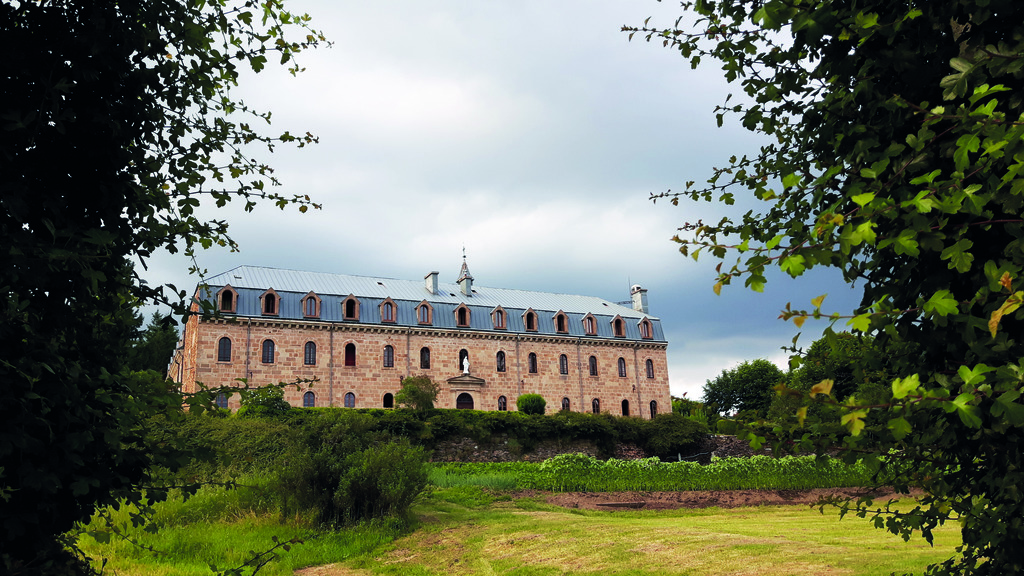
Notre Dame des Neiges © Nigel Bruce
Mountain country
The next day took me through La Bastide-Puylaurent, a village famed since Roman times for its warm, sparkling spring waters, then across the 1,300m summit of La Mourade, before descending to the Chassezac valley. It was here in Chasseradès that Stevenson shared accommodation with surveyors planning the railway that still runs through this mountainous country, where heavy snow lies in winter. Climbing again, I traversed the Montagne du Goulet, then another vast forest where the river Lot rises amid a profusion of marsh orchids. Following this small stream, which becomes one of France’s great rivers, flowing 485km into the Garonne, I emerged into sunlit meadows and my first view of the fascinating, wild and beautiful Mont Lozère.
The mountain is traversed by ancient transhumance drailles, which have seen passage of people and their animals over many centuries, and is rich in wildlife including red deer, golden eagle and the western marsh harrier. The GR70 ascends by a sinuous, grassy path bound by granite markers which have guided travellers through fog and snow. The 1,700m Finiels summit is a striking natural divide in the GR70 trail, a moment Stevenson captures magnificently: “Although it had been long desired, it was quite unexpectedly at last that my eyes rose above the summit. A step that seemed in no way more decisive than many other steps that had preceded it – and, ‘like stout Cortez when, with eagle eyes, he stared at the Pacific, ‘I took possession, in my own name, of a new quarter of the world. For behold, instead of the gross turf rampart I had been mounting for so long, a view into the hazy air of heaven and a land of intricate blue hills below my feet.”
The GR70 path on the Velay plateau © Nigel Bruce
Reluctant to leave, I followed a delightful trail past ancient farmsteads and massive granite boulders to reach Pont-de-Montvert, scene of the 1702 murder. I found the garden where Langlade was killed and the old bridge where Huguenot Esprit Séguier was burned alive in retribution. Nearby, a basket-maker and blacksmith provided a pleasant diversion from harrowing tales of religious bloodshed.
The variety in landscape is one of the marvels of this hike and the next section, to Florac, does not disappoint. Climbing onto a dry, limestone ridge, from where stunning views range across the aromatic, pine-clad hills among which the Camisards once sought refuge, I felt relieved to have brought enough water for the long, hot hike that day.
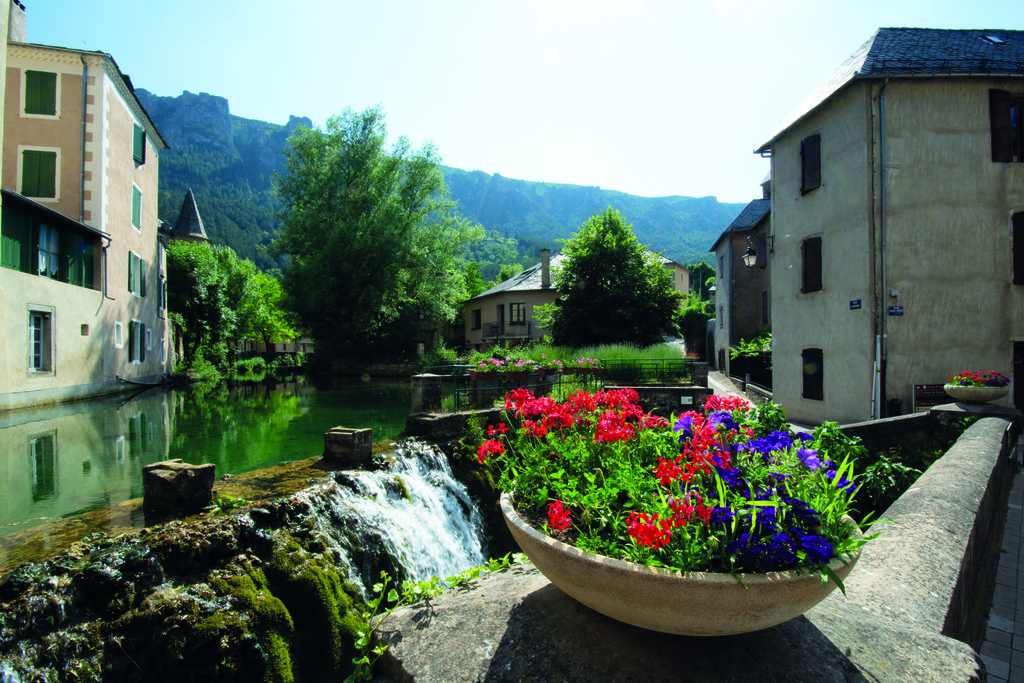
Florac © Nigel Bruce
End of the road
A steep path finally led into Florac, a pretty town lying at the confluence of the Tarn, Mimente and Tarnon, surrounded by high cliffs where vultures soar. The founding here in 1560 of the first Protestant community in the Cévennes made it a focal point in the Wars of Religion. From Florac, the GR70 heads up the remote Mimente valley, initially following an old railway track beside the clear, tumbling river. Climbing again, I walked above a Gallo-Roman villa and past a rock-cut burial chamber poised above serried ridges of blue, densely-forested hills stretching away to the hazy, far-distant southern horizon. At Saint-Germain-de-Calberte, from where Langlade once exerted his repressive power, Protestant graves lie beside village houses; even in death, the parish cemeteries were off-limits to the Huguenots.
Then, after a stiff climb to the breezy Col de Saint-Pierre, the trail reached Saint-Jean-du-Gard, where I enjoyed a cold beer and the last chapter of Stevenson’s book, in which he wrote that he was “now eager to reach Alais (Alès) for my letters”, including, we might presume, something from Fanny. Almost 150 years later, the GR70 remains a challenging adventure through one of France’s most beautiful regions.
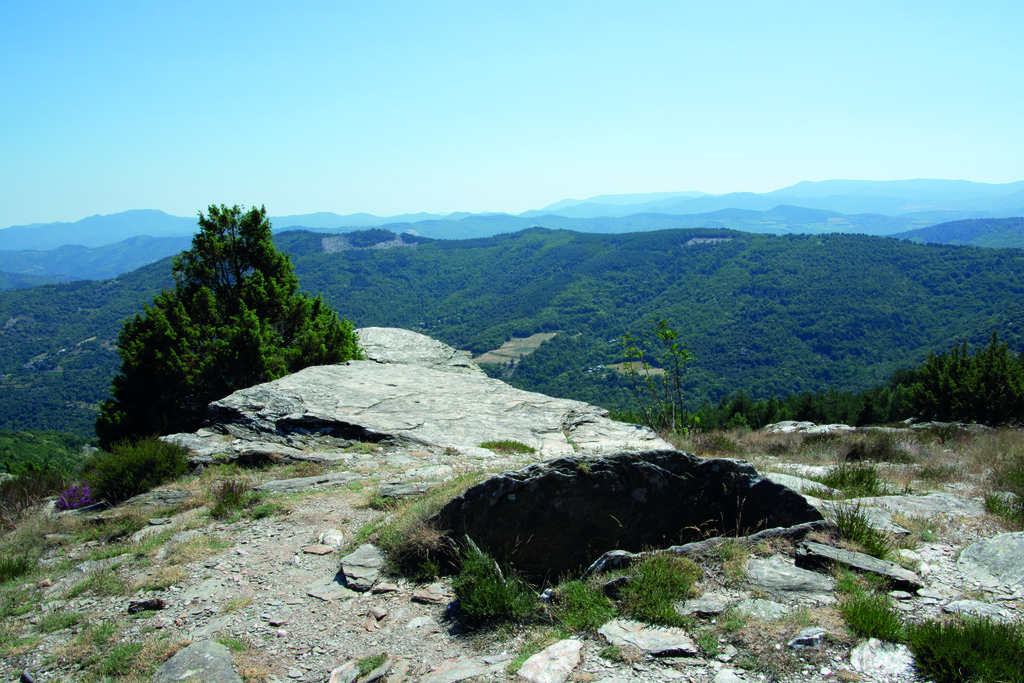
Burial chamber © Nigel Bruce
GR70 ESSENTIALS
- The GR70 Stevenson Trail can be hiked self-supported, with option of locally arranged baggage transfers provided by, for example, La Malle Postale
- Fully organised and supported hikes are offered by Macs Adventure, including the northern section (Le Puy-en-Velay to Chasseradės 115km/71 miles, from £895), southem section (Chasseradės to Saint-Jean-du-Gard 121km/75 miles, from (825), or the full route from Le Puy-en- Velay to Saint-Jean-du-Gard (252km/156 miles, from £1605).
- Supported hikes are also offered by the French travel company, Chamina Voyages with a choice of northern, southern and complete itineraries, plus the option of travelling, like Stevenson, with a donkey.
GETTING THERE
- The nearest airport to the start (Le Puy-en- Velay) is Lyon, to which flights are available from the UK, with major national carriers including British Airways and easyJet from Luton and Gatwick airports. Even with supported holidays, it is necessary to travel to Le Puy-en-Velay. This takes three to four hours by taking the shuttle from Lyon’s Saint-Exupéry Airport into Lyon-Part-Dieu train station and then a train to Le Puy-en-Velay.
TOURIST INFO
- Le Puy-en-Velay and surrounding area: en.lepuyenvelay-tourisme.fr
- Gorges du Tarn, Mt Lozère, Florac and surrounding area: en.cevennes-gorges-du-tarn.com
- Southern Cévennes including Saint-Jean-du-Gard, Alès and north towards Florac: www.cevennes-tourisme.fr/en
From France Today Magazine
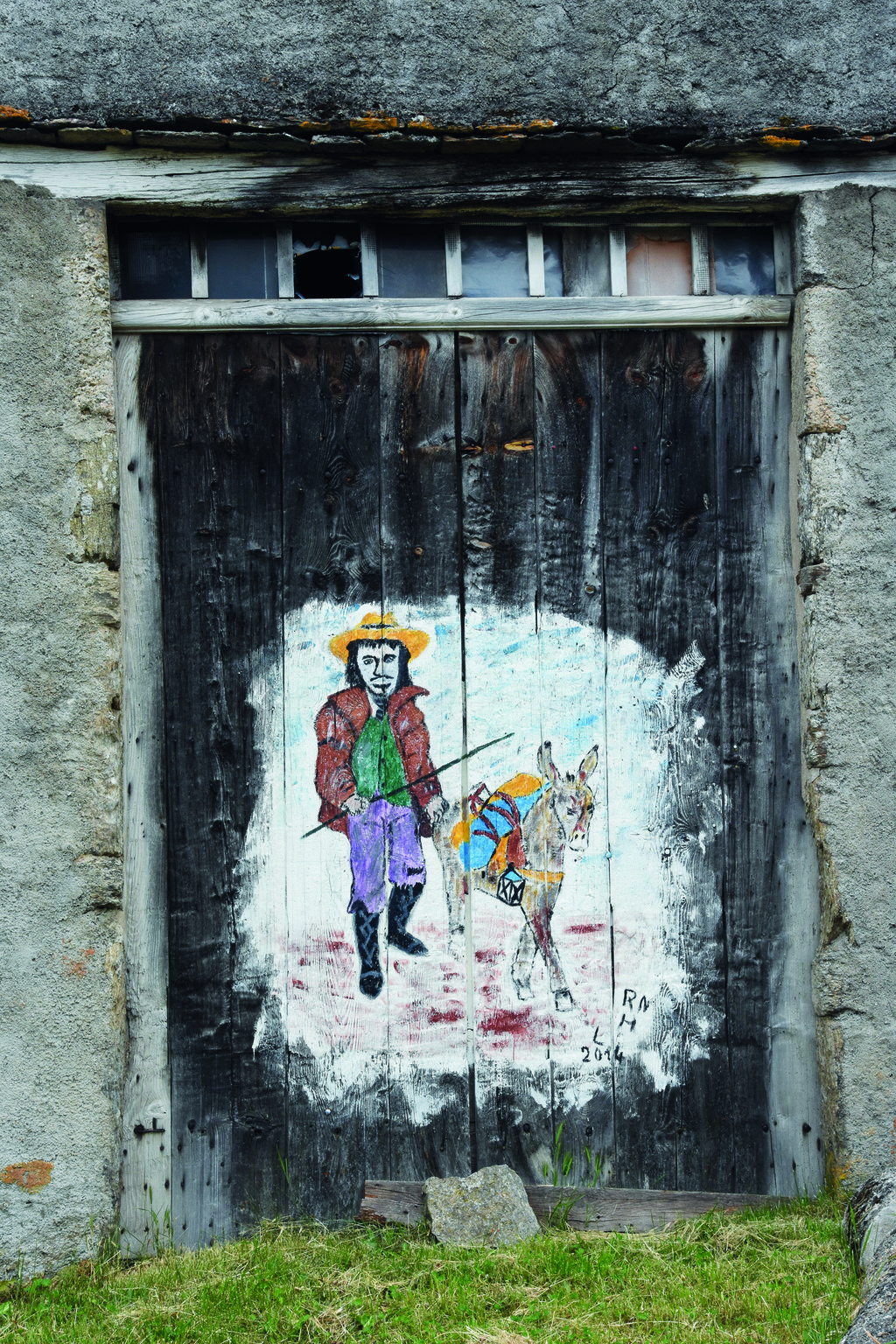
Stevenson and his donkey © Nigel Bruce
Ohlala! It looks like you’re not a Member yet
Join to view this content!
(If you are a Member, log in or reset your password below or contact us so we can help)
- Log in
- Forgot password
Share to: Facebook Twitter LinkedIn Email
More in Cévennes, France Today Membership, hiking, South of France, Stevenson Trail, walking holidays
Related Posts

By Nigel Bruce
Leave a reply
Your email address will not be published. Required fields are marked *