
Thiérache Revealed: Churches, Industry and the Echoes of War

As if the remarkable fortified churches of the Thiérache were not reason enough to visit this quiet corner of northern France (see FT issue 207, on sale now & available digitally for France Today Members), there is plenty more of interest in terms of history, heritage, gastronomy, and leisure to fill several more days of exploration.
The Social Palace of Guise
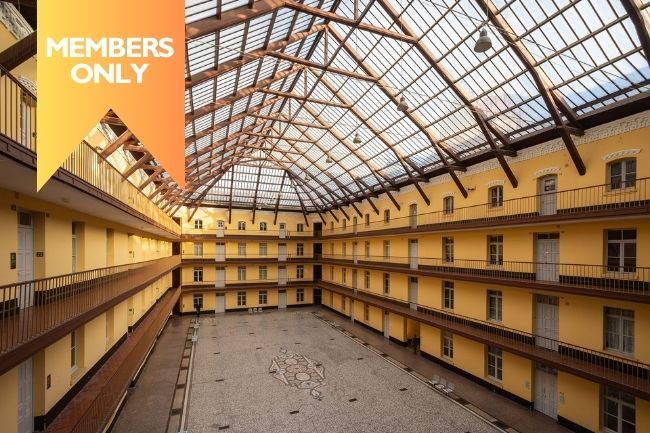
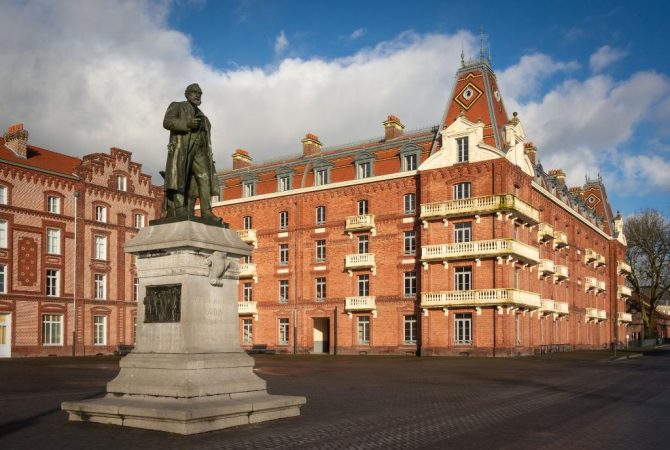
An absolute highlight is the Familistère de Guise, built by industrial entrepreneur and political theorist Jean Baptiste André Godin (1817 to 1888). As a young journeyman travelling around France, he saw the terrible conditions of working people and vowed to change that in his factory making cast-iron stoves in Guise.
He built apartments for his workers, and provided schools, shops, a theatre, bathing pool, and more. Inspired by the philosophy of Charles Fournier and the Phalanstère social housing movement, Godin went much further, passing 70% of profits to the workers, and involving them in company management.
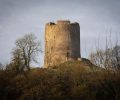
The Familistère is open for visits (allow at least 2-3 hours), and there are very reasonably priced apartments in one of the original buildings where (like the author) you can stay. Guise also has an imposing château-fort, with the tall donjon dominating the hilltop site. This was once the seat of the powerful Dukes of Guise, who led the Catholic factions in the Wars of Religion, forming the Catholic League.

Abbaye de Saint-Michel
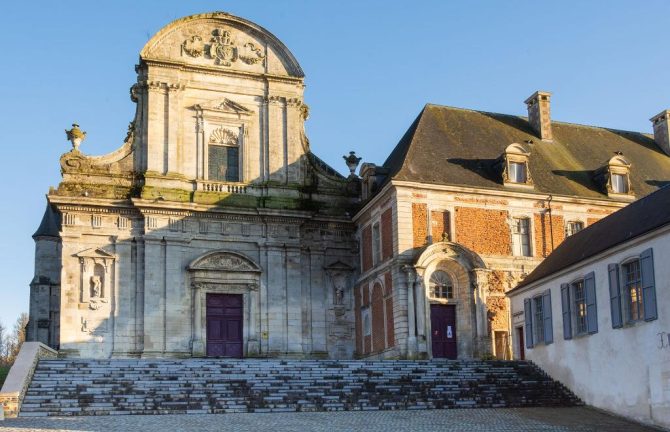
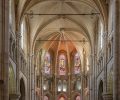
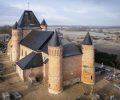
Another Thiérache gem is the Benedictine Abbey of Saint-Michel near Hirson.
“The history of this abbey is marked by five major fires,” began André Meunier, my guide. “The first was in 987, soon after the abbey was founded in 945 during wars between Charlemagne’s descendents. The other four were caused by a local madman, more wars, and an electrical fault.”
We began our tour with the 13th-century choir, where the unusual combination of Romanesque and Gothic features reflect the period’s architectural transition. Turning to view the 17th-century nave, André told me that the impressive organ above the west door was the work of master craftsman Jean Boizard, and dated from 1714.
“It is celebrated for its exceptionally beautiful tone,” he said, “and a star attraction at the Festival of Baroque and Ancient Music held here each June.”
“And, we are very lucky to have it,” he continued, “because Saint-Michel’s is the only one of Boizard’s great organs to survive WW1 because the German Officer, charged with dismanting the instrument to retrieve metal for their war effort, was himself a musician. Persuaded to listen, he was greatly impressed, and ordered it be preserved.”
As the significance of that story sunk in, André added, “You must come and hear it during the festival.”
“I’d love to”, I replied, hatching plans to return.
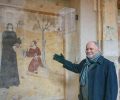
Moving next to the cloisters, André showed me the six panels of fine 16th-century murals depicting the life of Saint Benedict that had been discovered during restoration work after the most recent 1971 fire.
We returned to the front of the abbey church. “This is Baroque,” said André, motioning towards the ornate façade, “modelled on Saint-Ignace de Loyola in Rome, in recognition of Jean-Baptiste de Mornat (or Moronato), Chaplain to King Henry IV and Marie de Medici, and the Abbot here from 1598 to 1628.”
“So, you see,” concluded André, as if I needed more convincing, “this abbey has a quite extraordinary history.”
WW2 blockhouses and a famous tank commander
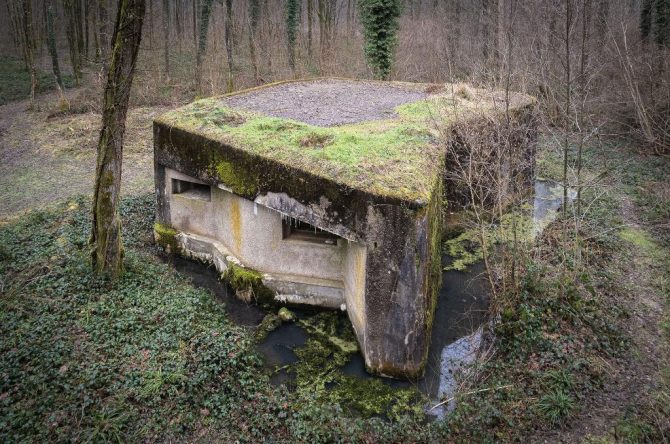
Deep in the Forest of Saint-Michel, paths lead past a memorial to French defenders during heroic actions in May 1940, to well-preserved artillery bunkers and tank-traps built in 1939 to fill a gap in the Maginot Line. There are around forty bunkers of various types, and access is free.
In Montcornet, a memorial recalls a tank battle, also in May 1940, where Colonel Charles de Gaulle demonstrated his leadership qualities while attempting to stop the German Blitzkrieg advance.

AOP cheese, farm cider, and fine basketry
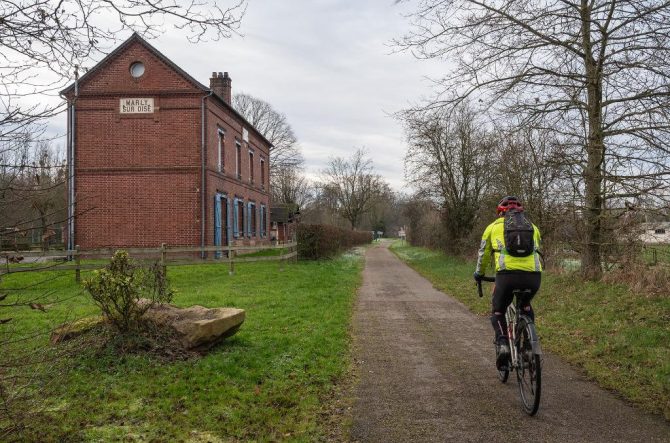
Maroilles cheese is the highlight of local gastronomy, and the key ingredient of Flamiche, or Tarte au Maroilles. I enjoyed this local dish at the excellent Estaminet la Halle. Run by Marc Anfray, it is located in the old Marly-Gomont station beside the ‘Axe Vert’ (a former railway running 35 kilometres from Guise to Hirson along the Oise Valley, now a leisure trail), and offers traditional French regional cuisine, an atmospheric bar, and music evenings.
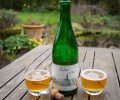
Another local delight is ‘cidre fermier’, made since the 17th century and only with the best apples. I tried a couple of varieties, and both were deliciously refreshing.
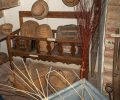
Abundant supplies of naturally growing osier (willow) beside the Oise and Ton rivers led to the Thiérache becoming one of the foremost French basketwork centres. The advent of plastic killed off this industry, but fine examples can be found at the museum of Rural Life and Forestry (Saint-Michel Abbey), and in Vervins museum.
The Thiérache is one of those lesser-known parts of France, which is nevertheless rich in heritage and other attractions, and well worth a closer look.
For more information, visit www.tourisme-thierache.fr

Ohlala! It looks like you’re not a Member yet
Join to view this content!
(If you are a Member, log in or reset your password below or contact us so we can help)
- Log in
- Forgot password
Lead photo credit : The Guise Familistère
Share to: Facebook Twitter LinkedIn Email
More in France Today Membership, highlights, north of France, top sites
Related Posts


By Nigel Bruce
Leave a reply
Your email address will not be published. Required fields are marked *