
The Extraordinary Life of the Genius Behind France’s Fortified Cities

We explore the extraordinary life and legacy of the military engineer and fortifier of France, Sébastien Le Prestre, aka the Marquis of Vauban.
📢 As you scroll through the beautiful images, why not listen to our narrated article? It’s a great way for France Today Members to dive deeper into the story while enjoying the visuals. We hope you love this experience, and we’d love to hear what you think—feel free to share your thoughts in the comments below! Happy listening!
When one considers leading figures from the illustrious, broad history of French architecture, it is usually the likes of Le Nôtre, Mansart, Haussmann, Perret, Le Corbusier and Nouvel who dominate ‘top 10’ lists – all were hugely influential in the realms of housing, urban development, formal landscaping and innovative design, from the very pretty to the perfectly practical.
But there is another ‘architect’-military engineer, actually whose influence in shaping the course of French history could be deemed far greater: Sébastien Le Prestre de Vauban. Born in 1633, Vauban rose from relatively humble, lower nobility beginnings in the Yonne to become a trusted servant to Louis XIV, whom he would serve for 53 years. He was latterly an esteemed Marshall of France.
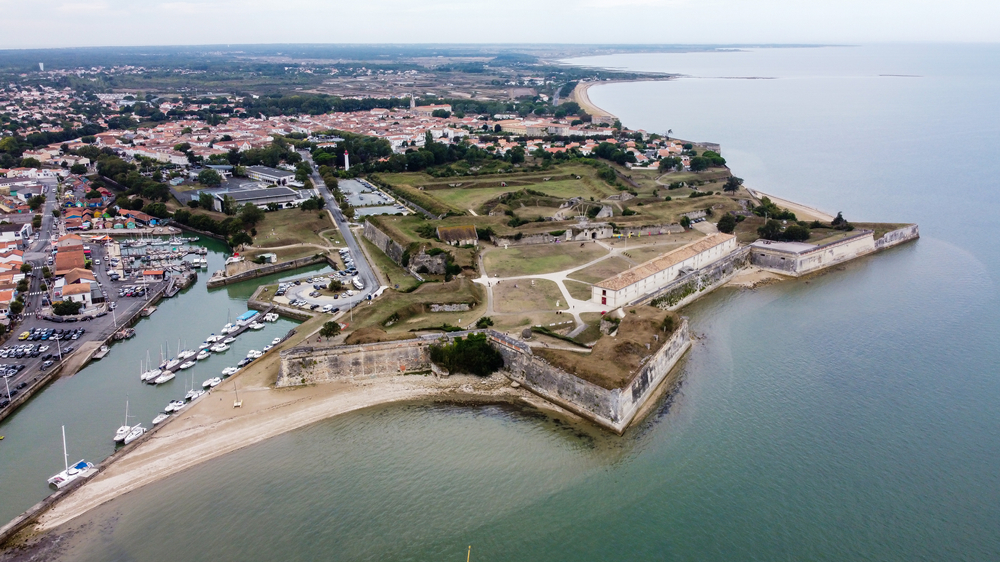
Chateau d’Oléron located on the island of the same name © shutterstock
Bright beginnings
His career path can be traced back to the age of ten when he began learning the rudiments of mathematics, science and geometry, as well as fortifications, at the Carmelite college in Semur-en-Auxois. His father, Urbain – although reduced to being a forestry worker by a legal wrangle over family ownership of Château de Bazoches (in Bazoches du Morvan) that had impoverished the family – designed gardens for the local gentry and it is thought that the design of these neo-classical gardens rubbed off on bright young Vauban.
By the age of 17 he had joined the Prince of Condé’s regiment as a cadet but in 1653, he was taken prisoner and thus entered into the service of Louis XIV, under whom he became an infantry officer and then military engineer in charge of fortifications. Thanks to his involvement in many sieges, including Stenay (1654), Landrecies (1655), Montmédy (1657) and Lille (1667), Vauban developed a gift for offensive operations (‘stronghold attacks’) and his first solo, and life-changing, siege design came in 1673. His pioneering ‘siege parallel’, which used three parallel trenches linked by communication lines, helped the French army capture the Dutch fortress of Maastricht. It became a model of siege warfare. Vauban also became rich at this time – his reward for Maastricht was a hefty sum of money, which he used to purchase the aforementioned Château de Bazoches from his cousin.
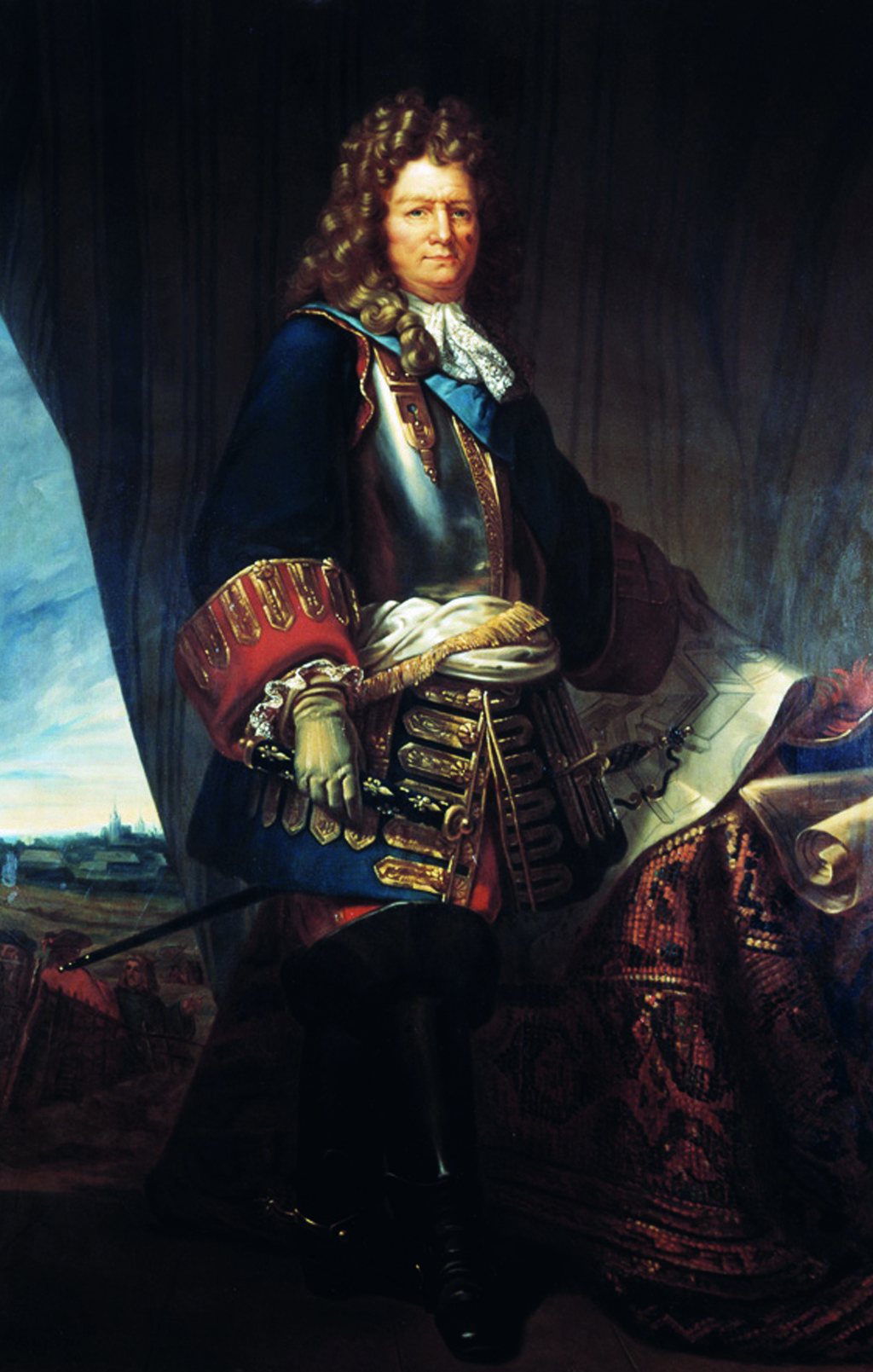
Sebastien le Prestre de Vauban
In 1678, Vauban was appointed Commissioner General of Fortifications to the King (a position he held until his death). While he continued to direct sieges, his main concern was to build a system of defensive fortifications that would establish a ceinture de fer (iron belt) to defend against enemy attacks. He was a master at incorporating natural obstacles such as rivers, mountains and coastlines into these defensive strongholds – and it is the remains of such fortifications, from urban enclosures to seaside towers, that stand testament to his legacy today. Louis XIV awarded him the military distinction (not a rank) of Marshall of France in 1703 for his services to the kingdom, the same year Vauban completed his last, and perhaps most impressive, urban planning project and military fortification (with a double town wall) at Neuf-Brisach in Alsace.
“A simple principle determines the internal organisation of this octagonal layout, namely to provide practical internal thoroughfares so that different areas, for commanding, fighting or civilian activity, could exist in harmony without getting in each other’s way,” is how it is described by the Network of Major Vauban Sites, which manages 12 groups of fortified buildings under the label “The Fortifications of Vauban’, a collective UNESCO World Heritage Site along France’s borders.
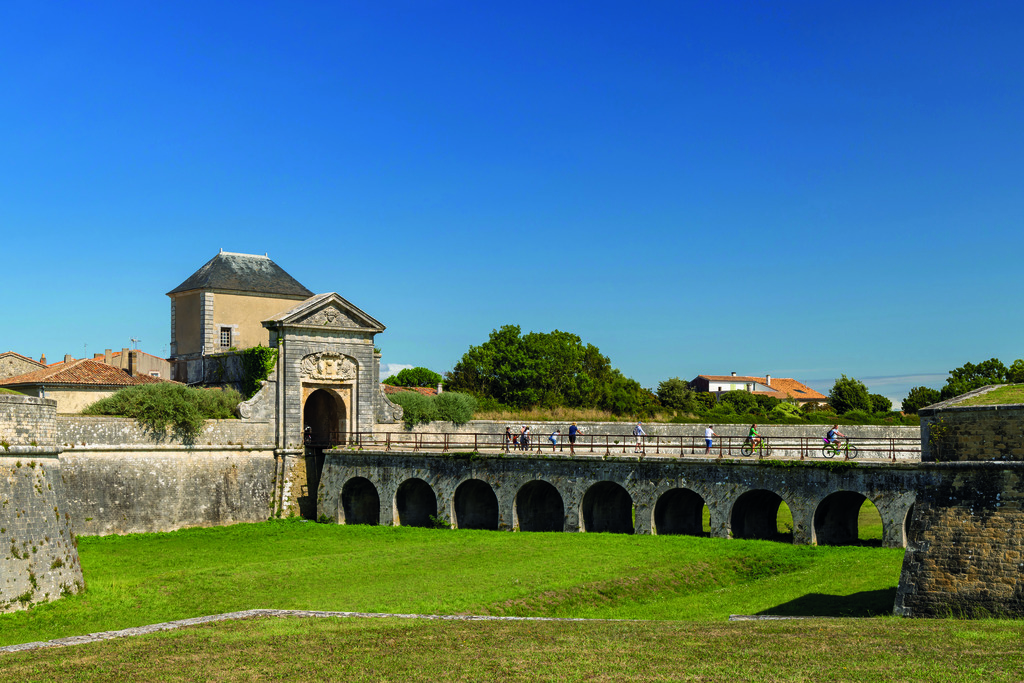
Citadel of Saint Martin on Ile de Ré © Shutterstock
Timeless contribution
“Vauban’s work is a major contribution to universal military architecture. It crystallises earlier strategic theories into a rational system of fortifications based on a concrete relationship with the territory,” wrote UNESCO. “It bears witness to the development of European fortification in the 17th century and produced models used throughout the world until the mid-19th century, illustrating a significant period in history.”
Vauban, innovator and patriot (and also a humanist and social inequality opponent) died in 1707. According to Napoleon, his ‘iron belt’ twice saved France from invasion: under Louis XIV at the Battle of Denain, and again during the Revolution. He left behind about 30 plans which were used after his death.
From France Today Magazine
Ohlala! It looks like you’re not a Member yet
Join to view this content!
(If you are a Member, log in or reset your password below or contact us so we can help)
- Log in
- Forgot password
Lead photo credit : Neuf-Brisach in Alsace © shutterstock
Share to: Facebook Twitter LinkedIn Email
More in fortified cities, France Today Membership, French history, icons of France, Vauban
Related Posts

Leave a reply
Your email address will not be published. Required fields are marked *