
Benjamin Franklin in France: The Founding Father and French Society
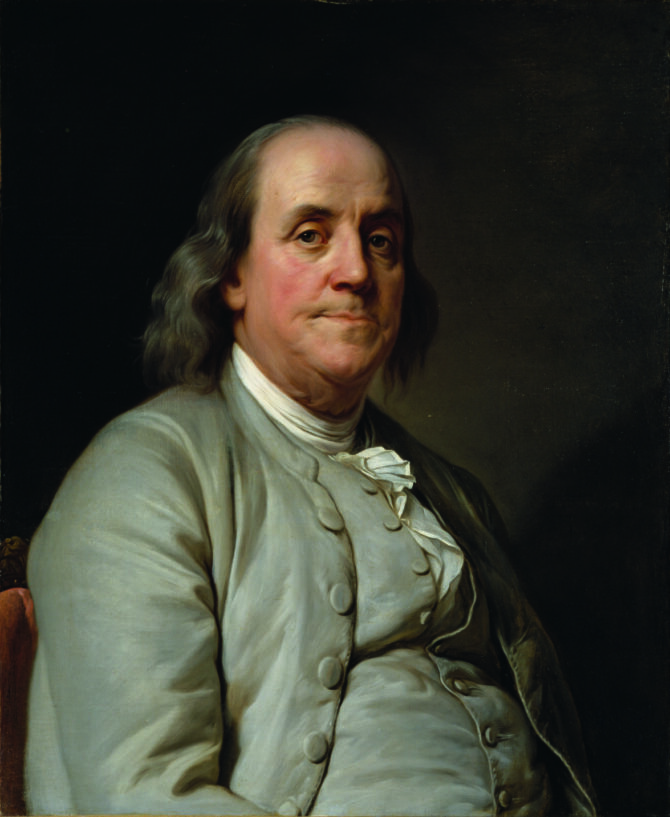

Hazel Smith explores Benjamin Franklin’s history-making diplomatic triumph.
Benjamin Franklin was one of the Founding Fathers of the United States, respected for his role in drafting the 1776 Declaration of Independence. As a diplomat, he spent nine years living in France, where he gained a rather different reputation.
Franklin was charged with the critical task of securing France’s military and financial support for the American Revolution. An instant sensation in Paris, the polymath was already known as a writer, scientist and inventor, infamous for harnessing electricity through a kite string.
His republican virtues were embraced by the like-minded French, who romanticised America’s fight for liberty.
Franklin’s iconic image, complete with the signature bifocals he’d designed himself, appeared on medallions, rings, watches and snuffboxes. Fashionable Parisiennes adopted ‘la coiffure à la Franklin’, inspired by his rustic fur cap.
Complete with lightning rod, Franklin’s home in the suburb of Passy became the centre of American diplomacy in Europe, with a revolving door of visiting philosophers, academics and military men, who partied into the early hours.
REVOLUTIONARY SUCCESS
Franklin’s ‘debauched’ life was detailed in the diary scribblings of another American emissary. John Adams was appalled at how the French ladies swarmed to exchange kisses with his compatriot and regarded Franklin as overly fond of female company.
But what straight-laced Adams couldn’t grasp was that while Franklin was hobnobbing with the rich and famous, he was using his charm, wit and fractured French to make inroads with people who mattered. In doing so, he helped secure one of the most important diplomatic successes of the American Revolution.
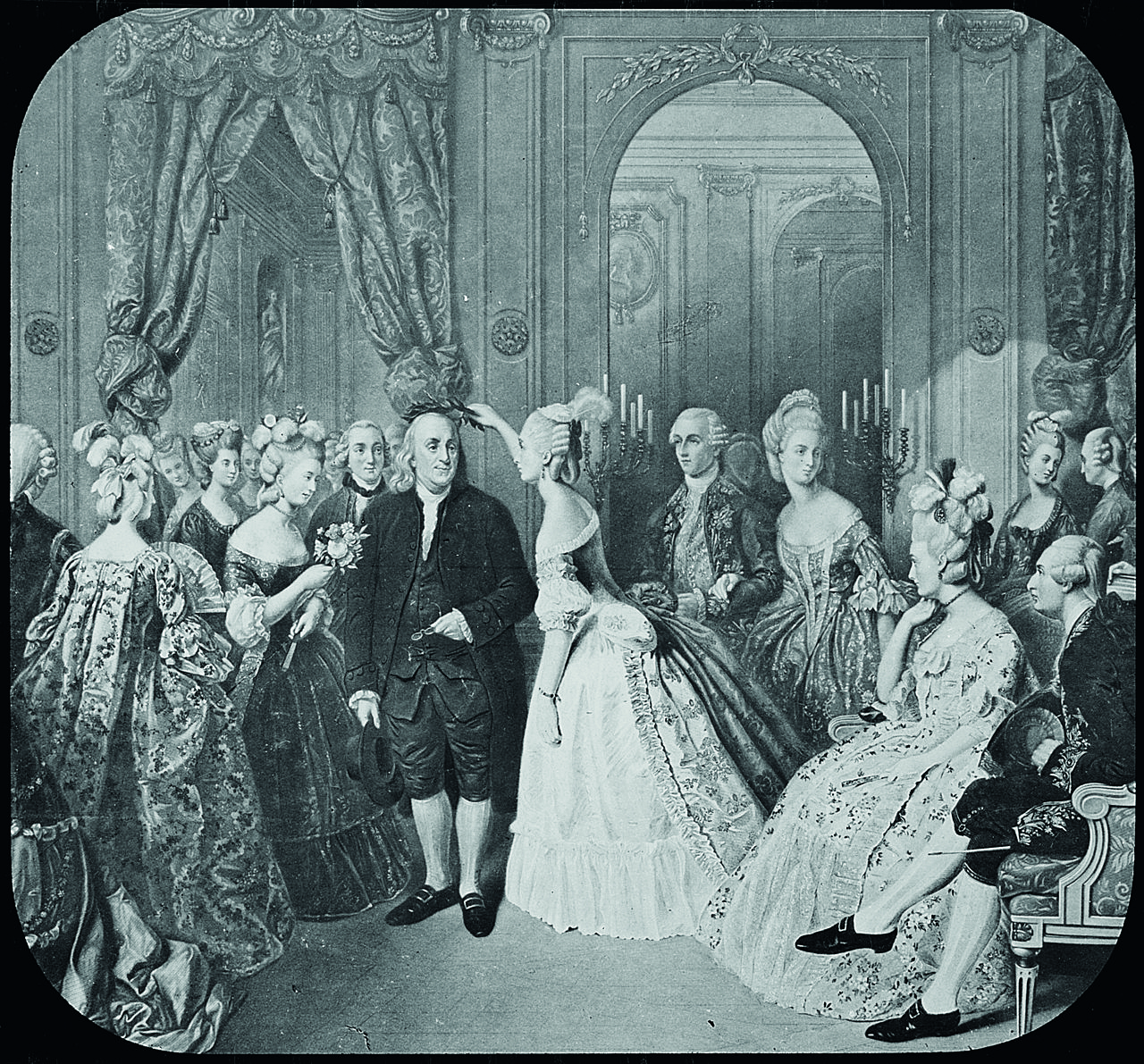
an engraving by William Overend Geller of Franklin’s reception at the Court of France in March, 1778
In 1777, France was the first country to recognise the USA as a sovereign nation, becoming America’s official ally. Tonnes of munitions and gunpowder were shipped to the colonies.
Franklin secured multiple millions from the French treasury, all but bankrupting the government. Without Franklin’s savvy networking abilities, the American Revolution would have collapsed.
A LONG-AWAITED RETURN
After co-signing the Treaty of Paris in 1783, Franklin understandably wanted to return to his newly minted country. The US Congress, however, insisted he remain a minister to France.
Receiving no response from home for months, the aged Franklin continued his scientific networking and witnessed the first flight of the Montgolfier balloon. At Le Procope, Paris’s oldest café, he gathered with other enlightened thinkers; at the Café de la Régence, hours were spent playing chess. He also published his satirical Bagatelles from his home printing press.
In 1785, Franklin finally set foot in the country he had done so much to create. But he was snubbed by the newly formed government, receiving little thanks or reward for his work. Had too much ‘Frenchness’ rubbed off on him? Or was the resentful John Adams feeding the rumour mill?
Perhaps. Nonetheless, Franklin governed Pennsylvania for three years, became an active abolitionist and was among the signatories of the US Constitution.
John Adams went on to be the second president of the USA, while Benjamin Franklin remained the greatest President America never had.
Lead photo credit : Joseph Siffred Duplessis’ portrait of Benjamin Franklin