7 Reasons to Cycle La Vélodyssée
Sponsored
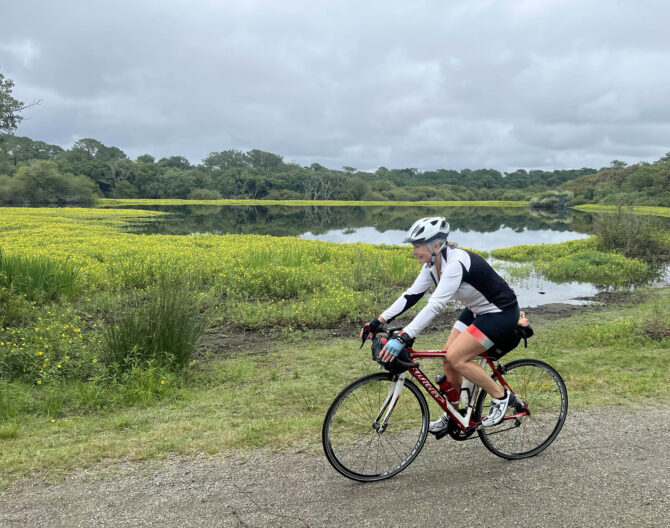
From the rural uplands of Brittany to the pine-scented shores of the wild Atlantic, La Vélodyssée is a 1300km cycling odyssey down the west coast of France, taking in medieval towns, historic ports, wildlife-rich wetlands and some of Europe’s best surf beaches along the way. It forms the French section of EuroVelo 1, the cycle route that runs the length of western Europe from Norway to Portugal, and with 80% of it on traffic-free paths, it’s as suited to a gentle week away as it is to a full coast-to-coast adventure. It sits alongside the Loire, the Rhône and the Canal du Midi as one of France’s great long-distance cycle routes, and neither end requires a flight to reach. Cicerone’s new guidebook, Cycling La Vélodyssée by Jack Jackson, covers all 19 stages, with maps, GPX files and everything you need to plan your ride. Here’s why it deserves a spot on your cycling bucket list.
1. Flat, mostly traffic-free and open to all levels
You don’t need to be a seasoned cycle tourer to take this one on. La Vélodyssée is largely flat and predominantly follows dedicated cycle paths, making it genuinely accessible whatever your experience. It’s what’s known among cyclists as “Type 1 fun”: an easy, enjoyable ride rather than a gruelling challenge, which is part of why it appeals to such a broad range of people, from retirees to families, to first-time cycle tourists testing the waters. Many riders currently doing the route are in their forties and beyond, but there’s plenty of scope for it to appeal to a much wider crowd too, including younger riders and families looking for an accessible, low-stress introduction to multi-day cycle touring.

2. The wild Atlantic coast
For long stretches, the route hugs the Atlantic, delivering pine forests, rolling sand dunes and beaches of soft golden sand, including some of Europe’s best surf spots. Highlights include the vast Dune du Pilat and the glitzy resort towns of the southwest, where beach life and serious cycling sit comfortably side by side. If you’re the sort of cyclist who likes to finish the day with a swim, this route delivers in spades.

3. Three regions, one unforgettable route
La Vélodyssée is really three rides in one. Brittany brings towpaths, medieval towns and ancient castles; the coastal lowlands of Pays de la Loire, Vendée and Charente-Maritime bring drained marshland, historic ports and wide river estuaries; and Aquitaine brings pine forests, dunes and Basque country. Few routes pack in this much variety without ever losing their rhythm.

4. Historic towns and famous ports
The route threads together some of France’s best-known coastal destinations, including Nantes, La Rochelle, Rochefort, Royan, Bayonne and Biarritz. These are places with centuries of history, from Roman occupation and the Hundred Years’ War to Belle Époque seaside glamour, and they also happen to be well set up for visitors, with plenty of places to eat, sleep and explore.

Photo 4 The Tour de la Chaîne, La Rochelle
5. Exceptional food and drink
Cycling La Vélodyssée is as much a culinary journey as a physical one. Expect Breton crêpes and galettes in the north, moules-frites and Marennes Oléron oysters along the coastal marshland, and Basque specialities such as jambon de Bayonne further south. Throw in two of France’s great wine regions, the Loire and Bordeaux, and there’s a strong case for planning your stops around lunch as much as your legs.

6. Flexible enough for a week or three
Not everyone has three weeks spare, and La Vélodyssée doesn’t demand it. The route naturally splits into three sections at the Loire and Gironde estuaries, each making a satisfying week-long trip in its own right, whether that’s the canal paths and historic towns north of Nantes, the ports and fenland in the middle, or the pine woods and dunes to the south. Equally, plenty of riders tackle it all in one, sometimes continuing on into Spain towards Santander or Bilbao.

7. Easy to reach, easy to plan
No flying required. Brittany Ferries sails directly to Roscoff at the start of the route, and Hendaye at the finish connects easily back into the French and Spanish rail networks, or on towards Bilbao by bus for those extending their trip into Spain. Accommodation ranges from budget campsites to smart hotels, and the sheer volume of it means spontaneous, last-minute planning is often possible outside the busiest tourist spots. Cicerone’s new guide, Cycling La Vélodyssée, brings it all together with detailed stage-by-stage descriptions, maps and downloadable GPX files, whichever way you choose to ride it.

Cycling La Vélodyssée by Jack Jackson is out now from Cicerone. Find out more at cicerone.co.uk/cycling-la-velodyssee.

For over 50 years, Cicerone Press has been your go-to guide for exploring the great outdoors. It is the leading publisher of guidebooks for walkers, trekkers, climbers and cyclists, covering destinations in Britain, Europe, and beyond. You’ll find more inspiring articles and the full range of guidebooks on the Cicerone website.