
Carnac’s Megalithic Site Joins UNESCO World Heritage List
Sponsored
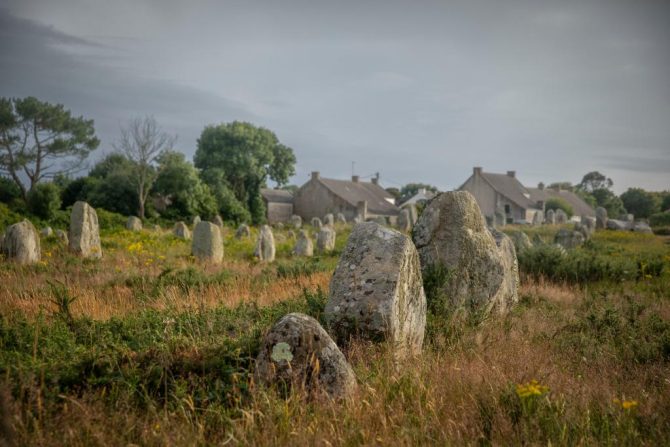
Efforts 12 years in the making have finally been rewarded: in July 2025, the Carnac and Shores of Morbihan megalithic alignments joined UNESCO’s World Heritage list, recognising these areas’ huge heritage and cultural importance.
No one is really sure when the standing stones of Carnac were erected but recent searches date most of the stones back between 4800 and 3500 BC. More than 3,000 menhirs – cut from local granite and arranged into vivid formations – stand in carefully arranged rows in the windswept farmland making these monolithic alignments one of the oldest and most extensive collection of megalithic monuments known globally.

Carnac’s Neolithic builders didn’t stop at menhir alignments: they also constructed dolmens, tumuli, and intricate enclosures, forming a sprawling ritual and burial landscape whose full purpose remains cloaked in mystery. Modern archaeology points to spiritual, astronomical, or agrarian functions, shrouded in the belief systems of Neolithic Europe.
After centuries of neglect – some stones having been removed for local building projects – very few of the original menhirs still stood. The French State intervened in the 19th and 20th centuries to protect the site and began raising the stones up again. Though the site does not look like the way it probably was in prehistoric times, combined conservation efforts have made it the largest megalithic site in the world today.

It also became an integral part of Brittany’s cultural landscape, featuring in local legends and stories that have been passed down generations.
Recognition at last
In a landmark decision on July 12 2025, UNESCO inscribed the Megaliths of Carnac and the Shores of Morbihan to its prestigious World Heritage List, recognizing the site’s “outstanding universal value” and its exceptional testament to Neolithic cultural and technical achievement.

The petition was carried mostly by Yves Coppens – one of the palaeontologists who discovered the remains of Lucy, long considered the oldest Australopithecus skeleton in the world – until he passed away in 2022. He and a collective of 27 towns in Brittany wanted the megalithic sites of Carnac and throughout Morbihan to be truly valued for the influence they’ve had on the landscape and its history.
This designation covers a vast cultural landscape: over 550 megalithic sites and more than 1,000 km² in southern Morbihan – an unparalleled concentration of prehistoric monuments.

Today, visitors can wander among these prehistoric giants freely and all year round. The Maison des Mégalithes interpretation centre offers more detailed explanations of the site with maps, digital displays and temporary exhibitions, as well as a panoramic terrace from which visitors can observe the site.
Maison des Mégalithes:
April 1 – October 30 – 9h30 – 18h
July 1 – September 30 – 9h30 – 19h
September 1-30 – 9h30 – 18h
October 1 – March 31 – 10h – 13h & 14h – 17h
Guided tours available. Tickets purchased online or at the Maison des Mégalithes.
For more information, visit www.menhirs-carnac.fr and www.megalithes-morbihan.fr
Share to: Facebook Twitter LinkedIn Email
More in Brittany, celtic culture, Discover the secrets of France's heritage sites, French monument, menhirs, prehistoric site
Related Posts


Leave a reply
Your email address will not be published. Required fields are marked *
REPLY