
Carol Drinkwater on Late Summer on Her Provence Olive Farm
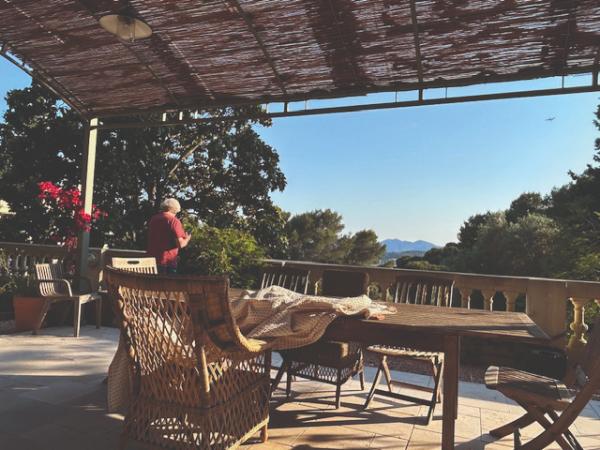
Carol shares a Sicilian olive-growing secret and late-summer pleasures in Provence
Summer is drawing to a close, although here in the south it promises to continue for a while. The days are a little cooler while the evenings remain long and light. Life, during this season, is lived outside overlooking the sea beneath the shade of the pergola or, in the evenings, by candlelight and glittering starlight.
We constructed our pergola three years ago and it has been such a joy to watch the climbing plants as they travel their way up its iron posts. Red and purple bougainvillea, sweet jasmine and orange trumpet flowers were all potted soon after the pergola was completed. Now, they are starting to give us vibrant colours and heady perfumes. I love to sit there, reading, or just gazing out towards the distant Var. The raucous calls of the cicadas assure me that summer is still with us.

The sardine method
On most days the barbecue is fired up. Yards of herb sausages or succulent fish are sizzling. These plates are accompanied by gargantuan Mediterranean salads dressed with lashings of garlic and olive oil. The rosé is chilled.
This year our olive trees are laden with plump fruits. I am keeping a beady eye in case the olive fly comes calling in early autumn. Normally these pests invade the olive fruits in midsummer, but for several years now it has been too hot for them in the peak months. They wait until it is cooler, when the female lays her larvae in the fattening olives, damaging them. The fruits rot and fall, depleting the harvest. Many farmers spray their trees to keep the fly at bay, but since I travelled round the Mediterranean some 20 years ago in search of the historical secrets and stories of the olive tree and its cultivation, we’ve opted for kinder alternatives to pesticides.
Here’s a process I learned about in Sicily. Instead of chemicals, quite a number of Sicilian farms use the ‘sardine method’. At first these producers were laughed at by their colleagues but the results proved incontestable. After years of trial and error, a small group of Sicilian farmers came up with the idea of hanging plastic bottles filled with water from the branches of their olive trees. Submerged in the water is a Mediterranean sardine! It sounds crazy, but it works. It’s not quite as efficient as the toxic sprays but it deters the fly, is cleaner, less poisonous and respects nature.
But what’s for supper?
How does it work? Take a litre plastic water bottle, cut it in half. You only need the lower portion. Make two small holes, one either side of the lip. Insert a length of wire into both the holes, making a handle. We use green garden wire, which is hardier than lengths of cotton. Fill the plastic container with water, sink a sardine into the water, then hang it from the tree. Simple. Due to their size and circumference, our gnarled old trees need four bottles apiece. This represents a ton of sardines!
When I pop to the village to collect my order, the fishmonger welcomes me with open arms. “Bonjour Madame, two hundred sardines are in the cooler waiting for you!” Heads turn. I shrug and stride off with my purchases. Back at home, family members and friends are preparing the mountains of bottles we have been collecting since spring. In go the sardines before the bottles are hung from the trees. I make only one rule: please leave sufficient sardines for tonight’s delicious barbecue!
Share to: Facebook Twitter LinkedIn Email
More in Carol Drinkwater, column, essay, late summer, Love France, olive farm, olive growing, Provence, real life
Related Posts



Leave a reply
Your email address will not be published. Required fields are marked *