
How These French Towns Became Wellness Hotspots


From thermal springs to grand spa architecture, these three French towns quickly emerged as wellness destinations and remain sought-after for relaxing and healing stays.
📢 As you scroll through the beautiful images, why not listen to our narrated article? It’s a great way for France Today Members to dive deeper into the story while enjoying the visuals. We hope you love this experience, and we’d love to hear what you think—feel free to share your thoughts in the comments below! Happy listening!
In their heyday, the French spa towns of Vichy, Vittel and Évian-les-Bains were dream destinations with a twist. Apart from their grand hotels, casinos and concert halls, the raison d’être for each village was their miraculous mineral springs, where people with minor medical ailments could seek a cure in a luxurious atmosphere. These gems of the European spa circuit were pioneers of health tourism, but they also contributed to the character of France.
Once an esteemed Roman spa, the forgotten springs at Vichy regained popularity during the reign of Louis XIV, when the gentry discovered the waters worked miracles on their skin. Vittel was also a Roman spa, where General Vitellius cured his gout. And at Evian-les-Bains, an 18th-century nobleman described the water as ‘light and easily drinkable’. Soon visitors found it more favourable to be immersed in the warm, sparkling waters.

Vittel
A popular cure
Whether a drinker or a bather, French doctors regularly prescribed ‘taking the waters’. Rich in either calcium, magnesium or sodium, they were just the tonic to treat kidney ailments, engorged livers and even arthritis. Streams of wealthy visitors filled their cups, while others soaked their modestly clad bodies.
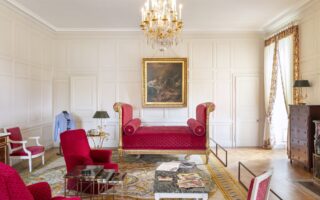
The sumptuous architecture of these spas was half their attraction. Vittel’s impressive buildings were the work of Charles Garnier, the architect who created the Paris Opera. Dripping with Moorish influences, the baths, the casino and a glass roofed-gallery for promenading were all Garnier’s work.

The Grande Grille source in Vichy © Shutterstock
Vichy was Napoleon III’s favourite health retreat and he was the impetus behind its intensive renovation. Once fit for the Emperor, it boasted grand bath complexes, numerous entertainment halls and a series of luxury chalets near the River Allier. Vichy is listed by UNESCO as one of the Great Spa Towns of Europe.
Ideally situated between the Alps and Lac Léman, the first thermal spring in Evian-les-Bains opened in 1827, its spas and opulent hotels bordering the lake. Reinvigorated during the Belle Époque, Evian became the grandest spa of its era, with many exquisite Art Nouveau façades and flourishes.
The French rail system enabled other spas to spring up during the 1800s, transforming hamlets into urban hubs. These busy stations thermales provided work for thousands and created lucrative job opportunities for women.

HotelSplendideEvian – Photo: Wikipedia
Tourists and diplomats
Vichy, Vittel and Evian were rival resorts that influenced the development of 19th-century France. They heralded a leisure-oriented society but they were also networks for diplomatic exchange. Tsars, kings and shahs hobnobbed with French presidents and poets such as Proust. While taking their water cure, these voluptuaries influenced social trends, policy and culture.
The culture of spas changed, however, in the 1930s, when antibiotics proved more effective than hydrotherapy. But some medical practitioners still prescribe what is known as balneotherapy. Today Vichy, Vittel, and Evian-les-Bains continue to attract people to their thermal resorts, where curious clients can enjoy a wide range of health services, while soaking up their fascinating history and glorious architecture.
From France Today Magazine
Ohlala! It looks like you’re not a Member yet
Join to view this content!
(If you are a Member, log in or reset your password below or contact us so we can help)
- Log in
- Forgot password
Lead photo credit : Evian-les-Bains
Share to: Facebook Twitter LinkedIn Email
More in France Today Membership, French history, spa towns
Related Posts

By Hazel Smith
Leave a reply
Your email address will not be published. Required fields are marked *