
The Lasting Influence of Erik Satie’s Music
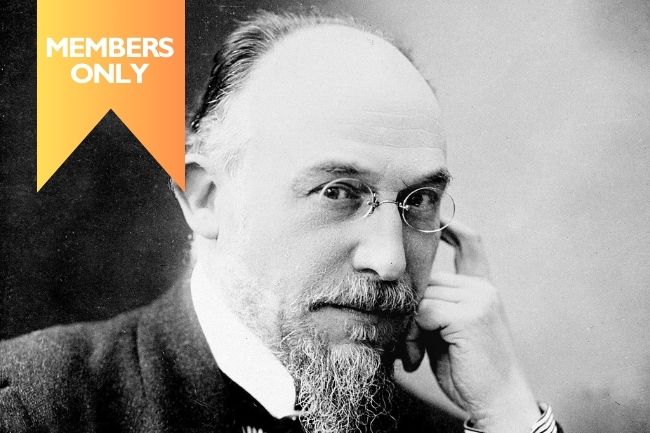
One hundred years after the Normandy-born composer’s death, Satie’s influence on music continues to this day.
The coastal town of Honfleur – known as the ‘birthplace of Impressionism’ – is no stranger to artists. However, its homegrown talent was not just restricted to painters. One of its most famous sons was Erik Satie – an exuberant musical talent intent on stripping the exuberance out of the classical music of the Belle Epoque.
This year marks one hundred years since his death. It’s a reminder to revisit his legacy, playfully examined in the Maison Satie museum that now inhabits his childhood home.
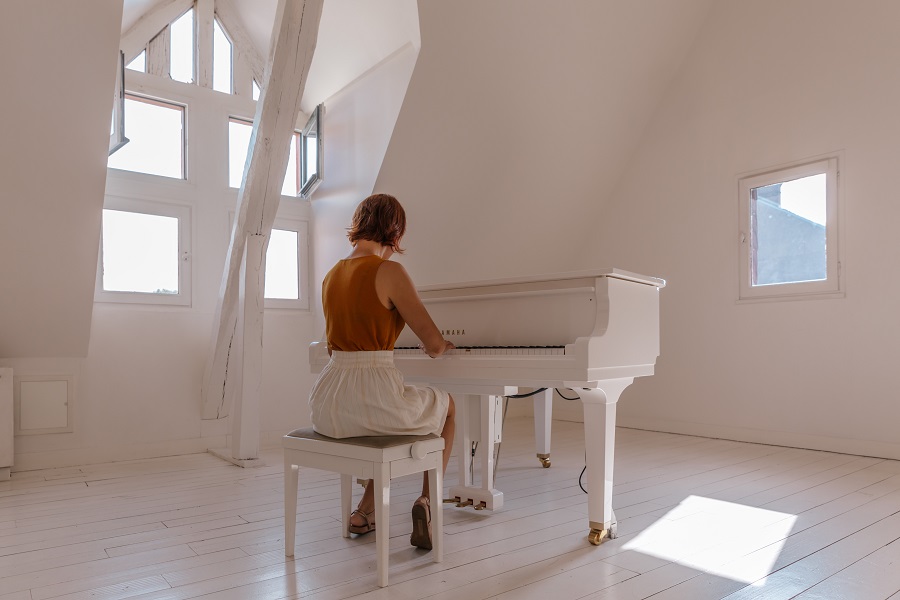
Maison Satie in Honfleur © lemassonbanninglover
A diamond in the rough
The young Erik Satie had a topsy-turvy start. Born in Honfleur in 1866, his father soon uprooted the family to Paris as part of a mid-life career change. His mother died when he was six, and Satie senior packed Satie and his two younger siblings off to Honfleur, to be raised by their grandmother. At age eight, the impressionable youth was given music lessons by a local organist, who instilled in Satie an early appreciation for the minimalism of Gregorian chant.
The Satie children returned to the capital following the death of their grandmother. Here he was enrolled, somewhat begrudgingly, into the Paris Conservatoire by his loathed mother-in-law, Eugénie. Decreed “gifted but indolent” by his teachers, Satie was expelled for his lack of application. Readmitted a few years later, the youthful composer failed to seize upon his second chance. At this time, he was more enthralled by Notre-Dame cathedral or the medieval writings he found in the National Library. Out of these side studies came Ogives – a quartet of piano pieces inspired by Gothic architecture and the rhythms of Gregorian chant.
Eventually, convinced that anything would be better than labouring beneath the restrictive orthodoxies of the Conservatoire, Satie enlisted. Whatever romantic, rebellious impulse led him to the army was quickly dispelled by the realities of life in the 33rd infantry. To escape, the opinionated, artistic twenty-year-old stood outside during a frigid winter night with his chest bared in an effort to make himself ill. He succeeded. His army career, after a brief period of convalescence, was concluded.
Bohemian rhapsody
Now 21, Satie struck out on his own. He secured lodgings close to Montmartre, and a job playing piano at the famous cabaret club, the Chat Noir. Free from the buttoned-down influences of his father and step-mother, Satie, now in the company of artists and free thinkers, allowed his natural flamboyance to blossom. According to his biographer Robert Orledge, Satie transformed himself into, “a long-haired man-about-town in frock coat and top hat”. The youth from Honfleur had gone full 19th century Parisian hipster.
Amid this throwing off of societal pressures and the hullabaloo of the cabaret and bohemian life, young Satie composed his trio of Gymnopédies. These haunting, stripped-down compositions sound like a study in loneliness, not the output of a hard partying youth living in Paris. Satie’s compositions were a retort to Romantic music, a stripping back of its grandiosity to be replaced by a more refined artistic mode (or, as the anti-Wagnerian Satie had it, music “without the sauerkraut”). Following the Gymnopédies came Gnossienne, which imbued a free-flowing jazz element into his style.
At this time, Claude Debussy who was enjoying the same kind of piano-playing hand-to-mouth existence as Satie, entered his orbit. The two became fast friends. But while Satie’s earnings remained scant, he was moving in the right circles to develop his avant garde inclinations. And he enjoyed a (somewhat) higher profile when he became the composer for a Rosicrucian sect.
Playful and iconoclastic, it was around this time that Satie, embedded in the sub-culture, made a bold move against the establishment when he put himself forward for a recently vacated seat in the Academie des Beaux-Arts (he was unsuccessful). Amid this posturing, Satie continued to compose, compiling a body of work that began to resemble a creative manifesto. His dedication to his art continued even during his first (and possibly last) love affair, with artist Suzanne Valadon, when he created the Danses Gothiques, apparently as a way to help master his passion during their five-month entanglement.
In the years that followed, Satie moved out of Montmartre to a quieter address in the less central Arcueil-Cachan. It was here that he would remain for the rest of his life.

The Parade ballet with decor designed by Picasso
Recognition at last
The next phase of Satie’s musical career was catalysed by his old friend, Debussy. Experiencing Debussy’s opera Pelléas et Mélisande on its debut in 1902, Satie was awestruck. Debussy’s success encouraged him to work on his technique, so he returned to the strictures of the classroom, this time at the Schola Cantorum musical academy as a mature, and much more focused student.
When he graduated in 1912, Satie was already gaining public acclaim as a pioneer in the ongoing revolution in music. Two years later, Satie was at last able to throw off his reviled cabaret career to focus on his art. His profile was further bolstered by the production of a ballet Parade in collaboration with Picasso. A couple of years later, he went on to create what many consider his masterpiece, Socrate.
By the age of 59, Satie’s lifelong heavy drinking had caught up with him and he died in 1925 of cirrhosis. Throughout his life, Satie had been an iconoclast and an innovator. He’d inspired artists including Claude Debussy and Philip Glass, with a legacy imprinted into classical, jazz, and electronic music. You can learn more, and feel closer to this unique character, at the Maison Satie museum in Honfleur. Its imaginative, eclectic displays draw on the influences that shaped Satie’s life, and act as an immersion into the colourful psyche of this groundbreaking artist.
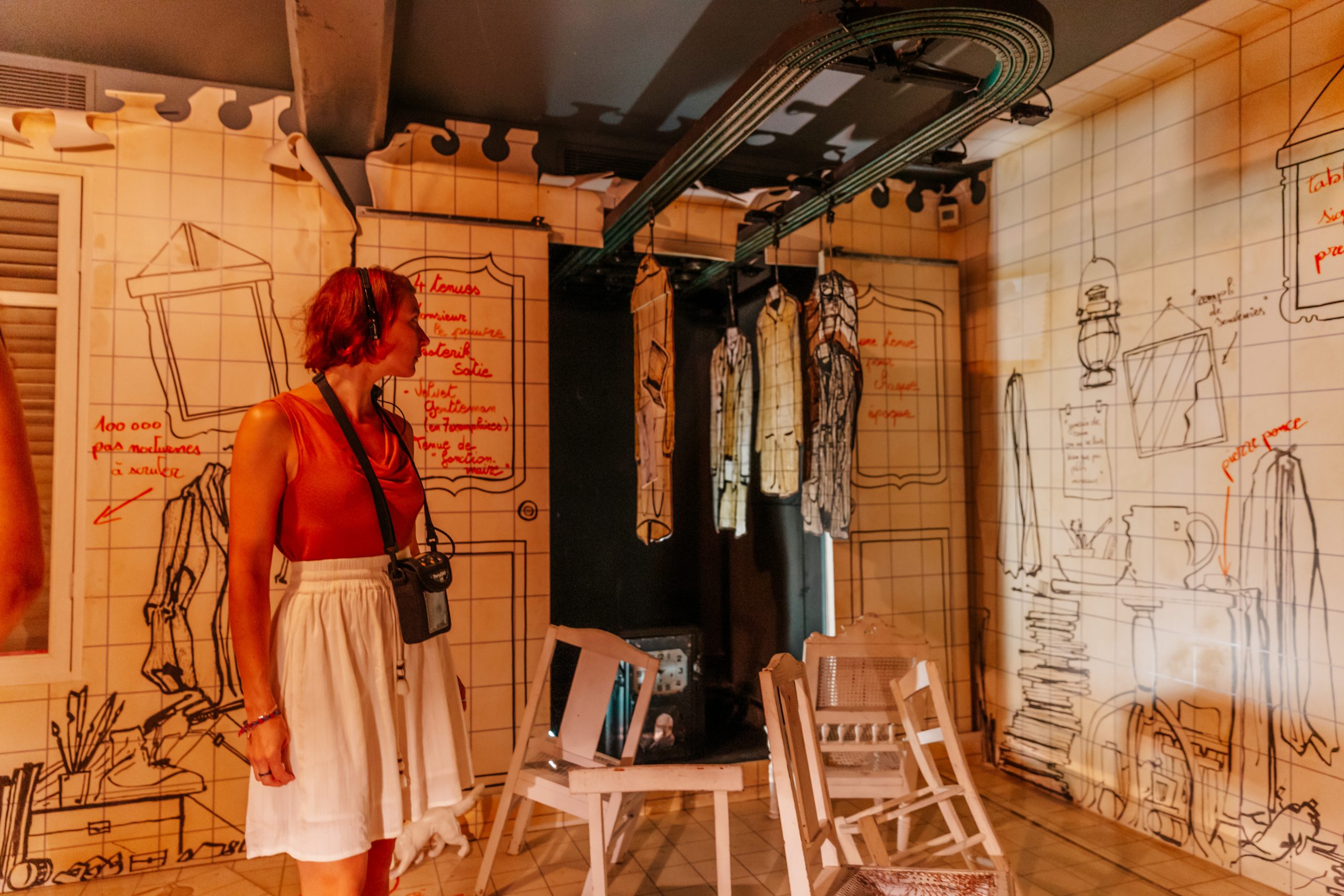
Maison Satie in Honfleur © lemassonbanninglover
Entry tickets from: €7 for adults. Children and card-carrying artists enter free.
Ohlala! It looks like you’re not a Member yet
Join to view this content!
(If you are a Member, log in or reset your password below or contact us so we can help)
- Log in
- Forgot password
Share to: Facebook Twitter LinkedIn Email
More in classical music, famous French person, France Today Membership, French history, French musician, music
Related Posts


By Chris Allsop
Leave a reply
Your email address will not be published. Required fields are marked *
REPLY