
The Men of Gustave Caillebotte: A Must-See Exhibition at LA’s Getty Museum
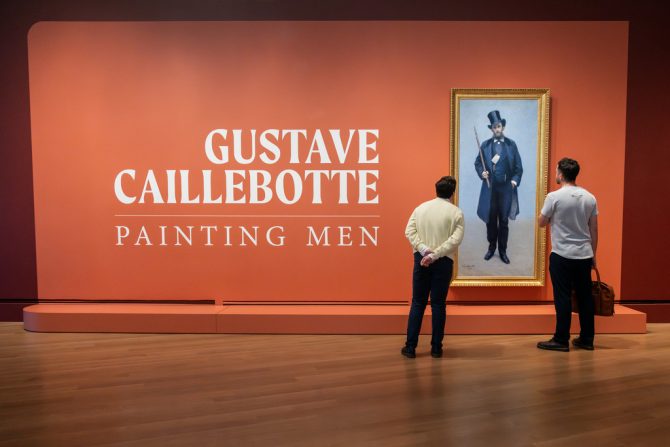
The Getty Museum in Los Angeles presents a striking new exhibition dedicated to Gustave Caillebotte, showcasing his masterful depictions of men in moments of work, leisure, and everyday life in the 19th century.
Gustave Caillebotte is considered by art historians to be an innovator. His debut paintings were part of the second Impressionist exhibition starting in 1876 because one of his most famous paintings, The Floor Scrapers, was rejected by the Salon of 1875 as critics considered it “vulgar.” He painted in both realism and Impressionist styles with many of his subjects being male and used photography-style composition using angles and focus on both foreground and background.
The male emphasis is the subject of the exhibit Gustave Caillebotte: Painting Men now showing at the J. Paul Getty Museum in Los Angeles, fresh from the exhibition at the Musée d’Orsay in Paris. This curated selection of works includes painted images of friends, family and acquaintances of Caillebotte’s and most of them are male.
“We wanted a thematic angle and there hadn’t yet been a show that had this kind of specific gendered angle,” said Scott Allan, Curator of Paintings at the Getty Museum and one of the organizers of the exhibit. “It was a very salient kind of obvious fact about his work and we thought this was a good way to have a thematic focus but … also tell the basic story of his life and career through paintings that might not be that familiar.”
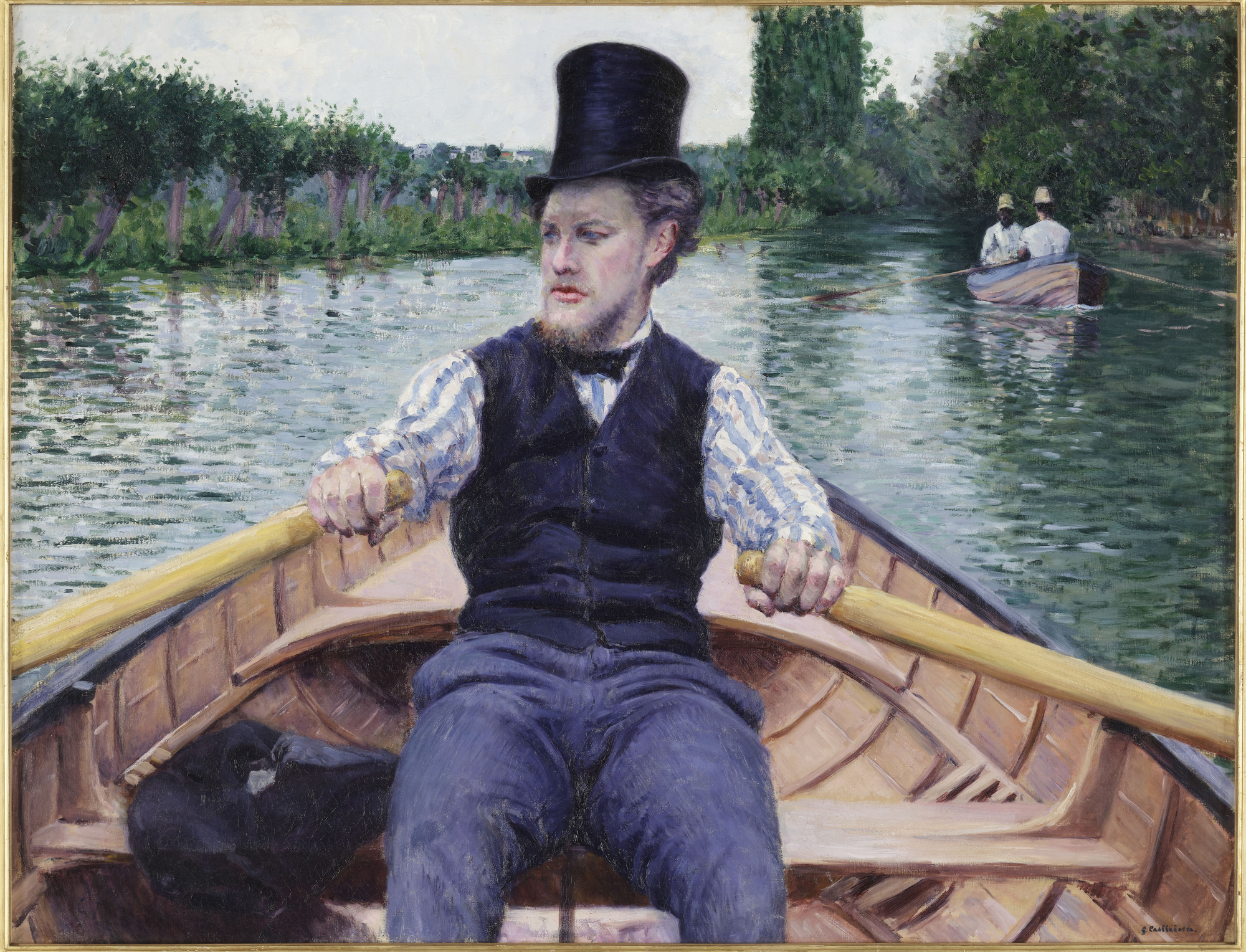
La Partie de Bateau, G. Caillebotte, 1878
The Caillebotte exhibit was organized by three professional friends. Allan at the Getty; Gloria Groom, Chair and Winton Green Curator of Painting and Sculpture of Europe, and Executive Director of Initiatives in France for the Art institute of Chicago; and Paul Perrin, Director of Collections and Conservation at the Musée d’Orsay. Caillebotte paintings are owned by each of these museums.
According to Allan, the Caillebotte acquisitions were the origin point for this exhibit project. The Getty acquired Young Man at his Window at auction in 2021. The Musée d’Orsay acquired Oarsman in a Top Hat in 2022. Perrin and Allan then developed the “painting men” theme and started discussing with Groom to include Paris Street, Rainy Day (acquired by the Art Institute of Chicago in 1964) in the exhibit. She agreed, only if the Chicago Museum could be a part of the exhibition group.
“Earlier Caillebotte shows didn’t address the issue of gender and this very clear predilection that Caillebotte has for male subjects,” said Allan. “I think in the context of art criticism and academics in the 90s, this was a bit of an elephant in the room.”
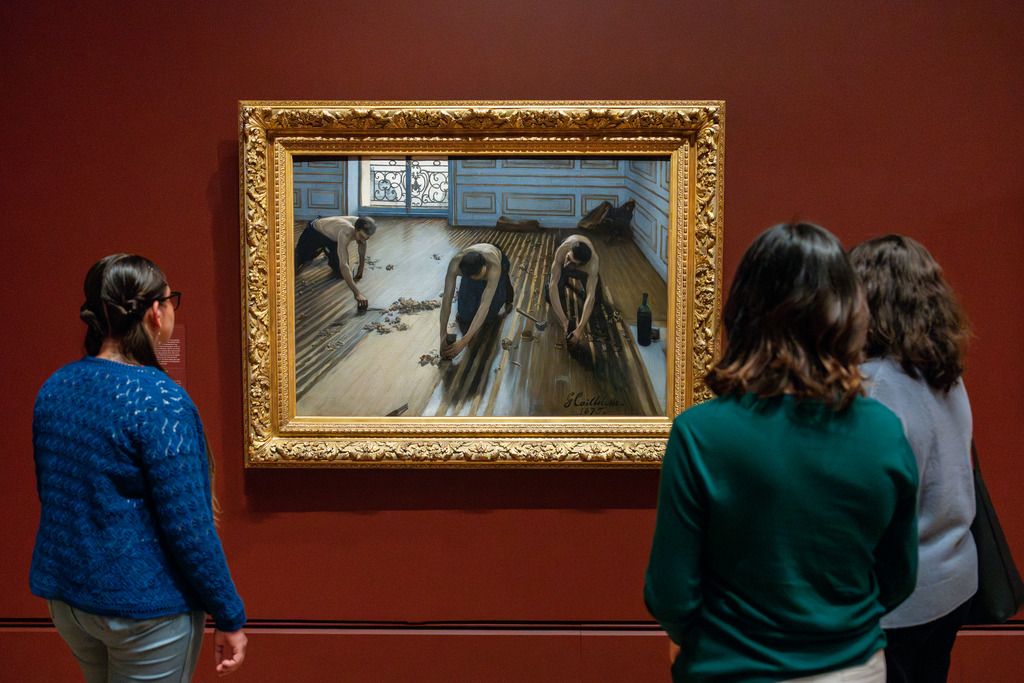
The trio then worked to gather a key selection of Caillebotte’s works that feature men and/or his male work and play environment. Much of Caillebotte’s art is privately owned, so the owners needed to be contacted, often through dealers, and persuaded to be a part of the exhibit. They needed to be convinced about the safety of and security for the artwork that would travel to Paris, Los Angeles and Chicago and be publicly displayed. Museums also needed to be convinced to allow their art to join the exhibition.
It was fast work taking around two years to develop the exhibition and all the written materials in support of the show. The result is an exhibit of Caillebotte’s compelling and famous paintings that reflect his artistic originality while telling stories in his personal, social, biographical and historical context. Often with a sense of humour.
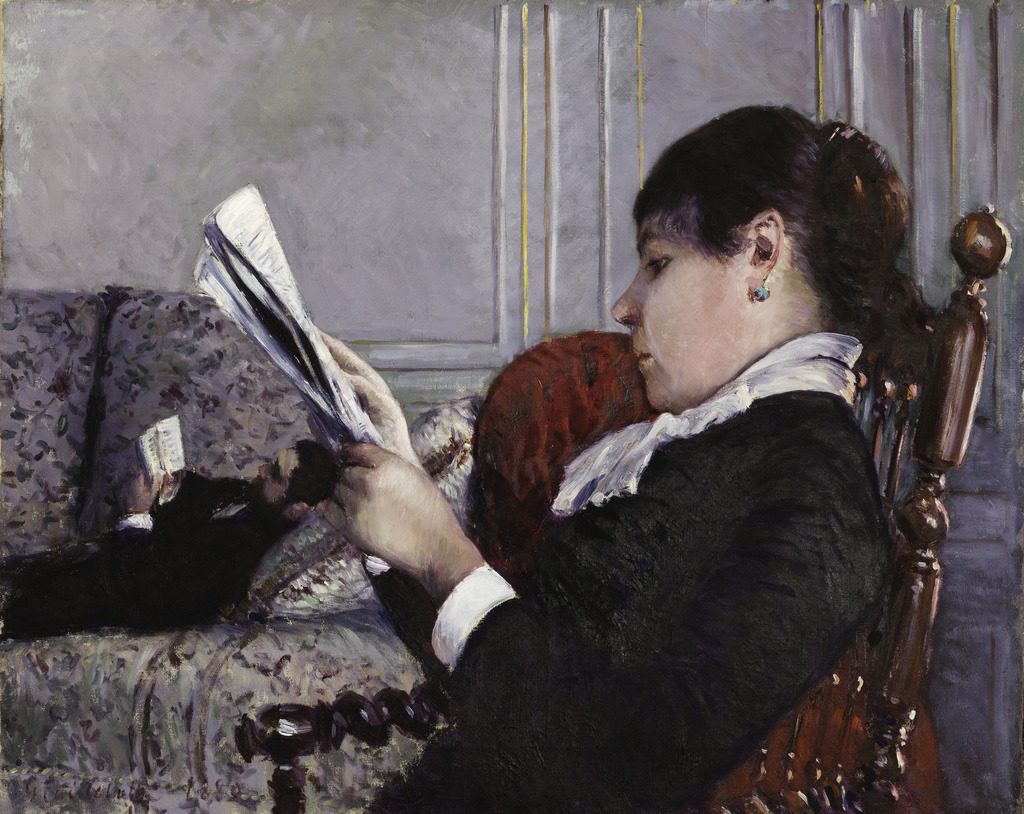
Interior, Woman Reading, G. Caillebotte, 1880 – reading a newspaper was seen predominantly as a man’s activity.
Caillebotte was independently wealthy and followed many pursuits. He was in the French army during the Prussian War, lived in an elegant Paris apartment with his family of two brothers, was passionate about boating and water sports and spent time with male friends, as was typical for the era. Few women were involved in his day-to-day life. He painted what he saw and what he experienced. In fact, according to the Musée d’Orsay, almost 70% of his work features men while other Impressionists largely embodied female figures and social gatherings of women and men. This focus on his life was part of Caillebotte’s innovation as an artist, according to Allan.
“His paintings…reflect his social world to a large extent and what was familiar to him,” said Allan. “The world in which he lived was a very homosocial world, to borrow an academic term. He had a family of brothers, he socialized in all boys’ schools, he was a wealthy bachelor and most of his friends were the same. He was involved in various activities besides painting like sailing and yachting …and these were all male clubs. His life was very skewed towards men and none of that was unusual for the time.”
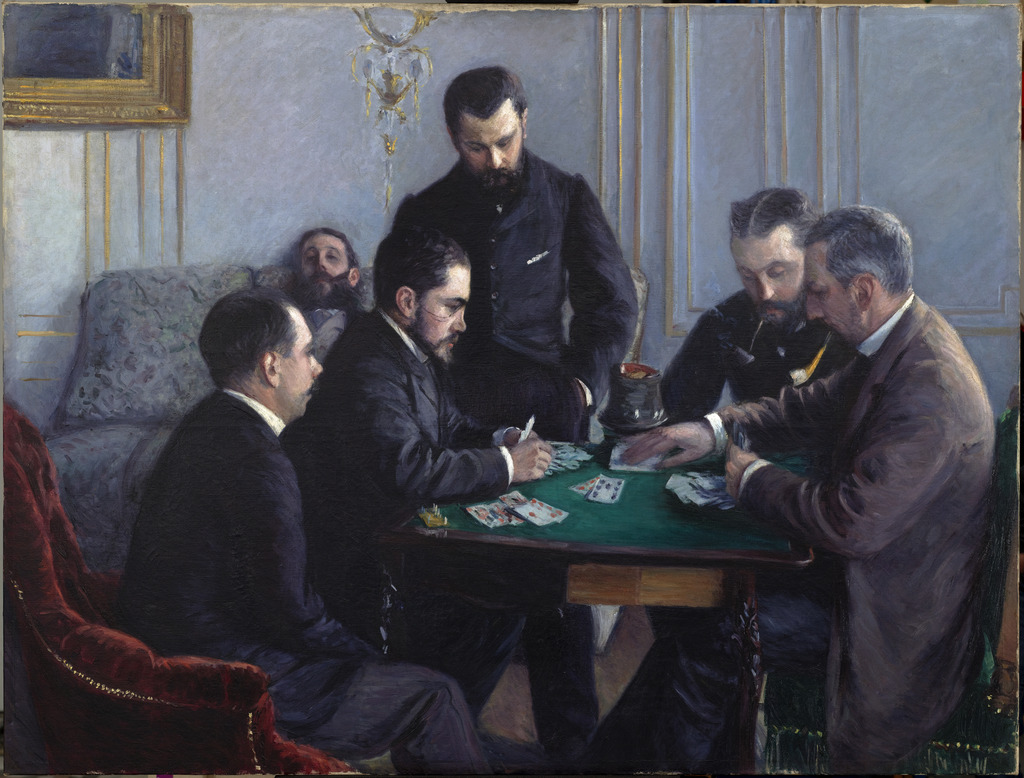
The Bezique Game, G. Caillebotte, 1880
The result is an exhibit of some of Caillebotte’s best paintings from around the world from both museums and private owners. It includes the three paintings owned by the curating museums along with The Floor Scrapers; gentlemen playing games including The Bezique Game which is a group portrait of men playing cards; several paintings of soldier scenes, including one soldier with pants down taking a poop (look close or you’ll miss it); yachtsmen in boats, with a few women as companions; and a rare male nude – Man at His Bath – where Caillebotte intentionally masculinized the genre with a naked man towelling off after a bath but done with grace and class; and Interior, Woman Reading which features a woman reading a newspaper which was viewed as a male activity at the time.
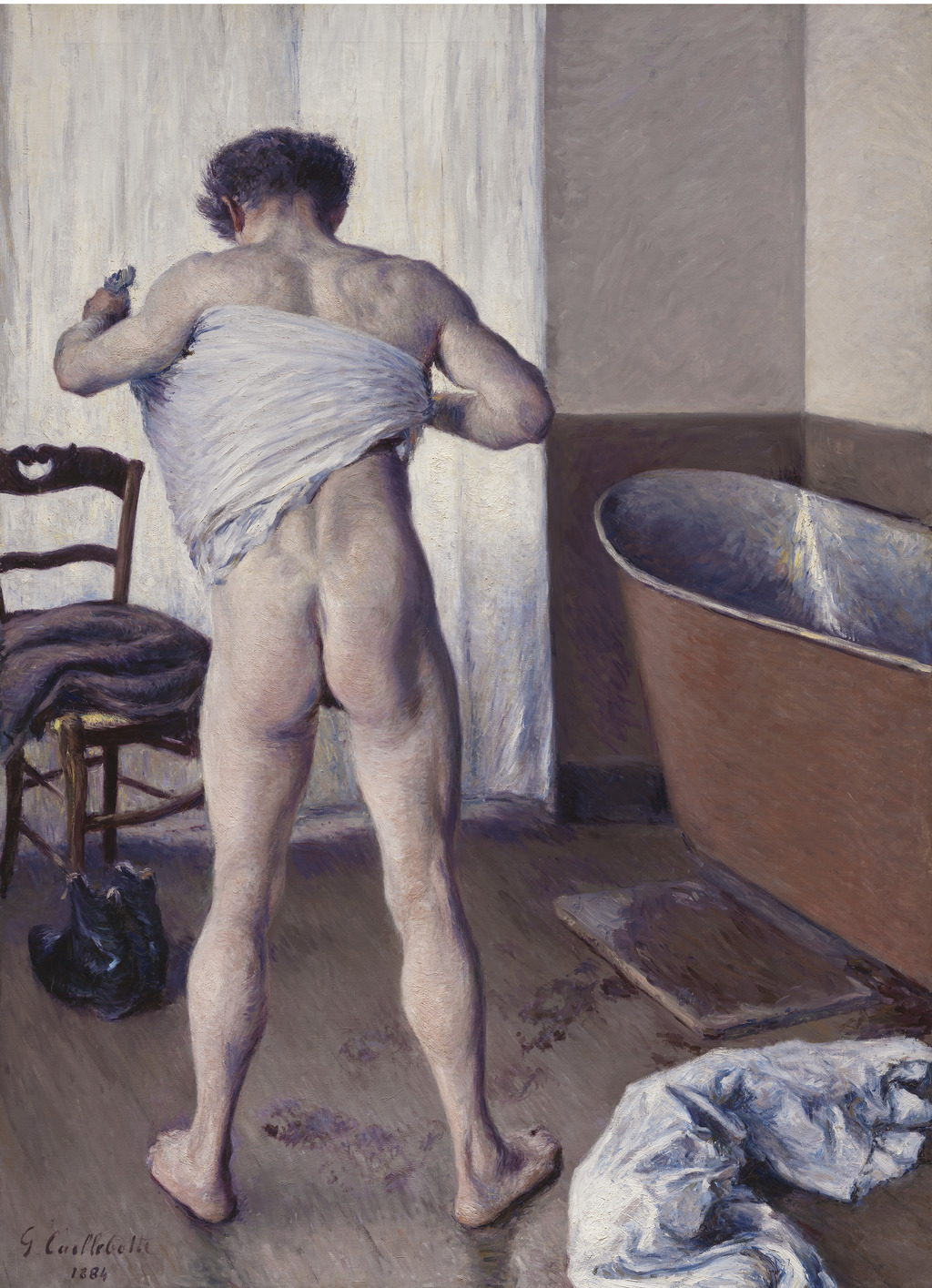
Man at His Bath, G. Caillebott, 1884
Allan has been inside Caillebotte’s Paris apartment that was featured in Young Man at His Window. He and Perrin were exploring Caillebotte’s neighbourhood in Paris when he saw a woman smoking outside the door of the apartment building where the Caillebotte family lived. He politely asked if she would let him inside the courtyard so he could visit the law firm that is now occupying the Caillebotte apartment on the third floor. The room with the window is now a conference room and Allan took several pictures of the view standing in front of the window.
“I won’t lie. It was a huge treat,” said Allan. “We got to stand at the window, check out the view and take selfies like in the pose of the guy in the painting. You can appreciate how well observed the painting is but also the little changes that the artist made. You can’t recreate the painting perfectly in a photograph, but the view is very, very similar.”
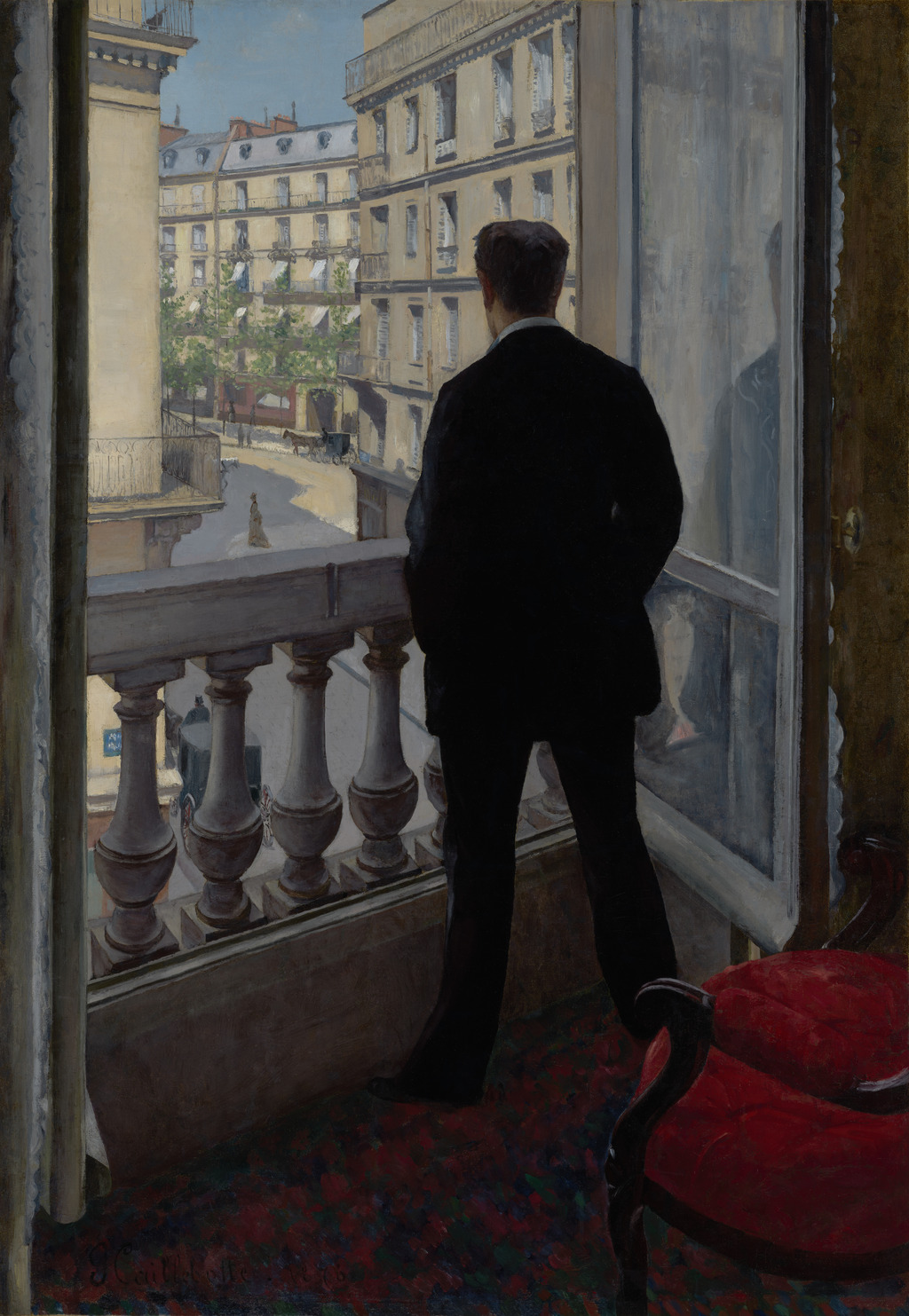
Young Man at his Window, G. Caillebotte, 1876
Gustave Caillebotte: Painting Men features about 100 paintings and drawings of the French Impressionist painter who lived from 1848 – 1894. It is the largest display of Caillebotte’s work on the West Coast in 30 years. It is at the Getty Center from February 25 – May 25, 2025 and will them move to the Art Institute of Chicago from June 29 to October 5, 2025. Not to be missed.
Share to: Facebook Twitter LinkedIn Email
More in art, exhibition, France in America, French artist, Impressionism
Related Posts




Leave a reply
Your email address will not be published. Required fields are marked *