
Step Inside Paris’ New Cheese Museum


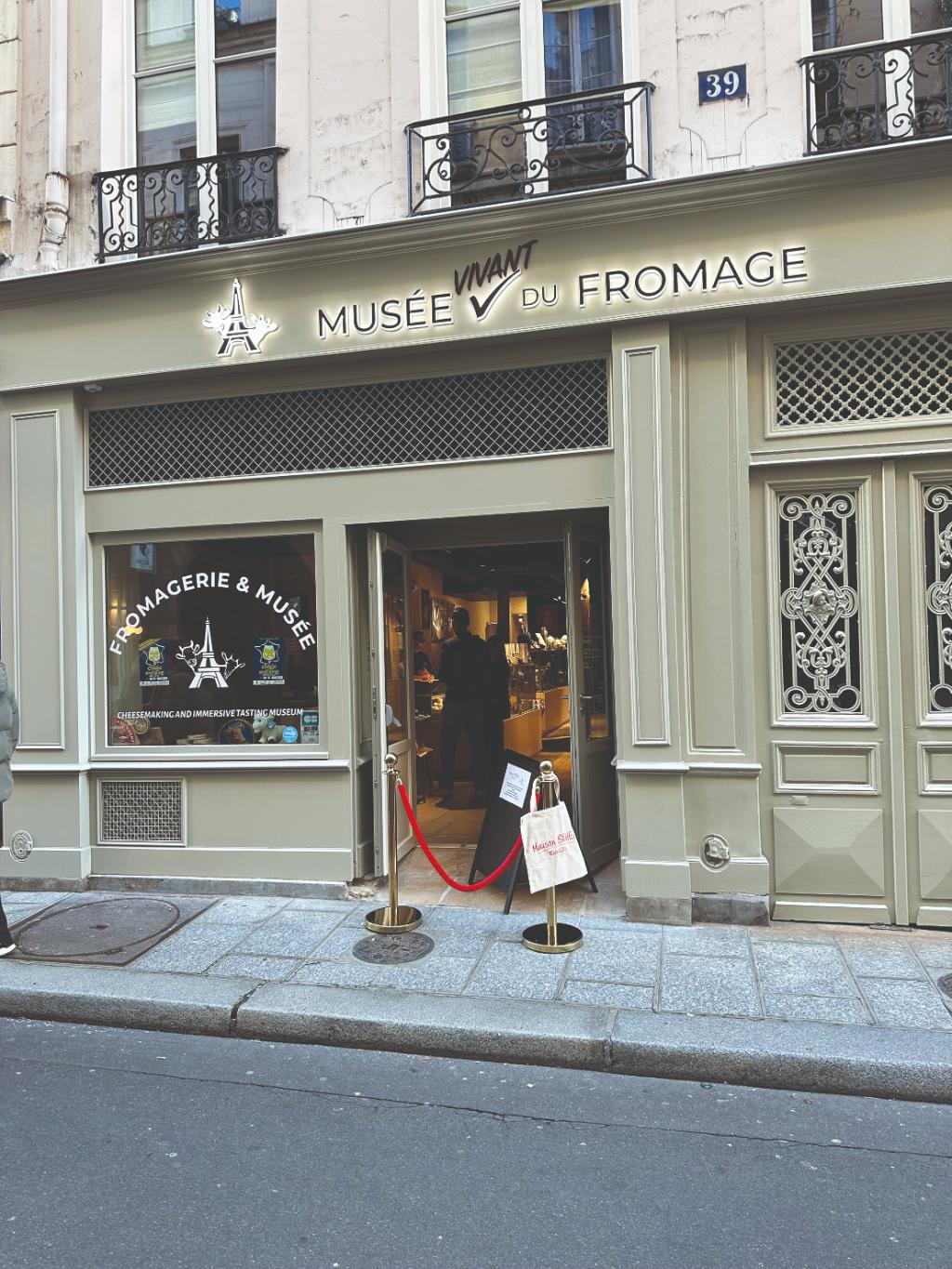
The Musée Vivant du Fromage, which opened last June just a short walk from Nôtre-Dame in Paris’s 4th arrondissement, offers an A-Z primer in the history, making and consumption of French cheese.
Charles de Gaulle’s famous quip, “How can anyone govern a country with 246 varieties of cheese?” fell well short of the mark, according to Guillaume Gaubert, an expert cheesemonger and the director of Paris’s new Musée Vivant du Fromage. “In fact, it’s more like 2,000,” he says.
Cheese, it seems, is the perfect metaphor for France itself, the astonishing variety reflecting not only the richness of its culture and gastronomy, but the remarkable diversity in its landscape: “You explain cheese, you explain France”, says Gaubert.
Walking into a Paris fromagerie can be a revelatory experience, and an intimidating one too, the sheer variety of shapes and sizes, colours, smells and flavours being both scintillating and inscrutable. With so many cheeses to choose from it would take decades to know them all. It’s the Musée Vivant du Fromage’s mission to help that process along by demystifying French cheese.
Through a guided visit and tasting, you will gain a solid grasp of the basics in under 90 minutes and come out ready to take on the exciting world of fromage. Gaubert, a member of Paroles de Fromagers – an association which teaches cheesemaking and appreciation to amateurs and professionals – emphasises that it all begins with the terroir, a concept that encompasses everything from climate and soil composition to farming techniques and habitat. As wine lovers know, terroir is fundamental to winemaking and tasting – and it’s no different for cheese. Where a cheese is made determines everything from which milk will be used -goat, sheep or cow – to how the cheese is made, to its unique texture and flavour.
© Paroles de Fromagers
The stuff of history
The history of cheesemaking in France dates back at least 2,000 years and probably longer, according to Gaubert. “Every cheese has a history and every farm has its history too.” Take Cantal, one of the earliest French cheeses, mentioned by Pliny the Elder in the 1st century AD and first made by the Gauls in the mountains of the Auvergne. According to Gaubert, this hard cheese “the poor person’s meat” was pressed into large, dry wheels for a reason: “If you lived in the mountains your cheese had to last all year since there were no roads and people couldn’t come down till the snow thawed.” The less water in the cheese, the longer it would keep (in warmer climates you’ll find softer cheeses with more moisture since they had to be consumed quickly in the absence of preserving cold).
Animals also eat differently in spring and summer, when there’s fresh grass to graze on, than in winter when there’s only hay. You can taste the difference in the cheese. In Mediterranean climates, the cheese will have a tang of salt from the sea air, which enters the soil and plants and ends up in the milk.
Mould is another major player. The tale of the origin of Roquefort, another of France’s oldest and most revered cheeses, is that a shepherd, spying a local beauty passing by, hastily left his cave and his bread and sheep’s cheese lunch. When he returned to the cave weeks later, his sandwich, now blue with mould, had a heavenly flavour. A 19th-century marketing story to be sure; Roquefort’s real, and more interesting, story dates back to 1411, when Charles VI granted the people of Roquefort-sur-Soulzon, in the southern French region of Aveyron, proprietary rights to ripen their cheese (which they had been making for centuries) in the local limestone caves. Roquefort is made solely from the creamy milk of local Lacaune sheep and owes its distinctive blue-green veins to Penicillium roqueforti, a mould cultured from bacteria found uniquely in these caves.
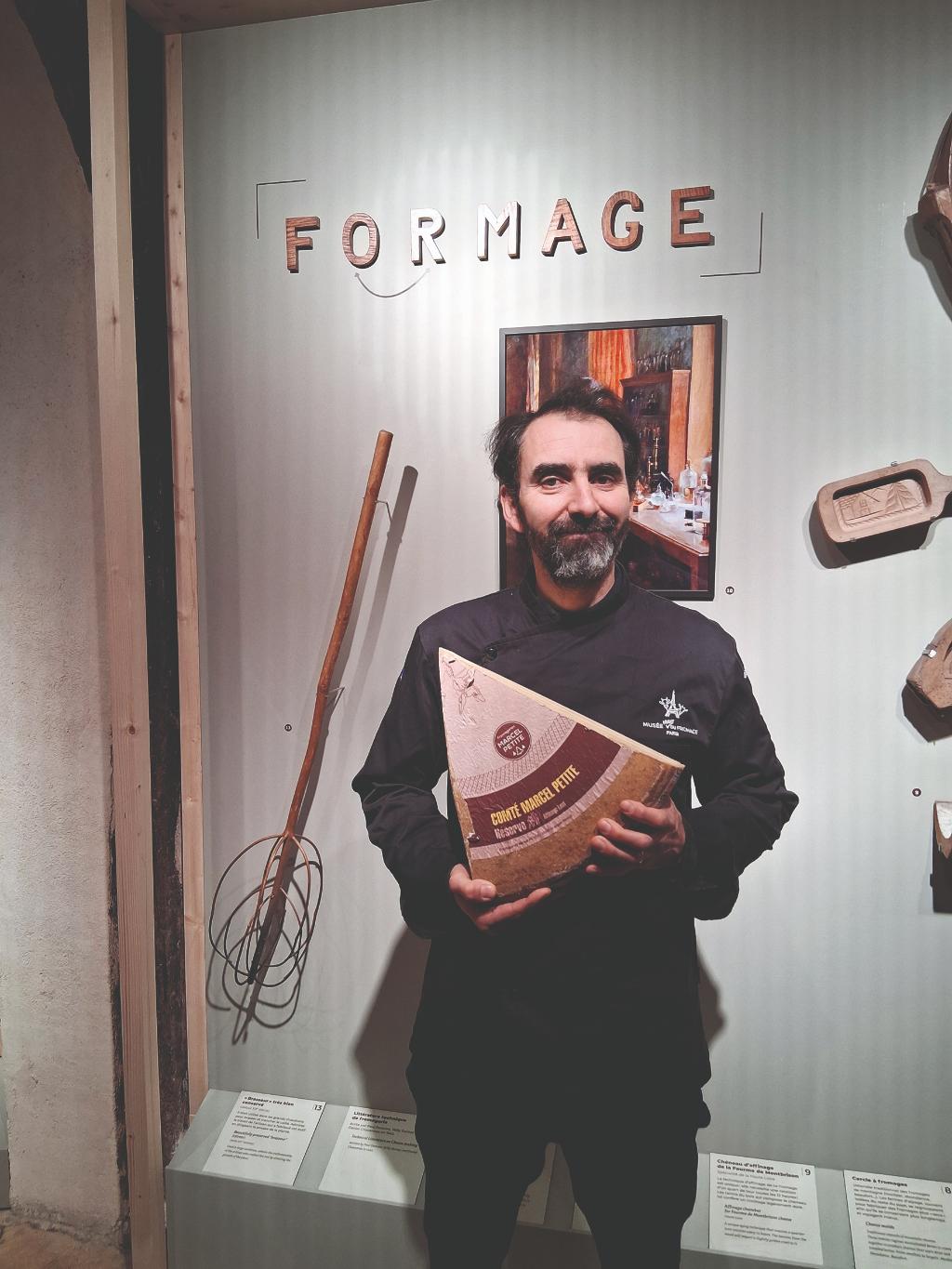
Guillaume Gilbert © Paroles de Fromagers
Vital heritage
Today Roquefort is made by only seven cheesemakers (historically, most of them have been women, as you’ll see in the museum videos), who produce between 180 and 10,000 tonnes of cheese per year. Like the other 46 AOC French cheeses, it is made under strict guidelines that govern everything from the pastures the sheep can graze to the milk that can be used (delivered within 20 days of lambing and used whole, raw and unfiltered) to how long the cheese must mature in the caves (a minimum of three months).
When I visited, the museum had just hosted a party to celebrate the elevation of Mothais sur Feuille, a deliciously creamy goat’s milk cheese dried and matured on a chestnut leaf, to AOC status. The French AOC designation both acknowledges a particular regional know-how and protects a tradition that can date back 1,000 years, as is the case with Roquefort, and 200 or more for most other French cheeses. For a relatively tiny production – 16 farm producers, four artisans and two dairies producing a total of 292 tonnes per year – Mothais is representative of the kinds of cheeses Gaubert champions, because “this is an expertise that could disappear”. The issue, Gaubert explains, is that as fewer young people are interested in taking over small family farms and cheesemaking businesses, these smaller enterprises are more and more at risk. “No farmer makes cheese to get rich,” he says.
Even in France, many people don’t know the difference between industrial cheeses and their farmed counterparts, and that, in Gaubert’s eyes, is a tragedy. It is also why the good fromageries are so vital. Next to an artisan cheese which has been carefully aged and stored in a fromagerie, an industrial cheese bought at a grocery store will lack flavour and texture. As affineurs, or master agers, it is the fromager‘s job to offer you a cheese that is either perfectly ripe when you buy it or that will be at its peak when you plan to eat it. This mastery is vital for raw-milk cheeses (as all the great French cheeses are) to ensure that these living products are handled safely and correctly – something you’ll learn more about at the museum.
© Jennifer Ladonne
Become and expert
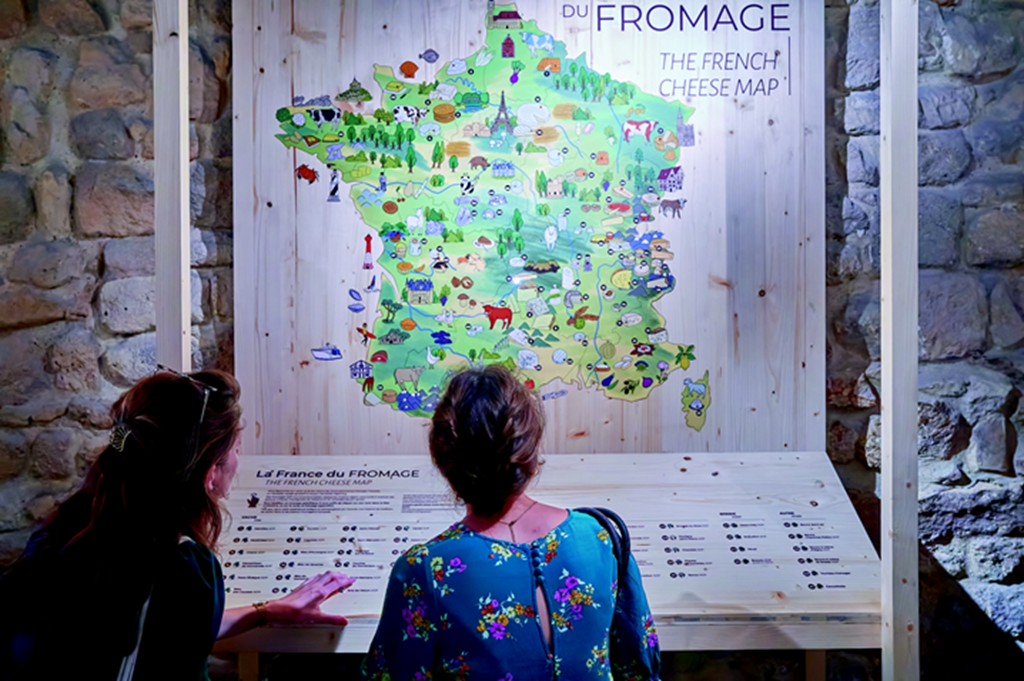
It’s the museum’s mission to help people understand the basics of cheese and why it is so compelling and delicious. Visitors begin their tour in a real Parisian fromagerie at the museum’s entrance and from there begin a journey that touches on every aspect of cheesemaking: its origins and history, its making and ageing, the milks used, the lacto-fermentation process and more. Videos and interactive features like The Cheese Route, The Fabrication of Fromage and Which Cheese are You? make the tour entertaining and informative for kids and adults alike. And, of course, everyone loves the cheese tasting at the end.
At the time of writing, the museum was in the process of creating an audio-guide in several languages. No ticket is needed to visit the museum cheese shop, where you’ll find dozens of the artisan cheeses to enjoy. There’s also a gift shop carrying cheese and wine-related items. The museum hosts regular seminars and demonstrations related to cheese, including classes in cheesemaking and pairing cheese and wine that you can sign up for online.
PARIS CHEESE MUSEUM ESSENTIALS
GETTING THERE
The Musée Vivant du Fromage is at 39 rue Saint-Louis en i’lle. 75004 Paris (on the Île Saint-Louis).
Entrance: €20 for adults, €10 for kids, including the cheese tasting
Line 1: Saint Paul
Line 7: Pont Marie-Cité des Arts
Line 4: Cité
MORE INFORMATION
From France Today Magazine
Lead photo credit : © Paroles de Fromagers

REPLY
REPLY