
Beyond the Guidebooks: Provence’s Most Overlooked Destinations
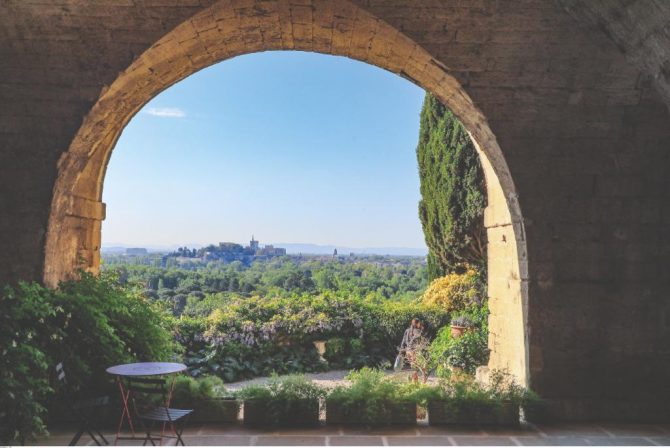
After making the requisite beeline to Gordes, the Abbaye de Senanque and the Roman vestiges at Orange and Vaison-la-Romaine, take some time to discover Provence’s lesser-known towns and villages.
Picturesque perched villages crowned by romantic ruins, endless landscapes of vineyards and lavender fields, shaded village squares harbouring laid-back cafés… the Vaucluse embodies a dream of Provence that attracts travellers from far and wide. Despite its renown, there are still places that defy the endless crowds, especially in the off-season. Here are five places off the tourist radar that offer all the delights of Provence, plus history, off-the-beaten-track lodging and dining, and charm galore.
Villeneuve-lès-Avignon
When the 14th-century popes of Avignon and their cardinals needed a break, over the Saint-Bénézet bridge they went to this tranquil village, founded a century earlier by King Philippe le Bel as a strategic stronghold. No fewer than 15 palaces and their splendid gardens sprang up here, along with the Val de Bénédiction, France’s largest and richest monastery, all sheltered by vertiginous cliffs and the king’s fortifications and towers.
Nowadays, this elegant village a stone’s throw from Avignon is still a privileged enclave, its elegant squares lined with chic cafés, boutiques, restaurants and the many vestiges of its storied history. Entering the front gates of the beautifully preserved Val de Bénédiction monastery is a walk back in time, its rose gardens, chapel and monks’ rooms very much as they were in its 15th-century heyday.
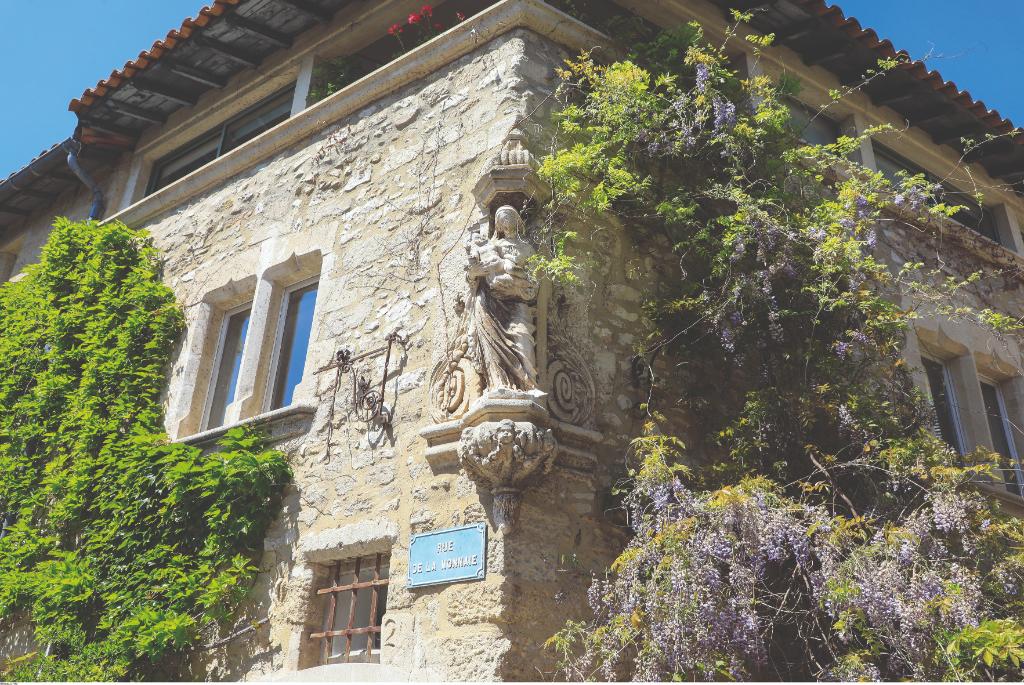
Villeneuve-lès-Avignon © Alain Hocquel
Ditto for the Philippe le Bel tower and cool gardens perched just above the village. The village’s lodgings carry the echoes of its illustrious past and provide a more placid alternative to bustling Avignon, especially during the crowded theatre festival. A scenic ten-minute walk from the town centre, the Maison Orsini guesthouse was once a cardinal’s palace. Perched high above the village a stone’s throw from Philippe le Bel Tower, its four guest rooms and two apartments offer dramatic views of Avignon from perched terraces the perfect spot to watch the sky behind the Palais des Papes and the Mont Ventoux turn rosy pink or fiery orange at dusk and dawn. Tucked away in a corner of the village, five-star Le Prieuré-Baumanière was the 14th-century summer home of Cardinal John XXII, then a priory, before its transformation into a luxury spa hotel and gastronomic restaurant. Villeneuve-lès-Avignon’s placement near Avignon’s TGV station and major roads provides easy access to Avignon, Carpentras and the hilltop villages of the Vaucluse and Luberon.
Carpentras
What this historic town in the shadow of the Mont Ventoux lacks in the way of hilltop charm it more than makes up for in historical sights, a stunning new museum, vibrant old town and one of the biggest and most colourful markets in Provence.
Capital of the ancient Comtat Venaissin (roughly modern-day Vaucluse), Carpentras has flourished as a vibrant market town since its founding by the Phoenicians in 600 BC, long before the arrival of the Romans. Pope Clement V made it his papal headquarters before moving to Avignon in 1309 (Carpentras and this small enclave of Provence did not become part of France until 1791). For 500 years the French popes provided safe haven for the region’s Jewish population, known as the ‘Popes Jews”, with communities in Carpentras, Cavaillon and Isle-sur-la-Sorgue. Carpentras’ 14th-century synagogue-the oldest in continuous operation in France and among the oldest in Europe is a must-see while here. The modest 650-year-old building, with sections dating to the 6th century, contains a worship room in the 18th-century Baroque style, two ritual baths, a bakery and a quarry.
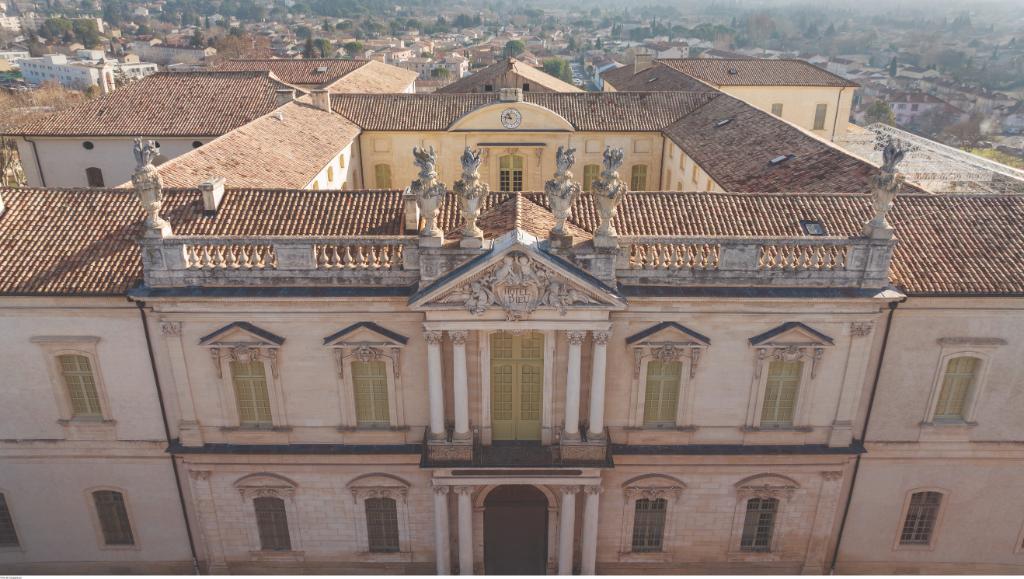
Carpentras
Learn all about the region’s fascinating history and more at the splendid new L’Inguimbertine museum and library, set in Carpentras recently restored 18th-century hospital. The beautiful building hosts a vast collection of artefacts, artworks and an exceptional 14th-to 18th-century library as well as France’s oldest intact apothecary. The museum tells the story of the French popes’ reign and the protected Jews in Provence (the synagogue of Cavaillon, 27 km (16 miles) away via the D31, is also a museum and another must-see). On a sweet note, Carpentras is also the birthplace of the Berlingot de Carpentras, a pyramid-shaped candy whose recipe dates back to Clement V, which you can watch being made at the Confiserie du Mont Ventoux.
Along with its year-round Friday morning market, Carpentras winter truffle market is held every year from mid-November to mid-March. In late spring, look for the bright scarlet fraises de Carpentras, a sweet, tender strawberry which is celebrated during Carpentras’ Strawberry Festival in mid-April, complete with a strawberry ball in the evening.
Pernes-les-Fontaines
Called the ‘pearl of the Comtat’, this beautifully preserved medieval village, which lies between Carpentras and Îsle-sur-la-Sorgue, was named for its dozens of spring-fed fountains nestled among charming courtyards and secret squares. The village is notable for its many historic mansions and intact medieval ramparts, harbouring three crenelated towers, including the stately Notre-Dame Gate, built in 1548, flanked by the Nesque River as a natural moat. The Ferrande Tower houses a series of exceptional 13th-century frescoes representing Charles of Anjou’s conquest of Sicily. For spectacular views, head to the 12th-century Clock Tower, the vestiges of a castle that once belonged to the Counts of Toulouse, where the panoramas include gorgeous vistas of Mont Ventoux’s famous white-limestone peak. Pass through a gate and over a bridge to the entrance of Notre-Dame-des-Grâces Chapel, built in 1510, the seat of the Masonic Order for centuries. At the 11th-century Romanesque Notre-Dame-de-Nazareth church, a 16th-century organ still sounds under the thousand-year-old vaulting.
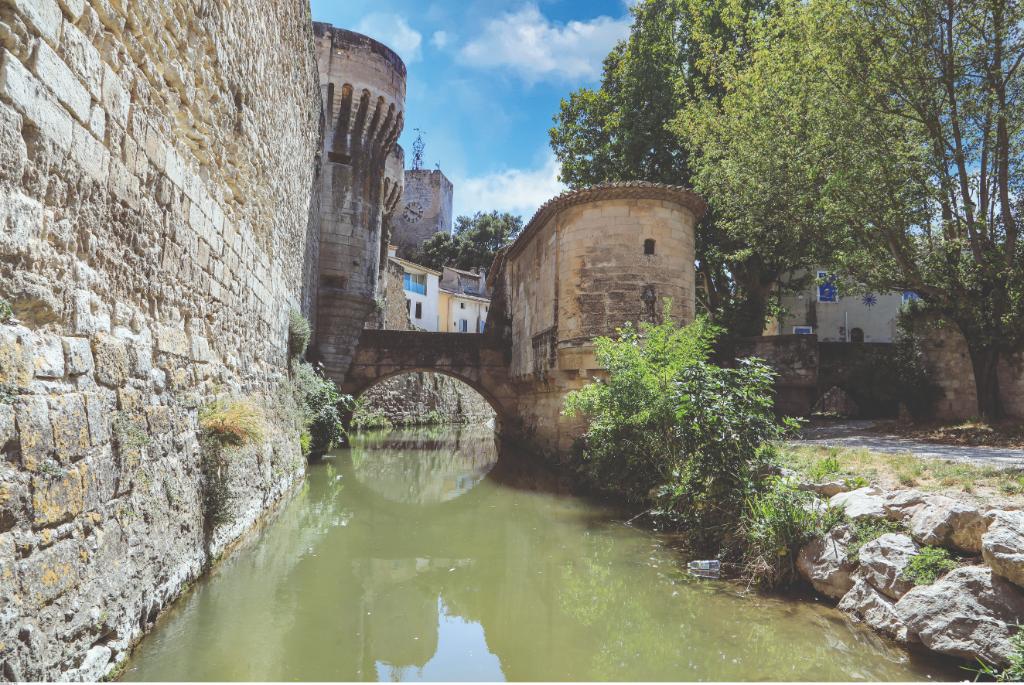
Pernes © Alain-Hocquel
Pernes’ historic heritage is best discovered on foot. Of the 36 fountains here (four of which are in private squares), look out for two of its lovelier examples: the Gigot fountain, at the foot of the Ferrande Tower, and the Cormoran fountain. Pernes-les-Fontaines’ covered market, built between 1622 and 1627, hosts temporary exhibitions and a truffle market in January. A year-round market is held at Place Gabriel Moutte and the Quai de Verdun along the Nesque river, and the evening market is held on Wednesdays from early April to mid-October on the Place Frédéric Mistral. This region is known for its orchards, so be sure to taste the local apples, cherries, pears and almonds, as well as the famous Carpentras strawberries and melons and asparagus in the spring. For inveterate hikers, the trails to Venasque (another exceptional town for its baptistry, one of the oldest in France, and Notre-Dame-de-Venasque church) and Saint-Didier (with a charming café and nougat manufactory) are two of the prettiest in the region.
Le Beaucet
Like Pernes-les-Fontaines five miles away, Le Beaucet’s attractions are best enjoyed on foot, especially in the pedestrianised village centre where you can walk the narrow streets unimpeded by automobile noise and traffic. Perched against a rocky hillside and topped by a 12th-century château, the village is known more for its craggy charm and lovely views than any standout structure, though a renovation in 2014 partly restored the château. Together, the ruined ramparts, vestiges of drawbridge and moat, 14th-century castle gates and graceful, Romanesque Saint-Étienne Chapel add up to a scene as pretty as a postcard.
A wander up the narrow village streets takes you past Place Castel Loup with its covered lavoir, where you can easily imagine medieval villagers doing their washing and exchanging gossip, and some charming village houses, now private homes, and the ateliers of village artisans whose pottery, weaving and traditional Provençal santon figures make perfect mementos of the region.
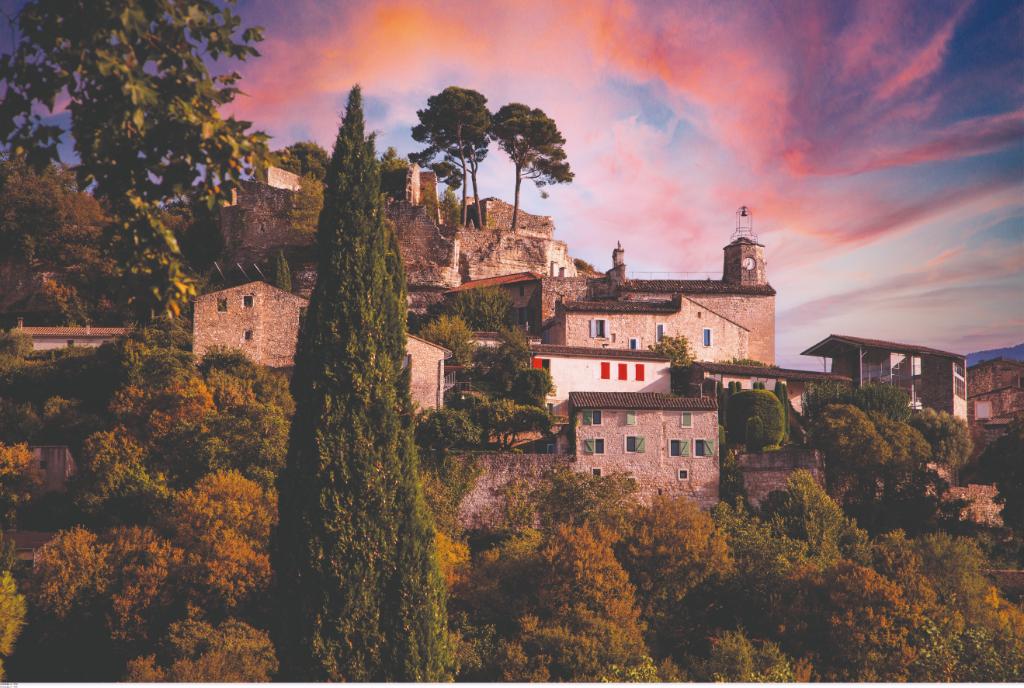
Beaucet © A. Hocquel
If you have the time, a pleasant half-hour stroll in the countryside outside the village takes you to the Hermitage of Saint Gens, dedicated to the 12th-century hermit, and its miraculous spring, a pilgrimage place said to have healing properties. The relics of the saint-said to have brought water to this parched land in the 12th century when the water sprang from his finger-are still kept in a gilded wooden shrine in the chapel.
Comfortable shoes are recommended for the lovely mile-long walk to La Roque-sur-Pernes, another charming village, and one mile further to Venasque, where there are several cafés, sights and exceptional views.
Saint-Saturnin-lès-Apt
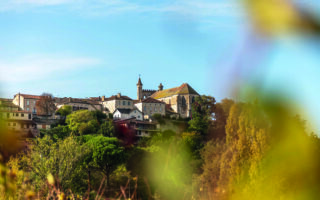
When the sun illuminates the village’s creamy pale stone, it shimmers like a mirage rising up from the surrounding forests, topped by the jagged ruins of an ancient castle. This tiny medieval village was made for walking and its ancient windmill, 11th-century Romanesque chapel and castle ruins are perfect destinations for a wander up the sloping streets that summit onto sweeping views over the Luberon. Perched high at the side of this rocky outcrop, a small hilltop reservoir, unique in the Vaucluse, gathers rainwater to supplement the village water supply. On your way up, notice the ornately sculpted lintels, doorways and passageways lining the Rue de la République, spanning six centuries of architecture.
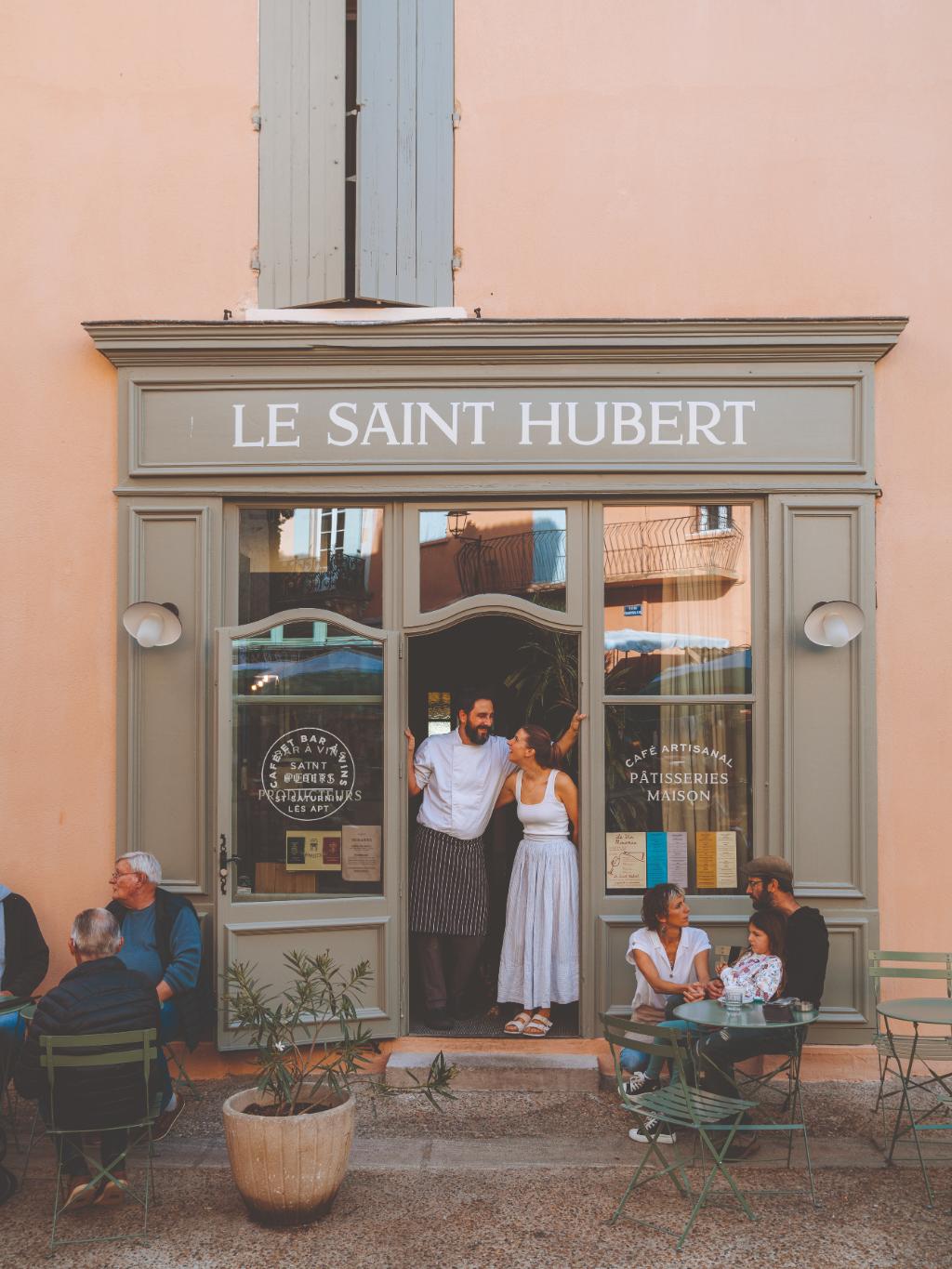
St Saturnin © Le St. Hubert
Plan to arrive on Tuesday, when the weekly farmers’ market stretches from the central square over several streets and you can stock up on the local seasonal specialities: black truffles in winter, fat red cherries in late spring, and lavender and wine all year round. For a taste of the regional cuisine at its very best, head to the Saint-Hubert, a beautifully restored 18th-century inn with six contemporary guest rooms, a café and wine bar and a sought-after gastronomic restaurant. Food lovers flock here from miles around for its original, all-organic cuisine, laid-back vibe and jaw-dropping views of the vineyards and hills beyond from the dining room and terrace.
Lead photo credit : View on the Palais des Papes from the gardens of the Abbaye Saint-André © Abbaye Saint-André
Share to: Facebook Twitter LinkedIn Email
More in Provence, secrets, South of France, villages
Related Posts

Leave a reply
Your email address will not be published. Required fields are marked *
REPLY