
City Break in France: Vernon, Eure
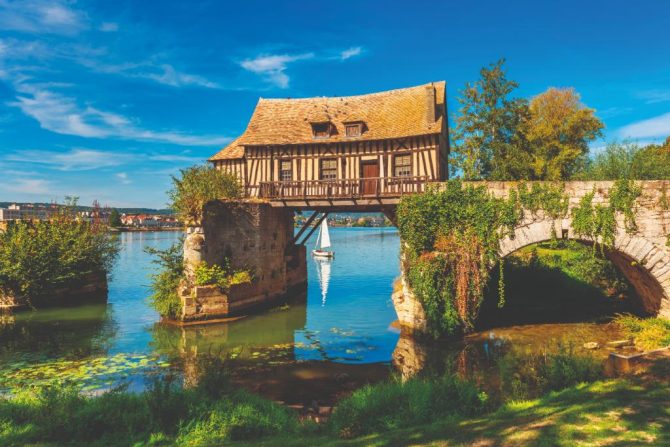
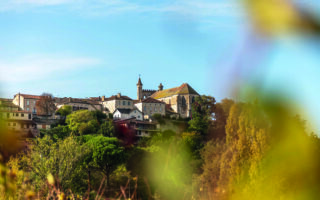
The charming medieval town of Vernon, in Normandy, is full of its pretty streets, an historic mill and enchanting riverside vistas.
An hour’s train ride from Paris takes you to Vernon-Giverny station, but instead of making a beeline for Claude Monet’s famous gardens, pause first for a delightful detour in this historic medieval town perched along the river.
Every year, thousands make the journey via regional train from Paris’s Saint-Lazare station to Vernon-Giverny to visit Monet’s home and gardens. Curious travellers ready to explore a wider scope of the region should budget extra time for a stroll along the charming medieval streets of Vernon, whose iconic 14th-century mill – painted several times by Monet – is reflected in the Seine like a picture postcard. Better yet, take a day to experience all Vernon has to offer. Aside from admiring its medieval architecture and exceptional Gothic church you can browse antiques and vintage shops, take a picturesque stroll to the Château de Bizy (called ‘Little Versailles’) and enjoy a relaxed gourmet meal on the banks of the Seine while watching the river flow by. You can even take a delightful hour-long walk or 15-minute bike ride along the river to Giverny instead of taking the bus from the train station.

Vernon’s old © aurelienpapa
Vernon’s roots go as far back as prehistory, and archaeological vestiges attest to the town’s early life as a settlement during Celtic and Gallo-Roman times. Its position on the Seine made it a thriving crossroads along the fluvial trade route and its high, forested cliffs offered a natural vantage point to detect (and defend against) boats travelling between Paris and Rouen. Vernon was a crucial tactical military base during the long medieval rivalry between France and England. In 1196, Philippe Auguste, fighting Richard the Lionheart of England for possession of Normandy, made Vernon a royal town and built the castle, whose keep and a single tower remain along with vestiges of its arched stone ramparts, still visible around town. The beautifully preserved Château des Tourelles, a defensive structure also built by Philippe Auguste, sits on the other side of the Seine across the modern bridge, side by side with the half-timbered Old Mill.
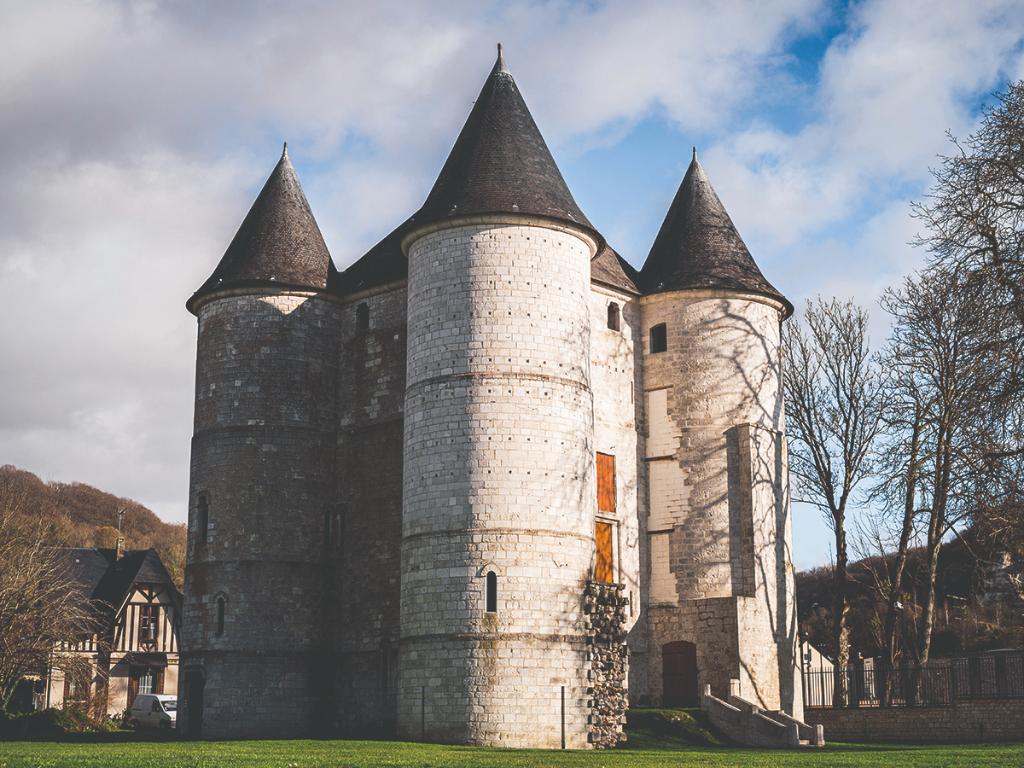
Chateau de Tourelles © Aurélien Papa
Medieval roots
Although a substantial part of Vernon’s old city was destroyed during the Second World War, if you face the Collégiale Notre-Dame de Vernon with the 19th-century town hall behind you, it’s easy to imagine the medieval village as it was in the 1400s. Bordered by the original 14th-to 16th-century half-timbered buildings winding down two narrow streets, the church’s elongated Gothic contours, symmetrical turrets flanking a rose window, and elegant flying buttresses create a uniquely graceful silhouette. Construction of the Collégiale we see today – built on the remains of an early Roman temple and a ninth-century church – began in the 11th century (a collégiale is similar to a cathedral except worship services are performed by non-monastic clergy and there is no resident bishop). The church is a beautiful example of French early Gothic architecture with earlier Romanesque features. Its organ is considered one of the finest in Normandy (it is under renovation until 2027 but open for visits).
A thriving medieval town, Vernon’s wealth came from vineyards, timber from the nearby forests, limestone quarried from the cliffs, and mills powered by the powerful river current. It’s fitting that the picturesque Old Mill, the town’s resident icon, is a last vestige of that bustling industry. Perched on the remains of a 12th-century bridge, part of the half-timbered structure’s allure is how it seems to hover over the river, on sunny days its picturesque reflection merging with the snowy silhouette of the Château des Tourelles behind it.
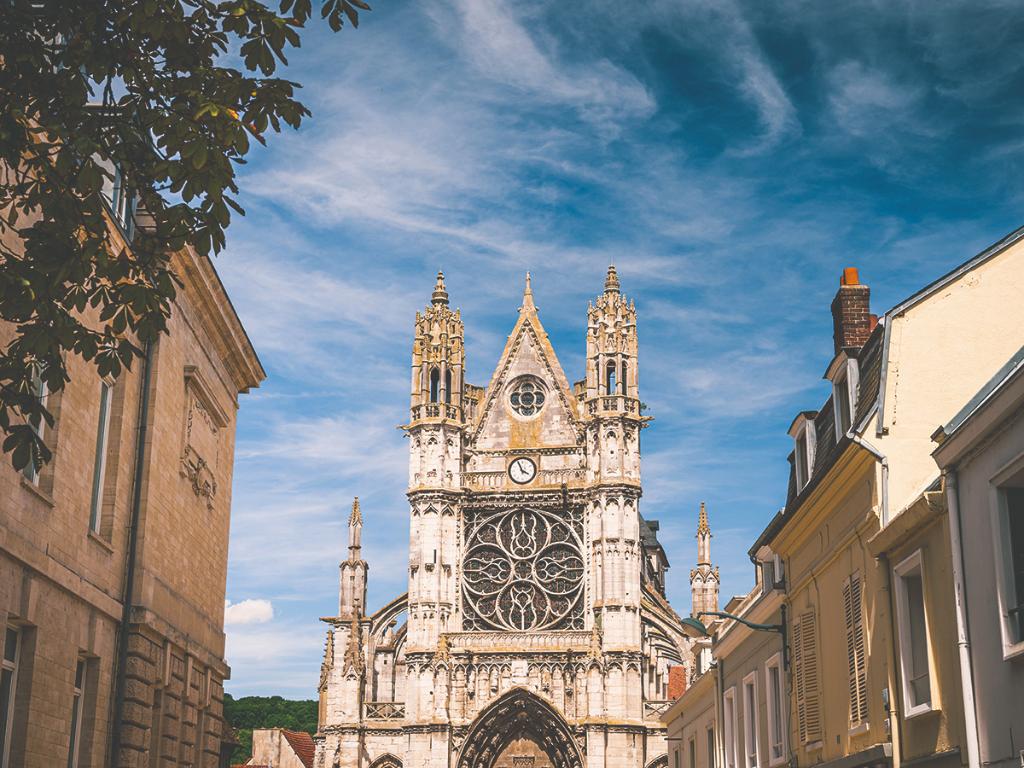
Collégiale Notre-Dame de Vernon © aurelienpapa
Start your visit with a trip to the Vernon Tourist Office on Rue du Pont, where you can pick up a map and a handy brochure that gives the history of all the main sites (or download their excellent app – in French only). Housed in the same building, the Musée Blanche Hoschedé-Monet shows works by Monet, Bonnard and Hoschedé-Monet, Monet’s daughter-in-law. You can easily explore Vernon’s medieval quarter in an hour, concentrated as it is on half a dozen streets lined with half-timbered structures. Around the church, follow the Rue du Chapitre, Rue Bourbon-Penthièvre, Rue de la Boucherie, Rue Saint-Sauveur and Ruelle Malot. In the northwest quarter, medieval structures line Rue Carnot, a main artery, and Rue Potard, their striking carved faces, called mascarons, so full of personality, one could imagine they recall their 15th-century owners but in fact, these expressive wood-sculpted heads are 19th-century additions.
After a stroll through the medieval town, you can reach the Old Mill via a 10-minute walk across a busy 1950s bridge to the Vernonnet quarter of town, where Impressionist painter Pierre Bonnard lived and worked for a time. Though neither the castle nor the mill is open for visits, their surrounding riverside park offers a shady place to stroll in and enjoy the picturesque views.
Saturday is market day in the town square behind City Hall, but every day there are plenty of shops to visit, including the O’Plum gourmet grocer, full of French delicacies chosen by the Michelin-starred chef at Giverny’s Le Jardin des Plumes restaurant, and Reynald, a chocolatier-pâtissier that makes its glorious chocolates and pastries on the premises. Vernon also boasts several fine antiques and vintage shops clustered around the intersection of Rue d’Albufera and Rue Carnot. For a break, choose from several charming tearooms in the medieval quarter or town square (Tata la Gourmande, Les Gourmandises de Vernon) or try the adorable Cookie Cat Café, for brunch, lunch or dessert while hobnobbing with the friendly felines.
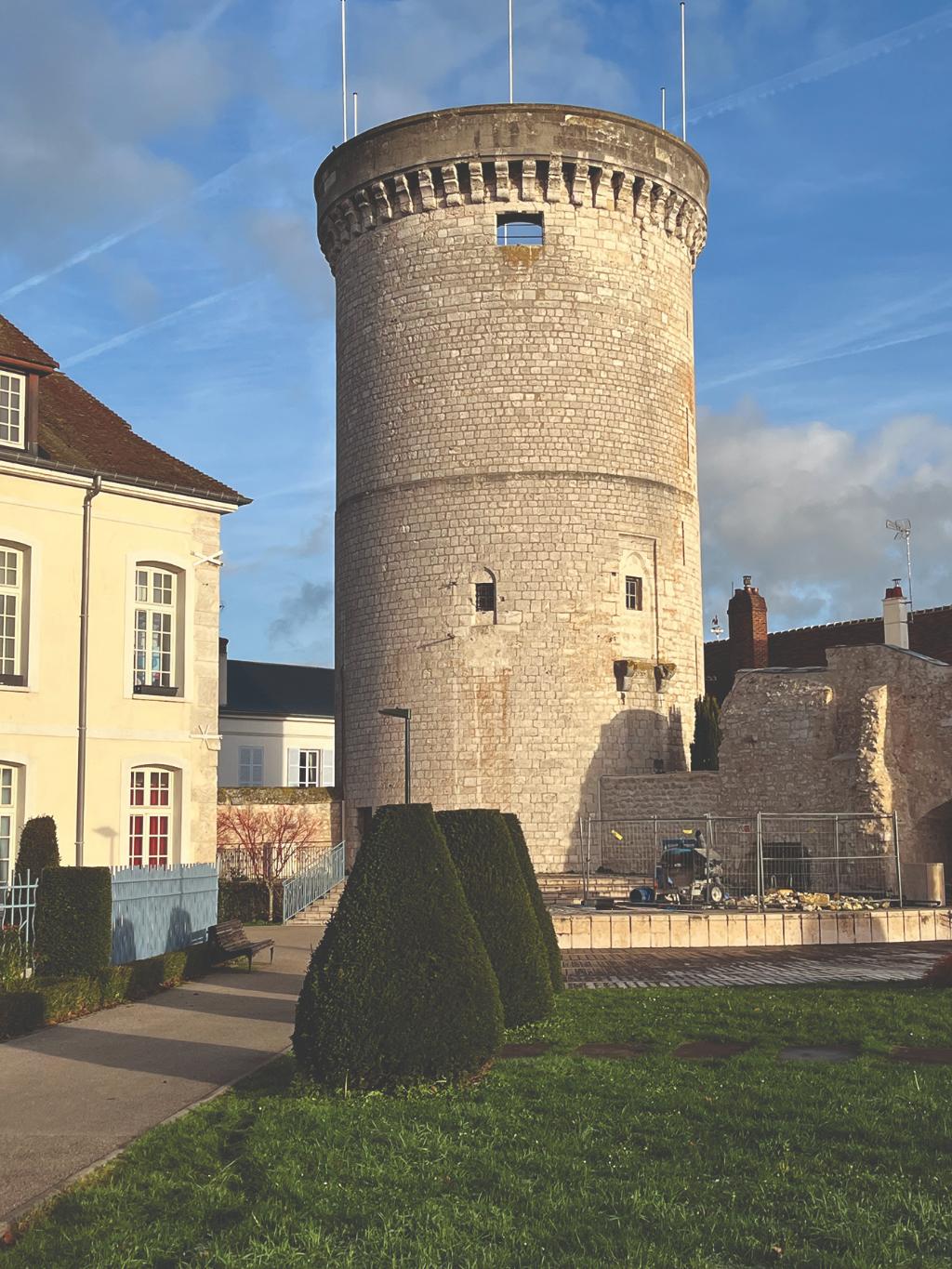
Tour des Archives © Jennifer Ladonne
Dining & cruising
Parisian foodies are flocking to Vernon to dine at Blossom, a contemporary restaurant whose talented young chef sources the freshest ingredients from growers within a 60-mile radius of town. You’ll enjoy an exceptional (and well-priced) gourmet lunch or dinner outdoors on the terrace facing the Seine or in the spacious contemporary dining room.
The hour-long walk or quick bike ride (bike rentals available in town) from Vernon to Giverny follows a pretty, leafy path bordering the Seine and the nearby forests. In summer, you can rent a self-piloted boat or take a river cruise from several spots along the banks of the Seine.
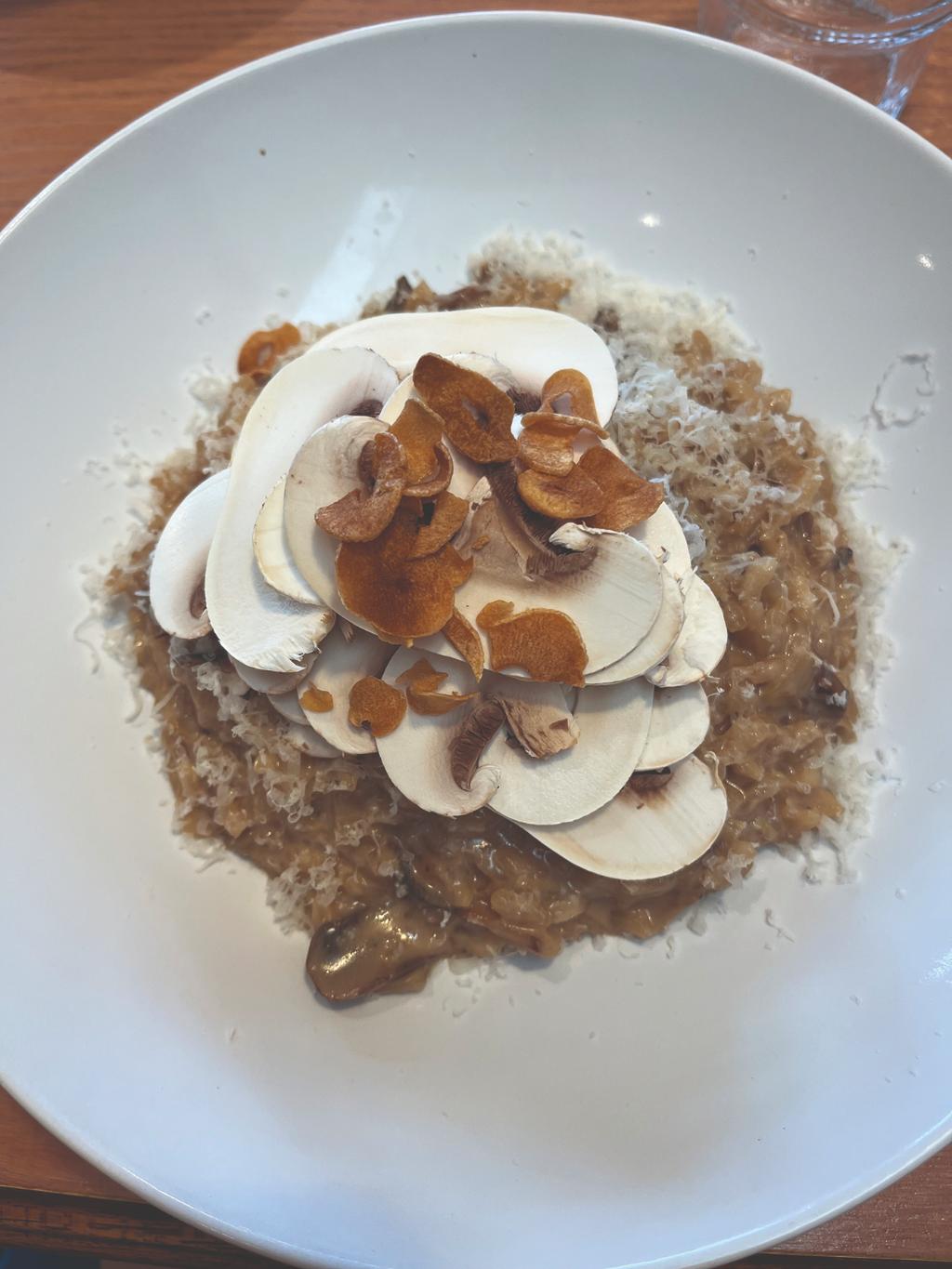
Dish Blossom LADONNE
VERNON ESSENTIALS
WHERE TO STAY
- Le Jardin des Plumes hotel and restaurant, is the best local hotel and the area’s only Michelin-starred restaurant.
- Twenty minutes from Vernon by car, the beautiful Domaine de Primard is an excellent place for a weekend getaway from Paris. If you don’t have a car, the hotel will arrange your pickup from the train station to the hotel as well as transport to and from Vernon or Giverny.
WHERE TO EAT
- Blossom is a not-to-be-missed dining experience in Vernon with a spacious terrace and an exceptional riverside setting. Open for lunch or dinner, reservations advised.
- You’ll also dine well at the Le Bistrot Montmartre or L’Estampille.
GETTING THERE
- Paris Gare Saint-Lazare (50 min to I hour, 22 regional NOMAD trains per day, around €24 round trip).
- Exiting Vernon-Giverny station, cross the tracks and take Rue d’Albufera straight to the city centre. To reach the Vernon Tourist Office head straight down Rue d’Albufera and take a left onto Rue Camot (just before reaching the Clémenceau bridge) then an immediate right onto Rue du Pont. The tourist office is tucked away in a cobbled courtyard to your left, next to the Musée Blanche Hoschedé-Monet.
CONTACTS
Vernon Tourist Office
12. Rue du Pont, 27200 Vernon
02 32:51 39 60
www.nouvelle-normandie-tourisme.com/en
From France Today Magazine
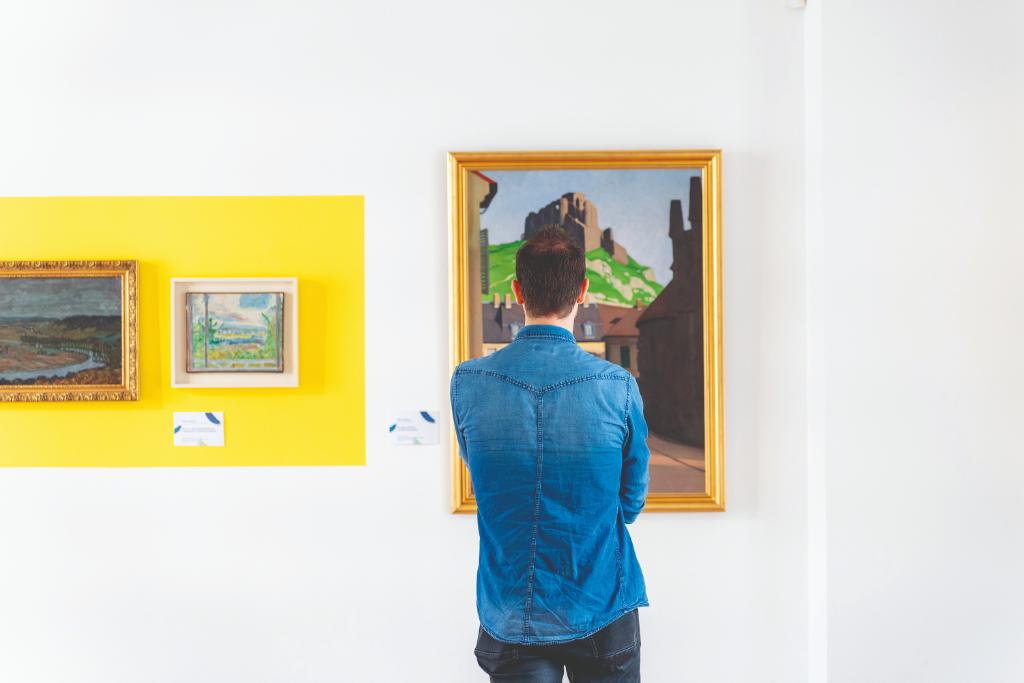
Musée Blanche Hoschedé-Monet à Vernon © Octave Benard
Lead photo credit : Photo: Shutterstock
Share to: Facebook Twitter LinkedIn Email
More in city break, French city, Normandy, short break, weekends in France
Related Posts

Leave a reply
Your email address will not be published. Required fields are marked *