
The Allure of the Côte d’Azur

With its stunning mix of rocky headlands and sandy beaches, glitzy cities and lavish marinas, it’s little wonder that the Côte d’Azur – or French Riviera – enjoys enduring popularity.
📢 As you scroll through the beautiful images, why not listen to our narrated article? It’s a great way for France Today Members to dive deeper into the story while enjoying the visuals. We hope you love this experience, and we’d love to hear what you think—feel free to share your thoughts in the comments below! Happy listening!
The Côte d’Azur. It’s a name that conjures up images of bright blue ocean, jagged limestone sea cliffs and bustling sandy beaches. You can almost hear the cicadas and smell the pine trees. Is this the most beautiful coastline in all of Europe? Many would argue vehemently that it is.
What exactly is the Côte d’Azur, though? Provence’s famous littoral, traditionally known in English as the French Riviera, has no official boundaries. All agree its eastern limit is at Menton, on the border with Italy, but as for its western point, the jury is out. Some place it at Saint-Tropez, others at Toulon. There are even those who insist it stretches as far as Cassis, which is almost a suburb of Marseille.

Playground of the rich
Whatever the demarcation, one thing is sure: the Côte d’Azur, with its heady mix of beaches, rocky headlands, luxury hotels and ostentatious marinas, has been luring in visitors for hundreds of years. For many foreign tourists, it represents the very essence of the Mediterranean. Here you can rub shoulders with the haves and the have-yachts at Saint-Tropez; you can opt for cheap and cheerful in the many seaside campsites; you can go celebrity-spotting at the Cannes Film Festival; you can lose a fortune in minutes in Monte Carlo’s casino; you can roller-blade along Nice’s Promenade des Anglais; you can breathe in the lavender fields around Grasse; or you can swim in the azure waters that gave the region its name. It was French writer Stéphen Liégeard who first coined the name Côte d’Azur. During the late 1800s, he would spend his winters in Cannes and was so enamoured with the blue of the Med that, in 1888, he published a book called La Côte d’Azur, which won a prize from the Académie Française. The name stuck.
Sheltered by the Alpine foothills to the north and lapped by the waters of the Mediterranean, the coastline has one of the most enviable climates in all of Europe. Yes, it gets scorching hot in high summer, but for the rest of the year the climate is warm or mild, as long as you duck the infamous Mistral wind. Even in winter you can enjoy lunch in the sun.

Toulon © shutterstock
The extensive road network along the coast makes the Côte d’Azur perfect for a driving tour. Our route starts in Toulon, the prefecture of the Var department. Home to France’s Mediterranean fleet, this naval base has an attractive old town, famous for its 17th-century fountains. The 16th-century Tour Royale sea fort is well worth a visit, as is the Musée National de la Marine.
From here, head east along the A570 autoroute to Hyères, the oldest resort on the Riviera, where both Queen Victoria and Tolstoy used to holiday (not together!). Hyères is set back from the coast and so, once beach holidays became more popular, it lost its appeal. It’s still a pretty town, however, ablaze with flowers and home to both a lower and an upper old town.
Drive along the isthmus that links Hyères to the Presqu’ile-de-Giens and you’ll encounter sandy beaches on the eastern side and flamingos in the salt flats on the western side. Now continue east along the D98 towards Le Lavandou. Accompanying you along this stretch and visible out of your right window, are the îles d’Hyères, a pretty archipelago that includes Porquerolles, Port-Cros and Île du Levant. From various ports along this coastline you can take boat trips out to the islands.

Nice © shutterstock
Island life
Porquerolles is the focal point of an annual yacht race called Porquerolles’ Cup, which circumnavigates the island. Levant couldn’t be more different: for the most part, it’s a military missile testing zone and, not surprisingly, off-limits to the public. But a small section of it, which has avoided ordnance, is home to Heliopolis, one of Europe’s naturist colonies. There’s nothing half-baked here: on the beaches, in the streets and pretty much everywhere else, locals wander around in their birthday suits. Only at the island’s harbour, in the square of the main town and in shops and restaurants are they likely to cover up, and even then only in ‘le minimum’.
Back on the mainland, continue east along the coast-hugging D559 and eventually you’ll reach one of France’s most famous, and most crowded, fleshpots: Saint-Tropez. Your wallet will take a beating here, but during summer months the people-watching potential is enormous, as Europe’s spoilt and wealthy flash their cash to excess. If you want to join in, grab your cashmere jumper, tie it around your shoulders and stroll down to the Vieux Port, pretending you’re on your way to your yacht. At the Place des Lices you might join in a game of boules, refreshed by a glass of pastis.

St Tropez © shutterstock
When things really heat up, head for Saint-Tropez’s famous beaches. In town you’ll find the smaller La Glaye, La Ponche and La Fontanette, but across the headland is where the fun really starts. Here – and brace yourself – is the world-famous Pampelonne beach, a 5km north-south sandy stretch where topless is the norm, or used to be in the old days, at least. Buzzing bars and restaurants line the shore, including Bagatelle, Nikki Beach and the much-loved Le Club 55.
The D559 continues its twisting route along the coast, passing first through Sainte-Maxime – less pretentious than Saint-Tropez, with cleaner beaches. As you drive through the sprawl of beachside towns, enjoy the sparkling views of the Med on your right and the jagged ridges of the Massif des Maures high on your left. Soon you’ll find yourself in Fréjus, once a Roman naval base under emperors Julius Caesar and Augustus. The original amphitheatre has been partially renovated and now hosts concerts and events.

Fréjus © shutterstock
From Fréjus to Cannes is one of France’s classic driving routes, the Corniche de l’Estérel, a section of the D559 which snakes through tiny resorts, limestone inlets and beaches to die for. Stop wherever you fancy for a swim or a cold glass of rosé. Just be sure to keep an eye on the road, which is tortuous and narrow in places. Thanks to its famous annual film festival, considered by many the most important in the movie industry, Cannes hardly needs an introduction. Every May for 12 days, the town becomes an orgy of glamour and self-promotion as thousands of stars and behind-the-scenes bigwigs strut on the red carpets. You must normally be an industry insider to attend the various official events and film previews; however, mere mortals are allowed at the open-air beach cinema (Cinéma de la Plage), where a different film is shown every night.
During the rest of the year, there’s no shortage of bars and restaurants, fashion stores, mega-yachts, sports cars and celebrities to keep your head turning. The beach at La Croisette has recently been widened thanks to boatloads of imported sand and now work is taking place to upgrade the main promenade.
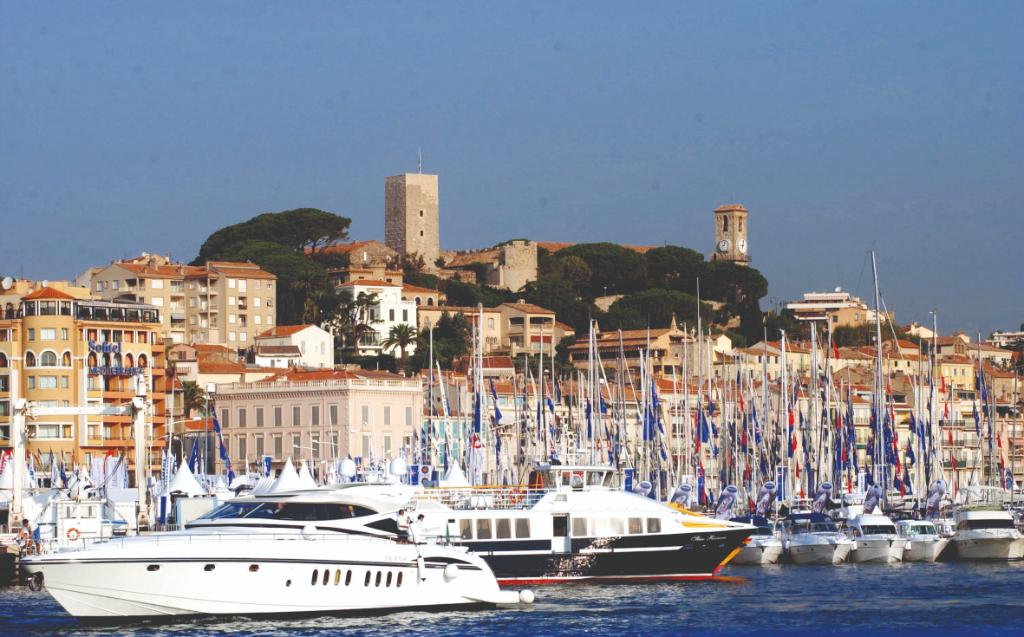
Cannes © CRT Côte d’Azur / Anais BROCHIERO
An inland detour
The coast road continues northeast to Antibes, where the old town (Vieil Antibes) offers a welcome respite from the tourist sprawl. Here, amid the medieval walls and labyrinth of squares and lanes, you’ll find the covered Provençal market, open every day in summer but closed on Mondays the rest of the year.
Now it’s time for a detour inland. First, head to Grasse, France’s and some would say the world’s perfume capital. There are dozens of parfumeries here, mixing anything from civet cat excretion and whale vomit to resin, bark, moss and goat musk to create those wonderful smells. Three parfumeries, Molinard, Fragonard and Galimard offer free tours. You can even join a perfume workshop to create your own. Go easy on the whale vomit, though.
Just north of Grasse is an unmissable network of serpentine roads and hiking paths around the Gorges du Loup. Each new waterfall, sheer cliff face, road bridge and hilltop village will have you gasping at the beauty. If you’re short for time, take a short but twisty round trip from Chateauneuf, north on the D3 through the fortified village of Gourdon as far as Bramafan before turning back south along the D6 and the D2210 through the amazing medieval village of Le Bar-sur-Loup. If you’re really bold you can join a canyoning group in the precipitous rivers that run through the region.
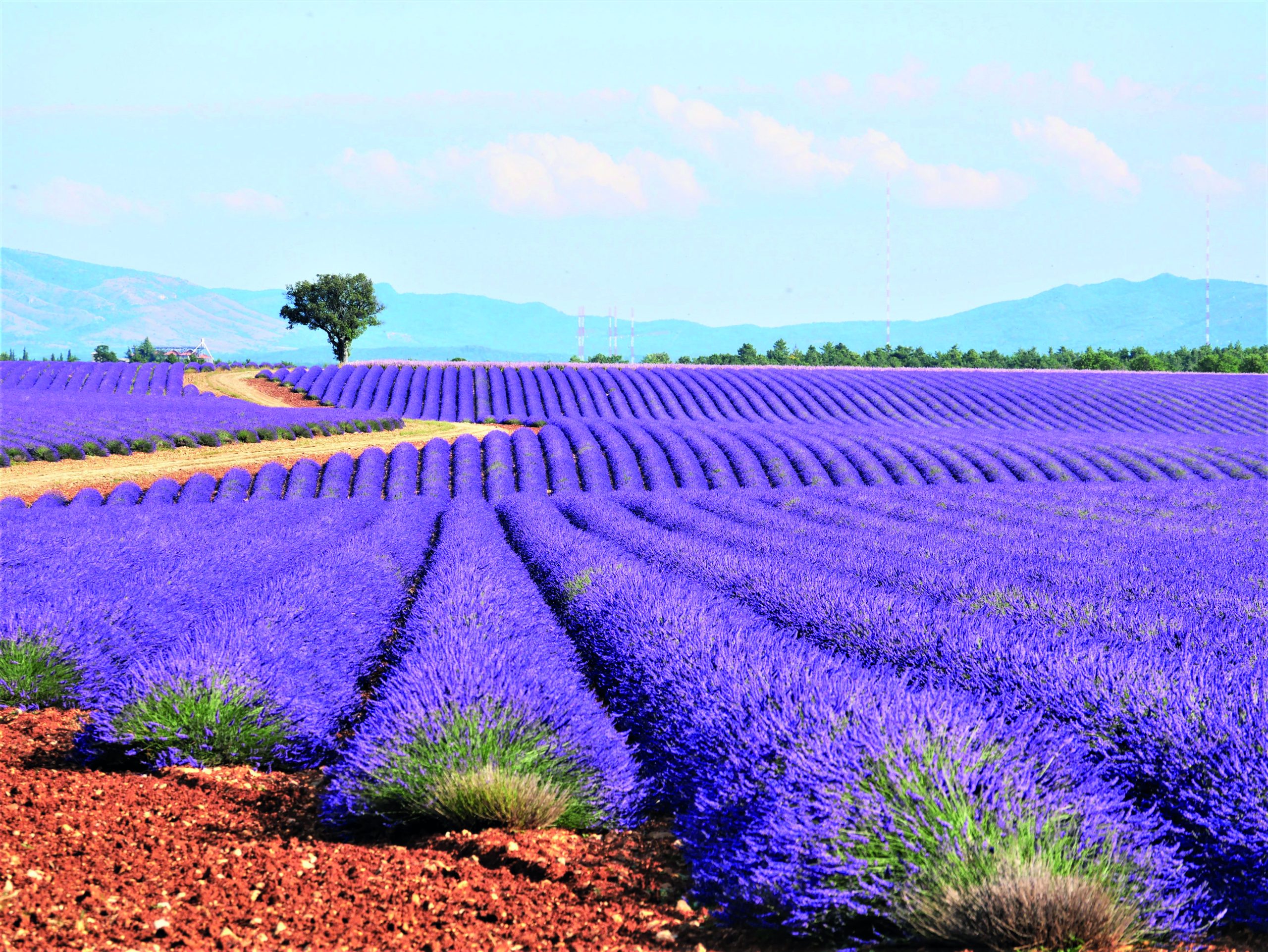
© Le Pelley
On your way back to the coast road, head for Saint-Paul de Vence, a lovely fortified village. If you can, eat at the hotel-restaurant La Colombe d’Or where, on the walls, you’ll spot original works by the likes of Braque, Picasso, Matisse and Bonnard who, before they became famous, gifted their images in return for meals or overnight stays.
Nice is the biggest city along the Côte d’Azur, with both the charms and the irritants you’d expect from a metropolis. While the summer traffic, the near-permanent roadworks and the graffiti are horrendous and the pebbles on the beach will numb the bum of even the most cautious sunbather, what Nice does possess is a vibrant culture, nightlife and restaurant scene. Don’t miss the astonishingly good art museums and the people-watching opportunities of the Promenade des Anglais.

Monaco © shutterstock
Monaco or bust
Heading east from here, there are three routes towards Monaco: the Corniche Inférieure, which follows the train line through pretty Villefranche-sur-Mer, Beaulieu-sur-Mer and Cap-d’Ail; the Moyenne Corniche, which offers the most dramatic driving, its road cutting through the overhanging cliffs and passing the medieval village of Eze; and the Grande Corniche, which boasts plenty of photogenic stopping points and the ancient Roman monument at La Turbie.
Now you’re in Monaco which, at 200 hectares, is the world’s second smallest nation. Despite its enormous wealth, tax-haven status and royal residence, this principality has some surprisingly plain architecture. Notable exceptions are the Palais Princier de Monaco (mostly off-limits for tourists) and the Casino de Monte Carlo (well worth the paid tour). Every year in May, this city-nation stages the Monaco Grand Prix.
The final stop on our tour of the Côte d’Azur is Menton, just shy of the Italian border. Les developed than much of the rest of the Riviera, it is graced by pretty, pastel-coloured, Italianate architecture and hosts the annual Fête du Citron in February. Encircled by mountains, Menton enjoys a subtropical microclimate, with average temperatures warmer than anywhere else on the Cote-d’Azur. After your long drive, head for the Les Sablettes beach, where you can cool off in the Med, even during colder months. A fine conclusion to a beautiful journey.
From France Today Magazine
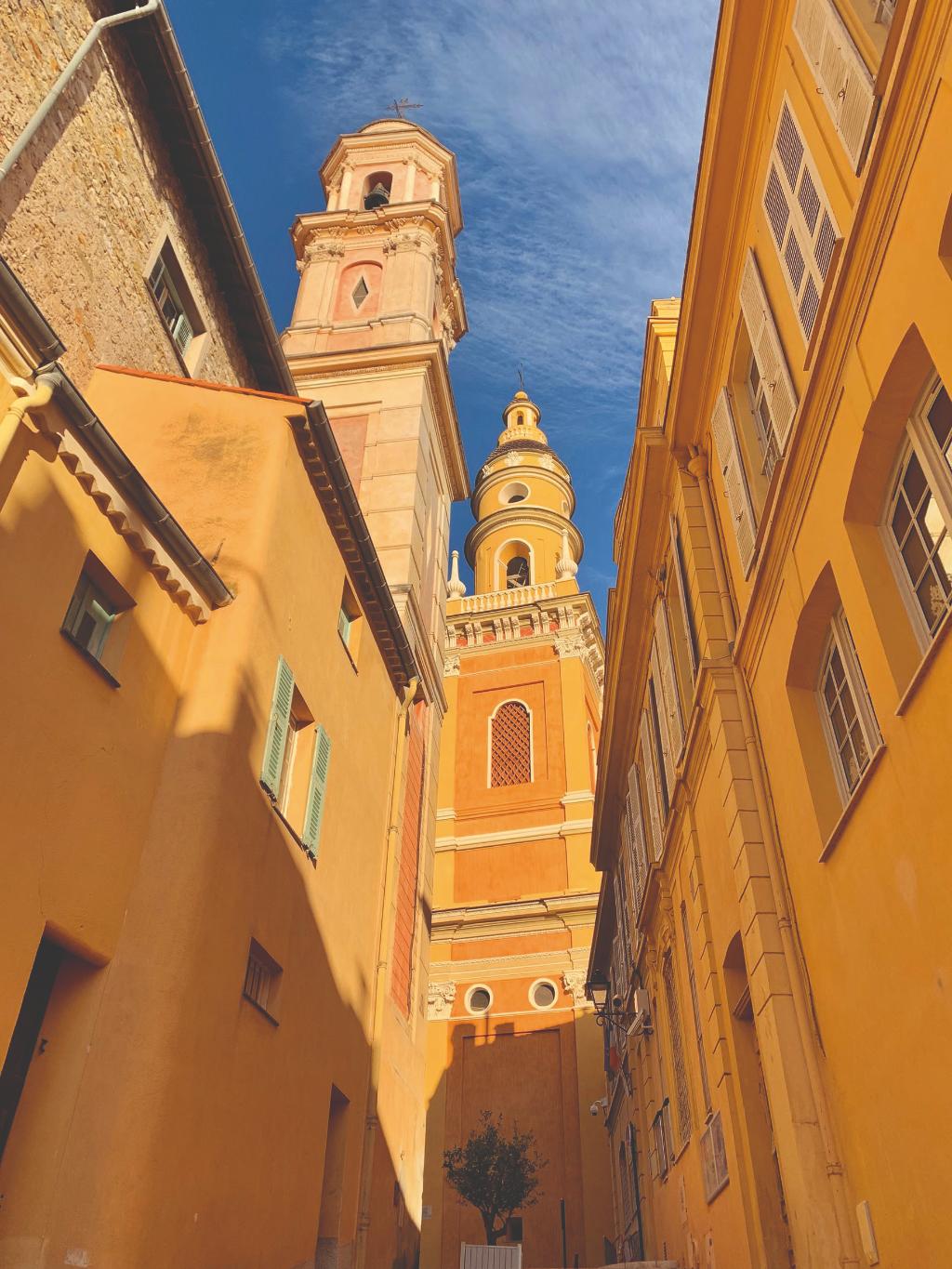
Menton © CelindanoA
Ohlala! It looks like you’re not a Member yet
Join to view this content!
(If you are a Member, log in or reset your password below or contact us so we can help)
- Log in
- Forgot password
Share to: Facebook Twitter LinkedIn Email
More in Côte d’Azur, France Today Membership, Riviera, roadtrip, South of France
Related Posts
Leave a reply
Your email address will not be published. Required fields are marked *