French City Break: Calais

The port city of Calais, brimming with history and culture, is worth lingering in for a short break.
Sail across the English Channel to Northern France and if you are standing on deck, you may well be surprised to see the vast sandy beach that gives the busy port of Calais an unexpected holiday vibe. Then as you get closer, the surprises keep on coming. No need to rub your eyes. That really is an enormous dragon you see lumbering along the promenade, flapping its wings, snorting steam and breathing fire into the air.
The immense Calais Dragon is just one of many attractions in a town that has a surprising amount to offer thanks to an urban makeover that is winning over residents and visitors alike. Better still, most of the attractions are within easy walking distance of each other, linked by a self-guided route between the Grand Theatre and the promenade. Calais may not be the first resort that springs to mind when you think of a French seaside holiday, but the newly revamped sea front area – Calais La Plage is the focal point of a project that is persuading increasing numbers of arrivals to stop and explore the town rather than rush off to their final destination.
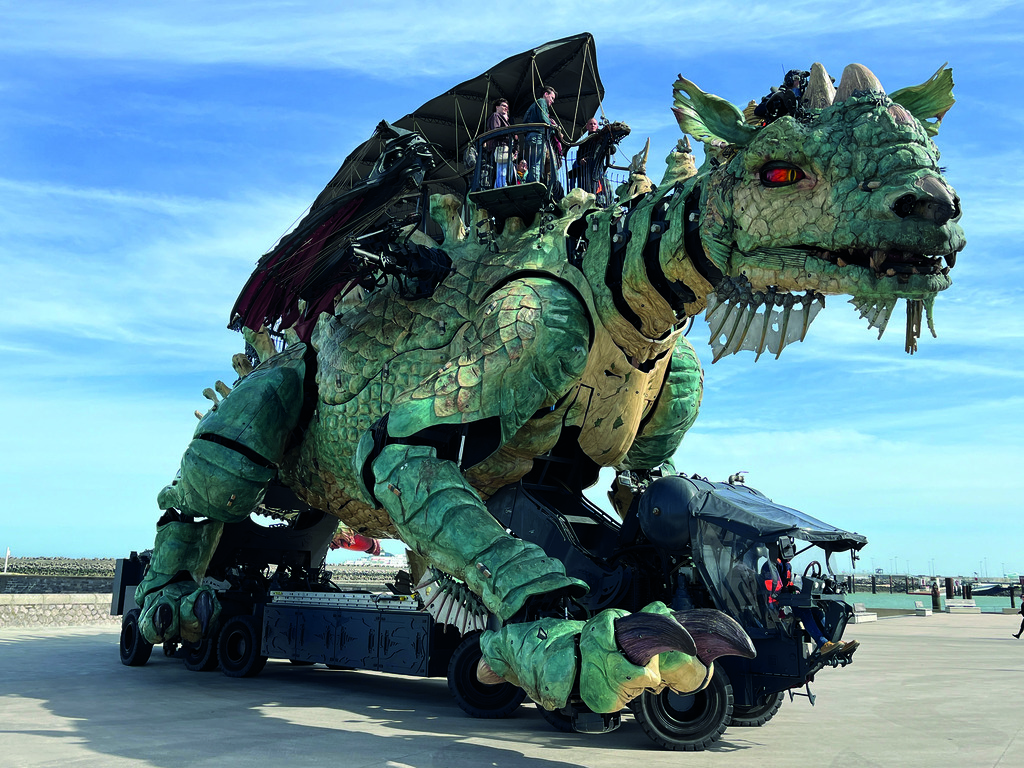
Calais’ mechanical dragon
I have tacked an overnight stay onto a driving tour of the Pas-de-Calais department so I can explore the ‘new look’ town and take a ride on the giant beast. But first, I’m stepping back in time.
Calais has long had an uneasy relationship with its English neighbours, just 20 miles away across the water. Ruled by England from 1347, the strategic port was finally regained by France in 1558 after a siege led by Francis, Duke of Guise. For English queen Mary I, it was a bitter blow to lose England’s last territory in mainland France, but for French king François II, it meant the triumphal repatriation of the last piece of territory lost in the Hundred Years War.
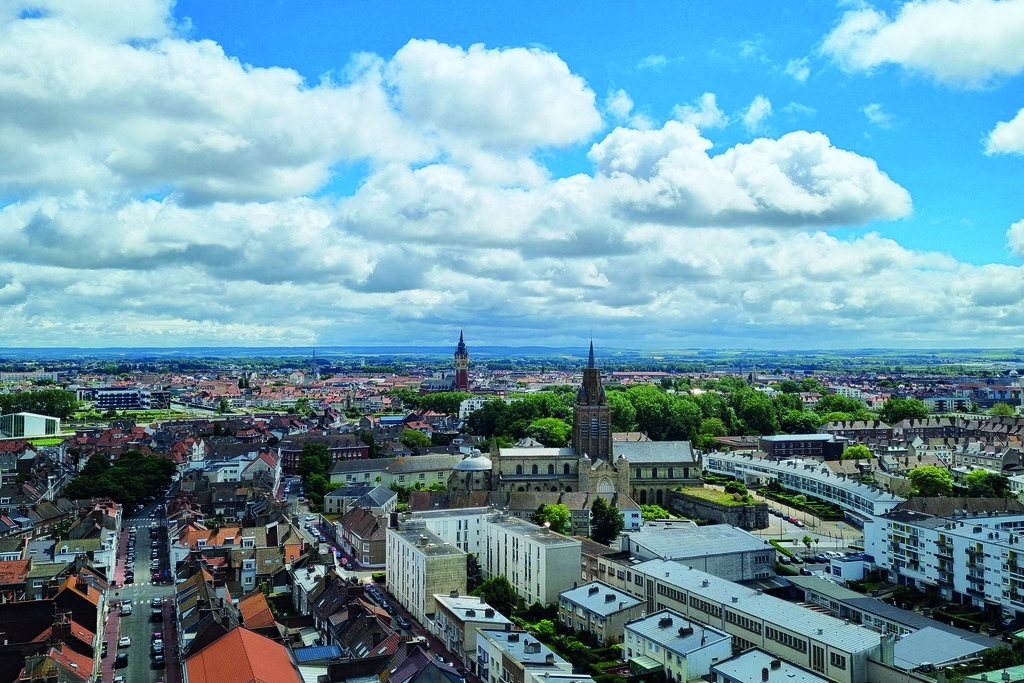
Calais skyline © Shutterstock
Monuments to the past
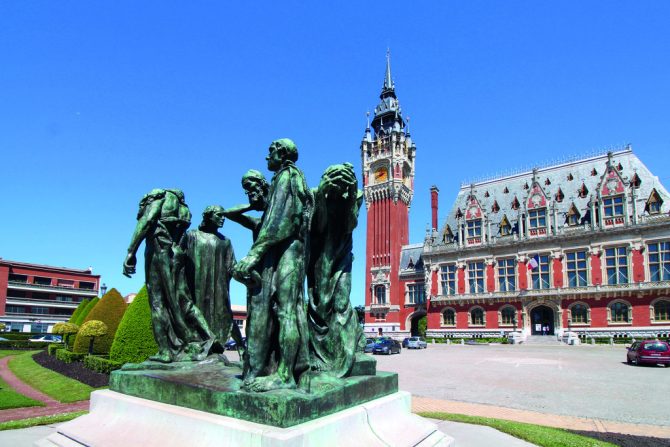
Walk through the formal gardens beneath the flamboyant Town Hall and belfry one of 56 bell towers across northern France and Belgium listed by UNESCO and you can’t miss Rodin’s famous statue, which commemorates a famous event in an earlier siege that marked the start of 200 years of English rule. In 1346, England’s Edward III laid siege to the town during the Hundred Years War, while French king Philip VI ordered the citizens to hold firm. But after 11 months, the people were starving, so Edward agreed to spare the town if six of their leaders would surrender with nooses around their necks and the keys to the city in their hands.
Six Burghers – Les Bourgeois – offered themselves in sacrifice, a moment that Rodin captured in his group statue. Unveiled in Parc Richelieu in 1895, the monument was later moved to the formal gardens in front of the Town Hall at the sculptor’s request. A further 11 casts were made and now stand across the world from Copenhagen to New York City, Tokyo to London as a symbol of heroism. As for the Burghers, they kept their heads, reputedly because Edwards’s pregnant wife begged him to spare them, feeling that the alternative would be a bad omen for her unborn child.
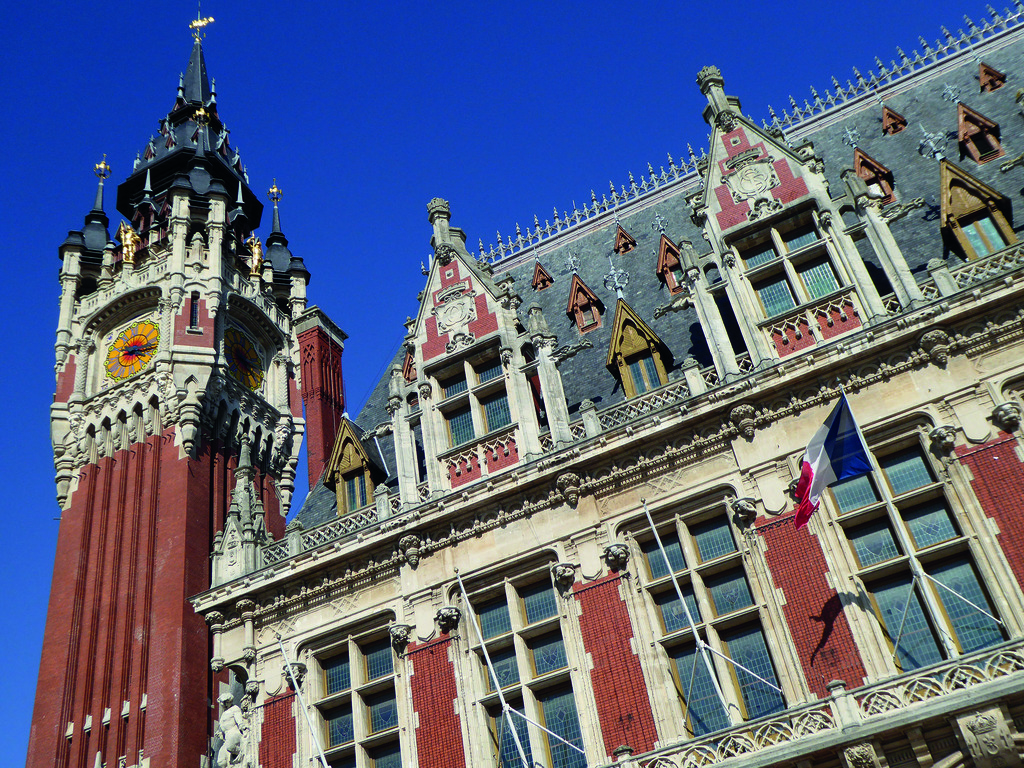
Calais Town Hall
Towering over them is the Town Hall, which was designed by architect Louis Debrouwer in the regional style and is one of the first public buildings to use reinforced concrete and other Art Deco construction and decorative techniques. Construction began in 1911 but ground to a halt during the First World War. Repaired and completed when peace returned, the monumental building was inaugurated in 1925, only to be damaged again in 1940. Take the lift to the top of the bell tower for panoramic views over the town, harbour and, on a clear day, those troublesome English neighbours. And look out for other Art Deco properties in Rue du Pont Lottin and Rue Jean Jaurès.
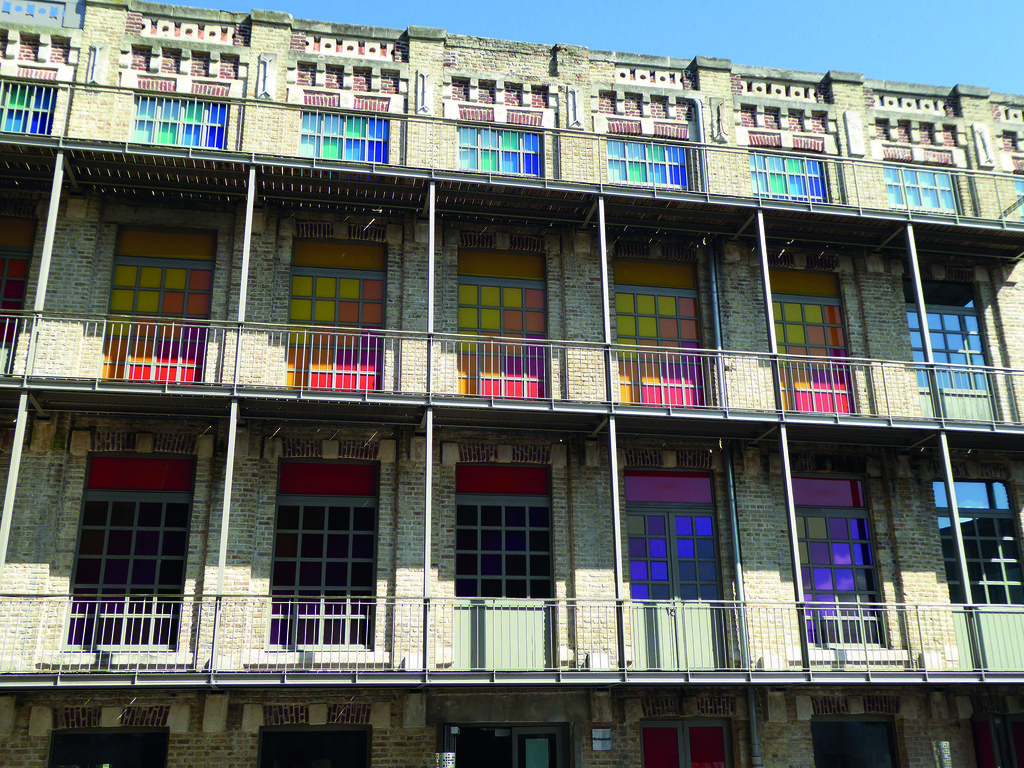
Cité Internationale de la Dentelle et de la Mode
Lace and art
Stop off in Parc Saint-Pierre beside the Town Hall to visit the Musée Mémoire 39-45, which is set in a former German bunker and tells the story of Calais during the war. Then turn your back on the Burghers and follow the Canal du Commerce for the short walk to Cité de la Dentelle et de la Mode, a gem of a museum that celebrates the local talent for lacemaking. Discover the tricks of the trade, both ancient and modern, and catch the latest temporary exhibition.
You are also in the heart of Calais’s substantial outdoor art gallery, an eclectic collection of street art with new works added each year during a summer festival. Pick up the free map from the Tourist Office on the edge of Parc Richelieu, where you come face to face with two more giants – Sir Winston Churchill and General Charles de Gaulle walking towards a deconstructed outline of France. De Gaulle married Calais native Yvonne Vendroux in 1921 at the nearby Église Notre-Dame, and the couple are frozen in time in a delightful sculpture in the adjacent Place d’Armes.

Richelieu gardens
Overlooking Parc Richelieu is the Fine Arts Museum, home to sculptures, ceramics and paintings to suit all tastes. The must-see is the Rodin room, which tells the story behind the statue of the Burghers of Calais, a project that took 10 years. With plaster models and archive photographs, it brings the six figures – and their sculptor – vividly to life.
From the Fine Arts Museum, the self-guided Calais Essentials trail skirts Notre-Dame Church with its Tudor garden that reflects the English character of the 13th-century church, as well as the 13th-century watchtower, part of the city’s original fortifications. If you are feeling energetic, head up the 271 steps of the nearby lighthouse for circular views over the harbour. Or if retail therapy sounds more appealing, browse independent shops such as Calaisfornia for local clothing with a ‘North Coast’ flavour, L’Atelier du Chocolat Calais on Rue Royale and La Maison du Fromages et des Vins on Place des Armes. Then turn back towards the sea and cross the bridge towards Fort Risban, a remnant of two centuries of English occupation. At times used as a gunpowder store and a lookout post, it is now a leisure area crossed with footpaths and cycle tracks. Look out for the statue of Tom Souville, an authorised ‘pirate’ or privateer who hounded English vessels in the early 19th century.
And so you arrive at the Calais Dragon, a fabulous creature in every sense of the word. Made from wood and steel by the Compagnie du Dragon, this enormous beast is inspired by legends of monsters who emerge from the sea depths to walk on land. Climb the ladder to the covered platform on its back and feel the power beneath you as the reptile lumbers out of its hangar towards the seafront, steam hissing from its nostrils.
You quickly forget the six operators who skilfully manoeuvre the giant beast along the promenade to the delight of onlookers. But you certainly won’t forget the unique view between dragon’s ears of this historic and fascinating port.
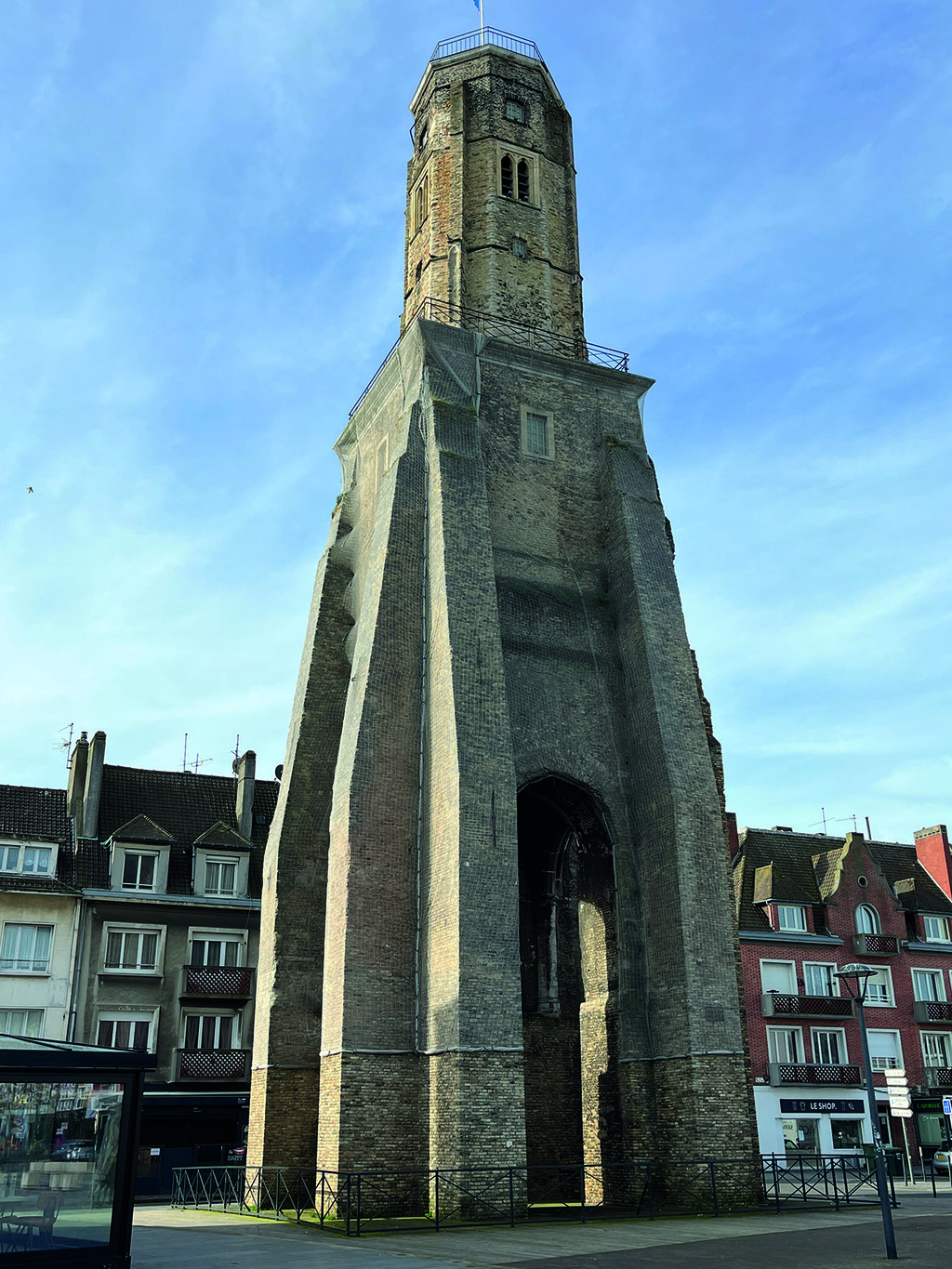
Tour du Gué
CALAIS ESSENTIALS
GETTING THERE
Gillian took her car with LeShuttle for the 35-minute journey from Folkestone to Calais – www.leshuttle.com
Or take the ferry from Dover to Calais in 1h30 with DFDS, P&O or Irish Ferries.
WHERE TO STAY
Simple but spacious rooms at the Ibis Styles Calais Centre an economy design hotel in a quiet location on Rue Royale in the heart of town private parking spaces available but advance booking recommended.
WHERE TO EAT
Chef Patrick Comte serves up seasonal bistronomie à la française at L’Histoire Ancienne on Rue Royale, expect gourmet food in traditional surroundings with a zinc bar, antiques and old-fashioned sweet jars. www.histoire-ancienne.com And experience the buzz at Le Channel Calais, a creative centre between the Eurotunnel terminal and the town centre that includes a theatre, gallery, bistro and gastronomic restaurant.
www.lesgrandestables.com/le-channel
SHOPPING
On your way back, be sure to stop at Calais Vins (near the ferry port) or Olivier Vins (close to the Eurotunnel) – two of the finest wine destinations in the region. With more than 4,000 carefully selected wines, beers and spirits, you’ll find everything from prestigious labels to hidden gems at great prices. Friendly, English-speaking staff are on hand to guide you to the perfect choice. Enjoy a free ferry crossing with pre-orders over €300, plus hassle-free VAT refunds, making your wine shopping both exciting and rewarding. Visit yine-calais.co.uk for more details.
TOURIST INFORMATION
Calais Tourist Office at Boulevard Georges Clemenceau is open daily from 10am (closed Sundays from January 9 to April 30). www.calais-cotedopale.com For information on the surrounding area visit www.visitpasdecalais.com
From France Today Magazine
Lead photo credit : © Shutterstock