
French City Break: Périgueux, Dordogne
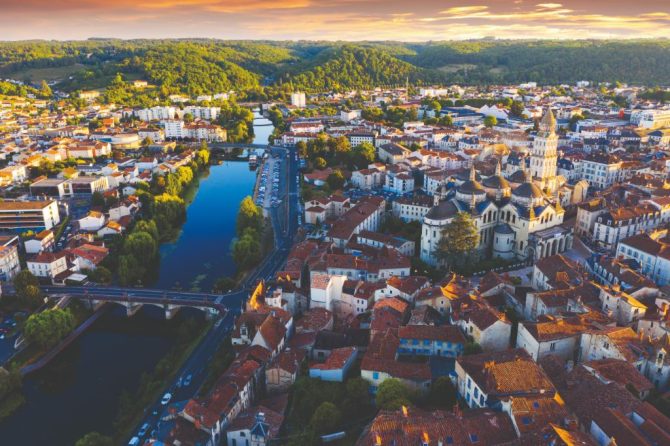
Travellers to the Dordogne often make a beeline for Sarlat, Bergerac and places solidly on the tourist radar. But the medieval town of Périgueux should not be overlooked.
I had the good luck of arriving in Périgueux on market day. It seemed fortune smiled on me everywhere on that sunny, breezy spring morning in late March: I easily found a parking space near the river and, unsure of my way, made the short trek up a cobbled hill in the commanding shadow of the cathedral, where a lively market square in full swing opened before me precisely where I wanted to be. Celadon skies and limpid sunshine shimmering off Périgueux’s limestone buildings made the rows of market stalls pop with colour, the glorious ruby red of spring’s first strawberries, fat green and white asparagus, and the sunny faces of narcissi plunged unceremoniously into a bucket.
Sometimes first impressions are unreliable and I need time to get the measure of a place but not here. The morning’s happy mood permeated everything I saw. Every turn in the narrow maze of streets in Périgueux’s mostly pedestrianised old town revealed another curiosity, another architectural gem, a charming café-lined enclave, half-timbered town house or sculpted Renaissance doorway.
Turning a narrow corner into a wide, leafy square brought me elbow to elbow with vendors selling mountains of fresh produce, homemade pastries, juices and jam, fragrant walnut oil (a local speciality), honey, flowers-market day, it seemed, was an all-town event. At Les Halles du Coderc, Périgueux’s picturesque indoor market, old-timers lingered over their morning espresso or white wine, bantering with each other at a wooden zine bar in a scene right out of a 50s movie. Cheese stalls displayed local Cabécou, Rocamadour, Bleu des Causses and Trappe d’Echourgnac, while butcher stands hawked the famous local veal, Quercy lamb and all manner of specialities made from the Périgord duck, a mainstay of cuisine here for centuries, crowned by rich, buttery foie gras, the king of pâtés.
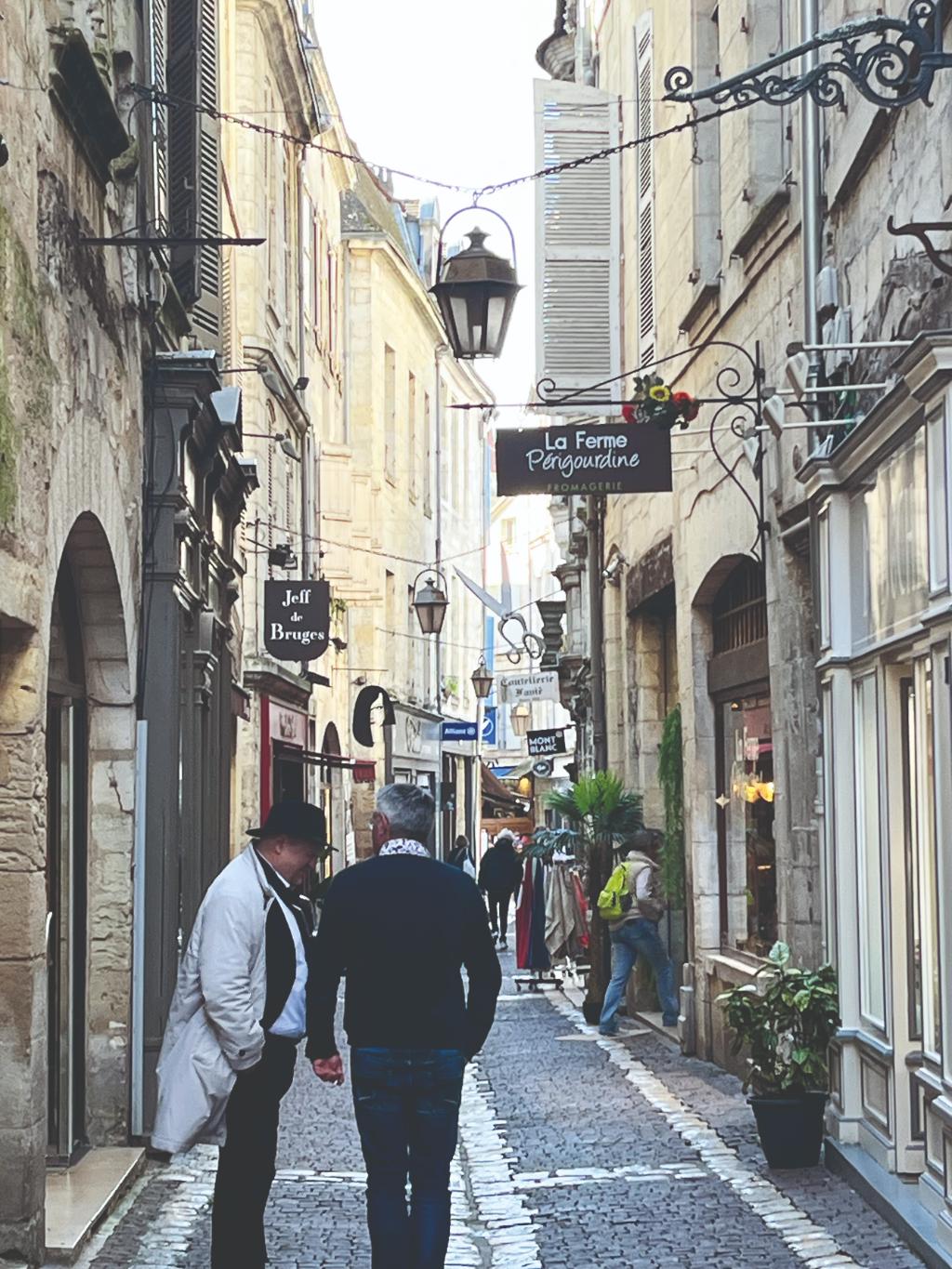
PERIGUEUX Avenue JLADONNE
A place of authenticity
It struck me why the town felt so convivial: this is a lived-in place, with townspeople going about their daily routine, not a museum city clogged with tourists. I’d stumbled upon the kind of authenticity I’d forgotten I was missing. In such a popular and scrutinised country, where no charming stone goes unturned, it felt as though I’d come upon something uniquely itself.
Périgueux is the capital of the Dordogne, a particularly comely and beloved region of southwest France about 80 miles northeast of Bordeaux. Also known as the Périgord, its more ancient name, the region is divided into four areas differentiated -by colours – white, green, black and purple that loosely correspond to their defining feature or product: white chalk cliffs, green forests, black truffles and (mostly red) wine.
A favourite tourist region – especially cherished by the British, who for hundreds of years wrestled the French for domination of the region and now vie for vacation homes here – the Dordogne is rich in everything from history to gastronomy. Here you will find storybook landscapes of dense forest, rolling vineyards and picturesque cliffs; caves remarkable for their prehistoric paintings (Lascaux, Grotte de Rouffignac, Les Eyzies, Grotte des Merveilles) or eye-popping splendour (Gouffre de Padirac, Gouffre de Proumeyssac, Lacave); and an exceptional food culture, featuring such luxury specialities as foie gras, black and white truffles and caviar d’Aquitaine.
Périgueux’s origins date from Roman times when the city was an important Gallo-Roman stronghold. Remains of the Roman city, which were discovered in 1959 during excavations for a bank, are now on view at the marvellous Vesunna Gallo-Roman Museum, encased within a soaring glass structure designed by the French architect Jean Nouvel. In front of the museum presiding over a leafy park sits the exquisite Tour de Vésune, a Gallo-Roman shrine and the last vestiges of the ancient fortifications that once sheltered the city. Across the street, the Square des Arènes harbours the picturesque vine-clad remnants of a Roman amphitheatre.
The Hundred Years’ War, Wars of Religion and other upheavals took their toll on Périgueux, with a time of relative peace in the 17th century when the city was able to stabilise and rebuild. Today, the old town is a compelling mix of buildings that trace the city’s prosperous heydays in the Middle Ages and Renaissance, all easily viewed on a pleasant hour-long stroll.
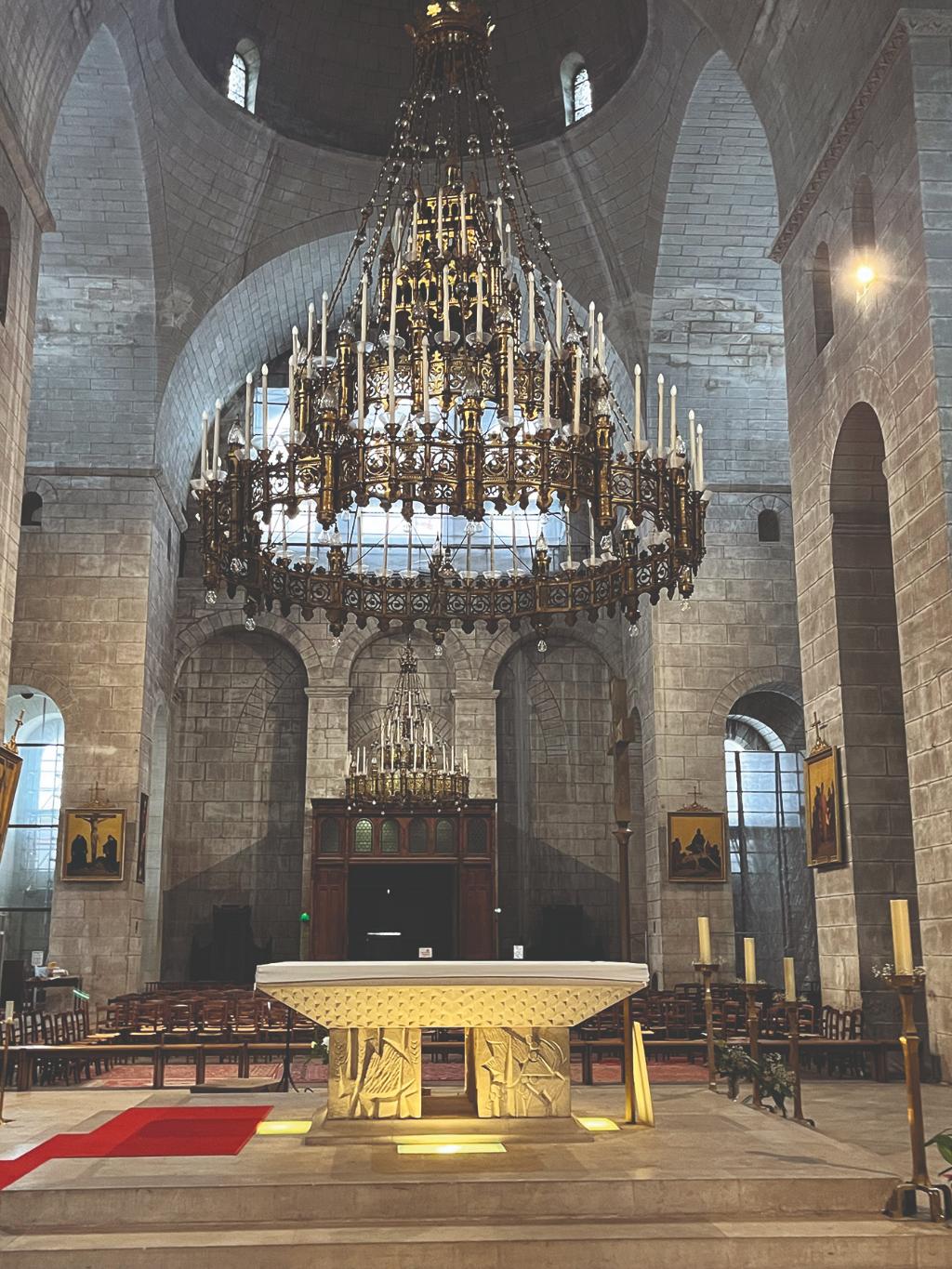
JLADONNE PERIGUEUX St Front Chandelier
A walking tour
The vast Cathédrale Saint-Front, Périgueux’s major historic monument, is a good place to start your walking tour. The church’s imposing stone block interiors are curiously devoid of ornament, but its five soaring domes, stained glass windows, immense chandeliers which illuminated Paris’s Notre-Dame Cathedral for the wedding of Napoleon I and the Empress Eugénie – and ornately sculpted woodwork add up to a uniquely majestic interior that’s impressive to behold. Rooftop tours of the cathedral offer sweeping views of the city, old town, Roman ruins and an up-close look at the cathedral’s Byzantine-style domes and intricately carved spires (and the bleached bones of pigeons devoured by resident falcons).
The narrow streets across from the cathedral are a good place to begin wending your way through the medieval town surrounding the church to the Renaissance quarter around Rue Saint-Front, although the vestiges of both periods converge everywhere. A half-timbered house may be tucked between a medieval polygonal tower or the finely ornamented windows of a noble Renaissance mansion. The friendly folks at the tourist office will happily provide you with a map for a self-guided walking tour or sign you up for several themed guided tours around the old town in English. You can also book regional tours that focus on cuisine or wine.
Interspersed between inviting pavement cafés and tempting boutiques displaying everything from antiques to Laguiole knives, you’ll find shops selling local cheeses and other regional specialities, including, of course, foie gras, the delicacy which every Périgordine grandmother makes from a recipe handed down for generations. Nowadays, you’ll find it canned, potted, semi-cooked or raw, stuffed in figs or duck breasts – even in desserts. The Périgord’s other great delicacy, the black truffle, is best eaten fresh. Hidden three to five inches underground among the roots of old oak trees, and detected by the delicate noses of Italian-trained dogs, from December to early March the ‘divine tubercule’ shows up in dedicated markets. The truffle festival in January is a spirited affair, with truffle-inflected dishes, tastings and wine pairings, competitions, live music and the chance to win a golf ball-sized tuber.
On a return trip with my daughter, on a dazzling market day, laden with strawberries and an armload of flowers, an elderly couple stopped us and offered to take our photo – the perfect moment to preserve all the pleasures of Périgueux.
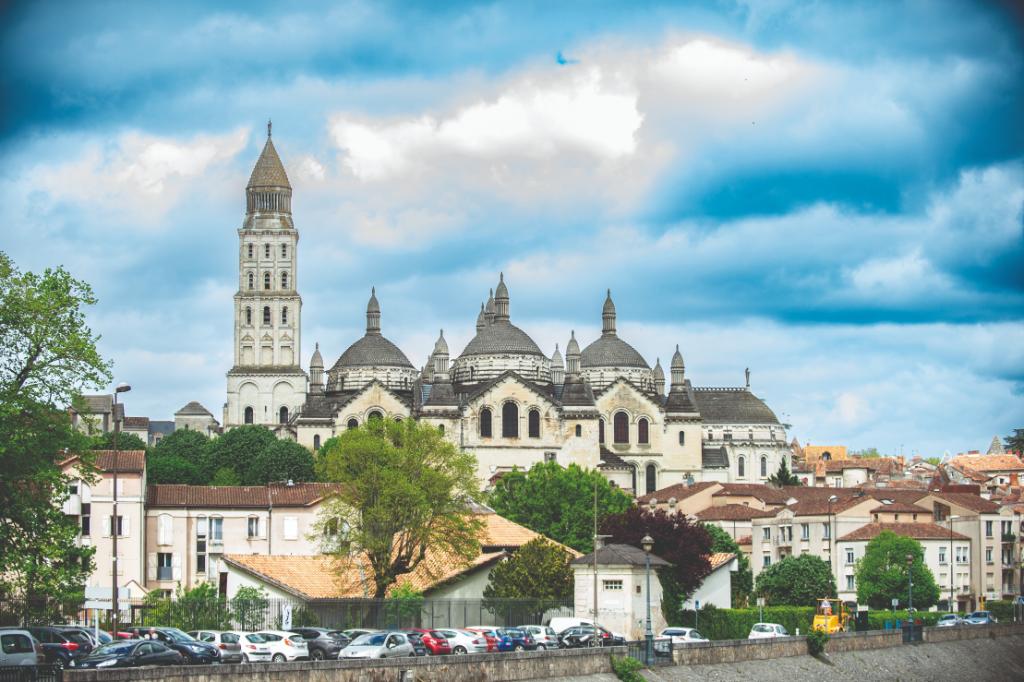
PERIGUEUX RENAISSANCE©otidugrandperigueux-Raynald Aubert_
PÉRIGUEUX ESSENTIALS
GETTING THERE
BY TRAIN
You can reach Périgueux by direct or corresponding trains from Montparnasse in 3.5 to four hours. Or take a direct train to Bordeaux (2 hours), rent a car at the TGV station, and enjoy making the scenic 90-minute drive to Périgueux.
WHERE TO SHOP
Périgueux’s old town is filled boutiques to stock up on French food, fashions, housewares and all the local delicacies.
WHERE TO STAY AND EAT
Domaine Richard Lequet is set on a lovely wooded property five minutes from the city centre. The owner, a Michelin-starred chef, welcomes you to one of four beautifully decorated rooms then prepares an exquisite meal dreamed up that day from whatever seasonal local bounty is available at market or in his kitchen garden. Café Louise is a local favourite for a hybrid Perigord-Italian cuisine in a charming setting.
L’Essentiel is Périgueux’s Michelin-starred restaurant set smack in the centre of the old town. Cacaothé Café is an excellent spot for good coffee and a delicious brunch on a lovely terrace facing Saint-Front Cathedral.
FOR MORE INFORMATION
Périgueux Tourist Office: 9bis Pl. du Coderc, 24000 Périgueux
www.destination-perigueux.fr/en
From France Today Magazine
Lead photo credit : © Shutterstock
Share to: Facebook Twitter LinkedIn Email
More in city break, Dordogne, south-west
Related Posts

Leave a reply
Your email address will not be published. Required fields are marked *
REPLY