La Clusaz in Summer: Exploring the Sunlit Alpine Meadows
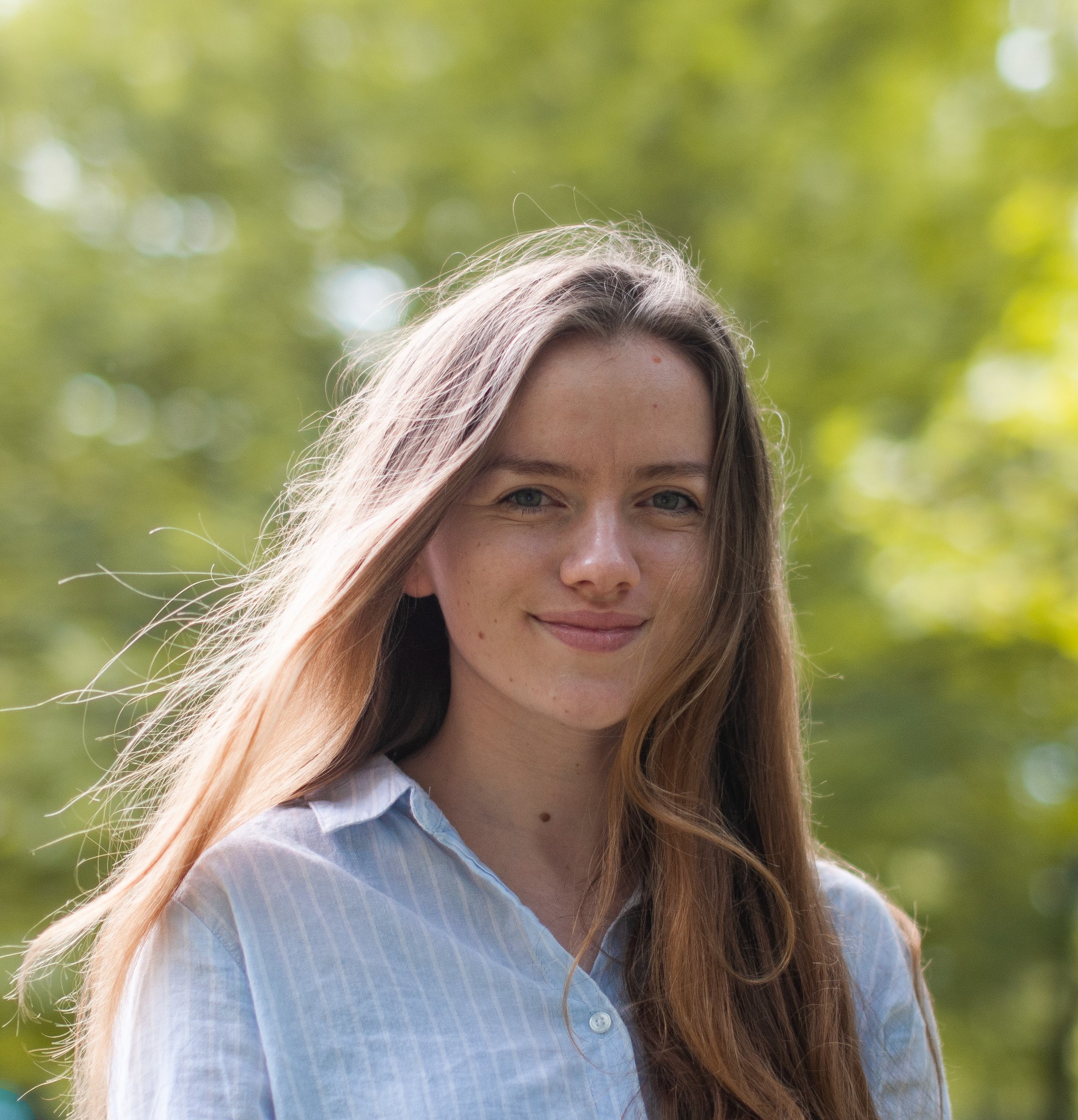
Elinor Sheridan heads for the Alps to find out what the popular ski resort of La Clusaz has to offer summer visitors, as Alpine meadows replace winter snowfields
📢 As you scroll through the beautiful images, why not listen to our narrated article? It’s a great way for France Today Members to dive deeper into the story while enjoying the visuals. We hope you love this experience, and we’d love to hear what you think—feel free to share your thoughts in the comments below! Happy listening!
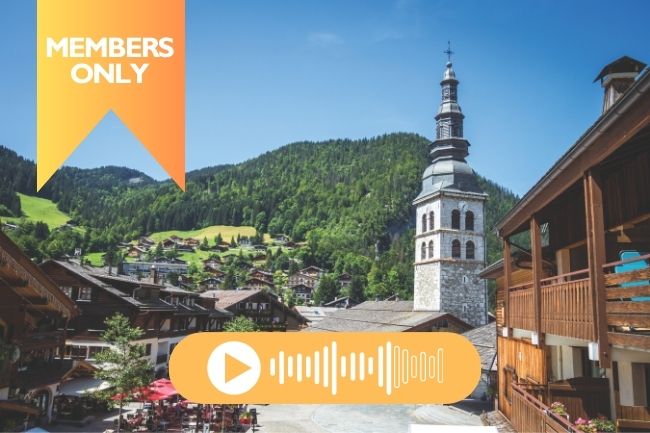
La Clusaz is best known as a ski resort, but in summer, when the lifts carry walkers and cyclists rather than skiers, it makes a very good base for exploring Annecy and the surrounding mountains at a slower pace.
The name La Clusaz comes from the old Savoyard word cluse, meaning a passage between two mountains. In the 14th century, the village was referred to as Clusa Locus Dei, ‘God’s narrow place’. It’s a fitting description. Tucked at 1,040 metres in the Aravis range of Haute-Savoie, with the jagged ridge of the Pointe Percée rising behind it, La Clusaz has the kind of setting that halts conversation mid-flow, revealing itself as you round the bend on the D909 from Annecy.
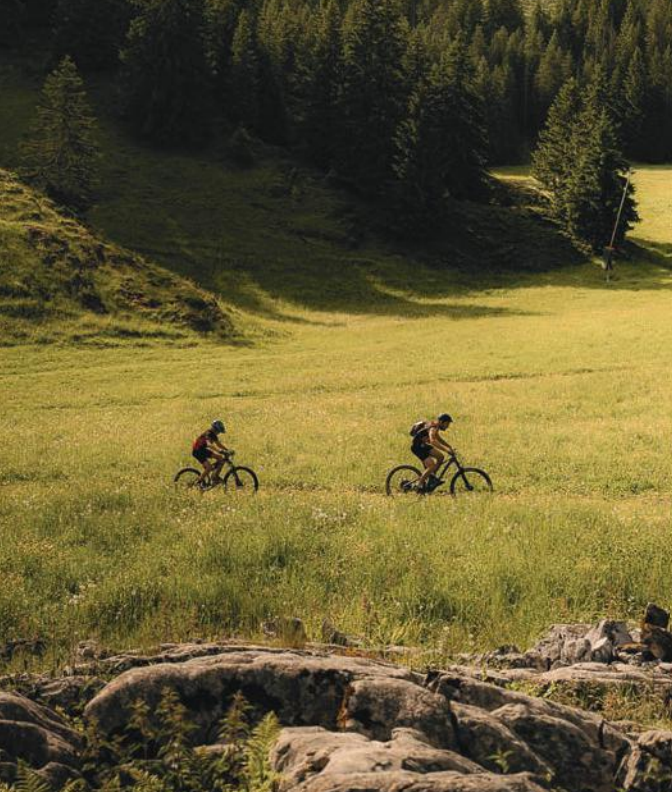
Le Bélier VTT mountain biking event is held annually in La Clusaz
I arrived at the chalet on a Saturday afternoon in June when the snow had retreated to the highest peaks and the meadows were embroidered with wildflowers. The chalet, a privately owned home rather than a hotel, is designed for mountain living year-round rather than sitting empty outside the ski season. That first evening, we drove up to Chalet du Lac beside Lac des Confins, where dinner by the lake, its surface refl ecting the surrounding peaks, felt quietly extraordinary. Sunday was built around Le Bélier, an annual mountain biking event that is a celebration of everything La Clusaz does best. The Rando 3 Fromages is a 12km route through forests and Alpine pastures with three cheese-tasting stops along the way. We collected our e-bikes and rode the Crêt du Merle ski lift with our bikes to the start. From there, the trail wound down through the shady woods of the Balcon du Voret before opening out at the Retenue du Lachat. Here, a wedge of Reblochon appeared, one of the Aravis valley’s best-known cheeses.
A CHEESE TOUR BY BIKE
Reblochon has a cheeky origin story. In the 13th century, farmers in the Aravis paid their rent based on how much milk their cows produced. When the landowner came to measure the yield, the farmer would deliberately hold back, performing an incomplete milking. Once the inspector left, they would re-milk the cows – reblocher means ‘to milk again’ – and this second, richer milk gave rise to the cheese. It’s still made by hand from raw milk on farms here. In summer the cows are back on the slopes, and these cheeses that appear so confidently on menus have an obvious landscape behind them.
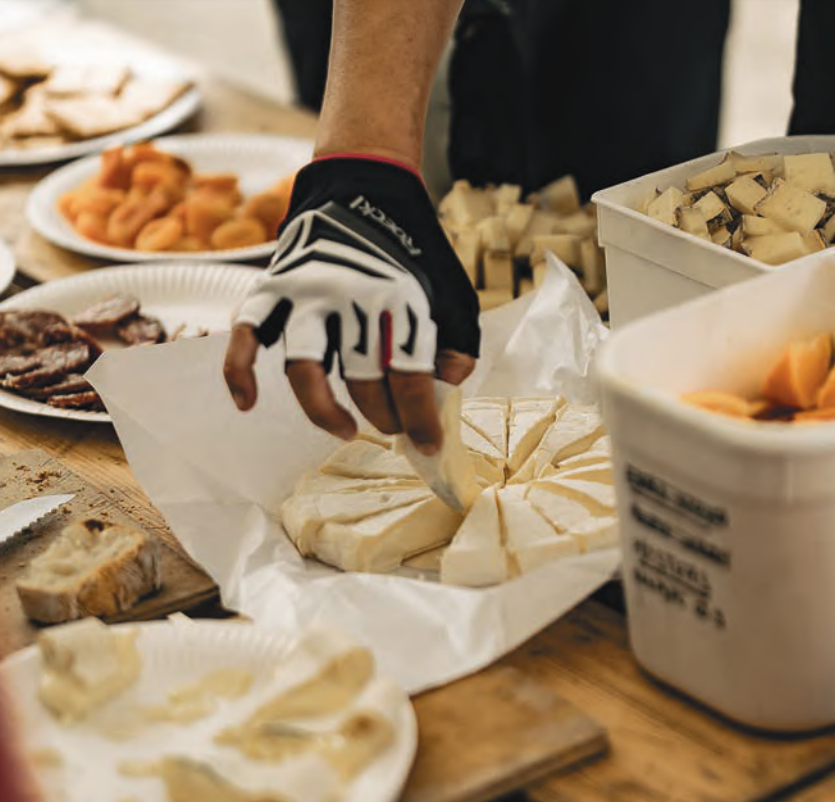
the Rando 3 Fromages is a 12km route with cheese-tasting stops
The ride continued along the Chemin du Laythet to Lac des Confins, where we sampled Chevrotin, a tangy goat’s milk cheese with a creamy centre. From there, the final leg coasted downhill to Le Fernuy for a wedge of Tomme, earthy and firm, a classic mountain cheese. The last descent was a satisfying zig-zag that made us feel like we had earned every gram of dairy consumed en route. I should repeat: I did it all on an e-bike, and I’m not remotely sorry. Back at the chalet, Valérie, a local Ayurvedic massage therapist, arrived for treatments, and after a morning spent tasting cheese, it was time for even more indulgence. That evening, Restaurant l’Outa offered exactly the sort of mountain hospitality you hope for after a day outside: hearty local dishes and, at the end, a glass of local génépi, all wild herbs and clean heat, sipped slowly.
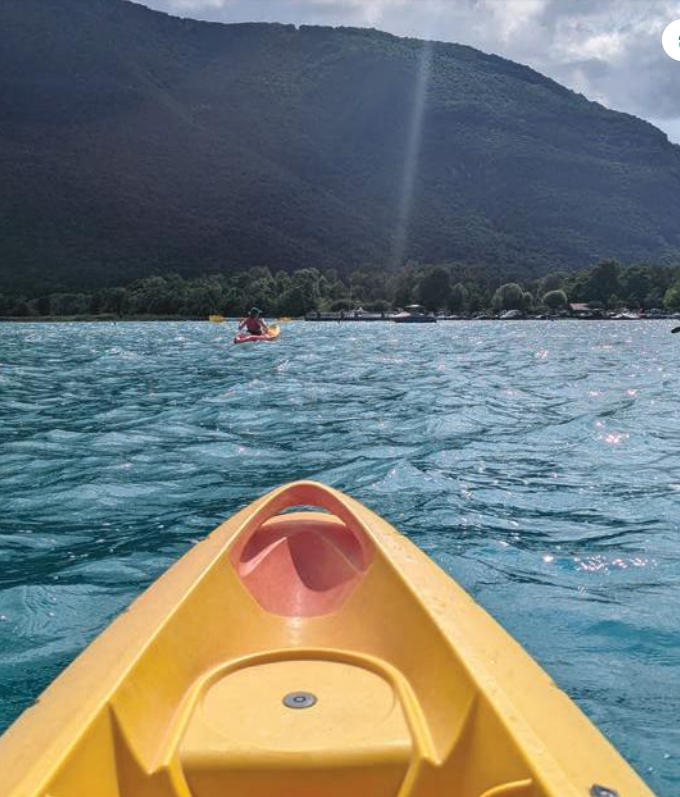
Kayaking on Lake Annecy is a fantastic way to appreciate ‘Europe’s cleanest lake’
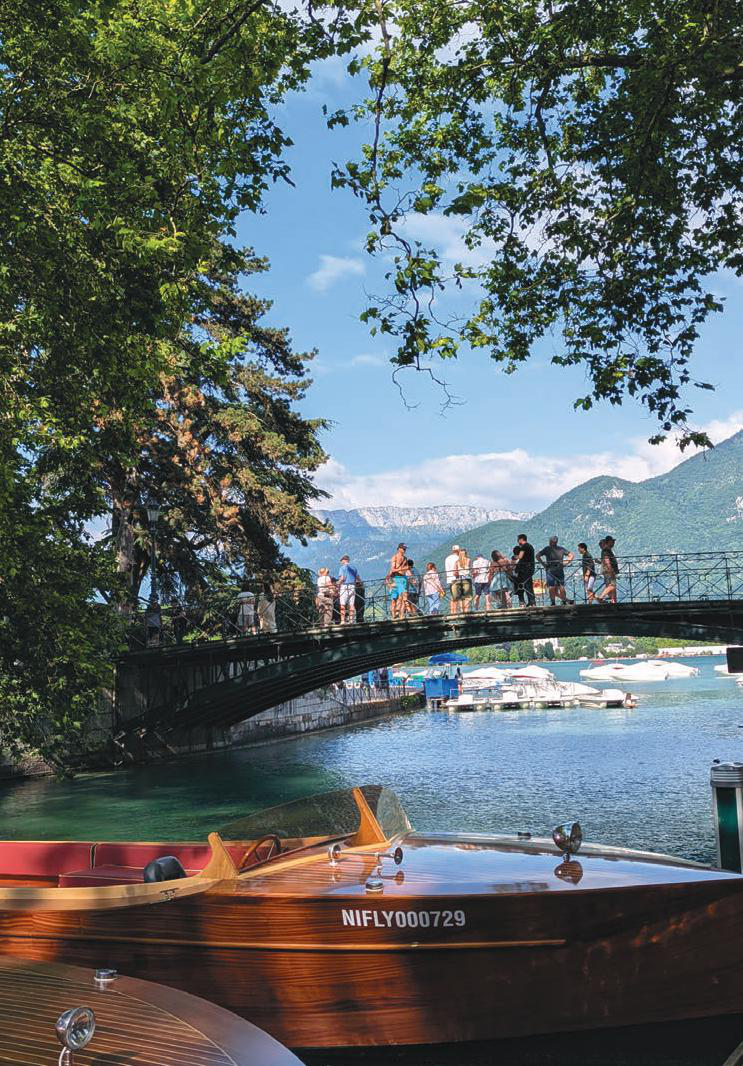
Monday was an Annecy day and we drove down to the lake for kayaking, paddling out across water so clear it barely seemed real. Lake Annecy is often called Europe’s cleanest lake, and from a kayak, you understand why: you can see the stones on the bottom, even in deeper sections, and the mountains rise like theatre scenery on every side. There is a stillness to being on the water here – a sense of being held between sky and mountain, with nothing but the dip of a paddle to break the silence. Afterwards, lunch at La Cuillère à Omble, a restaurant specialising in freshwater fish from the lake and perfectly placed on the waterfront, was a highlight of the trip. A boat cruise on the lake followed before we disembarked for a guided walk through Annecy’s old town. With its pastel-coloured houses, canals and the Palais de l’Île sitting like a stone ship in the middle of the Thiôu river, Annecy is as photogenic as its reputation suggests, but it also has a soul beyond the postcard.
We walked through the cobbled streets and learned how Annecy became a Catholic refuge in the 1530s, when the bishops of Geneva fled the Reformation and settled here, turning it into a small citadel facing Protestant Geneva. Tuesday morning began before most sensible people had opened their eyes. Alexia, a local yoga instructor, led us through a Yoga Toumo session – cold-water immersion. It starts gently, with guided breathing on the riverbank, and builds to the moment you wade into a freezing mountain stream at sunrise. It sounds brutal – and it was, briefly. But the rush that followed, a full-body awakening that lasted for hours, made the whole thing entirely worth it.
Warmed and buzzing, we set off for breakfast. Le Grand-Bornand is a village of around 2,000 people and, as of the year 2000, roughly 2,000 cows. This happy numerical coincidence inspired the village to declare itself the capital of cow art, and it has never looked back. Metal sculptures, wooden totems, mural paintings and comic-strip cows now populate the streets, an open-air gallery that makes a fun treasure hunt.
“La Clusaz in summer may not give you the adrenaline of a black run. What it offers instead is more lasting.”
REMEMBER TO LOOK DOWN
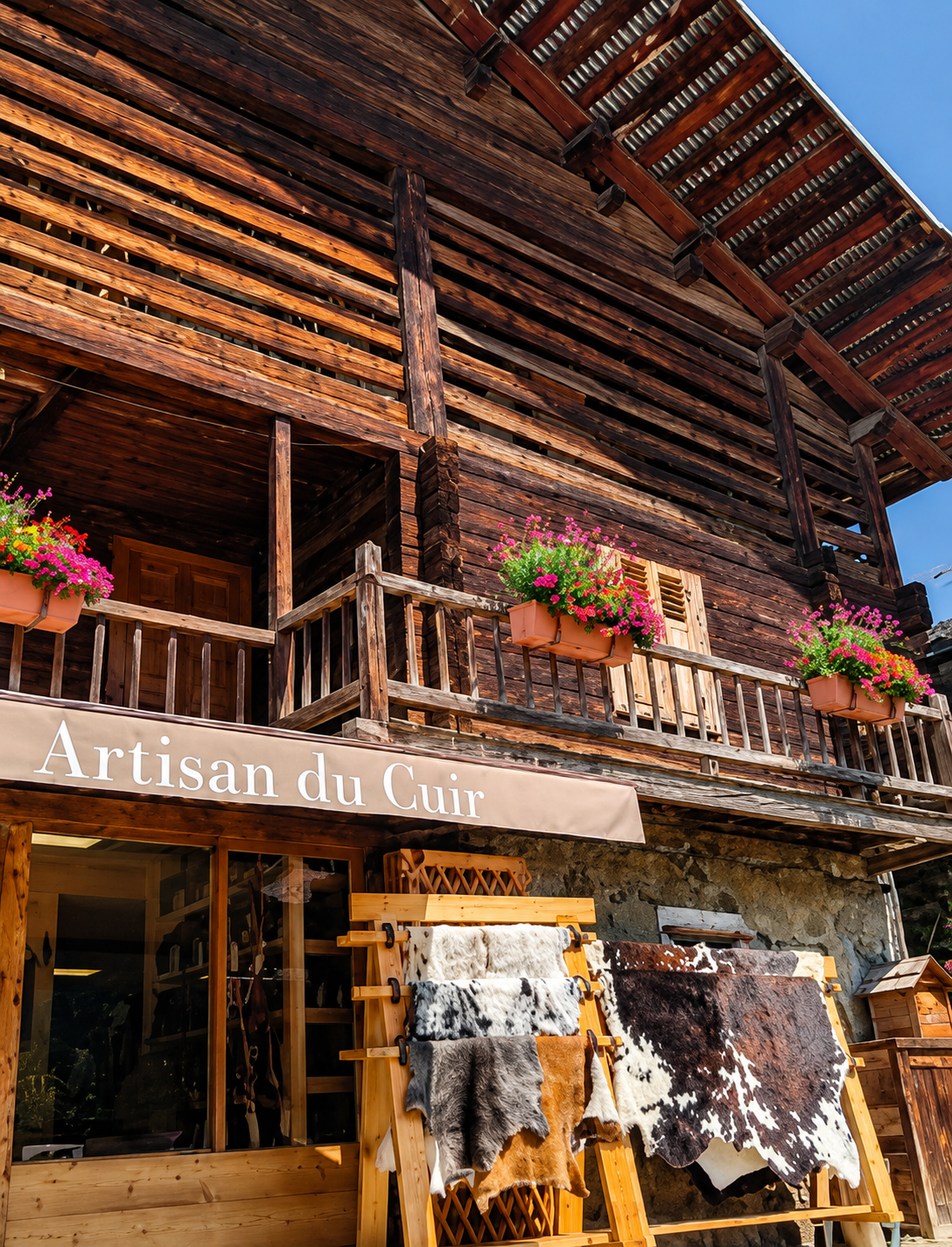
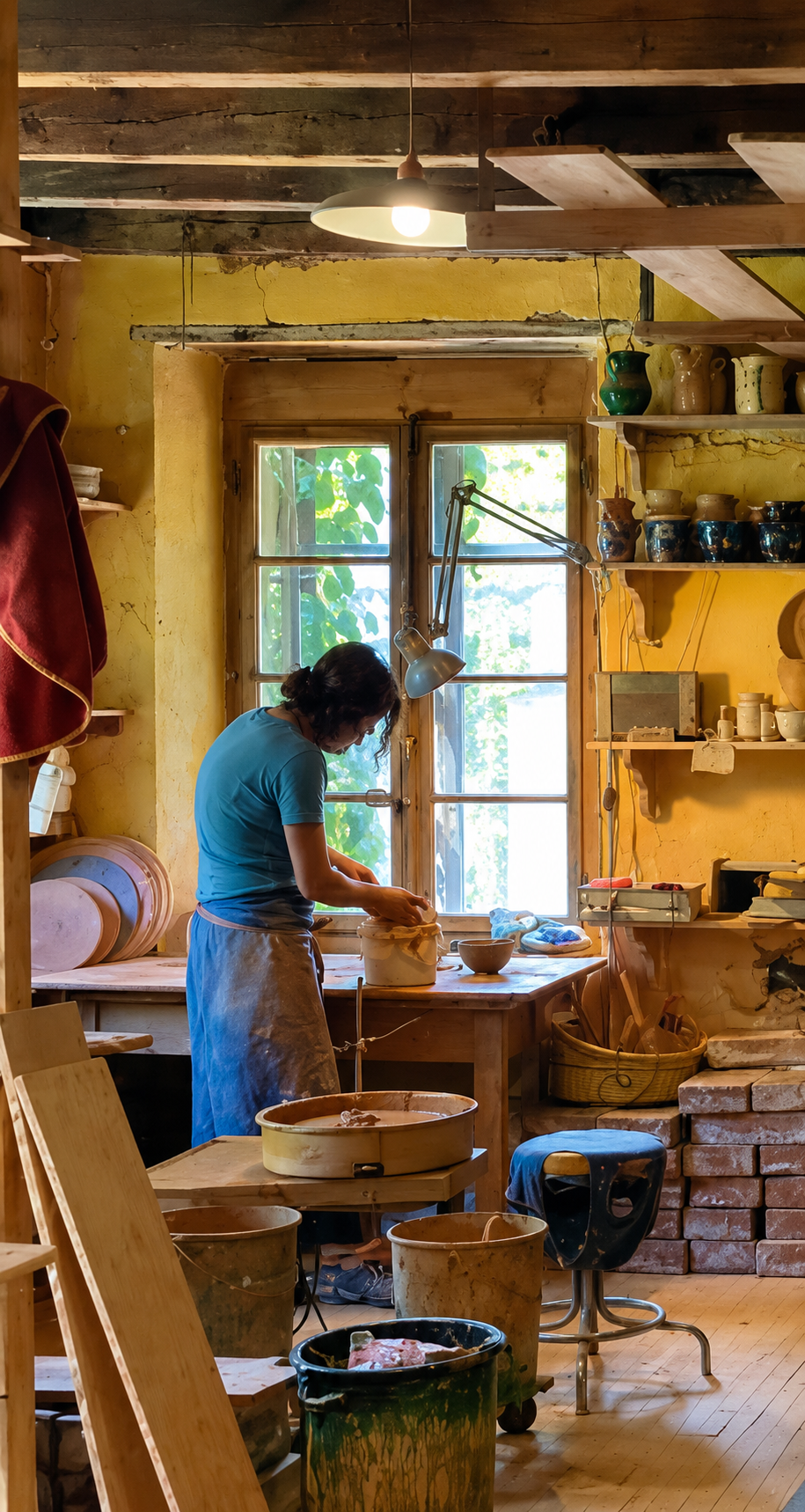
Beyond the cows, Le Grand-Bornand has a tangible craft tradition. The Bourreliers, a family of leatherworkers, produce beautifully made belts, bags and cowbell harnesses from their workshop. Meanwhile, at Les Poteries du Grand-Bornand, you can watch ceramicists at work and pick up pieces that feel genuinely ingrained in place. These are not souvenir shops but working studios, rooted in the materials of the valley, and the difference shows.
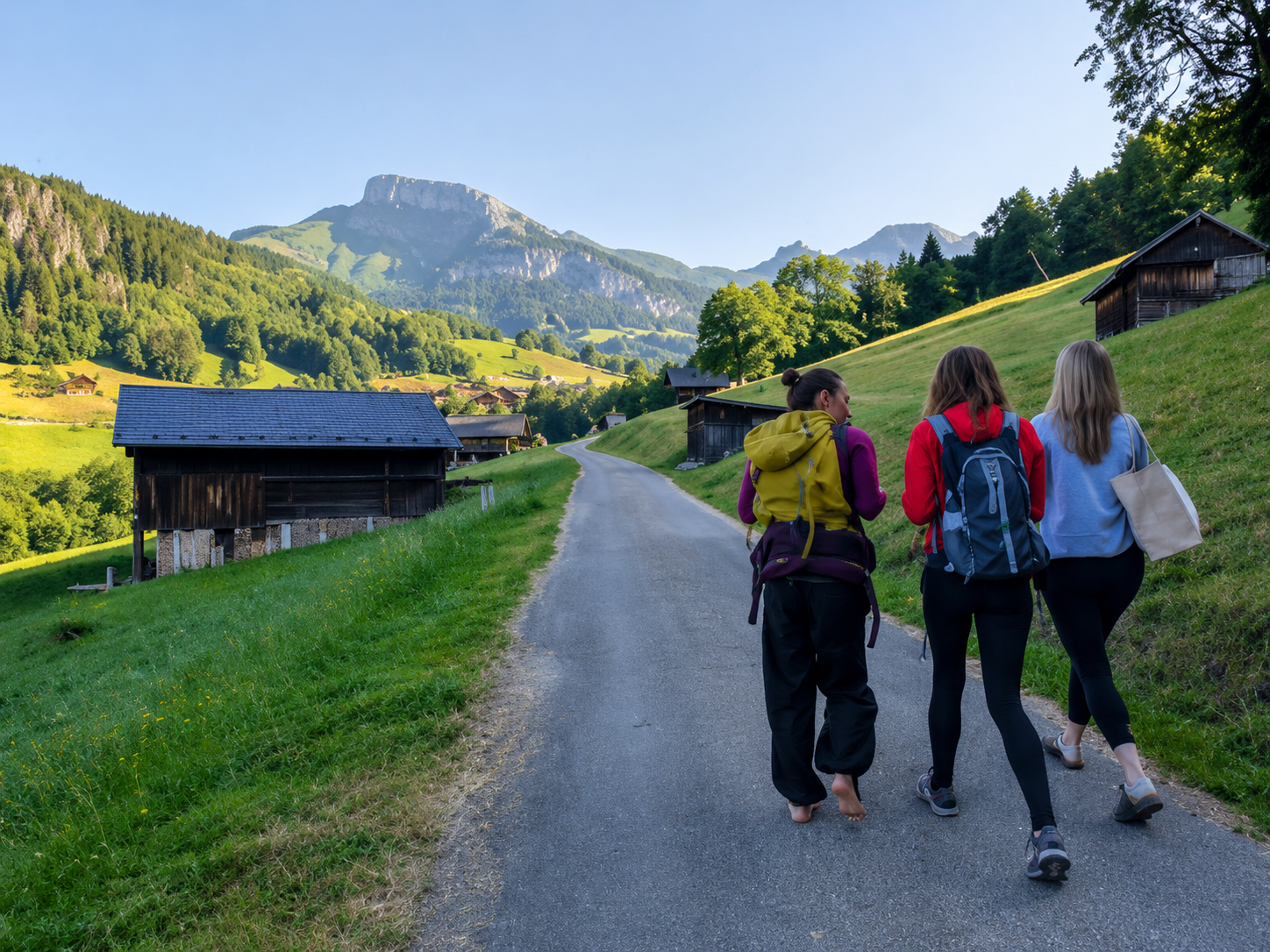
After a lunch of beignets and charcuterie at La Cheminée, we met Nicolas, from Botanico, for a foraging walk near Thônes. In a landscape like this, it’s easy to spend your time looking up at the ridges or out across the valley. Nicolas does the opposite: he gets people looking down. He led us through meadows and along forest edges, pointing out edible plants, explaining their properties and gently reframing the mountain landscape as a kind of open-air larder. Some are edible, some medicinal, some simply interesting because of where they grow.
He talked us through scents, textures and leaves, and the walk felt less like a stroll through the countryside and more like a lesson in paying attention to where you place your feet and direct your eyes. It also makes you realise how much you miss if you only visit in winter, when it’s all sleeping under snow.
A FRESH PERSPECTIVE
On our final morning, Valérie returned, this time with her daughter, to prepare brunch using ingredients gathered on our walk. Edible flowers, foraged herbs and a beautiful spread turned the chalet terrace into a food stylist’s daydream. It was a fitting end: a meal weaving together the people, places and flavours of one weekend into a single, generous table.
La Clusaz in summer may not give you the adrenaline of a black run, but what it offers instead is arguably more lasting: an introduction to the people who live here year-round, and the time to notice the small things – the herb growing by the path, the cheese that began as an act of rebellion, the cow sculpted from driftwood. For anyone who has written off the Alps as a winter-only destination, this corner of Haute-Savoie makes a compelling case for rethinking that assumption. And if you find yourself on an e-bike on a mountainside, wedge of Reblochon in hand, you may wonder why it took you so long.
LA CLUSAZ ESSENTIALS
GETTING THERE
BY AIR
Geneva Airport is the most convenient gateway for La Clusaz, sitting around 50km away and roughly an hour by road, while Lyon Saint-Exupéry Airport is another option at around two hours away.
BY CAR
La Clusaz is an easy drive from Annecy, at around 40 minutes by road, making it a good base for combining mountain scenery with day trips to the lake and city.
WHERE TO STAY
Chalet Bleu Infini by OVO Network offers a more contemporary take on the classic Alpine stay, with big mountain views, generous space for groups and thoughtful extras, including a sauna, cinema room and home of ce. Close to both the lifts and summer walking routes, it makes an easy base for experiencing La Clusaz in any season.
WHERE TO EAT
For a scenic dinner, Restaurant Chalet du Lac sits beside Lac des Confins at the top of the valley. In La Clusaz itself, l’Outa is included as an evening dining stop, while La Cuillère à Omble near Lake Annecy is a standout for sh. In nearby Le Grand-Bornand, Shed Café is a good breakfast stop and La Cheminée offers a memorable mountain lunch.
WHAT TO DO
Join the Le Bélier e-bike cheese ride with bike hire at Evo2, head to Lake Annecy for watersports with Skiwake74 and an electric cruise with Le Deck, or slow things down with Yoga Toumo with Alexia, a botanical walk with Botanico, or a massage treatment by Valerie.
TOURIST INFORMATION
From France Today Magazine
Ohlala! It looks like you’re not a Member yet
Join to view this content!
(If you are a Member, log in or reset your password below or contact us so we can help)
- Log in
- Forgot password