La Margeride: A Hidden Corner of France Strewn With Wildflowers

Caroline Mills takes time to explore La Margeride, an overlooked corner of France where abundant wildflowers colour the land
📢 As you scroll through the beautiful images, why not listen to our narrated article? It’s a great way for France Today Members to dive deeper into the story while enjoying the visuals. We hope you love this experience, and we’d love to hear what you think—feel free to share your thoughts in the comments below! Happy listening!
Welcome in our village. Here, farmers work every day to feed us, crops and herds beautify our landscapes, craftsmen bring our know-how to life, the bell tower punctuates the life of the village and the roosters crow early in the morning. Let’s be proud of our rurality.”
So reads the hoarding that greets visitors to Saint-Denis-en-Margeride. It’s a notice that could be placed at the entrance to any village in La Margeride, or indeed at the outposts of the 3,200km2 area, as a reflection of the entire locale.
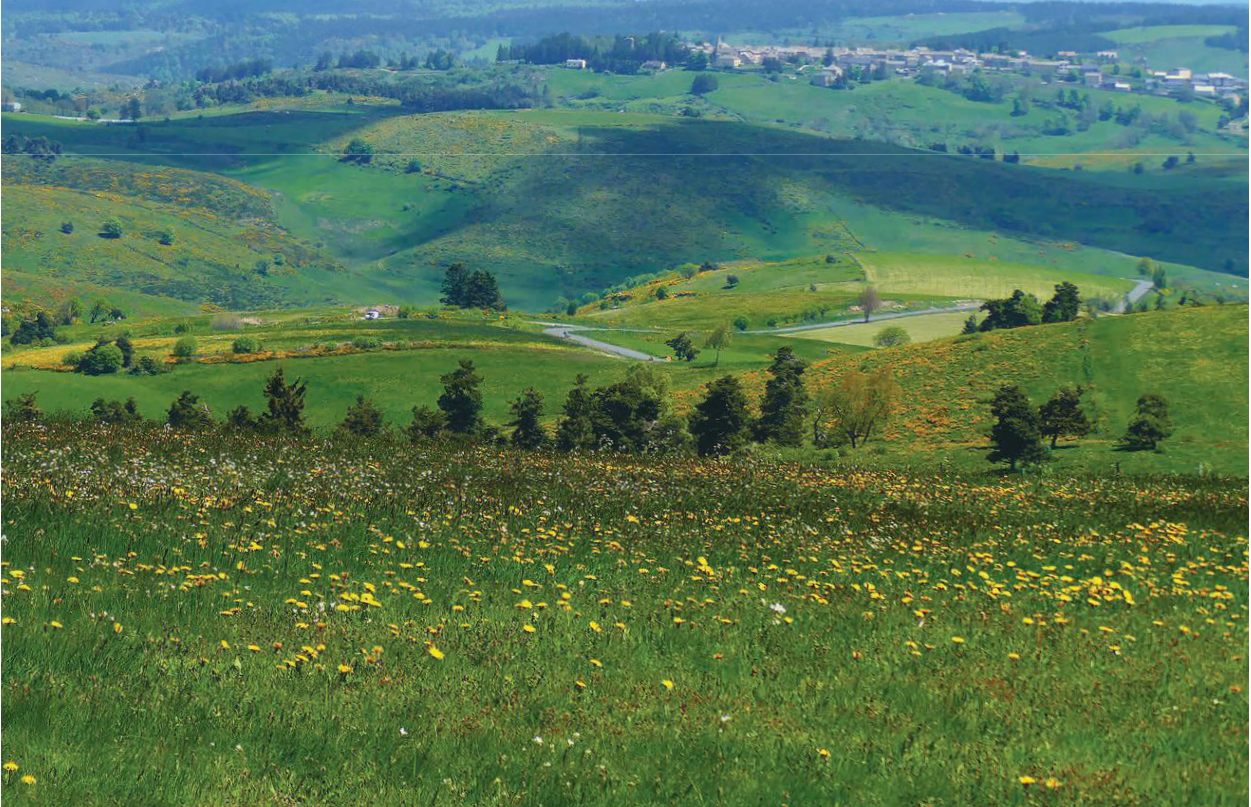
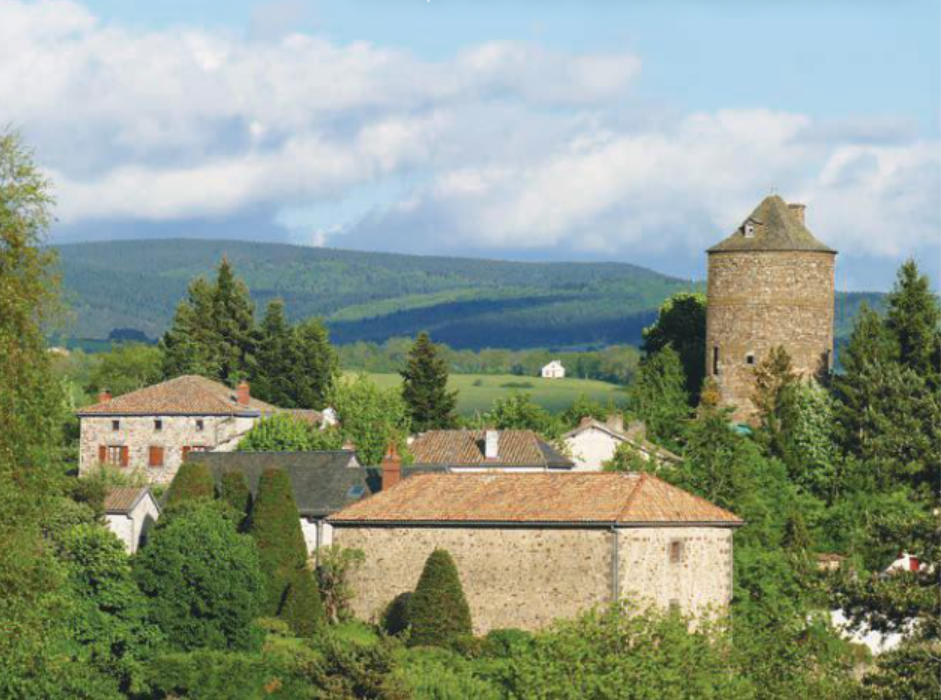
Ruynes-en-Margeride, a western gateway to La Margeride and a Station Verte
La Margeride sums up ‘hidden France’. This lump of rural granite in a southeastern corner of the Massif Central spans three departments and two regions: Cantal and Haute-Loire in Auvergne-Rhône-Alpes and, mostly, Lozère in Occitanie.
Beyond that matter-of-fact explanation, frankly, I don’t quite know what to say. I thought that I had seen the best of France over the decades – until now, standing on a hillside above Saint-Denis. Forgive me if there are a clutch of superlatives: La Margeride is astonishing, and all I can do is smile in utter joy at the scene. There’s nothing much mountainous about the Monts de la Margeride, for they are part of the Massif’s plateau and though they reach more than 1,500m in height, there are no soaring peaks. Yet with every turn in the road, every footstep I walk, the landscape of meadows, forests and moors seems to become ever finer, covered, seemingly, by more wildflowers than anywhere else in France.
the extraordinary rolling landscape with views towards Châteauneuf-de-Randon
A COUNTRYSIDE HAVEN
I begin my tour in Cantal’s Ruynes-en-Margeride, a gateway village in the northwestern corner of the area. Its medieval bourg with 12th-century stone tower, L’Écomusée de Margeride and its designation as a Station Verte are enough to keep a visitor here, though the views are too enticing to hang around for long.
I pick a route and follow the road to Clavières, where beyond the immediate foreground meadows, which are striped with intoxicatingly fresh-cut hay, lies the open expanse of the Cantal to the northwest, its mountains, and valleys. Pink flushes of wild thyme and dainty rock soapwort bring my eye back to the roadside.
La Margeride has no cities and barely a town. Its rural outlook is, however, punctuated by pretty villages, including my next stop, Le Malzieu-Ville. A pair of streams, leading to the River Truyère, run either side of the medieval village, whose narrow streets form concentric rings to a central square. Designated a Plus Beau Village de France, Le Malzieu-Ville is, indeed, beautiful. A walking trail, which is linked by interpretation panels that detail its history, guides me around, through ancient gates that allow passage to its coeur, with towers to climb for rooftop views.
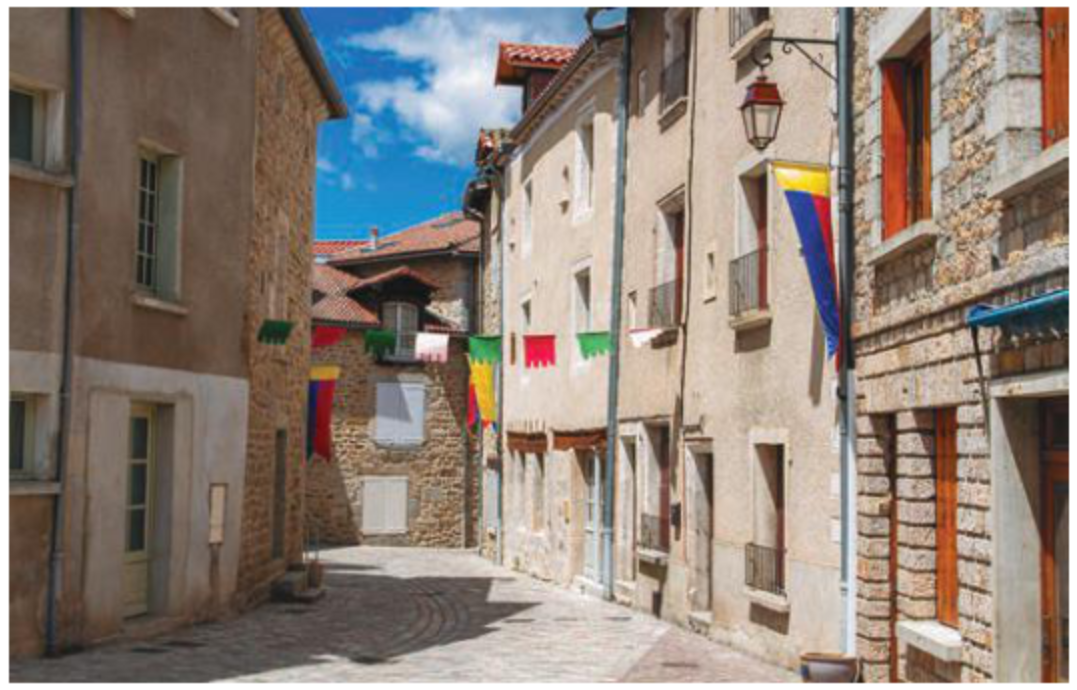
Plus Beau Village Le Malzieu-Ville
Climbing to the narrow hilltop streets of Saint-Alban-sur-Limagnole, I gain views that, once more, floor me. The bucolic landscape of pastures is not only filled with Aubrac cattle but wild narcissi, too – not blousy yellow trumpets but graceful, white-petalled fl owers, delicately scented.
A gentle gradient leads to the Station de pleine nature des Bouviers. In winter, these wild heaths are occupied by cross-country skiers; in spring and summer, it’s a chance to step out on an 11km circular walk that includes an old Roman Road, the Via Agrippa. The meadows and pathways are splashed with wild mountain pansies in multiple shades: intensely regal purple in one clump, others a subtle mauve.
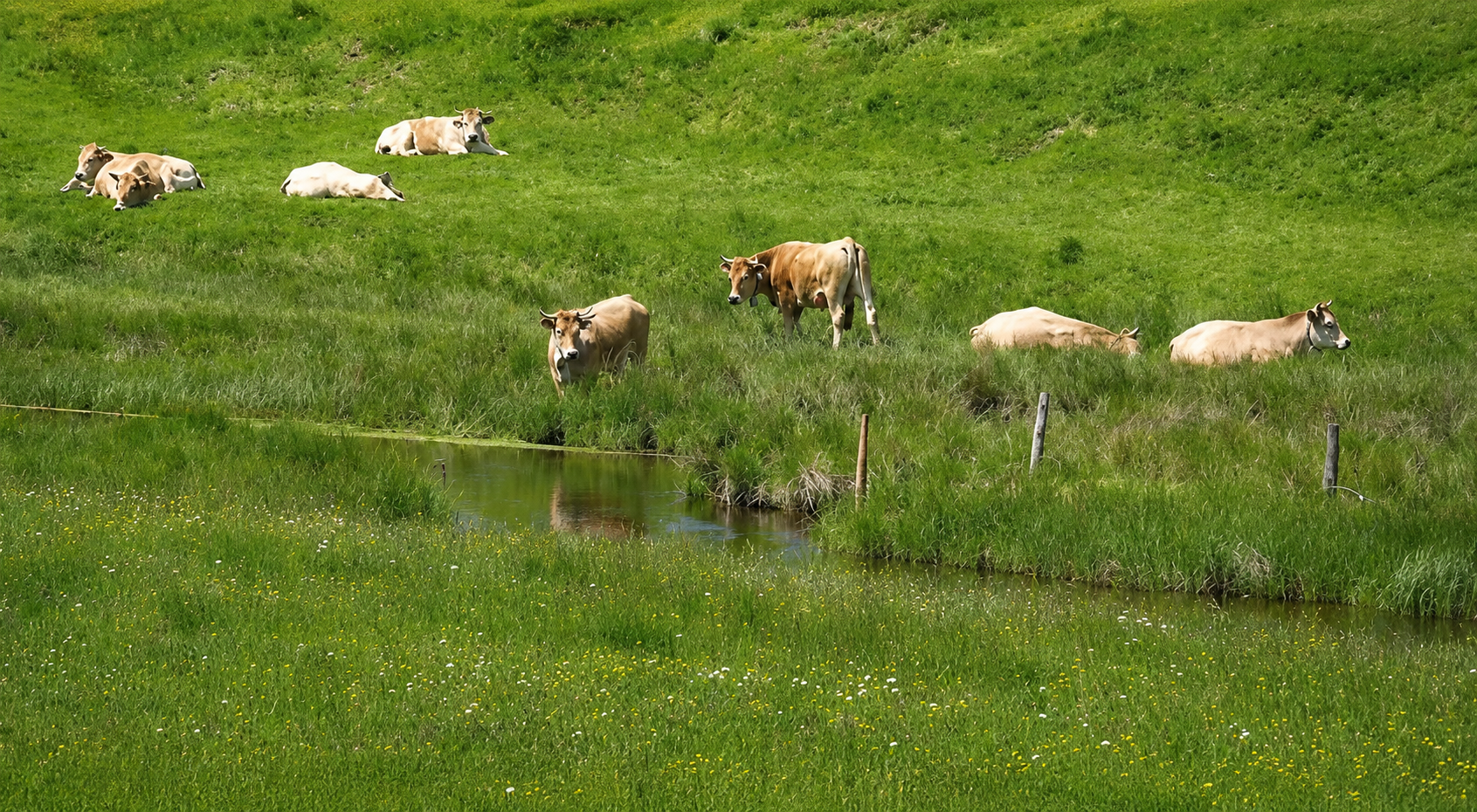
Cattle in wildflower-filled pastures beside the River Chapeauroux
My drive continues in a loop, descending to La Villedieu and its sprinkling of farms, and following the valley of the now tiny Truyère river, a wiggling thread of water. I leave the river behind to climb again to Truc de Fortunio, the highest point in the Margeride at 1,552m. Granite chaos reigns across this wild and windswept mountain, and once more the views from the observation point render one speechless: from here you can see the western Lozère and Monts de Cantal, pine forest, open moor and peat bog, sheep pastures and, below, the Lac de Charpal. Beside me, the teardrop, drooping heads of wild tulips.
Passing through Froidviala and Estables, two hamlets of higgledy-piggledy houses roofed with tiny round-edged slates, I then drive east along the D1. The landmark television mast at Truc de Fortunio remains in view but it is the lower slopes, littered with granite boulders, vivid gorse and roadside flowers, that attract my attention across the Plateau du Palais du Roi.
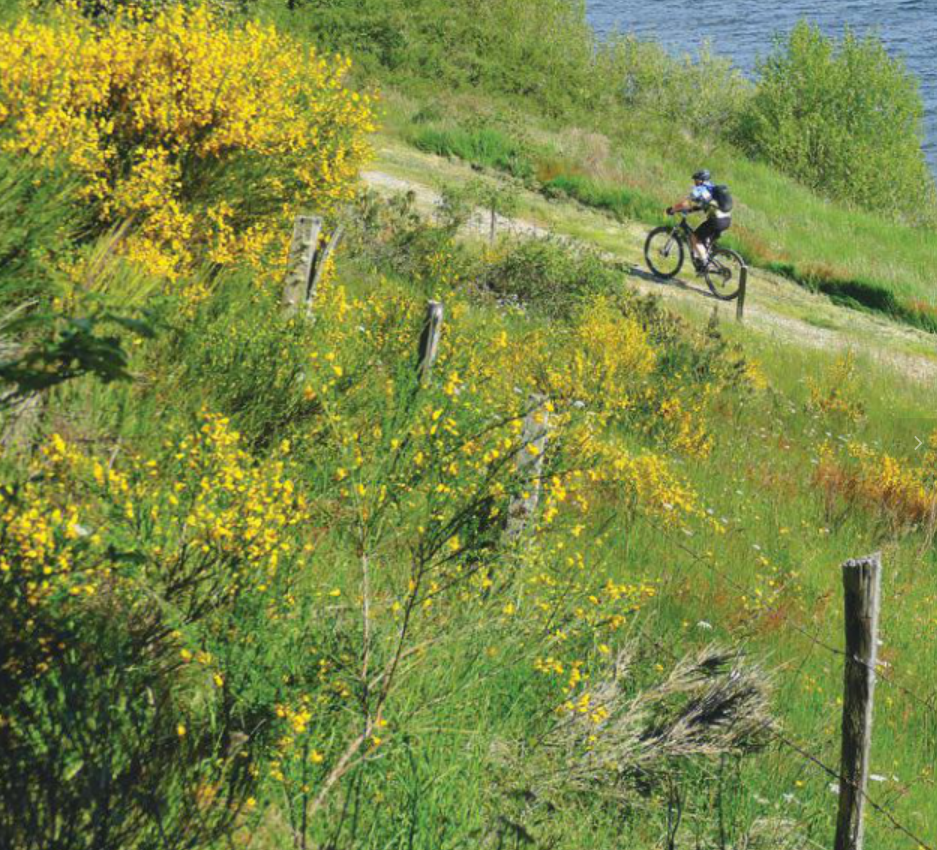
a path around Lac de Naussac
THE BEAUTY OF SOLITUDE
My next port of call is Lac de Charpal, hidden within a forest. It’s refreshingly unoccupied, except for swifts weaving en masse through the sky, their screams piercing the silence. A 9km walking and cycle trail circumnavigating the lake is signposted, ornamented by lady’s smock, wood anemone and more violas. There’s one last look at Truc de Fortunio, too, linked to the lake by the Grand Traversée du Massif Central, a long-distance cross-country mountain-biking trail.
I leave the intimacy of the hidden lake behind as my journey continues northeast towards Châteauneuf-de-Randon. There are hazy views of the Alps very far away, though they are of no consequence to the great valleys, the folds and hummocks before me, flushed with a brilliance of broom and an electrifying assemblage of flowers nodding in the breeze.
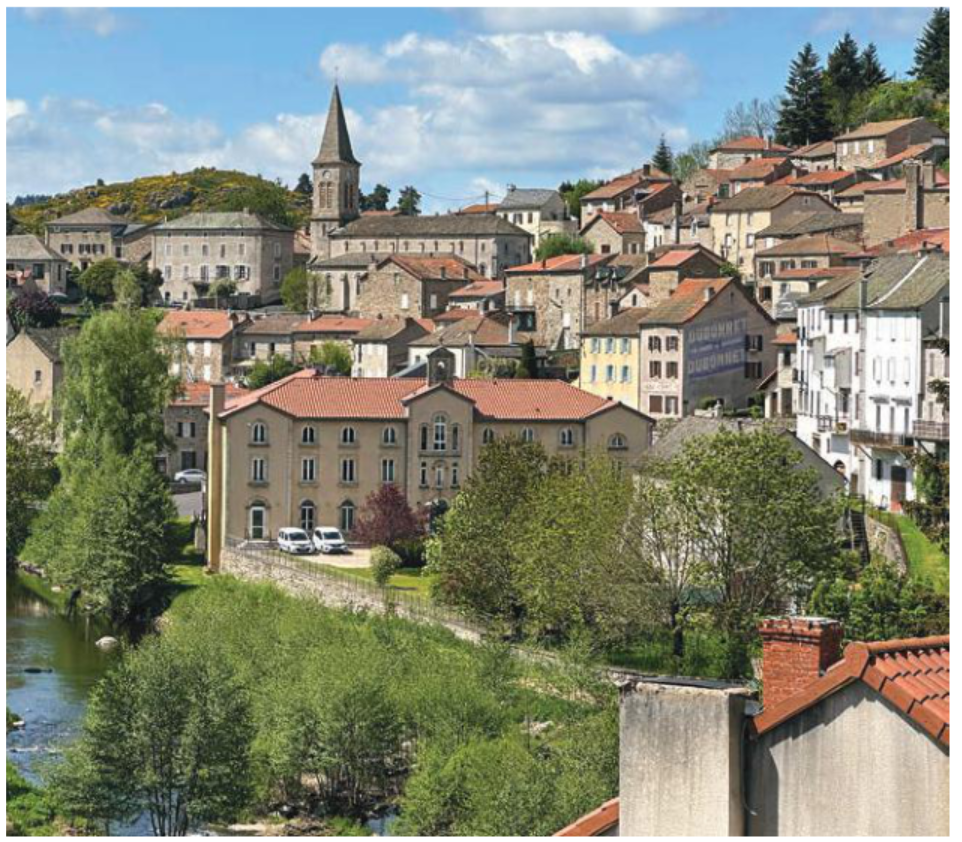
Châteauneuf-de-Randon is a hilltop bastide village, a pleasant square of stone houses pitched around a statue of Bertrand du Guesclin. The 14th-century Breton knight, who was prominent in the Hundred Years’ War, met his end in this remote village. I step into Auberge du Guesclin and am charmed by the red-checked tablecloths and basic menu with a choice of one dish. It feels as if I’m sitting in someone’s home, as the owner sips a Saturday afternoon pastis with a neighbour and three village women gossip over a homemade myrtle tart.
The views on my sleepy wander around the village are impressive, including those of the route I’ve already travelled. But one prospect, looking northeast from my rocky outcrop viewpoint above the village, especially captivates: it overlooks a tiny stream – the Chapeauroux – with a country lane beside it. It’s this that I choose to follow. It is a remarkable road thanks to its landscape of endless meadows of wildfl owers, amassed wild narcissi, the occasional farm and the river, which is always by my side as it meanders through the countryside.
“IT IS A REMARKABLE ROAD THANKS TO ITS LANDSCAPE OF ENDLESS MEADOWS OF WILDFLOWERS”
A LANDSCAPE TO LINGER IN
The Chapeauroux fl ows through Auroux, a tightly clustered village of narrow lanes that sits upon a steep hillside on the river’s right bank. Opposite rises a vertical cliff of pine and beech. Meadow cranesbill and cow parsley are refl ected in the barely audible river, the village hushed in spring sunshine.
To the north, the river vanishes in a tree-smothered gorge, allowing my eye to focus on the right bank rocks where wild forget-me-nots, buttercups and mouse-ear fi nd any crevice among the gargantuan rocks in which to bloom.
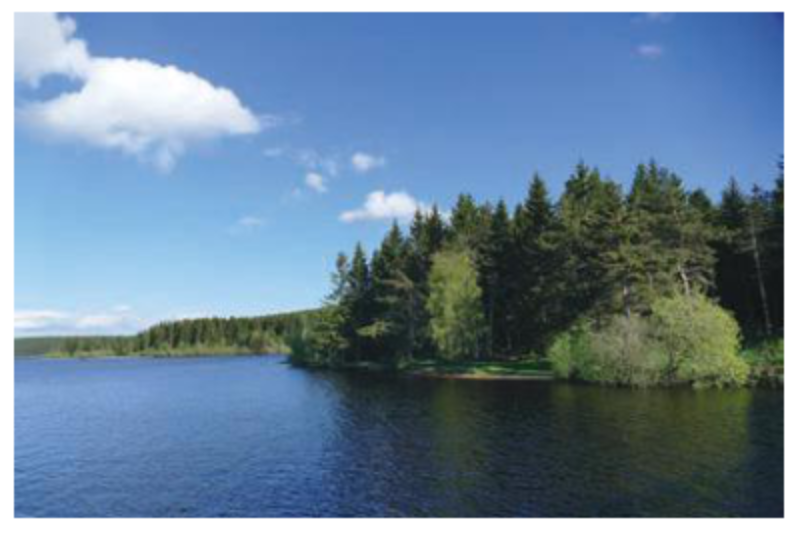
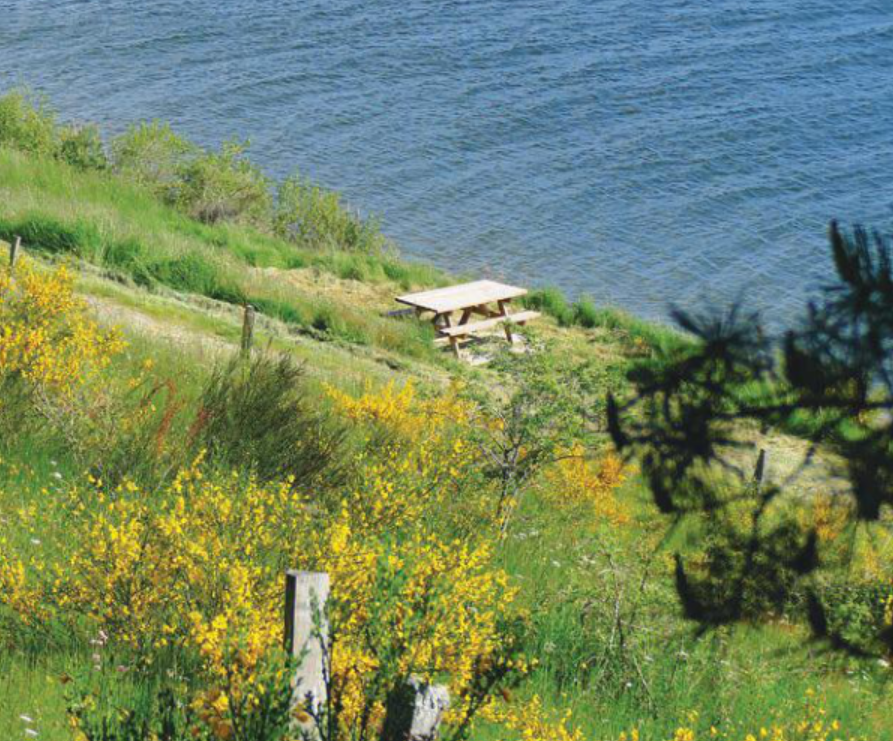
Leaving the river behind, I turn back on myself, passing through Fabrèges and Briges. There are distant, elevated views over Lac de Naussac. My descent towards the lake is steady, allowing time to soak up the roadside scene: orchids, pasquefl owers, thrift; then, as I park up to stroll along the lakeside foot and cycle path, ox-eye daisies and round-headed rampion. What follows are meadows so packed with pignuts, field scabious and more that they create riotous colour. They’re accompanied by a cacophony of sound – not from the wild swimmers taking a dip in the lake, but from crickets, cicadas and cuckoos. Sometimes such immense natural beauty doesn’t need words. Merely time to sit and take it in. La Margeride is such a place.
MASSIF CENTRAL ESSENTIALS
GETTING THERE
BY PLANE
Rodez-Aveyron from London Stansted with Ryanair
La Margeride is a remote area with limited transport connections. Note that from Rodez, the nearest airport with direct flights from the UK, it is a further 4h 30m by train to Saint-Flour.
BY TRAIN
Paris Bercy – Saint Flour (via Clermont-Ferrand): 5h.
Lyon – Saint Flour: 4h 30 m.
BY CAR
From Paris: A10 to Orléans, A71 to Clermont-Ferrand, then A75 to Ruynes-en-Margeride. Approx. 500km/5h 30m. From Montpellier: A75 to Ruynes-en-Margeride. Approx. 170km/2h 30m
TOURISM
www.lozere-tourisme.com/margeride
From France Today Magazine
Ohlala! It looks like you’re not a Member yet
Join to view this content!
(If you are a Member, log in or reset your password below or contact us so we can help)
- Log in
- Forgot password