
Pick of the Ponts: France’s Most Beautiful Bridges

France is blessed with a diverse array of picture-postcard bridges that span styles and epochs. Passionate pontists, make your travel plans now to take in these simply ingenious or downright alluring bridges.
The oldest standing bridge in Paris is logically, if confusingly, called Le Pont Neuf because it was new when it was inaugurated in 1607 and was so named to distinguish it from existing older bridges. It is also, perhaps, the first French bridge to be captured on camera. More impressively, if Louis Daguerre’s pioneering open-air daguerreotype was taken in 1836 (it is, rather vaguely, listed as having been taken some time between 1836 and 1839), it is also the first ever photograph to feature a human. Look closely at the bottom left (you can see the original at the Musée des Arts et Métiers) and you’ll see two people lying at the foot of some steps, in the shade of the statue of Louis IV on a horse.
Today, of course, it’s a little more straightforward to capture scenic structures for posterity and you can find photogenic ponts everywhere in France. From household names that have inspired songs and poetry to little-known yet effortlessly cute village bridges spanning streams, you are never far from an impressive bridge.
Well-known examples include the grand Roman masterpiece Pont du Gard; the song-inspiring medieval Pont d’Avignon (proper name Pont Saint-Bénézet; only four arches remain); the majestic Pont de Normandie spanning the Seine to link Le Havre and Honfleur; and the iconic Pont-canal de Briare, a canal bridge traversing the Loire. All are astonishing and historic in their own way but there are many more to add to your must-visit list. Here we present our subjectively selected France Today pick of engineered eye-pleasers, a shortlist that we deem ‘best in class – variously traversable by foot, bike, train or car. What is your favourite French bridge?
Tell us about it or send photos to [email protected]
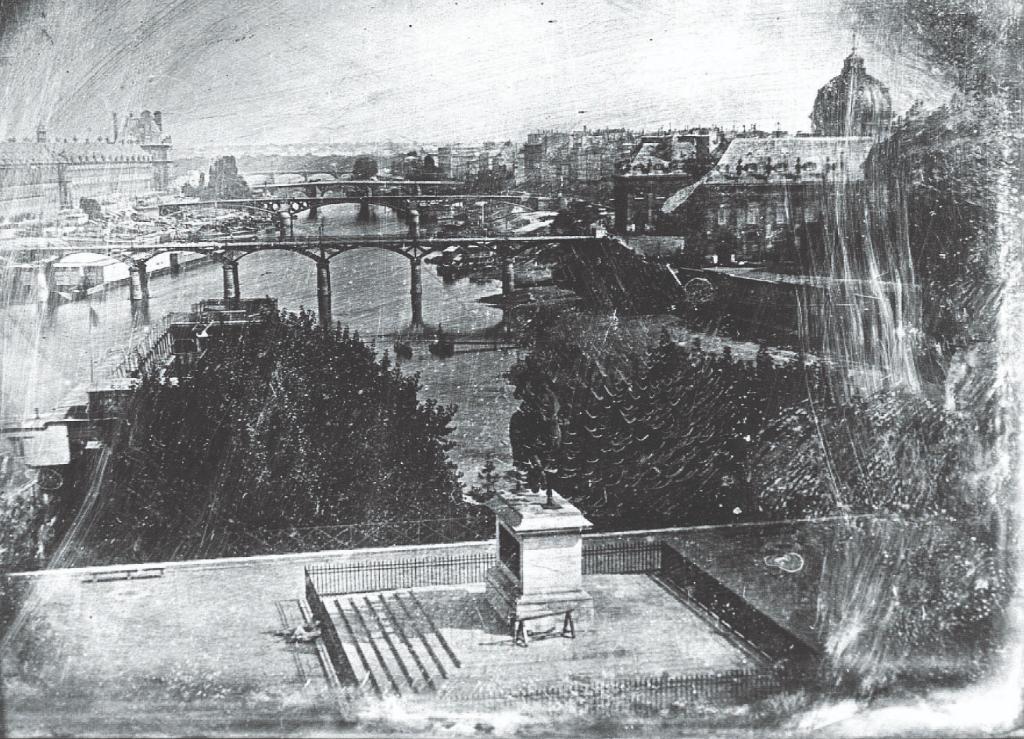
Pont Neuf, Daguerre and Fordos, circa 1836-39
Devilish grand design
1. Le Pont Valentré, Cahors (Lot, Midi-Pyrénées)
Aesthetically pleasing and imposing in equal measure, Cahors’ Valentré bridge measures 172m in length. Completed around 1380, it spans a bend in the Lot river, boasts three square towers and six Gothic arches and has been UNESCO-listed since 1998. Slow building progress (it took 70 years to finish) allegedly prompted its architect to make a pact with the devil, who promised to help him ensure it was finished on time. But the man reneged and tried to trick the devil, who took his revenge by sending a demon every night to loosen a single stone, ensuring the bridge would never ever be finished! If you pay a visit during the evening, you can enjoy its grandeur beautifully illuminated in various different colours, depending on the local festivals and events taking place. It has been a pedestrians-only bridge since 1995.
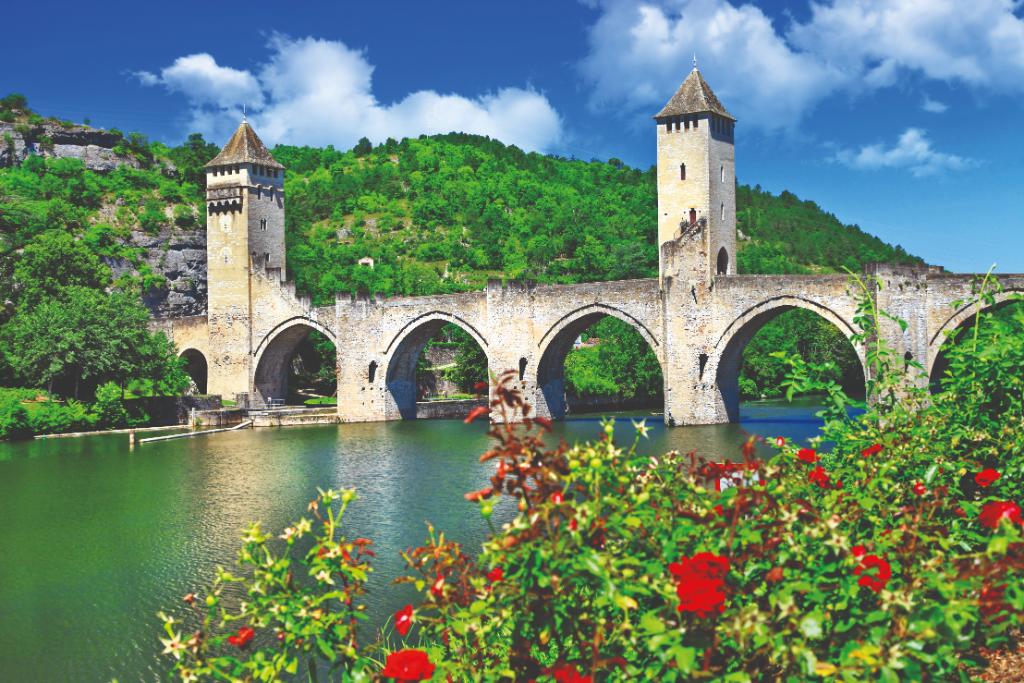
Pont Valentré, Cahors © Shutterstock
Gilty pleasure
2. Le Pont Alexandre III, Paris (Île-de-France)
You will not see a more striking bridge in all Paris than this one, built in the Beaux-Arts style to connect Les Invalides on the Left Bank to the Grand Palais and Petit Palais on the Right Bank. Built by engineers Jean Résal (1854-1919) and Amédée Alby (1862-1942) for the 1900 Universal Exhibition, the Alexandre III bridge is admired not merely for its impressive dimensions (154m long and 45m wide) but also for its huge 17m-high pylons which are topped with gilt bronze sculptures of Pegasus and the four renommés – allegorical Greek deities personifying a character of public or social recognition. They represent the arts, sciences, combat and war.

Pont Alexandre III, Paris © Shutterstock
Engineering wonder
3. Le Viaduc de Millau (Aveyron, Midi-Pyrénées)
No road trip in Aveyron is complete without a drive over the epic Millau viaduct, a multiple-span, cable-stayed bridge whose sailing-boat-like form majestically spans the Tarn valley near the village of Millau. Conceived by French engineer Michel Virlogeux and designed by English architect Lord Norman Foster, it was completed in 2004, its role as part of the A75 autoroute to ease congestion caused by large numbers of holidaymakers making their way down from Paris towards Spain. A big bridge means big numbers: its estimated cost was €394m and at 343m high, it is, to this day, the tallest bridge in the world. Drivers who wish to appreciate the bridge can stop at the Aire du viaduc de Millau rest stop and visitor centre in a former farmhouse in Brocuéjouls.

Millau viaduct © Shutterstock
Vertical virtuosity
4. Le Pont Jacques Chaban-Delmas, Bordeaux (Gironde)
The most unusual bridge amongst our selection is Bordeaux’s stunning vertical lift bridge, the largest in Europe, which traverses the Garonne. Measuring 575m long and 77m high, it was inaugurated in 2013 by President François Hollande and Bordeaux mayor Alain Juppé. It was conceived to improve traffic flow in the city, notably for heavy goods vehicles, as well as to relieve congestion on the city’s historic Pont de Pierre. What makes it a standout creation, however, is the state-of-the-art design and technology that powers its innovative lifting system via hydraulic cylinders the bridge deck can be raised to a height of 53m in just 11 minutes, allowing large ships to pass through. Enjoy a night-lit view of the bridge on a stroll along the quays.

Le pont Chaban-Delmas, Bordeaux © Shutterstock
Right on track
5. Viaduc de Morlaix (Finistère, Brittany)
Equally appealing to railway enthusiasts and architecture admirers, this 58-arch, 52m-high, 292m-long Breton landmark was completed in November 1863 and, thanks to the efforts of some 900 workers, took only 23 months to build. Controversially (at the time) located slap bang in the heart of the town, it provided a high line link to the town’s station on the Paris-Montparnasse to Brest railway route. In 1943, British aircraft dropped 43 bombs on the town to cut the railway line, but only one hit the viaduct. Visitors cannot miss its imposing presence, and can stroll along its lower tier, the Promenade De Guichen, free of charge in the daytime.

Morlaix viaduct © Shutterstock
The right angle
6. Le Pont Coudé, Brantôme Dordogne
Attractive rural bridges are plentiful in France, but Brantôme’s Pont Coudé has enhanced appeal because of the wider panoramic spectacle it brings to the town’s impressive Benedictine Abbey. One of the unusual curiosities of this medieval bridge is that while it appears perfectly straight on most photographs, in fact three of its ten arches are set at right-angles to each other – it needed to span both the Canal des Moines and the River Dronne, whose impetuous currents it needed to withstand. Hence its name Pont Coudé (Bent Bridge) – coude means elbow in French. It was built in the first half of the 16th century to give monks access to the gardens on the river’s left bank; for a latter day, contemplative river-level tour of the locale, take a 50-minute guided cruise (www.brantomecroisieres.com).
From France Today Magazine

Pont Coudé, Brantôme © Shutterstock
Lead photo credit : Pont Coudé, Brantôme © Shutterstock
Share to: Facebook Twitter LinkedIn Email
More in architecture, bridges, Paris, rivers
Related Posts

Leave a reply
Your email address will not be published. Required fields are marked *